Reviewed · TOURS
Australian Dinosaur Giants Tour
The biggest bones in Australia are waiting in Eromanga. This one-hour tour at the Eromanga Natural History Museum brings you close to Cooper and George, two enormous titanosaur sauropods, then shows how fossil hunters expose ancient bones from the rock. I especially like the chance to touch a 95 million-year-old dinosaur bone and the practical workshop demonstration, which gives the science a human scale. My main caution is that the tour depends on clear guiding, and one account found a guide difficult to understand and not especially confident.
The museum also makes a good stop for families, dinosaur fans, and anyone crossing Queensland’s outback routes. The main display is impressive, the setting is unusually modern for such a remote town, and the adjoining cafe serves coffee and sausage rolls. At the advertised $11 price, the hour offers excellent value, though one published comment refers to paying $70, so I would confirm the current price before booking.
In This Review
- Key points at a glance
- Why Eromanga’s dinosaurs matter
- The museum visit begins with a film
- Meeting Cooper and George
- Inside the fossil preparation workshop
- Touching a 95 million-year-old bone
- Eulo megafauna and the wider collection
- Is the $11 price good value?
- Who should book this dinosaur tour?
- Practical details for planning your stop
- How this compares with a quick museum visit
- Should you book the Australian Dinosaur Giants Tour?
- FAQ
- Where does the Australian Dinosaur Giants Tour start and finish?
- How long does the tour last?
- What is included in the tour?
- Are food and drinks included?
- How many people can join the tour?
- Can I cancel for a full refund?
Key points at a glance
- Cooper and George are Australia’s largest known dinosaur bones: The two titanosaur sauropods are the central reason to visit.
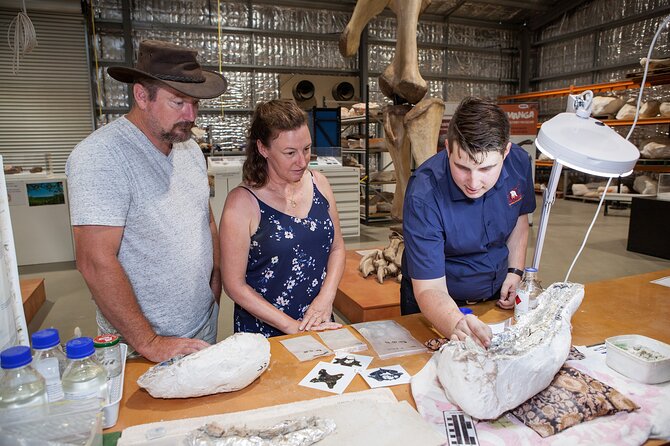
- The tour includes the working fossil workshop: You see how specialists expose fossilised bone with precise tools.
- You can touch a 95 million-year-old dinosaur bone: This small hands-on moment makes the distant past feel real.
- A 20-minute film may begin the visit: It explains Earth’s long story before the guided workshop portion.
- The museum includes Eulo megafauna fossils: The collection goes beyond dinosaurs to other extinct Australian animals.
- The group limit is 30 people: That keeps the tour relatively contained, though the quality depends on the guide leading it.
Why Eromanga’s dinosaurs matter
Eromanga sits far from Queensland’s better-known coastal attractions, so a dinosaur museum here may seem unexpected. That is part of the appeal. The museum presents fossils found in the outback and explains the work required to move them from the ground into a public display.
Cooper and George are titanosaur sauropods. These were long-necked, plant-eating dinosaurs and part of one of the last sauropod groups to live during the Cretaceous Period. They were also among the largest animals ever to walk on land.
The important point is scale. The bones on display are not simply large by museum standards. They are described as the biggest dinosaur bones found in Australia, and therefore the largest bones of any animal known to have walked the Australian continent. You do not need to be a specialist to appreciate what that means. A single bone gives you a better sense of size than a small model or a paragraph of text ever could.
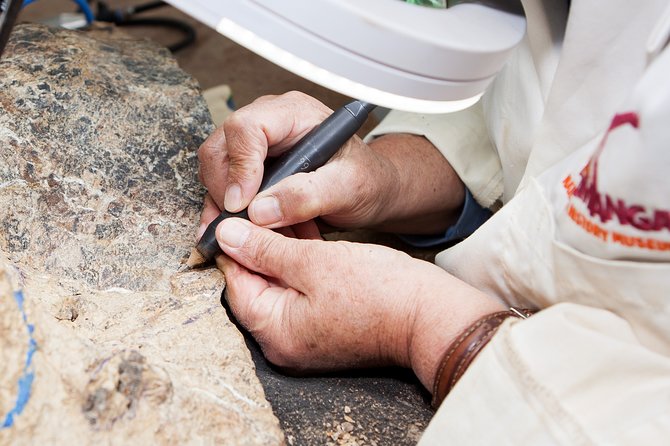
I also like that the tour does not stop at a giant skeleton. It connects the finished display to the messy, careful work behind it. You see how a fossil is exposed, prepared, and made ready for study or exhibition. That process is one of the most useful parts of the visit because it shows that paleontology is patient practical work, not just dramatic finds.
Other Queensland trips people book alongside this one:
- Bundaberg Rum Behind The Scenes Distillery Tour And Museum Experience
★ 5.0 · 724 reviews - Lady Musgrave Day Trip from Bundaberg Including Snorkeling
★ 5.0 · 683 reviews - Paronella Park Admission Ticket
★ 4.5 · 593 reviews
The museum visit begins with a film
The advertised tour lasts about one hour, and the visit may begin with a roughly 20-minute film. This is worth knowing before you arrive. If you expect an hour spent entirely beside dinosaur bones, the film portion may feel like a slower start. If you enjoy context, it gives you a useful outline of Earth’s great stretches of time and the prehistoric world of inland Australia.
The film has been praised for its production quality and information. It helps explain the eras in which the dinosaurs lived before you move into the workshop area. That order makes sense. Once you have the broad story, the bones and tools are easier to understand.
For children, the film could be the least active part of the visit. For adults, it may be a welcome introduction. I would frame it for younger visitors as the story before the exciting part, then point out that the workshop offers the hands-on section afterward.
The film also helps the museum avoid making the tour a simple parade of huge bones. You get a sense of time, place, and scientific work. That makes the main displays feel less like curiosities and more like evidence.
Meeting Cooper and George
The main highlight is the chance to meet Cooper and George, the museum’s two giant titanosaur sauropods. Their size is the immediate attraction, but the guide’s explanation gives the display its meaning.
You learn that titanosaurs were among the last sauropods of the Cretaceous Period. You also learn why these particular bones matter to Australia. They are the largest dinosaur bones found on the continent, which gives the display national importance rather than just local interest.
I would take your time here. Look at the size of individual bones rather than trying to absorb the whole display at once. The sheer scale can be hard to judge when everything is arranged in a museum. A guide’s explanation helps you connect one bone to the animal that carried it.
The tour is particularly good for families because the central idea is easy to grasp: these were the biggest animals ever found in Australia. Children can focus on size, while adults can listen for the geological and fossil-preparation details.
The museum also contains other natural history displays, including Eulo megafauna fossils. That broadens the visit beyond dinosaurs. You get a look at extinct animals from a later period of Australia’s past, along with fossils that range from very large specimens to much smaller finds.
Inside the fossil preparation workshop
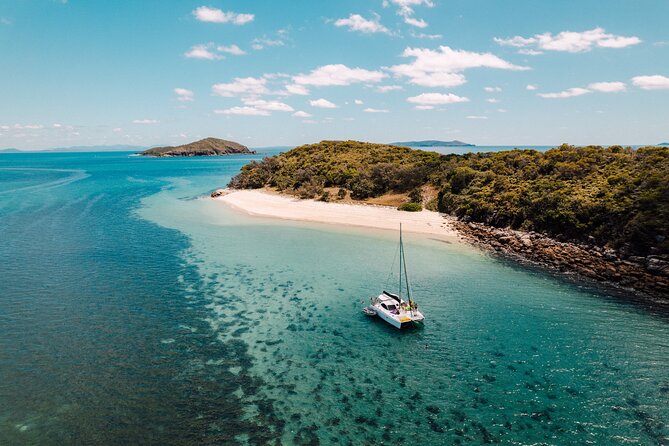
The workshop is where this tour earns its keep. Rather than hiding the technical work behind a finished exhibit, the museum lets you see the preparation process.
A guide demonstrates how fossilised bone is exposed using specialised tools. The work is slow and controlled. Rock is removed little by little, with care taken not to damage the fossil beneath it. Even a short demonstration can change how you look at the displays afterward.
This part also gives you a better idea of why fossil museums need skilled staff and suitable facilities. Finding a bone is only the start. It must be protected, cleaned, studied, and prepared before it can be displayed safely.
Some accounts specifically praise the workshop and the guides’ enthusiasm. Hollie is one guide whose clear, energetic presentation has been singled out. Staff quality can vary on any scheduled tour, however, and one person found a young guide’s speech difficult to follow. That is a fair practical consideration. The material is strong, but clear delivery matters when the subject includes unfamiliar names and long stretches of geological time.
The group limit is 30 people. That is not a tiny private tour, but it is small enough for a demonstration to remain useful if you position yourself where you can see the tools and hear the explanation. If the group is full, standing near the front should make a difference.
A completely different kind of day out in Queensland:
- Capricorn Caves Cathedral Cave Tour
★ 5.0 · 536 reviews - Capricorn Caves, Australia: 45-Minute Cathedral Cave Tour
★ 4.8 · 470 reviews - Giant Swing Skypark Cairns by AJ Hackett
★ 5.0 · 366 reviews - Hook A Barra Fishing Experience
★ 5.0 · 283 reviews
Touching a 95 million-year-old bone
The hands-on moment is simple but memorable. You get the chance to touch a dinosaur bone estimated to be 95 million years old.
Museum displays usually ask you not to touch anything, so this small exception has real value. It gives you a physical connection to the age being discussed. You can look at a fossil and admire it, but touching one makes the time scale feel less abstract.
This is also a good moment for children. They may not remember every term from the film, but they are likely to remember holding or touching something that existed tens of millions of years ago.
The museum’s approach works because the experience is controlled. You are not handling a fragile display at random. The touch is part of a guided explanation, alongside the workshop demonstration and the wider collection.
Eulo megafauna and the wider collection
The dinosaur giants are the headline act, but the museum’s collection reaches further. The Eulo megafauna fossils add another chapter to Australia’s natural past.
That matters because it gives you a broader view of extinction and change. The visit is not only about giant dinosaurs from the Cretaceous Period. It also shows that Australia’s prehistoric story continued through later periods, with other large extinct animals appearing in the fossil record.
The collection includes fossils of different sizes, from very large specimens to tiny examples. You may also find opal displays and other natural history material in the museum complex. The exact balance of displays can change, but the attraction is clearly more than a single dinosaur room.
I like this variety for a longer outback itinerary. If you have already visited dinosaur attractions elsewhere in Queensland, the Eromanga museum still offers a different angle through its fossil preparation work and local material.
Is the $11 price good value?
At the advertised $11 price, I consider this a strong-value stop. You receive museum entry, a guided tour, access to the workshop, a fossil-preparation demonstration, explanations of the dinosaurs and megafauna, and the chance to touch a 95 million-year-old bone.
That is a lot for one hour, especially if you are already passing through Eromanga. The value improves because the tour gives you access to working methods rather than only static displays.
There is a price inconsistency worth checking. One published comment refers to a $70 charge, while the supplied tour details list $11. That may reflect a different product, a broader tour, or an older price. Before setting your budget, confirm the price for the exact Australian Dinosaur Giants Tour.
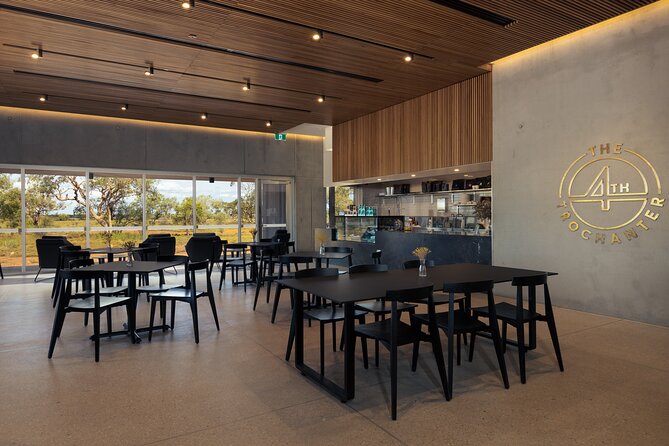
The museum also has a cafe serving coffee, tea, and food such as sausage rolls. Coffee and tea are not included in the tour, but the cafe makes the visit easier to combine with a break. There is also a merchandise range, useful if you want a small souvenir connected to the museum.
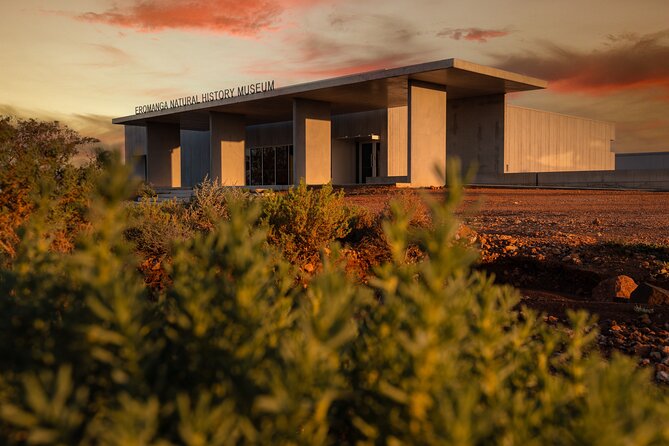
The building itself has received praise for its modern architecture. In such a remote setting, the facility adds to the sense that this is a serious museum rather than a roadside collection of props.
Who should book this dinosaur tour?
I would recommend it most strongly to:
- Families with children who enjoy dinosaurs or hands-on learning
- Adults interested in fossils, geology, or Australian natural history
- People following Queensland’s outback dinosaur route
- Visitors who want a short, focused activity rather than a half-day attraction
- Anyone curious about how museum specimens are prepared
- Architecture fans who appreciate well-designed public buildings
You do not need prior fossil knowledge. The film and guide provide the basic setting, while the bones make the subject easy to grasp.
You may want to think twice if you dislike guided presentations or expect a large interactive theme park. This is a museum tour with a film, displays, explanations, and a workshop demonstration. Its strength is real fossil material and careful preparation, not rides or theatrical effects.
The one-hour length suits a driving day. It gives you a clear subject without taking over your schedule. If you have come a long way specifically for dinosaurs, you may want to allow extra time before or after the tour to see the wider museum, visit the cafe, and browse the merchandise.
Practical details for planning your stop
The tour begins and ends at the Eromanga Natural History Museum, 1 Dinosaur Drive, Eromanga, Queensland 4480. Entry and the guided workshop tour are included in the listed activity.
The group can contain up to 30 people. Most people can take part, and service animals are allowed. The supplied information does not promise a specific guide, exact film schedule, or particular workshop specimen, so I would treat Hollie’s presentation as an example rather than a guarantee.
The activity requires good weather. If poor weather causes cancellation, you are offered another date or a full refund. For your own cancellation, you need to cancel at least 24 hours before the start time to receive a full refund. Changes made inside that 24-hour window are not accepted.
Because the tour is short, arrive ready to begin rather than assuming you can wander in at any time. A confirmation is provided when you book, so check the meeting time and the current price before setting out.
How this compares with a quick museum visit
You could visit a fossil museum simply to look at finished displays. This tour gives you more. The film explains the time scale, the guide places Cooper and George in context, and the workshop shows how the museum’s work is done.
That added explanation is important in Eromanga. The town is a long way from many major Queensland attractions, so the value of your visit depends on getting more than a quick photograph. The tour turns the museum into a story about discovery, preparation, and public education.
It is also less hurried than a large, heavily visited attraction can be. One account described the experience as more relaxed than the dinosaur attractions in Winton. That may make Eromanga a better choice if you prefer time to look closely and ask questions.
Still, the tour is only about an hour. If you want a major collection covering many dinosaur species, the museum may feel focused rather than vast. Its strength is the Australian titanosaur story, the local fossil work, and the chance to see preparation in progress.
Should you book the Australian Dinosaur Giants Tour?
Yes, if you are already travelling through Eromanga or building a Queensland outback dinosaur trip. Cooper and George give the tour genuine scale, while the workshop and touchable fossil make it more than a standard display visit.
I would book it for the practical science, not only the big bones. The film, fossil tools, Eulo megafauna, cafe, and modern museum building create a well-rounded stop. Just confirm the current price, allow for the film portion, and remember that the quality of the experience depends partly on how clearly your guide presents the material.
If your schedule is tight, the one-hour format is easy to fit in. If you are a serious dinosaur enthusiast, plan time around it for the wider museum. For most visitors, this is one of those outback stops that earns its place on the route because the experience feels connected to the actual work of finding and preserving Australia’s fossils.
FAQ
Where does the Australian Dinosaur Giants Tour start and finish?
It starts at the Eromanga Natural History Museum, 1 Dinosaur Drive, Eromanga, Queensland 4480. The activity ends back at the same meeting point.
How long does the tour last?
The tour lasts approximately one hour. A roughly 20-minute informative film may form part of the visit before the workshop tour.
What is included in the tour?
The listed inclusions are guided tour entry and entry to the workshop. You can see fossil-preparation tools, learn about Cooper and George, and have the chance to touch a 95 million-year-old dinosaur bone.
Are food and drinks included?
No. Coffee and tea are not included. The museum has a cafe offering coffee, sausage rolls, and other food.
How many people can join the tour?
The maximum group size is 30 people.
Can I cancel for a full refund?
Yes, if you cancel at least 24 hours before the experience start time. Cancellations made less than 24 hours before the start time are not refunded. If poor weather cancels the activity, you are offered another date or a full refund.
Just added around Queensland
- Great Keppel Island PADI Discover Scuba Dive with Keppel Dive★ 5.0 · 25 reviews
- Taribelang Bunda Cultural Tours★ 5.0 · 27 reviews
- Old Mary Kathleen Uranium Mine Interpretive Tour (4 hrs approx)★ 4.5 · 31 reviews
- Bundaberg Brewed Drinks Barrel Tasting★ 4.0 · 35 reviews
- Funtastic Catamaran Cruise and Snorkel of Great Keppel Islands★ 4.5 · 36 reviews
- Capricorn Caves Capricorn Explorer★ 5.0 · 37 reviews
- Breakfast with the Koalas at Hartley’s Crocodile Park from Cairns or Palm Cove★ 4.5 · 39 reviews
- Charters Towers Venus Gold Battery Experience★ 4.5 · 41 reviews
Tours, compared.

Great Ocean Road Small-Group Eco Tour from Melbourne
Read our review →
Laid back, Yarra Valley Wine Tour: Wine, Cider, Gin, Beer + Choc
Read our review →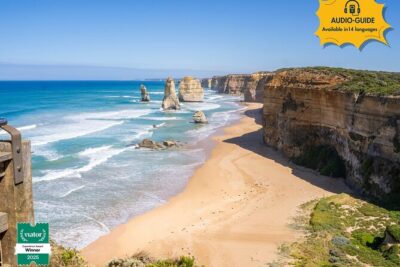
Great Ocean Road Reverse Itinerary Boutique Tour – Max 11 Guests
Read our review →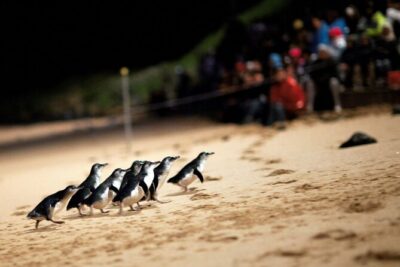
Penguin Parade, & Wildlife Encounters Eco Tour from Melbourne
Read our review →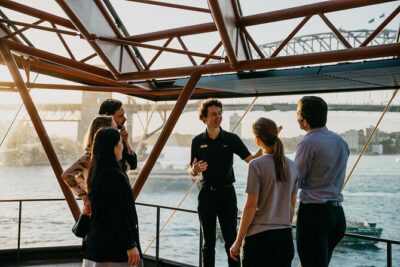
Sydney Opera House Official Guided Walking Tour
Read our review →