
Reviewed · CANBERRA TOURS
Australian Institute of Sport: The AIS Tour
Elite sport gets a practical tour here. The AIS experience lets you see where Australian athletes train, then try your own hand at Sportex challenges such as wheelchair basketball, reaction tests, and football shooting. I like the friendly guides, often athletes themselves, and the chance to glimpse real training areas. The main catch is that some interactive equipment may be out of order, and spotting famous athletes is never guaranteed.
For about two hours and $14, this is an easy Canberra activity for sports fans and families. I especially like the mix of Olympic memories, sports science, and hands-on games. If you expect constant access to active training sessions, though, the tour may feel quieter than you hoped.
In This Review
- Key points about the AIS Tour
- Starting at the AIS Visitor Centre in Bruce
- The guided walk through Australia’s sporting headquarters
- Sportex: the hands-on part families tend to enjoy
- Olympic memories, sporting legends, and sports science
- What makes the $14 price worthwhile
- Who will enjoy this most
- Practical timing and small things to know
- My verdict: book it for the setting, not celebrity sightings
- FAQ
- Where does the AIS Tour begin?
- Where does the tour finish?
- How long does the AIS Tour take?
- What is included in the ticket?
- Is food included?
- Can I see athletes training?
- What can I do in Sportex?
- Can children join the tour?
- Is the tour suitable for most people?
Key points about the AIS Tour
- See a working elite sports campus: Walk through the Australian Institute of Sport’s 160-acre grounds, training halls, accommodation areas, and specialist facilities.
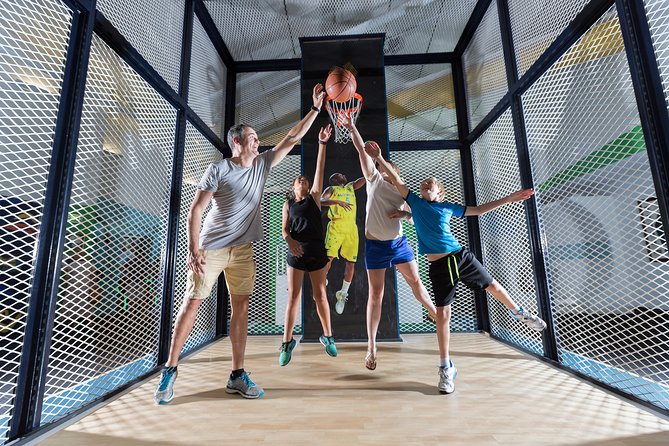
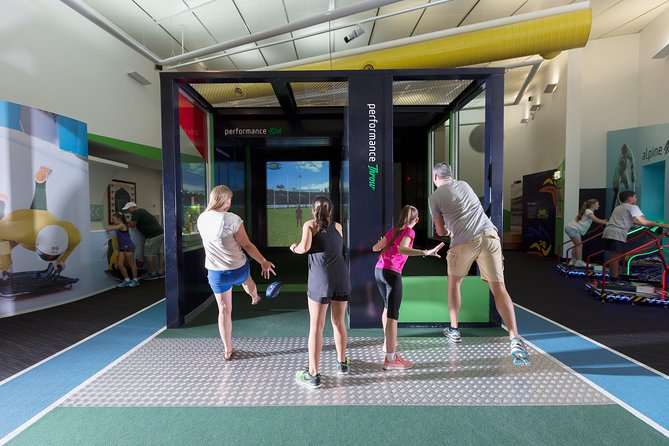
- Sportex adds real play value: Try wheelchair basketball, virtual downhill skiing, rock climbing, football penalty shootouts, reaction timers, and ball-skills tests.
- Guides bring the place to life: Some guides are current AIS athletes, giving the tour a personal link to high-level sport.
- Athlete sightings are possible, not promised: You might see gymnasts, swimmers, basketball players, or other athletes training.
- The price is family-friendly: At $14, the experience offers a guided visit plus Sportex access, making it good value if the equipment is working.
- Allow roughly two hours: The guided portion lasts about 90 minutes, with extra time for Sportex, exhibits, the café, or shop.
Starting at the AIS Visitor Centre in Bruce
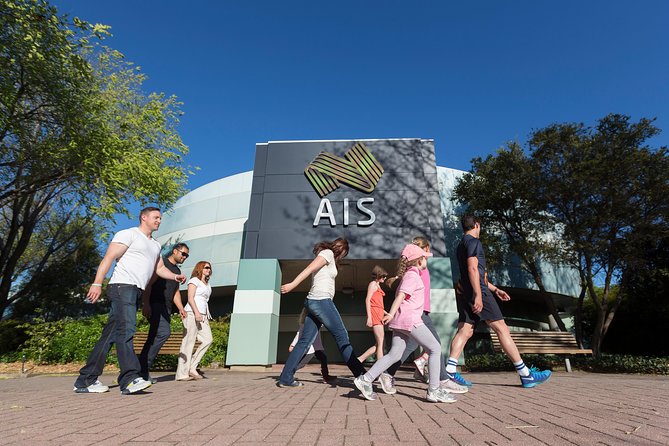
Your visit begins at the AIS Visitor Centre on Leverrier Street in Bruce, north of central Canberra. The tour ends at the same place, so you do not need to arrange a second pickup point.
A mobile ticket keeps arrival simple. The group size is capped at 15 people, which matters here. A small group gives you a better chance to hear the guide and ask questions while walking through large, sometimes spread-out facilities.
The Australian Institute of Sport is not simply a museum about Australian sport. It is an active training campus covering about 160 acres, or 65 hectares. Along with sports venues, the site includes athlete lodging, training camps, and facilities used by high-level competitors.
That working character is the appeal. You are not only looking at old medals behind glass. You are seeing the places where athletes prepare, recover, practise skills, and repeat small movements until they become automatic.
The campus is large enough to feel like its own sporting town. You will not see every corner, but the guided route gives you a useful look at several important areas and explains how the different parts fit together.
A few more Australia trips worth weighing up
- Highlights of Canberra Full Day Tour
★ 5.0 · 406 reviews - Canberra: City Highlights Day Tour with Entrance Fees
★ 4.8 · 114 reviews - Badass Women of Canberra: Meet the Women Who Shaped the Nation
★ 5.0 · 112 reviews
The guided walk through Australia’s sporting headquarters
The guided section takes about 90 minutes. A good guide makes a major difference, and the strongest guides appear to know the site from the inside rather than simply reciting dates and room names.
One guide described in the tour feedback was a current AIS athlete and former Western Australian 1500-metre swimmer. That kind of background can turn a standard walk into a more personal lesson about training, competition, and the pressure of elite sport.
You will hear about the facilities and the athletes who have trained there. The tour also gives you a sense of how much space different sports require. A swimmer, gymnast, volleyball player, basketball player, or track athlete may need very different training environments, yet all operate within the same national sporting system.
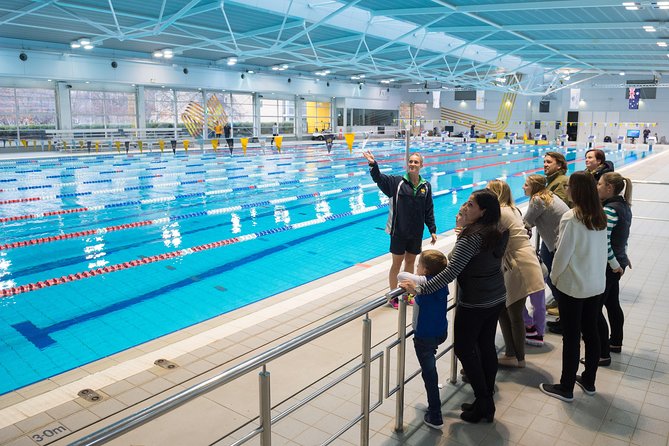
The facilities are a major draw. You may see training halls, gym spaces, aquatic facilities, and other areas used for preparation. The size of the gym has impressed many people, while the aquatic centre is a particular highlight for swimmers.
You might also catch athletes working out. A gymnast has been seen practising during a tour, and people have watched basketball and volleyball sessions in the training halls. These moments are memorable because they are unscripted. You are seeing practice, not a staged demonstration.
Still, keep your expectations realistic. The AIS is an active workplace, not an attraction where athletes perform on demand. Some tours may pass quiet halls, and there may be no famous athlete in sight. If that would disappoint you, think of any athlete sighting as a bonus rather than the main product.
The guide’s explanations are the heart of the visit. Without a strong guide, a sports hall is simply a sports hall. With clear context, you begin to understand why the facilities matter and what daily preparation at this level involves.
Sportex: the hands-on part families tend to enjoy
Sportex is included with every AIS tour and gives the visit a welcome change of pace. After hearing about elite performance, you get to test your own accuracy, speed, strength, and reaction time.
The activities include:
- Wheelchair basketball
- Virtual downhill skiing
- Rock climbing
- Football penalty shootouts
- A ball-skills tester
- A reaction timer
- Other interactive sports challenges
You do not need to be a serious athlete to enjoy this section. That is the point. Sportex lets you compare your own results with the demands of sport in a light, playful way.
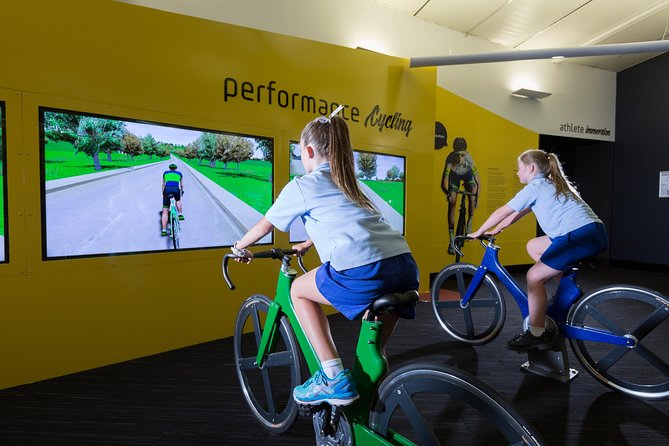
Families should allow time here. A six-year-old can enjoy the challenge room, while older children and adults can compete over reaction speed, shooting accuracy, or ball control. It works well as a shared activity because everyone can take a turn rather than simply watching one person perform.
Wheelchair basketball and wheelchair racing-style activities also give the area some educational value. They are not substitutes for understanding disability sport, but they can offer a small sense of the balance, coordination, and control involved.
The virtual downhill skiing station and rock-climbing activity add variety. You are not repeating the same test in different colours. The activities cover different types of movement, from fast reactions to strength and precision.
There is one important warning. Several activities have been reported as broken or out of order at times. When half of the available stations are unavailable, the 45-minute interactive portion loses some of its value. The equipment clearly needs regular care, so I would judge Sportex as a strong bonus, but not the sole reason to book.
Sportex was scheduled for refurbishment and closure from 23 June to 3 August 2025. If your visit falls within that period, check the current operating status before booking because the hands-on section is a key part of the experience.
Olympic memories, sporting legends, and sports science
Sportex is not the only part of the visitor area. You can also browse displays connected with the Sydney 2000 Olympics, Australian sporting heroes, famous athletes, and sports science.
The Sydney 2000 material gives the tour a clear national connection. Those Games remain a major moment in Australia’s sporting story, and the exhibits help place the AIS within that wider achievement.
The Heroes and Legends display looks back at athletes from earlier generations. I like this part because it prevents the visit from focusing only on current stars. You get a sense of how sporting success builds over time, with one generation providing examples and inspiration for the next.
Sports Science adds another useful layer. Elite performance is not just about talent or heroic effort. It involves measurement, technique, timing, physical preparation, and repeated testing. Even a short visit cannot explain the whole system, but this section points you toward the work behind the medals.
The displays can also fill time if a training venue is quiet. They give you something meaningful to examine rather than leaving the visit dependent on seeing an athlete in action.
A completely different kind of day out in Australia:
- Sydney: Opera House Guided Tour with Entrance Ticket
★ 4.8 · 8,312 reviews - All Inclusive Blue Mountain,Scenic World,Lunch,Koalas,ferry
★ 5.0 · 7,832 reviews - Great Ocean Road Small-Group Eco Tour from Melbourne
★ 5.0 · 6,607 reviews - From Melbourne: Great Ocean Road, 12 Apostles, Wildlife Tour
★ 4.7 · 6,020 reviews
What makes the $14 price worthwhile
At $14, the AIS Tour is inexpensive by Canberra attraction standards. Your ticket covers the local guide and Sportex admission, with the full visit lasting around two hours.
The value is strongest when three things come together: you get a good guide, most Sportex stations are working, and you see at least one active training session. Even without the third, the guided walk and exhibits can justify the modest price for people interested in Australian sport.
I would not call it a must-see for everyone in Canberra. Someone with little interest in sport may find the quiet halls and training explanations less gripping than the city’s political and national institutions. But for a family, swimmer, coach, sports student, Olympic fan, or curious child, the price is easy to defend.
The experience also gives you more than a conventional sports museum. You walk through a functioning precinct and try several activities yourself. That combination makes the visit feel active rather than purely observational.
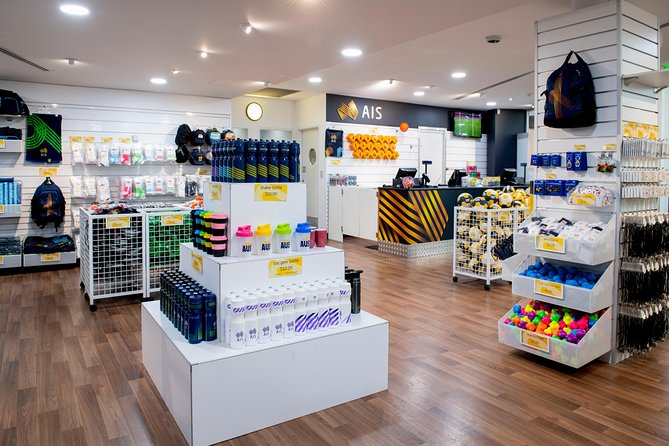
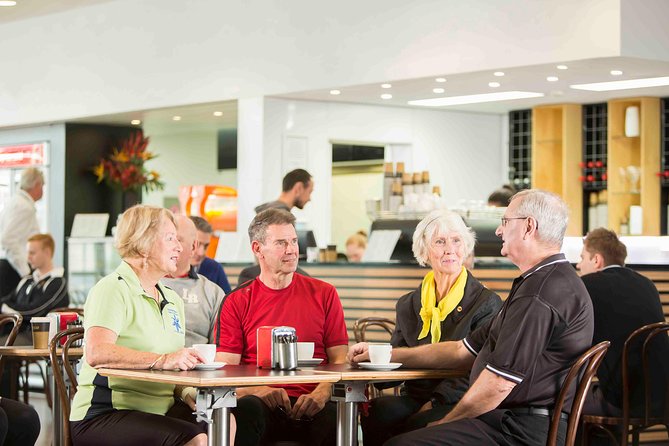
Food and drinks are not included, but you can stop at the AIS café afterward. The AIS shop offers souvenirs, and the AIS Arena hosts concerts and shows, including productions such as Cirque du Soleil. Those are separate options, not part of the tour ticket, but they may help you build a longer visit around the campus.
Who will enjoy this most
I would put the AIS Tour high on the list for families with children. The interactive challenges keep younger visitors involved, while the guided walk gives adults useful context. The capped group size also helps keep the experience manageable.
Sports enthusiasts of almost any kind should find something relevant. Swimmers may particularly enjoy seeing the aquatic centre. Gymnastics fans may be interested in the training spaces, while basketball and volleyball followers may appreciate seeing those halls in use.
It also suits people who want a different side of Canberra. The national capital is full of formal buildings, galleries, and memorials. The AIS shows another part of the country’s identity: the systems and facilities built to support elite competitors.
The tour may be less satisfying if you want guaranteed athlete access, behind-the-scenes entry into every room, or a packed schedule of demonstrations. You are seeing selected parts of a very large working campus, not receiving an all-access pass.
Children must be accompanied by an adult. Service animals are allowed, and most people can take part. The site is near public transport, though transport to and from the AIS is not included in the ticket.
Practical timing and small things to know
Plan on about two hours, although the guided walk itself is around 90 minutes. The extra time allows for Sportex, exhibits, and a possible café or shop stop.
Wear something that lets you move comfortably if you want to try the physical tests. The activities are recreational, but you may find yourself reaching, reacting, shooting, climbing, and competing with your family.
Do not build your whole day around meeting a particular athlete. Training schedules change, and the tour cannot promise who will be present. Go for the facilities and explanations, then enjoy any athlete sighting as an unexpected extra.
The ticket is mobile, and confirmation is issued at booking. It is non-refundable and cannot be changed, so check your Canberra plans before paying.
If hands-on activities matter most to you, check whether Sportex is operating and whether refurbishment work has affected the available stations. A working Sportex makes the price especially good; an equipment outage shifts more of the value onto the guide and campus walk.
My verdict: book it for the setting, not celebrity sightings
I would book the AIS Tour if you have a genuine interest in sport or need a family activity that mixes learning with play. The guide-led walk, working facilities, Olympic displays, and Sportex tests offer a good amount for $14.
I would think twice if your main goal is to see famous athletes training. That may happen, but it is not promised, and quiet halls are possible. The safest reason to book is the chance to understand Australia’s elite sporting centre and test your own skills along the way.
For most sports fans, families, and curious visitors, the low price makes this a sensible Canberra choice. Just confirm Sportex availability, keep your expectations flexible, and give the guide’s stories as much attention as the equipment.
FAQ
Where does the AIS Tour begin?
The tour begins at the AIS Visitor Centre, 26 Leverrier Street, Bruce, ACT 2617, Australia.
Where does the tour finish?
The activity ends back at the AIS Visitor Centre, the same place where it begins.
How long does the AIS Tour take?
The visit lasts about two hours in total. The guided tour portion takes about 90 minutes, with additional time for Sportex and the exhibits.
What is included in the ticket?
The ticket includes a local guide and admission to Sportex as part of the AIS tour.
Is food included?
No. Food and drinks are not included, but the AIS café is available for refreshments after the tour.
Can I see athletes training?
You might see athletes training in the facilities, but athlete sightings are not guaranteed.
What can I do in Sportex?
Sportex includes activities such as wheelchair basketball, virtual downhill skiing, rock climbing, football penalty shootouts, a ball-skills tester, and a reaction timer.
Can children join the tour?
Yes. Children can participate, but they must be accompanied by an adult.
Is the tour suitable for most people?
Most people can participate. Service animals are allowed, and the AIS is near public transportation. Transportation to and from the attraction is not included.
Just added around Australia
- J Ward Lunatic Asylum Ghost Tour★ 4.5 · 25 reviews
- Pinnacles Desert Sunset Stargazing Adventure Tour from Perth★ 5.0 · 25 reviews
- Ghost Tour & Dinner Norfolk Island★ 4.0 · 25 reviews
- Blue Mountains Small Group Tour with Lunch, Zoo and Scenic World★ 5.0 · 25 reviews
- Wine Tasting Experience★ 5.0 · 25 reviews
- Hobart Highlights Day Tour★ 4.8 · 25 reviews
- Half Day E-Bike Hire Echuca★ 5.0 · 25 reviews
- Melbourne Coffee Lovers Walk★ 4.8 · 25 reviews
Canberra Tours, compared.
Badass Women of Canberra: Meet the Women Who Shaped the Nation
Read our review →


Browse the lists this tour appears in