
Reviewed · HOBART & TASMANIA TOURS
Cradle Mountain: After Dark Tasmanian Devil Feeding Tour
Tasmanian devils save their best show for dark. At Devils@Cradle, you can watch these famously fierce marsupials feed in a small group setting, then hear the story behind their survival from a zookeeper who works with them every day. I especially like the close viewing and the strong focus on breeding and conservation, not just animal spectacle. The main drawback is simple: Cradle Mountain gets cold, wet, and windy after sunset.
For $26 per person and 90 minutes, this is one of the better-value wildlife activities around Cradle Mountain. You also get entry to the sanctuary for a self-guided visit, so arriving 30 to 45 minutes early can make the evening feel fuller. Bring warm layers, though. Several people found the cold hard to handle, even when the devils were putting on a fine show.
In This Review
- Key things to know before you go
- Why an evening at Devils@Cradle feels different
- Arriving at Cradle Mountain’s wildlife sanctuary
- The self-guided visit before feeding time
- The opening talk on the main viewing deck
- Walking through the enclosures after dark
- What you learn about conservation
- Cold, rain, and the practical comfort issue
- Is $26 good value?
- Who will enjoy this tour most?
- Should you book the after-dark feeding tour?
- FAQ
- Where does the Tasmanian devil feeding tour take place?
- How long does the experience last?
- What animals can I see?
- Is food or hotel transportation included?
- What language is the tour offered in?
- Can I cancel the booking if my plans change?
Key things to know before you go
- Feeding time is the main event: Tasmanian devils are nocturnal, so their evening energy makes this a far more active visit than a daytime animal stop.
- Three threatened carnivorous marsupials appear: The tour covers Tasmanian devils, spotted-tailed quolls, and eastern quolls.
- The guide enters the enclosures: A zookeeper feeds several animals while explaining their behavior, biology, and daily care.
- Sanctuary entry is included: You can walk through Devils@Cradle at your own pace before the guided session.
- Cold weather matters: The tour takes place outdoors after dark, and wind, rain, or snow can make the 90 minutes feel longer.
- Your $26 supports a conservation setting: The visit combines animal viewing with education and work to protect threatened species.
Why an evening at Devils@Cradle feels different
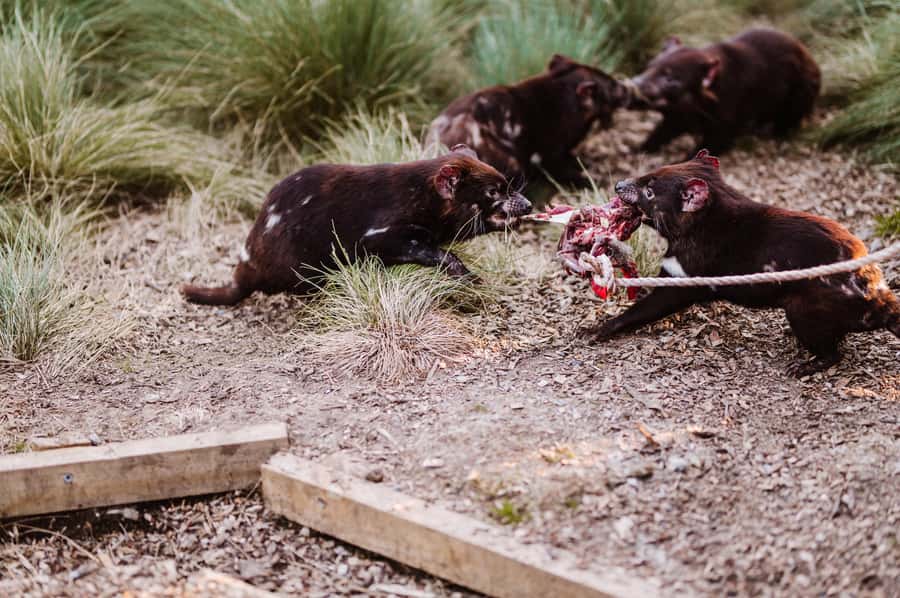
Tasmanian devils are often pictured as squat, snarling creatures with a bad attitude. That image is not entirely wrong, but it misses much of what makes them interesting. At Devils@Cradle, you see their social behavior, feeding habits, sounds, and individual quirks at close range.
The timing matters. These animals are nocturnal, and the sanctuary uses environmentally sensitive lighting so you can watch them during a more natural active period. As meal time approaches, the devils become alert and restless. Once food appears, their famous ferocity is easy to understand.
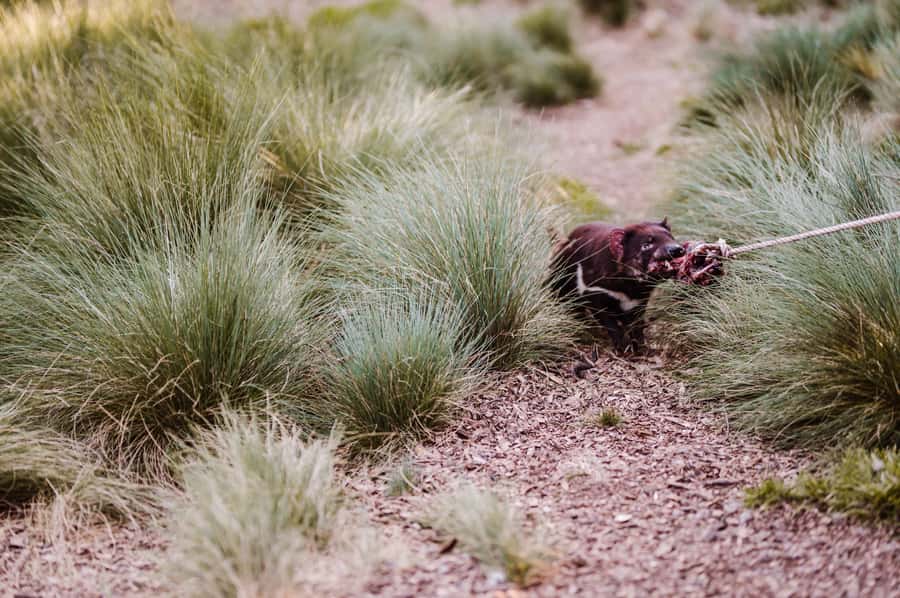
This is not a quiet walk past sleeping animals. You may see devils jostling around food, making sharp calls, and showing the group behavior that makes feeding time so memorable. The action can look rough, but the zookeeper’s commentary gives it context. You learn what is normal competition, what is social signaling, and how the animals are managed safely.
I like that the tour does not treat the devil as a novelty. The evening is also about the wider problem facing Tasmania’s carnivorous marsupials. Devils, spotted-tailed quolls, and eastern quolls are all threatened in the wild in different ways. The sanctuary’s work gives the visit a clear purpose beyond taking photographs.
A few more Australia trips worth weighing up
- Bruny Island Food, Sightseeing, Guided Lighthouse Tour & Lunch
★ 5.0 · 2,989 reviews - Gordon River Cruise departing from Strahan
★ 5.0 · 1,577 reviews - Full-Day Guided Bruny Island Tour from Hobart
★ 5.0 · 1,331 reviews
Arriving at Cradle Mountain’s wildlife sanctuary
Devils@Cradle is at the entrance to Cradle Mountain National Park, beside one of Tasmania’s best-known natural areas. You make your own way there and go to the entry gate. There is free parking on site, but hotel pickup and drop-off are not included, so you need your own transport or a separate transfer arrangement.
The tour includes sanctuary admission. That is an important part of the price because you are not limited to the guided feeding session. You can walk around the sanctuary before the start time and look at the animals at your own pace.
I would aim to arrive 30 to 45 minutes early if you want to make proper use of the included entry. That gives you time to see the sanctuary before joining the group. If you are mainly interested in the guided feeding, arriving around 10 minutes before the session may be enough, but you will have less time to explore independently.
The exact starting time depends on availability. Check the schedule when booking and plan your evening around it. At Cradle Mountain, daylight and temperatures change quickly, so do not leave your arrival until the last moment if the weather is poor.
The self-guided visit before feeding time
The first part is flexible. You can explore Devils@Cradle without a guide and get familiar with the animals before the evening presentation begins. That works well because you are free to pause, look closely, and return to any enclosure that catches your attention.
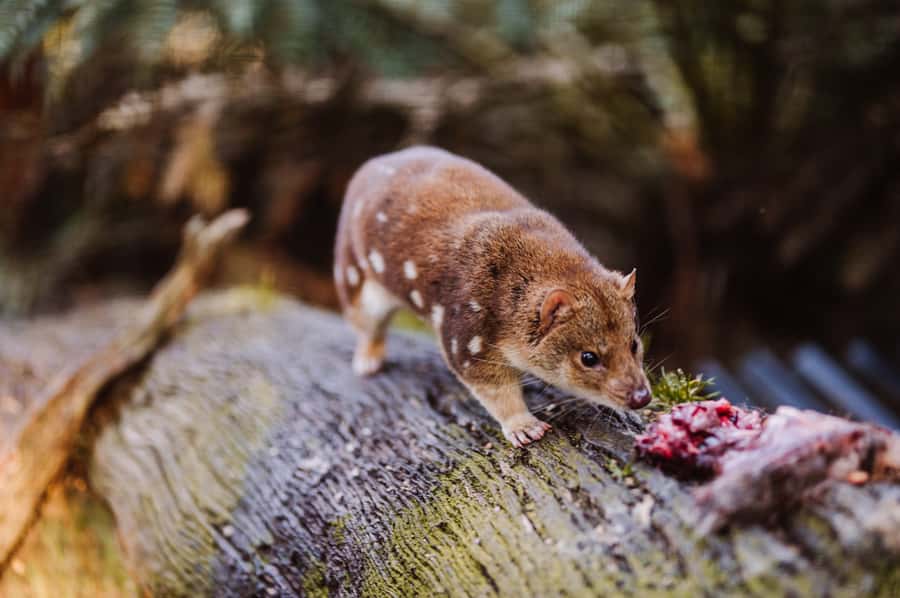
The sanctuary focuses mainly on Tasmanian devils, but it also cares for spotted-tailed quolls and eastern quolls. The quolls are easy to overlook if you arrive expecting only devils, yet they add real value to the visit. They are close relatives and help you see that Tasmania’s carnivorous marsupials are a wider family group, not a single famous species.
You may also see wombats around the sanctuary. One especially memorable animal mentioned by name is Pancake, a wombat who has become a favorite with visitors. The self-guided period gives you a chance to spot animals at your own speed before the group moves together.
This part is also useful for families. Children can look around first rather than standing still through a long opening talk. Adults can read the displays and get a basic sense of the sanctuary before the zookeeper begins the more detailed portion.
The opening talk on the main viewing deck
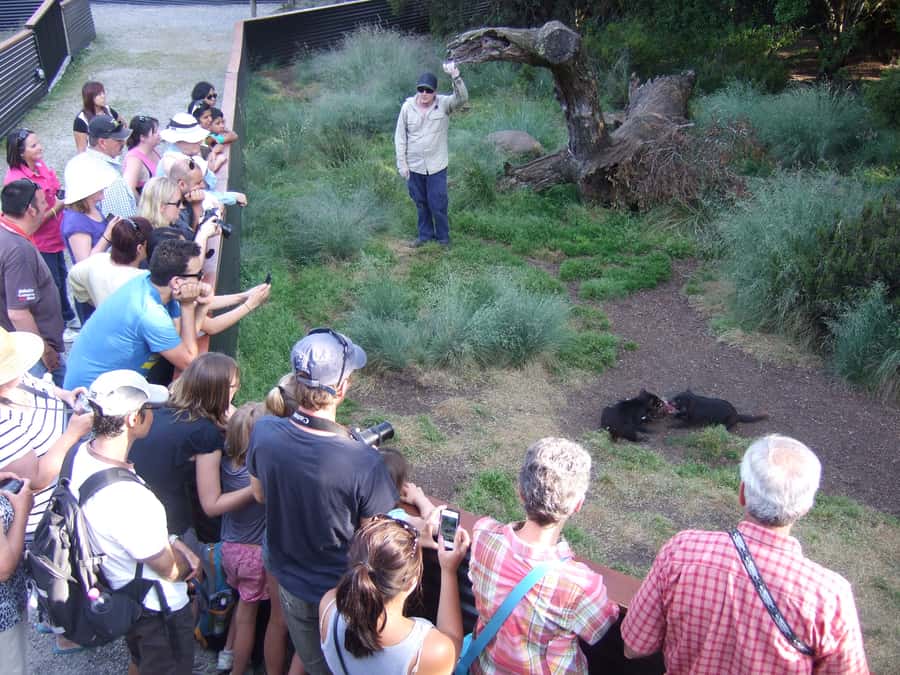
The guided tour begins on the main wildlife viewing deck with a short introduction to the three species managed at the sanctuary. This opening sets up the rest of the evening without taking too much time away from the animals.
Your guide explains the basic differences between Tasmanian devils, spotted-tailed quolls, and eastern quolls. You also hear about biology, behavior, and the threats affecting these species in Tasmania. The strongest part of the presentation is usually the guide’s ability to connect facts to what you can see in front of you.
Guides named by visitors include Prue and Renee, both praised for being warm, funny, and deeply committed to the animals. Another guide, Kay, was singled out for a polished presentation. The exact guide depends on the night, but the consistent strength is the staff’s personal connection with the animals.
That matters here. A feeding tour can easily become a quick look at animals eating, but a good keeper explains why the behavior happens. The guides answer questions, point out interactions, and keep the talk moving. Their enthusiasm also helps younger visitors stay interested when the weather turns unpleasant.
A completely different kind of day out in Australia:
- Sydney: Opera House Guided Tour with Entrance Ticket
★ 4.8 · 8,312 reviews - All Inclusive Blue Mountain,Scenic World,Lunch,Koalas,ferry
★ 5.0 · 7,832 reviews - Great Ocean Road Small-Group Eco Tour from Melbourne
★ 5.0 · 6,607 reviews - From Melbourne: Great Ocean Road, 12 Apostles, Wildlife Tour
★ 4.7 · 6,020 reviews
Walking through the enclosures after dark
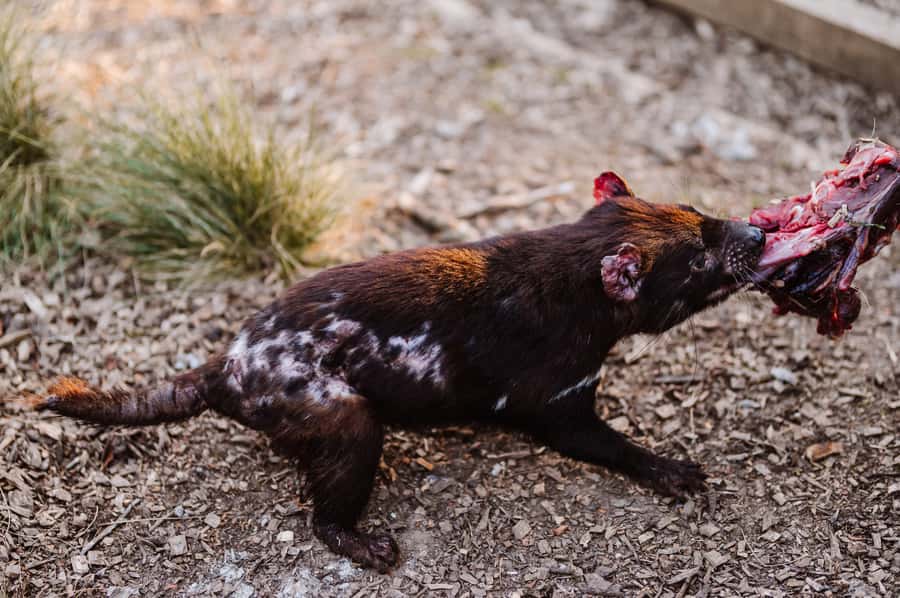
After the introduction, the larger part of the tour takes place outside within the sanctuary. You walk with the zookeeper between several enclosures while the keeper enters to feed a number of the animals.
This arrangement gives you a closer sense of the care involved. You are not simply watching food appear from a hidden chute. You see the keeper interact with the animals and learn how their individual behavior shapes the feeding routine.
The devils are the obvious stars. At meal time, their reputation for noisy, forceful feeding becomes clear. Their jaws, calls, and sudden movements make the scene lively, and the group setting lets you see how they compete and respond to one another.
The tour can also include feeding the spotted-tailed quolls and eastern quolls. That broadens the experience and prevents it from becoming a one-animal show. The quolls behave differently, and comparing them with devils helps you understand the variety within Tasmania’s carnivorous marsupial group.
One useful tip is to stay close to the guide. The group moves between enclosures, and information can be harder to hear from the back. There are repeated chances to see the devils feed, so you do not need to panic if another person gets a better position during one moment of action.
What you learn about conservation
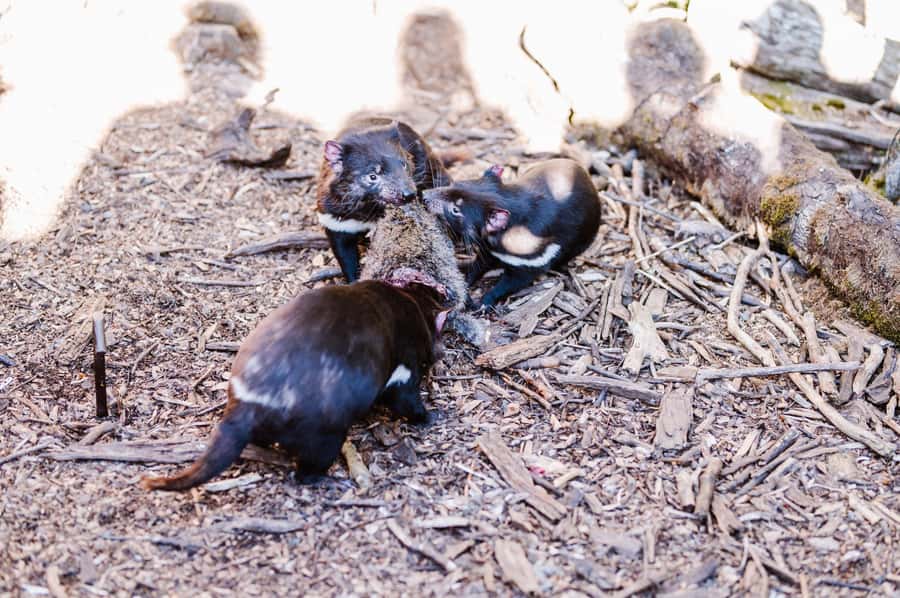
The conservation message is not an add-on. It runs through the entire tour.
Tasmanian devils face serious threats in the wild, and the sanctuary works with breeding and conservation efforts aimed at protecting the species. You learn about the biology of the animals, the pressures they face, and why managed breeding matters.
The tour also places the devil within Tasmania’s wider wildlife story. The spotted-tailed and eastern quolls are threatened too, although the problems vary between species. That wider view makes the visit more useful than a simple photo stop.
I appreciate the way the feeding behavior opens the door to conservation. Watching a devil tear into food is memorable, but the explanation afterward gives the scene meaning. You begin to see a living animal with a specific body, diet, social pattern, and role in the ecosystem, rather than a cartoon mascot.
The sanctuary setting also lets you see animals in good condition under professional care. That does not replicate seeing them in the wild, and the tour does not pretend it does. Instead, it offers access to animals that can be difficult to find in nature while supporting a place built around their care and protection.
Cold, rain, and the practical comfort issue
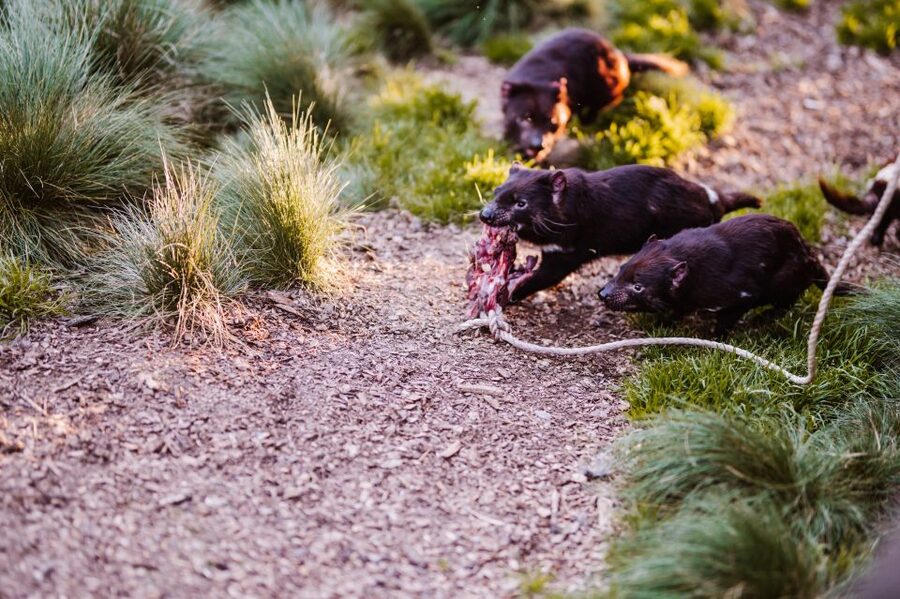
The biggest weakness is the weather. You are outside after dark, and Cradle Mountain can feel much colder once the sun disappears. Wind can cut through light clothing, while rain makes standing around less comfortable.
Several people found the tour excellent but had to shorten their time because of the cold. One person left early after the wind became too much, and another found that rain and a slow pace made the experience harder. These are fair warnings, not minor complaints.
Bring a proper warm layer, waterproof outer clothing, and shoes suited to an outdoor walk. A hat and gloves may be sensible in colder months. Even in summer, do not assume the evening will be mild. The temperature can drop while you are standing still watching a feeding session.
Rain does not necessarily ruin the tour. The animals remain interesting, and the guides continue explaining what is happening. But poor weather can affect how long you want to stand at each enclosure and how much you take in. If you are traveling with children or anyone sensitive to cold, plan clothing more carefully than you might for a daytime wildlife visit.
The pace is generally relaxed, with plenty of time to watch the animals. That suits people who want explanations and questions answered. If you prefer constant movement, the pace may feel slow, especially in cold rain.
Is $26 good value?
At $26 per person, I consider this strong value for the Cradle Mountain area. The price includes sanctuary entry, a live English-speaking guide, the feeding tour, and free onsite parking. You receive both an independent visit and a 90-minute guided experience.
The real value comes from the staff-led access to feeding time. You can see animals at the sanctuary on your own, but the zookeeper adds the details that turn observation into understanding. You learn what the animals are doing, why the feeding looks so aggressive, and how the sanctuary supports threatened species.
The price also compares well with the length of the activity. Ninety minutes is long enough to cover all three species without feeling like a rushed photo opportunity. If the weather is good, it can become one of the most memorable evenings of a Cradle Mountain stay.
Food and drinks are not included, so eat beforehand or plan something afterward. There is no hotel transportation either. Those are ordinary limits, but they matter in a remote mountain area where evening options may be limited.
Free cancellation up to 24 hours before the activity and the option to reserve now and pay later add flexibility. The tour is also listed as wheelchair accessible, which makes it suitable for more visitors, although you should still check the conditions of your own booking if you have specific mobility needs.
Who will enjoy this tour most?
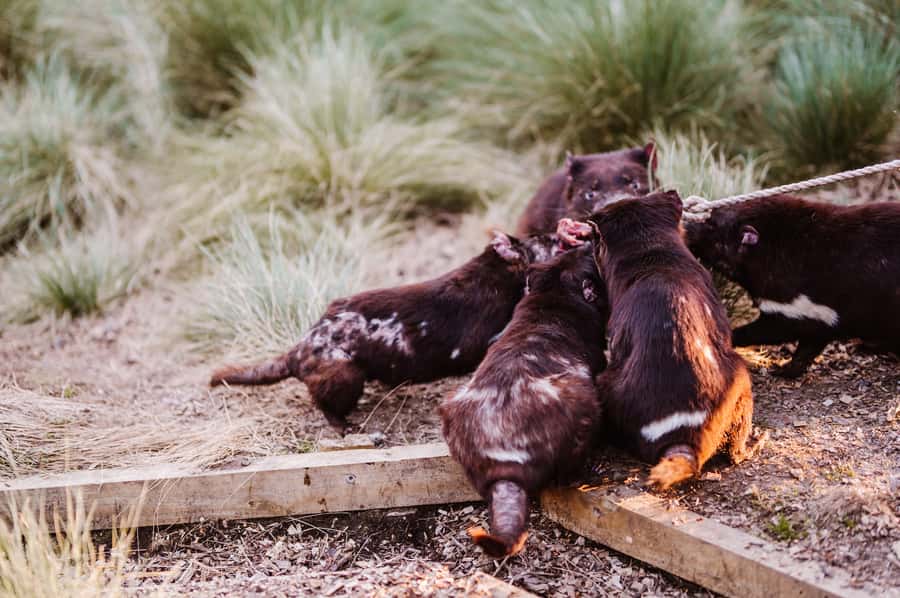
I would recommend it to anyone staying near Cradle Mountain who wants a close look at Tasmanian wildlife without committing to a long hike. It is particularly good for families, first-time visitors to Tasmania, and people who want an educational activity after a day in the national park.
Children are likely to enjoy the feeding action, especially once the devils begin competing for food. Adults get the biology and conservation material, while the guide’s humor keeps the talk from becoming too formal.
It also suits wildlife lovers who care about conservation. The experience does not simply present animals for entertainment. You hear about threatened species and the breeding work connected with their future.
You may want to skip it if you dislike standing outdoors in cold weather, or if you want to see animals in a truly wild setting. This is a sanctuary visit, so the animals live in managed enclosures. That limitation is clear, but it also makes close viewing possible.
Photographers should keep expectations sensible. The devils are active and photogenic, but it is dark, the animals move quickly, and environmentally sensitive lighting is used. You may get memorable images, but the strongest reward is watching the behavior directly.
Should you book the after-dark feeding tour?
Yes, if you are spending an evening at Cradle Mountain and can handle the weather. The combination of active devils, quolls, a 90-minute format, sanctuary admission, and passionate zookeepers makes this a worthwhile $26 activity.
Arrive early enough to explore Devils@Cradle on your own, then stay near the guide during the feeding walk. Pack warmer clothing than you think you need. If the forecast is wet or windy, the tour can still be rewarding, but comfort will shape your experience.
Book this if you want more than a quick animal sighting. Skip it only if cold, rain, or managed wildlife settings are likely to outweigh your interest in Tasmania’s remarkable carnivorous marsupials.
FAQ
Where does the Tasmanian devil feeding tour take place?
The tour takes place at Devils@Cradle Wildlife Sanctuary, located at the entrance to Cradle Mountain National Park in Tasmania. Go to the sanctuary entry gate.
How long does the experience last?
The guided after-dark feeding tour lasts 90 minutes. You can also visit the sanctuary independently before the tour begins because entry is included.
What animals can I see?
The sanctuary focuses on Tasmanian devils and also manages spotted-tailed quolls and eastern quolls. Wombats may also be seen during a visit to the sanctuary.
Is food or hotel transportation included?
No. Food and drinks are not included, and hotel pickup and drop-off are not provided. Free onsite parking is included.
What language is the tour offered in?
The tour is conducted in English with a live guide.
Can I cancel the booking if my plans change?
You can cancel up to 24 hours in advance for a full refund. A reserve-now-and-pay-later option is also available.
Just added around Australia
- From Goolwa: Half-Day Coorong Experience★ 4.9 · 129 reviews
- Great Ocean Road Lux Tour Max 11 Hotel Pickup★ 4.8 · 129 reviews
- Kangaroo Island Scenic Nature and Wildlife Day Tour★ 5.0 · 129 reviews
- Blue Mountains Small-Group Insider Tour from Sydney★ 4.5 · 130 reviews
- McLaren Vale Small Group Wine Tour★ 5.0 · 130 reviews
- Virtual Room – 40-50min VR Escape Game Adventure for 2+ Players★ 5.0 · 130 reviews
- Melbourne City Highlights Small Group Tour★ 5.0 · 131 reviews
- Darwin: Adelaide River Half-Day Jumping Crocs Cruise★ 4.3 · 130 reviews
Hobart & Tasmania Tours, compared.
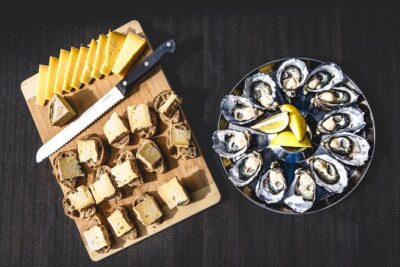
Bruny Island Food, Sightseeing, Guided Lighthouse Tour & Lunch
Read our review →
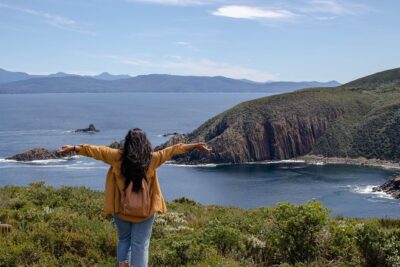
Full-Day Guided Bruny Island Tour from Hobart
Read our review →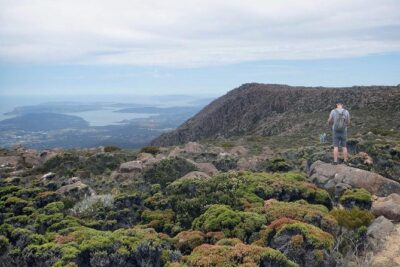
kunanyi/Mt Wellington Explorer Bus- Return Tour (2.5 hours)
Read our review →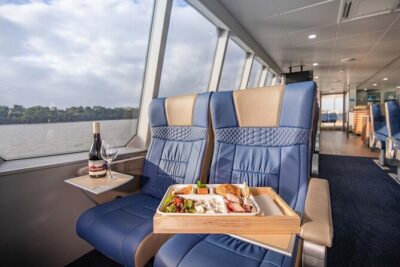
Morning World Heritage Cruise on the Gordon River from Strahan
Read our review →
Strahan: World Heritage Cruise on Gordon River with Lunch
Read our review →

Browse the lists this tour appears in