
Reviewed · CYCLING TOURS
Electric Bike Tour of Melbourne
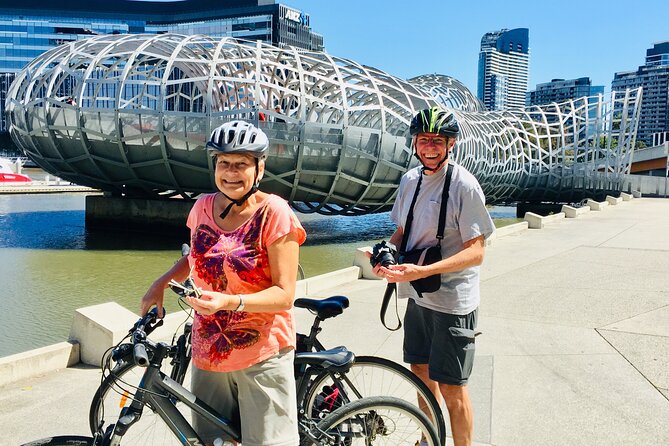
Melbourne reveals itself best on two wheels. This four-hour electric bike tour links major landmarks, leafy parks, street art, sports grounds, and nearby neighborhoods, giving you a fast but relaxed introduction to the city. About 95 percent of the route uses bike paths and park tracks, which makes the ride less stressful than a standard city cycling tour.
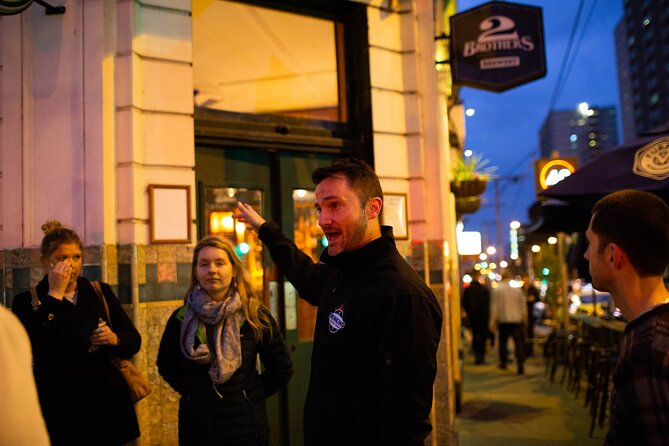
I like the easy electric assistance, especially for anyone who is not a strong cyclist. I also like the broad mix of places, from the Shrine of Remembrance and Melbourne Cricket Ground to Chinatown, Hosier Lane, and Fitzroy. Guides such as Al, Marcus, Avalon, and Freddie have earned praise for clear explanations, friendly pacing, and careful group riding.
The main consideration is the balance between cycling and commentary. One four-hour outing included only about 1.5 hours of actual riding because the guide spent so much time explaining history. That is a plus if you want a moving history lesson, but less appealing if your goal is constant cycling or a detailed look at back streets.
In This Review
- Key points to know before you book
- Why an electric bike is a smart way to see Melbourne
- Southbank and the opening conversation about Melbourne
- The Shrine of Remembrance and William Barak
- The MCG and Melbourne’s sporting identity
- Fitzroy Gardens and Cook’s Cottage
- Parliament House and the gold rush city
- Royal Exhibition Building and nineteenth-century ambition
- Lunch in North Fitzroy
- Chinatown and the gold rush connection
- Hosier Lane and Melbourne’s street art
- Federation Square and the Yarra connection
- The Immigration Museum and the ride home
- Guide quality and the value of the commentary
- Price, timing, and overall value
- Who should book this Melbourne bike tour?
- Should you book the Electric Bike Tour of Melbourne?
- FAQ
- How long does the Electric Bike Tour of Melbourne last?
- Where does the tour start and finish?
- Is an electric bike included?
- How much does the tour cost?
- Is lunch included?
- How much of the route is off roads?
- What happens if I need to cancel?
Key points to know before you book
- 95 percent off roads: Most of the route follows bike paths and parks, with limited time alongside traffic.
- Electric bikes included: The motor takes much of the strain out of a ride that may cover about 10 miles.
- Small groups of up to 10: A compact group makes it easier to stay together and hear the guide.
- Fitzroy lunch stop: You stop at a cafe in North Fitzroy, but food and drinks cost extra.
- Major city highlights in four hours: The route covers Southbank, the gardens, sporting precinct, central lanes, Chinatown, and the Yarra area.
- Strong guide reputation: Al, Marcus, Avalon, and Freddie are repeatedly praised for safety, humor, local context, and clear bike instruction.
Why an electric bike is a smart way to see Melbourne
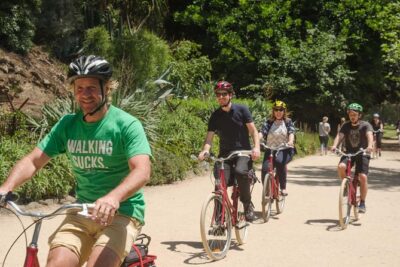
Melbourne is spread out enough that walking can leave you seeing only the central core. A bus can cover distance, but you lose the street-level feel. This tour gives you both movement and context. You pass through public spaces, cycle beside parks, and get close enough to notice how the city changes from one neighborhood to the next.
The electric motor matters. You still pedal, but the boost helps on longer stretches and takes the worry out of hills or fatigue. The experience is described as an easy ride, and one participant in their sixties found it manageable despite never having used an electric bike before. The guides provide basic instructions before setting off, so you do not need prior e-bike experience.
You should still be comfortable riding a bicycle. The route is not a sightseeing bus with a few minutes of pedaling. You need to steer, brake, watch other path users, and stay with the group. One account describes some periods of dodging pedestrians and traffic, while most other comments describe the riding as safe and straightforward. That is a fair picture of urban cycling: generally calm, but not completely free of attention and effort.
The maximum group size is 10 people. That is small enough for a guide to keep an eye on the group and adjust the pace. It also helps at stops, where a large crowd can make explanations hard to follow. Guides are frequently praised for making sure everyone stays together.
More Bike Tours in Melbourne
- Famous Melbourne City Bike Tour
★ 5.0 · 779 reviews - The Best of Melbourne Bike Tour
★ 5.0 · 671 reviews - Electric Bike Tour of Melbourne
★ 4.7 · 210 reviews
Southbank and the opening conversation about Melbourne
The tour begins at 20 Rebecca Walk in Melbourne, with a 10:00 am start. The first stop is Southbank, beside the Yarra River. Here, the guide acknowledges the Kulin Nation and explains that the land was never ceded. This gives the ride an important starting point, rather than treating Melbourne as a city that began only with European settlement.
You also hear about settler figures who helped shape Melbourne. The early discussion sets up a theme that continues through the day: Melbourne is not just grand buildings and sporting fame. Its story includes Aboriginal culture, colonization, migration, conflict, commerce, and changing public life.
Expect the first stop to be short in the listed schedule, but the guide may spend longer on the opening history. One person found the first 10 to 15 minutes too heavy on historical detail, while others praised the amount of information. If you enjoy context, this will help you understand later stops. If you prefer to get moving right away, the opening may feel slow.
The Shrine of Remembrance and William Barak
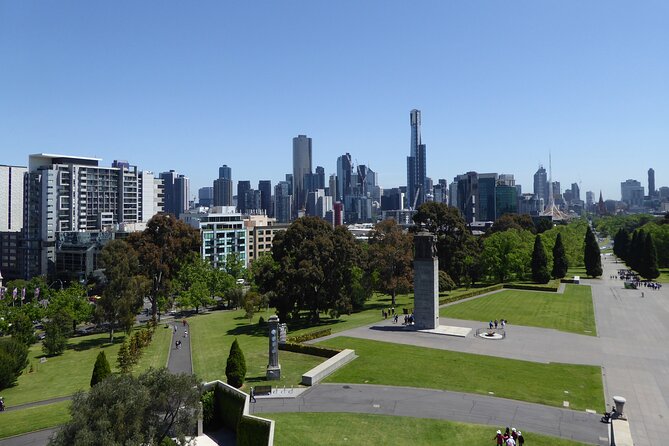
From Southbank, the ride reaches the Shrine of Remembrance, Victoria’s largest and most visited war memorial. Its scale and formal setting make it one of Melbourne’s most important civic landmarks. You stop outside rather than taking a dedicated interior visit, so think of this as an orientation stop, not a full museum experience.
The commentary also introduces William Barak, an Aboriginal leader, activist, cultural ambassador, educator, and advocate for Aboriginal rights. That pairing matters. The memorial represents Australia’s military memory, while the discussion of Barak brings attention to Aboriginal leadership and rights.
The stop works best when you listen for how the guide connects places to larger questions about identity and public memory. It may not satisfy you if you want a long visit inside the memorial, but it gives you a useful point of reference for returning later.
The MCG and Melbourne’s sporting identity
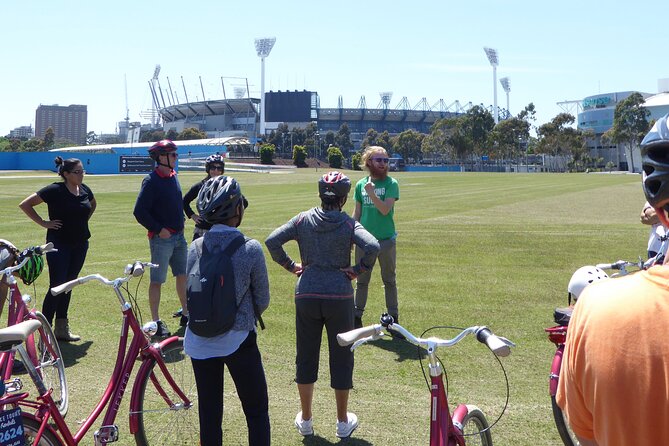
The Melbourne Cricket Ground is next. Even if you know little about cricket or Australian rules football, the stadium helps explain Melbourne’s strong sporting identity. The surrounding precinct lends weight to the city’s claim to be one of the world’s great sports centers.
The stop is brief, around five minutes in the planned itinerary. You will not get a stadium tour or a detailed look inside. Instead, the guide explains why the MCG matters and how sport fits into local life.
That short format is useful for a first visit. You see the setting, learn why it matters, and can decide if you want to return for a match or a separate stadium visit. Sports fans may wish the stop lasted longer, but the wide route means the tour has many other places to cover.
A completely different kind of day out in Melbourne:
- Great Ocean Road Small-Group Eco Tour from Melbourne
★ 5.0 · 6,607 reviews - From Melbourne: Great Ocean Road, 12 Apostles, Wildlife Tour
★ 4.7 · 6,020 reviews - Laid back, Yarra Valley Wine Tour: Wine, Cider, Gin, Beer + Choc
★ 5.0 · 4,552 reviews - Great Ocean Road Reverse Itinerary Boutique Tour – Max 11 Guests
★ 5.0 · 4,186 reviews
Fitzroy Gardens and Cook’s Cottage
Fitzroy Gardens brings a change of pace. The park offers leafy paths and a calmer setting after the formal memorial and imposing stadium. The featured attraction is Cook’s Cottage, a building shipped from England and rebuilt brick by brick in Melbourne.
The cottage is a curious piece of imported history. Its presence raises questions about the way colonial stories are presented, especially after the tour’s opening acknowledgment of the Kulin Nation. A good guide can help you hold both parts of that story at once.
The tour stops for orientation rather than an extended paid visit. If you want to enter Cook’s Cottage, check whether a separate admission is needed. The listed tour includes the guide, e-bike, and helmet, but not extra attraction tickets.
Parliament House and the gold rush city
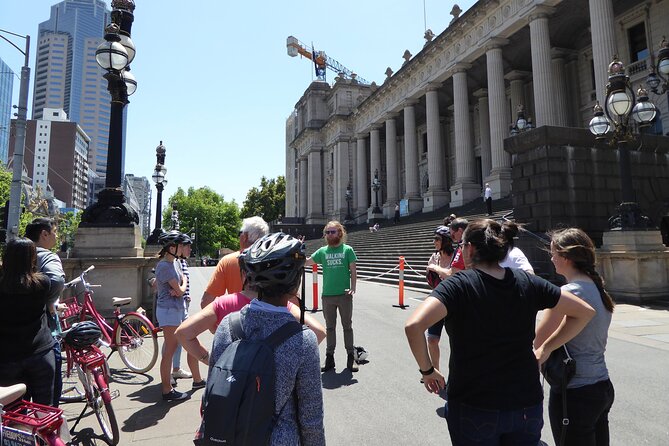
Parliament House of Victoria helps explain Melbourne’s sudden wealth during the gold rush. The building was designed to display the power and money of a city that had become one of the richest in the world.
You will likely hear how gold changed Melbourne’s buildings, ambitions, and social life. This is one reason a bike tour works well here. You can move from gardens to government buildings and see how public institutions sit close to the commercial center.
Again, the planned stop is short. You see the exterior and receive commentary, rather than taking a formal tour of the chambers. I would mark Parliament House as a return stop if architecture or Australian politics interests you.
Royal Exhibition Building and nineteenth-century ambition
The Royal Exhibition Building is another reminder of Melbourne’s wealth and ambition. It reflects the international exhibition movement of the nineteenth century, when cities used grand halls to display products, inventions, technology, ideas, and culture.
The guide uses the building to explain how Melbourne wanted to be seen by the world. That makes it more than an attractive facade. It shows the city competing for status during a period of rapid growth.
The stop is short, so do not expect an interior visit or a museum-style presentation. Still, it is an excellent place to pause and photograph. The building also gives you a useful contrast with the street art and modern public spaces later in the route.
Lunch in North Fitzroy
The lunch stop takes you to North Fitzroy, an eclectic part of the city with cafes and a more local neighborhood feel. This is one of the tour’s best practical features. You get a break from the saddle, a chance to talk with the group, and a taste of a district you might not reach on a short city visit.
Food and drinks are not included. Bring extra money, and allow for the fact that your meal choice and spending are your responsibility. The stop is described as a favorite cafe, but the specific venue may vary, so do not book this expecting a fixed menu.
The cafe break also exposes a slight mismatch in the tour’s design. A four-hour tour with lunch and frequent commentary leaves less time for uninterrupted riding. That suits you if you want a social, educational outing. It is less suitable if you want to cycle continuously through Melbourne.
Chinatown and the gold rush connection
After lunch, the route heads toward Chinatown. Melbourne’s Chinatown was established in 1851 in response to the gold rush and is described as the second oldest Chinatown in the world.
The stop adds another layer to the gold rush story. Melbourne’s wealth did not come from one group alone. Migration shaped the city’s food, commerce, streets, and population. The tour later connects this idea with the Immigration Museum, giving you a wider view of how Melbourne developed.
You will have time to look around, but do not expect a food tour or a long restaurant stop. Use the guide’s advice to note places to return to after the ride. Several guides also offer suggestions for restaurants and later activities, which is useful when you have limited time in the city.
Hosier Lane and Melbourne’s street art
Hosier Lane is the most visually immediate stop. You pull off the bike and walk your eyes along the bluestone lane, where changing layers of street art give Melbourne its international reputation for urban creativity.
The art changes, so the exact view depends on the day. The point is not a fixed collection of works but a living public space. This stop also shows how Melbourne’s identity can shift quickly, from grand exhibition halls and government buildings to rough stone lanes covered in color.
Five minutes is enough for a quick look, but not enough for a careful photography session. If street art is a priority, return independently after the tour and spend more time exploring nearby lanes.
Federation Square and the Yarra connection
Federation Square is the city’s main public meeting place and an important link between Flinders Street, the Yarra River, St Paul’s Cathedral, and nearby heritage buildings. Its angular architecture is very different from the older structures around it, which makes the square a useful lesson in Melbourne’s mix of old and new.
The guide explains the square’s role in public life and points out the surrounding landmarks. This is another orientation stop rather than a museum visit. You get a clear sense of where the river, station, cathedral, and central streets fit together.
If you are staying in central Melbourne, Federation Square is an easy place to revisit. It is also a useful reference point for planning the rest of your time.
The Immigration Museum and the ride home
The final listed stop is the Immigration Museum, viewed from outside or nearby rather than visited as a separate included admission. The commentary looks at Melbourne through the experience of its immigrants, who make up half of the population according to the tour information.
This is a strong closing idea. The route has already introduced Aboriginal history, colonial settlement, gold rush migration, public institutions, sport, and street culture. The Immigration Museum brings those threads back to the people who have shaped modern Melbourne.
The ride then returns to the Rebecca Walk meeting point. The tour ends where it began, with no hotel pickup or drop-off. Plan your transport to the starting point yourself, and allow time to arrive before 10:00 am.
Guide quality and the value of the commentary
The guides are a major part of the experience. Al is repeatedly praised for detailed explanations, careful group control, and practical suggestions for places to eat after the ride. Marcus is described as relaxed and well informed about Melbourne and Australia. Avalon receives praise for friendly, informative guiding, while Freddie is credited with making e-bike instruction easy for a first-time rider.
The commentary covers Melbourne’s founding, Aboriginal people, the Eureka Stockade, war history, gold rush wealth, migration, sport, architecture, and current city life. That is a lot for four hours. At its best, the information turns a series of landmarks into a connected story.
The tradeoff is clear. Some people may find the stops too talk-heavy, especially if English is not their first language. The tour is not designed as a silent sightseeing ride. You should book it because you want explanation, not despite it.
Price, timing, and overall value
At $85.35 per person, the tour is reasonably priced for a four-hour guided experience that includes an electric bike and helmet. You are paying for the equipment, route planning, guide, safety management, and local interpretation. The lunch is extra, as are food, drinks, attraction admissions, and transport to and from the meeting point.
The value is strongest on a first visit. You can cover the equivalent of a long walking day while still stopping often enough to understand what you are seeing. The electric motor makes the distance realistic for a wider range of fitness levels.
The value is weaker if you already know central Melbourne well or want an intensive cycling workout. You may prefer a self-guided ride, especially if you want to linger at one museum, photograph every lane, or choose your own cafes.
A mobile ticket is provided, and confirmation arrives at booking. Free cancellation is available until 24 hours before the 10:00 am start. Last-minute changes or cancellations do not qualify for a refund, and the operator may offer another date or a full refund if minimum numbers are not reached.
Who should book this Melbourne bike tour?
I would choose this tour for a first or short visit to Melbourne, especially if you want a broad orientation in one morning. It is also a good fit for couples, solo visitors, and mixed-ability groups where a standard bicycle might leave someone behind.
The e-bike is helpful for anyone in fair shape who feels unsure about a four-hour ride. The guide instruction and frequent stops make the outing approachable, but you still need basic cycling confidence.
I would think twice if you want a hard workout, a dedicated street-art tour, a food tour, or long interior visits at the landmarks. The pace is designed around explanation and sightseeing. One person found the riding time too short, while most of the praise centers on the amount of ground covered and the quality of the guiding.
Should you book the Electric Bike Tour of Melbourne?
Book it if you want to get your bearings fast, learn how Melbourne fits together, and see major sights without spending four hours on a bus. The electric boost, small group, off-road route, Fitzroy cafe break, and strong guides make this an efficient introduction to the city.
Skip it if you mainly want uninterrupted cycling or a close look at lesser-known back streets. For most first-time visitors, though, the mix of movement, history, parks, sport, street art, and local neighborhoods offers good value at $85.35. Bring money for lunch, arrive ready to ride, and expect a guided city lesson with wheels rather than a pure cycling excursion.
FAQ
How long does the Electric Bike Tour of Melbourne last?
The tour lasts approximately four hours and begins at 10:00 am.
Where does the tour start and finish?
It starts at 20 Rebecca Walk, Melbourne VIC 3000, Australia, and returns to the same meeting point.
Is an electric bike included?
Yes. The tour includes use of an electric bike and a helmet, along with a guide.
How much does the tour cost?
The listed price is $85.35 per person. Food, drinks, hotel transfers, and any extra attraction admissions are not included.
Is lunch included?
No. The tour stops at a cafe in North Fitzroy, but you pay for your own food and drinks. Bring extra cash or another accepted payment method.
How much of the route is off roads?
About 95 percent of the ride uses bike paths and parks. Some sections still involve city streets and shared areas, so you need to stay alert.
What happens if I need to cancel?
You can cancel at least 24 hours before the start time for a full refund. Cancellations or changes made less than 24 hours before the tour are not refunded or accepted.
More E-Bike Tours
- Sydney: Guided Harbour E-Bike Tour
★ 5.0 · 253 reviews - Hahndorf food and wine E-Bike Tour
★ 5.0 · 55 reviews
Just added around Melbourne
- Great Ocean Road Lux Tour Max 11 Hotel Pickup★ 4.8 · 129 reviews
- Melbourne City Highlights Small Group Tour★ 5.0 · 131 reviews
- Melbourne: Reverse Great Ocean Road 12 Apostles with Lunch★ 4.6 · 131 reviews
- Melbourne sunrise balloon flight only★ 5.0 · 132 reviews
- Yarra Valley Full Day Gourmet Food, Wine & Gin Adventure★ 5.0 · 135 reviews
- Virtual Room – 40-50min VR Escape Game Adventure for 2+ Players★ 5.0 · 136 reviews
- Melbourne Sports Experience + MCG Tour Combo★ 5.0 · 137 reviews
- Melbourne Park Tennis Experience★ 5.0 · 143 reviews
Cycling Tours, compared.

Browse the lists this tour appears in