
Reviewed · JERVIS BAY TOURS
Jervis Bay Beach Stargazing Tour with our Astronomer
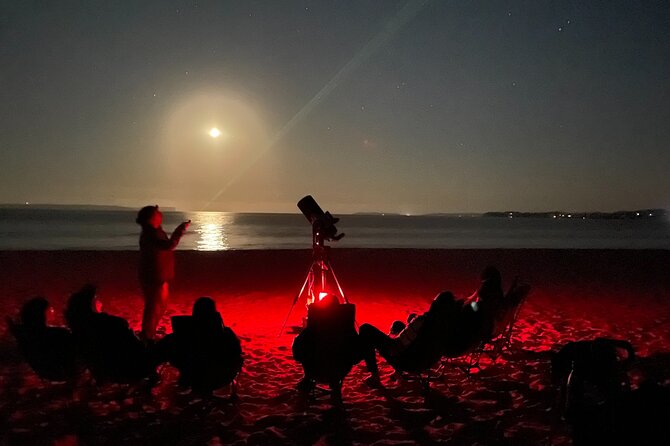
The stars are the main event. This Jervis Bay evening pairs laser-guided astronomy on Nelsons Beach with telescope views of the Moon, planets, star clusters, and the Milky Way. I like the beach setting, where waves provide the soundtrack, and the chance to look for bioluminescent plankton in the water. The main drawback is simple: cloudy weather can cancel the tour, and poor-weather refunds may not include the 5% merchant and service fees.
The 90-minute session is designed for families, couples, groups, and curious locals. I also like that the guide is an actual astrophysicist, Dimitri, with experience at Sydney Observatory, Mount John Observatory in New Zealand, and Emirates One & Only Wolgan Valley. You should book ahead, since this experience is typically reserved about 25 days before the date.
In This Review
- Key points at a glance
- Why Jervis Bay is a fine place to look up
- Meeting at Moona Moona Beach Playground
- Starting with the naked eye on Nelsons Beach
- Telescope time: what you may see
- A guide who can answer serious questions
- The possibility of glowing water
- Seating, comfort, and group size
- Weather cancellations and the refund fine print
- Is $60.97 good value?
- Who should book this Jervis Bay night?
- Should you book it?
- FAQ
- Where does the Jervis Bay Beach Stargazing Tour begin?
- Where does the tour finish?
- How long does the tour last?
- How much does the tour cost?
- How many people can join the tour?
- Who leads the astronomy session?
- What can I see through the telescope?
- Can I see bioluminescent plankton?
- What happens if the weather is poor?
- Can I cancel for a personal reason?
Key points at a glance
- Beachside naked-eye astronomy: Begin at Nelsons Beach with the sound of waves, sunset views, laser-guided star finding, and constellation stories.
- Southern Hemisphere sky: Look for celestial sights that are difficult or impossible to see from many northern locations.
- Expert-led session: Dimitri is an astrophysicist with a PhD, more than 10 years of experience, and a background in cultural astronomy.
- Telescope viewing: Depending on the date and conditions, you may see the Moon, planets, the Orion Nebula, star clusters, deep-sky objects, and the Milky Way.
- Small-group format: Numbers are capped at 20 people, allowing time for questions during the final astronomer-led discussion.
- Weather matters: Overcast skies can cancel the tour, with a rescheduled date or refund offered under the stated conditions.
Why Jervis Bay is a fine place to look up
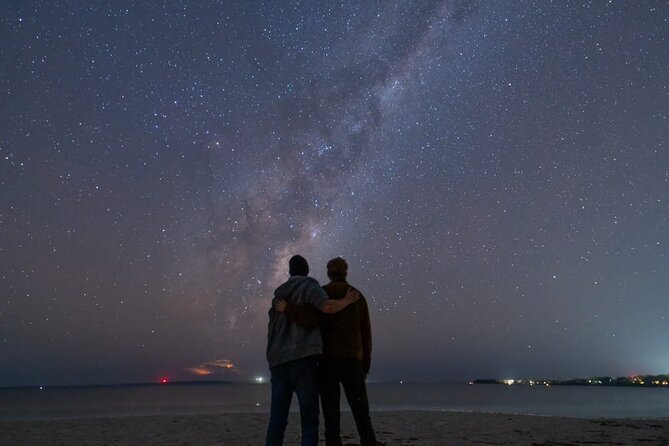
City lights flatten the night sky. At Jervis Bay, darker skies give you a better chance to see stars, constellations, and the Milky Way without needing a telescope for every sight.
That matters because the first part of this experience is not spent staring into an eyepiece. You begin with your own eyes. The guide shows you how to identify stars and constellations, then adds navigation tips and stories that help turn a scatter of lights into something you can recognize later.
The Southern Hemisphere also gives this tour a special angle. Depending on where you live, you may be seeing parts of the sky that are unfamiliar or impossible to observe from home. This is not just a standard astronomy talk moved outdoors. The location changes what you can see.
Jervis Bay also brings the coast into the experience. Instead of sitting inside a planetarium, you listen to the water while looking upward. If conditions cooperate, the guide may also check the sea for bioluminescence, sometimes called glowing water. It is not guaranteed, but it adds a small natural surprise to the night.
A few more Jervis Bay trips worth weighing up
- Jervis Bay Whale Watching Tour
★ 4.5 · 353 reviews - Jervis Bay Dolphin Cruise
★ 4.0 · 294 reviews - Half-Day Jervis Bay Sea Kayak Tour
★ 5.0 · 275 reviews
Meeting at Moona Moona Beach Playground
The tour begins at Moona Moona Beach Playground, at 7 Tapalla Avenue in Huskisson. The activity ends at the same meeting point, so you do not need to arrange a separate return transfer.
Because this is a mobile-ticket experience, confirmation is provided at booking. I would still save the meeting details on your phone and allow enough time to reach the meeting point before the session starts. The supplied information does not include hotel pickup, so plan to make your own way there.
The tour is approximately 1 hour and 30 minutes. That is long enough for a proper introduction, guided sky watching, telescope time, and questions, but short enough to fit into an evening around dinner or other Jervis Bay plans.
Starting with the naked eye on Nelsons Beach
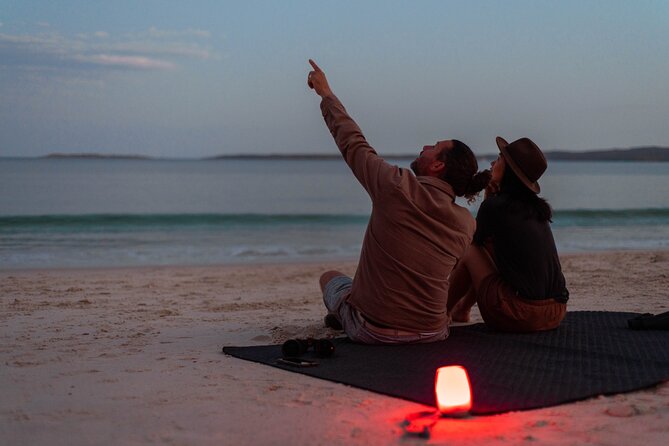
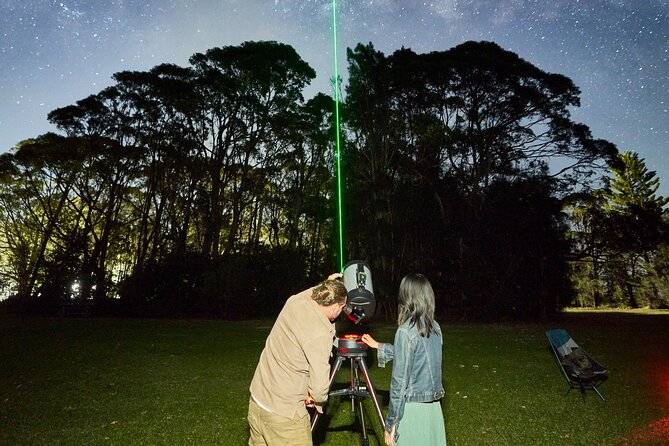
The opening beach session is one of the strongest parts of the experience. You are not rushed straight to a telescope. Instead, the guide begins by pointing out stars and constellations with a laser, explaining how to find them and offering basic navigation tips.
This approach is useful for beginners. A telescope can show you a wonderful object, but without context it may feel like a brief glimpse of a bright smudge. Learning where objects sit in the sky gives the viewing more meaning. You leave with a few practical ways to recognize the sky on your own.
The setting helps, too. Sunset views, ocean air, and wave sounds make this feel like a night at the coast rather than a classroom lesson. For a date night, that atmosphere may be the main reason to choose this tour. Families also get a clear activity with a beginning, middle, and end, rather than simply being told to look at the stars and guess what they are seeing.
The guide also includes constellation storytelling. That cultural side is worth noting. Dimitri is described as a cultural astronomer, so the session is not limited to technical facts about distance and temperature. The stories can help explain why people have used the night sky for direction, memory, and meaning.
Telescope time: what you may see
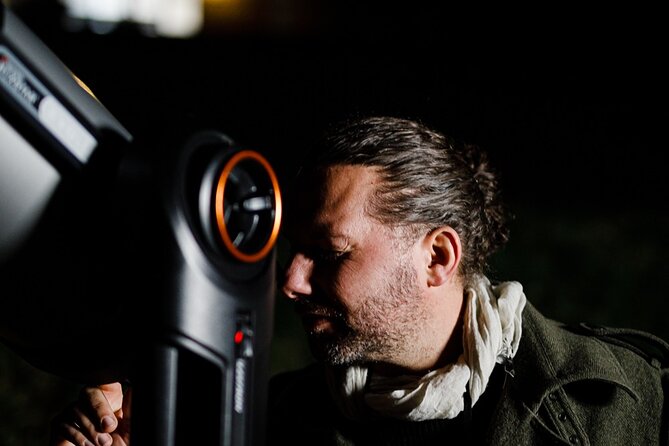
After the naked-eye session, the group moves to telescope viewing. The exact objects depend on the season, the time of night, and the conditions.
Possible sights include:
- The Moon
- Planets
- The Orion Nebula
- Star clusters
- Deep-sky objects
- The Milky Way
Do not treat this as a fixed checklist. Astronomy changes with the calendar, and clouds or haze can affect what is visible. The Moon can also alter how many faint stars you see, so the sky will not look identical on every date.
The telescope adds a different kind of interest from the beach session. With your own eyes, you learn the broad shape of the sky. Through the telescope, you get a closer look at selected objects. The Orion Nebula and star clusters can be especially rewarding targets when they are visible, while planets and the Moon offer more defined forms.
The Milky Way is also best understood as a sky feature rather than a single object to tick off. Under dark conditions, it can appear as a broad band across the sky. The darker Jervis Bay setting gives the guide a better chance to show you this structure, though no responsible astronomy tour can promise the same view every night.
You may also see shooting stars. Again, this is luck rather than a scheduled part of the program. That unpredictability is part of the fun, but you should book the tour for the guided sky experience, not for a guaranteed meteor display.
A completely different kind of day out in Jervis Bay:
- Huskisson: Dolphin Cruise & Boom Netting Experience
★ 4.3 · 112 reviews - Half Day Sea Kayak Tour from Batemans Bay with Morning Tea
★ 5.0 · 99 reviews - Jervis Bay: 2-Hour Cruise of Jervis Bay Passage
★ 4.5 · 97 reviews - Batemans Bay Glass-Bottom Kayak Tour Over 2 Relaxing Hours
★ 5.0 · 96 reviews
A guide who can answer serious questions
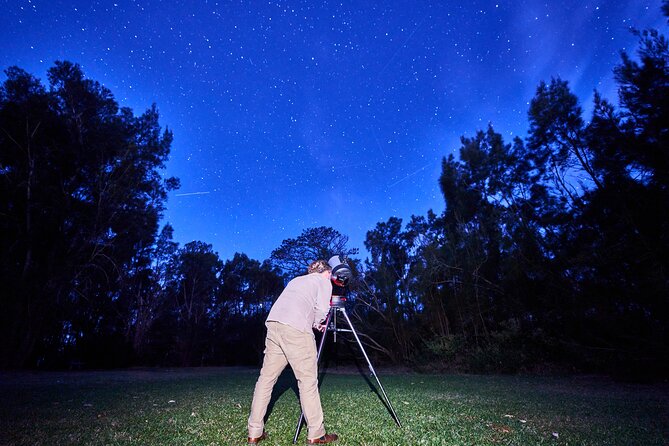
Dimitri’s background gives the experience useful weight. He is an astrophysicist with a PhD and more than 10 years of experience, including work at Sydney Observatory and Mount John Observatory at Lake Tekapo in New Zealand.
That last location is well known for its dark-sky astronomy, so the guide’s experience is relevant to what you are doing at Jervis Bay. He has also worked at Emirates One & Only Wolgan Valley and is a TEDx speaker. Those details suggest a guide comfortable with both the science and the public-speaking side of the job.
The tour ends with a question-and-answer session with an astronomer. This is a good chance to ask about objects you saw, how stars are identified, or why the Southern Hemisphere sky differs from the one you know. One session was moved to a 9:30 pm start and had a small group, giving people more room to ask questions. Timing can vary, so do not assume every departure will have the same schedule or group size.
A review of one session specifically praised Tom’s answers and knowledge. Since Dimitri is named as the main guide in the tour description but Tom led that particular session, the guide may vary. The useful point is that the experience is built around an astronomer or trained astronomy guide rather than a general beach host.
The possibility of glowing water
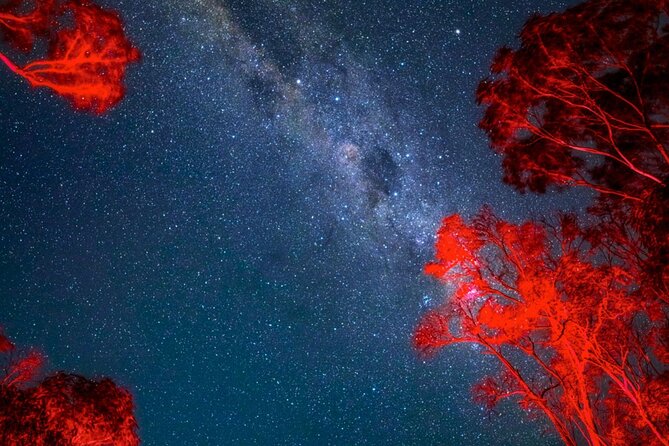
Checking for bioluminescent plankton is a distinctive extra. The tour gives you the opportunity to see glowing water in the sea, but it is not promised.
Bioluminescence depends on natural conditions. You may see it, or you may not. It should be treated as a bonus rather than a reason to expect a second major attraction alongside the stars.
Still, the possibility fits the location well. You are already standing beside the ocean at night, so the guide can connect what is happening above you with what may be happening in the water. If the plankton appears, it can make the evening feel unusually memorable. One especially positive experience included a sighting of luminescent plankton during the session.
Seating, comfort, and group size
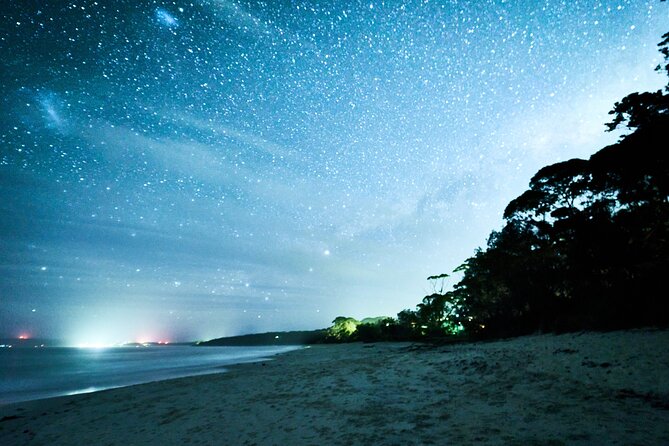
The tour is limited to a maximum of 20 people. That is not a private tour, but it is more manageable than a large coach-style group. A smaller group also makes the question period more useful, especially for children who want to ask several questions or adults with more technical interests.
Chairs and blankets were provided for at least one session. That is an important practical detail for a beach-based activity. Sitting helps during the telescope portion, and a blanket can make a difference once the evening cools.
I would still dress for outdoor conditions and avoid assuming that the coast will feel warm after sunset. The supplied information does not promise a particular clothing service or extensive shelter, so sensible layers are the safe choice.
The beach setting is part of the charm, but it also means the experience is exposed to the weather. Wind, cloud, and damp conditions can affect comfort and visibility. The provider needs clear enough skies to make the session worthwhile.
Weather cancellations and the refund fine print
Cloud cover is the main risk. The provider says it will email a cancellation notice at 3 pm on the day of the tour if the sky is overcast. You may then reschedule with a credit valid for three years in Jervis Bay or the Blue Mountains. That credit can be extended and transferred to another person as a gift card.
You may also request a refund in the event of poor weather. The weather information says the refund may exclude 5% merchant and service fees. Elsewhere, the cancellation terms say a full refund is offered when the provider cancels because of poor weather or because a minimum number of people is not reached. Since those details are not phrased identically, check the current terms before paying if the fee issue matters to you.
Your own cancellation is treated differently. The experience is described as non-refundable and not changeable for personal reasons. If you cancel or request an amendment, you should not expect your payment back.
This is a nature-dependent tour, so the weather rule is reasonable. Still, it affects your planning. If you have only one free evening in Jervis Bay, the tour carries more risk than an indoor attraction. If you have several nights, the long credit period and transfer option make the booking easier to justify.
Is $60.97 good value?
At $60.97 per person, this is not the cheapest way to look at stars. You could walk onto a beach and look upward for free.
The fee pays for more than access to the sand. You are paying for a guided introduction to the Southern Sky, a laser-led explanation of constellations, telescope time, an experienced astronomer, chairs and blankets in at least some sessions, and a final question period. You also get the chance to look for bioluminescence and shooting stars.
I think the price is fair if you want to understand what you are seeing. It is less convincing if you already know the constellations, own astronomy equipment, and are happy to organize your own night under the sky.
The 4.8 rating from 35 reviews and 97% recommendation figure support the idea that the tour usually delivers a strong evening when the weather works. The high praise focuses on smooth communication, a well-marked stargazing spot, helpful staff, chairs, blankets, and the special beach setting.
The lower rating in the supplied feedback came from a weather cancellation and concern about the service fee deduction, not from poor astronomy instruction. That distinction matters. The experience appears to be well received when it runs, but the weather and refund terms remain part of the value calculation.
Who should book this Jervis Bay night?
I would choose this experience for:
- Families wanting a structured activity suitable for different ages
- Couples looking for an unusual date night
- First-time stargazers who want help identifying what they see
- Visitors interested in Southern Hemisphere astronomy
- Groups who enjoy asking questions rather than simply taking photographs
- Locals who want a guided night under a dark sky
It may be less suitable if you need guaranteed clear skies, dislike sitting outdoors at night, or want a private astronomy session. The maximum group size is 20, and the guide may vary between departures.
For children, the laser-guided explanations and possibility of glowing water can keep the evening engaging. For adults, the telescope objects and question period add more depth. For couples, the ocean setting gives the experience a calm rhythm that a standard observatory visit may not offer.
The tour has also won Bronze awards at the 2022 and 2023 NSW Tourism Awards. Awards do not replace a clear sky or guarantee a perfect night, but they add useful evidence that the operation has earned recognition within New South Wales tourism.
Should you book it?
Book it if you want a guided, coastal astronomy experience rather than a simple stargazing stop. The best reasons are the dark Jervis Bay sky, the Southern Hemisphere focus, the beach atmosphere, and access to an astronomer who can explain what you are seeing in plain terms.
I would book several weeks ahead, especially since dates are commonly reserved around 25 days in advance. If your schedule allows, keep another evening free in case cloud forces a change.
Skip it if your main goal is a guaranteed list of telescope sights or a fully indoor activity. For everyone else, this is a good-value night out when the forecast cooperates, with enough science for curious adults and enough wonder for children.
FAQ
Where does the Jervis Bay Beach Stargazing Tour begin?
It begins at Moona Moona Beach Playground, 7 Tapalla Avenue, Huskisson, New South Wales 2540.
Where does the tour finish?
The activity ends back at the meeting point.
How long does the tour last?
The tour lasts approximately 1 hour and 30 minutes.
How much does the tour cost?
The listed price is $60.97 per person.
How many people can join the tour?
The activity has a maximum of 20 participants.
Who leads the astronomy session?
Dimitri is identified as the astronomer and guide. He is an astrophysicist with a PhD and more than 10 years of experience. A supplied review also refers to a session led by Tom, so the guide may vary.
What can I see through the telescope?
Depending on the time of year and conditions, you may see the Moon, planets, the Orion Nebula, star clusters, deep-sky objects, and the Milky Way.
Can I see bioluminescent plankton?
The tour includes an opportunity to check for bioluminescence in the sea, but it is a natural event and is not guaranteed.
What happens if the weather is poor?
If overcast skies make the tour unsuitable, the provider may cancel and offer a different date or a refund under the stated conditions. A weather cancellation email is sent at 3 pm on the day of the tour.
Can I cancel for a personal reason?
The experience is described as non-refundable and cannot be changed for personal reasons. If you cancel or request an amendment, the amount paid is not refunded.
Just added around Jervis Bay
- Eden: 2-Hour Highlights Tour, Nature, Beaches and Lookouts★ 4.5 · 28 reviews
- 3 Day Murramarang Coast Journey from Batemans Bay with Meals and Villa Accom★ 5.0 · 29 reviews
- Narooma – E-Bike Hire 2 Hour Rental★ 5.0 · 35 reviews
- Jervis Bay: 2-Hour Sunset River Cruise★ 4.5 · 61 reviews
- Batemans Bay Oyster Tasting Kayak Tour★ 5.0 · 83 reviews
- Jervis Bay Passage Tour★ 4.5 · 94 reviews
- Batemans Bay Glass-Bottom Kayak Tour Over 2 Relaxing Hours★ 5.0 · 96 reviews
- Jervis Bay: 2-Hour Cruise of Jervis Bay Passage★ 4.5 · 97 reviews
Jervis Bay Tours, compared.
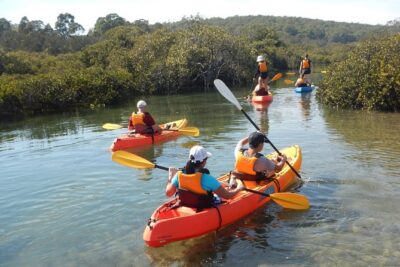
Half Day Sea Kayak Tour from Batemans Bay with Morning Tea
Read our review →
Batemans Bay Glass-Bottom Kayak Tour Over 2 Relaxing Hours
Read our review →
Browse the lists this tour appears in