
Reviewed · GREAT BARRIER REEF TRIPS
Scuba Dive the S.S. Yongala Wreck on the Great Barrier Reef.
A shipwreck can turn a reef day serious. The SS Yongala offers a rare mix of history, coral, and large marine life, all reached on a full-day trip from Townsville or Magnetic Island. I like the chance to complete two open-water descents at one of the world’s best-known wreck sites, and I like that tanks, weights, equipment, lunch, and return transport are included. The main caution is that this is not a casual outing: you need a recognised certification, at least six logged descents, and reasonable fitness.
I also like the way the wreck’s position concentrates marine life in one place. Turtles, sea snakes, giant trevally, Queensland gropers, eagle rays, manta rays, sharks, and tropical fish are all possible here. The trade-off is a long day, an early start, and sometimes rough surface conditions. One sharply negative account raised concerns about boat organization, equipment, and a briefing held over a loud engine, while a highly positive account praised the crew’s safety care, site explanation, and history talk.
In This Review
- Key things to know before booking
- Why the SS Yongala is such a special underwater site
- A 7:00 am start from Townsville
- Two descents, one historic wreck
- Equipment, food, and what you need to carry
- Marine life is the main reward
- Is the $350.73 price fair?
- What kind of diver will enjoy this most?
- Practical ways to make the day better
- Should you book the SS Yongala trip?
- FAQ
- Where does the SS Yongala tour start?
- Does the tour include transport?
- How many underwater sessions are included?
- What certification do I need?
- Do divers with fewer than 15 logged descents need a guide?
- Is there an extra charge for deeper descents?
- What happens if the trip is canceled because of weather?
Key things to know before booking
- The SS Yongala rests between 15 and 29 metres below the surface, so your certification and logged experience matter.
- Two certified open-water descents are included, making this a strong choice if you have only one day for the wreck and reef.
- The wreck is the sole large reef structure in the area, which helps explain the concentration of fish and larger animals.
- A guide is compulsory with fewer than 15 logged descents, at an extra A$20 per person.
- A deep adventure supplement of A$35 applies if your experience limit is below 18 metres.
- Humpback whales may be seen in cooler months, although wildlife sightings are never guaranteed.
Why the SS Yongala is such a special underwater site
The SS Yongala is not simply a sunken object placed on a reef tour route. It is a protected historic shipwreck inside the World Heritage-listed Great Barrier Reef Marine Park. The wreck is also protected under Australia’s Historic Shipwreck Act of 1976, so you are visiting a site with both environmental and cultural importance.
The ship rests from about 15 to 29 metres down. That depth gives the outing a more serious character than a shallow reef swim. You need good buoyancy control, comfort in open water, and enough experience to manage your air, depth, and position around a large structure.
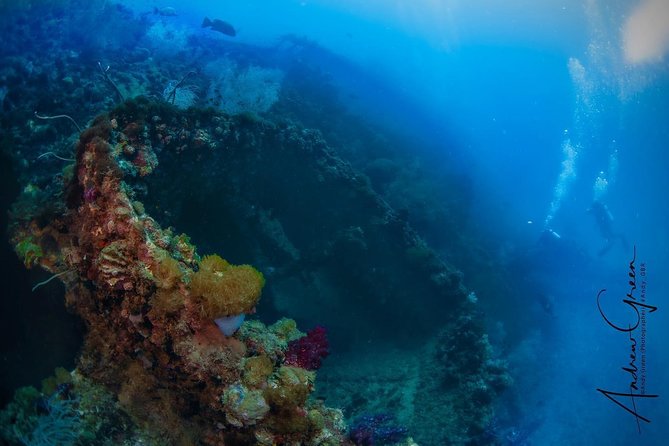
The wreck attracts marine life because it is the only large reef structure in the immediate area. Fish and other animals use it for shelter, feeding, and movement through the surrounding water. That makes the site unusually concentrated. Instead of searching a broad patch of seabed, you may find the action gathered around the wreck itself.
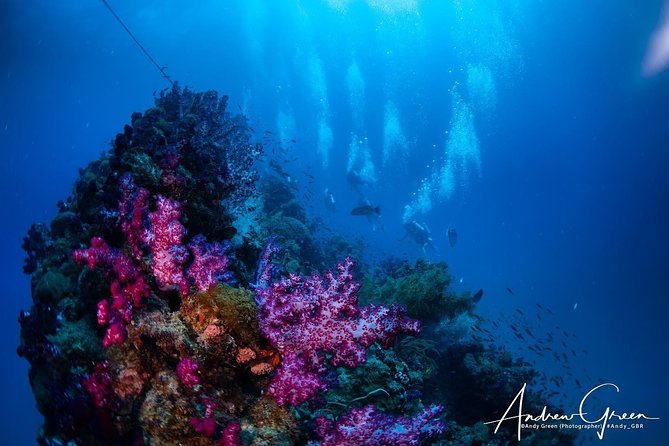
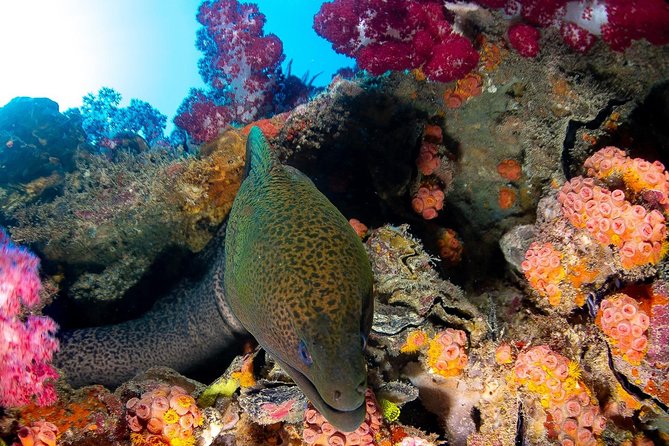
The possible sightings are a major reason to choose this trip. You might see turtles, sea snakes, giant trevally, Queensland gropers, eagle rays, manta rays, sharks, and schools of smaller tropical fish. Coral grows across parts of the wreck, adding colour and texture to the metal structure.
You may also see humpback whales during their annual migration in the cooler months. Tail slaps, pectoral fin waves, and breaches are all possible from the boat. Keep your expectations sensible, though. A whale sighting is a bonus, not a promise, and conditions at sea will affect how much time you can comfortably spend watching.
More ways to get out on the Great Barrier Reef:
- Great Barrier Reef Snorkeling and Diving Cruise from Cairns
★ 4.5 · 3,714 reviews - From Cairns: Great Barrier Reef Cruise by Premium Catamaran
★ 4.9 · 3,567 reviews - Cairns: Outer Edges of The Great Barrier Reef Scenic Flight
★ 4.9 · 2,912 reviews
A 7:00 am start from Townsville
The day begins at Fuel Wharf on Mariner’s Peninsula, at 29 Mariners Drive in Townsville City. You can also arrange transfer from Magnetic Island, which is useful if that is where you are staying. The activity ends back at the same meeting point after roughly ten hours.
The early start is practical rather than glamorous. The wreck is not a quick hop from central Townsville, and the transfer is part of what makes this possible as a single-day experience. I would keep the morning free and avoid planning an evening commitment. Delays can happen on any full-day marine trip, especially when weather affects the schedule.
Round-trip transport is included, so you do not need to arrange your own way to the launch point or work out how to return after two strenuous underwater sessions. That is a real convenience, especially if you are carrying personal clothing, a towel, and camera equipment.
The group can have up to 21 people. That is not a tiny private boat, so you should expect a shared operation rather than personal attention at every moment. The crew’s organization matters here. One very critical account described a hectic boat, a briefing made difficult by engine noise, and dissatisfaction with equipment and guidance. Those are serious concerns for any scuba operator, even at a famous site.
At the same time, a very positive account praised the crew’s care when surface water became choppy. The staff reportedly checked on the participant’s condition and safety, then explained the site, its history, and its wildlife well. That contrast suggests that your experience may depend heavily on sea conditions, crew communication, and how smoothly the boat is running that day.
Two descents, one historic wreck
The listed program focuses on the SS Yongala site, with two certified open-water descents during the day. The appeal is simple: you get more than a brief look at the wreck, but you do not need to book a second day to make the long trip worthwhile.
Your first descent should give you time to get oriented. The wreck is large, the depth is significant, and the marine life can compete for your attention. The history talk and environmental education are useful here because they help turn the site from a collection of metal shapes into a shipwreck with a human story and a protected place in the marine park.
The second descent gives you another chance to see sections you missed, watch animal behaviour, and settle into the site. Conditions can change between descents. Visibility, current, light, and the movement of marine life are not fixed. Two sessions also mean you do not have to treat the first few minutes as your only opportunity.
You should not assume that two descents make the trip easy. This remains an open-water scuba outing at a wreck that reaches 29 metres. Surface chop can be uncomfortable, and getting in and out of the water takes physical effort. The tour asks for a moderate fitness level, which is a useful warning rather than a formality.
If you have fewer than 15 logged descents, a guide is compulsory and costs an additional A$20 per person, paid directly on the day. You also need at least six logged descents before visiting this site. If your current experience limit is below 18 metres, the A$35 Adventure Dive Deep supplement is mandatory.
Bring proof of certification with you. The crew checks it onboard, and you must provide your certification level, total logged descents, and date of your most recent descent when booking. These rules may feel strict, but they fit the depth and conditions of the wreck.
Equipment, food, and what you need to carry
The tour includes tanks, weights, and scuba equipment. That is helpful if you are visiting Townsville without a full kit, or if airline baggage makes bringing your own equipment impractical. It also reduces the number of separate arrangements you need to make before the day.
Still, included equipment does not remove the need to prepare. Tell the operator your height, weight, shoe size, number of logged descents, and most recent descent date. Accurate details help the crew plan equipment and assess the group.
Wear your swimwear beneath your clothes and bring a towel. You should also pack a hat, sun protection, a camera, and a light jumper during cooler months. The boat can feel exposed after time in the water, even in a warm Queensland climate.
Food and drinks are included. Lunch is served onboard, and iced water, cordial, tea, and coffee are available through the day. That matters because you are away from shore for many hours. You can focus on the site instead of arranging food between sessions.
If you have specific dietary needs, the supplied details do not explain how these are handled. Ask before departure rather than assuming lunch can be changed. The same advice applies to personal equipment preferences. The package covers standard scuba equipment, but the information does not promise a particular brand, model, or custom setup.
More diving trips in Australia:
- Cairns: Premium Snorkelling and Diving Reef Day Trip
★ 4.7 · 1,528 reviews - Cairns: Great Barrier Reef Premium Diving Full Day Tour
★ 4.7 · 792 reviews - Cairns: Best Value All-inclusive Reef Trip With Scuba Dive
★ 4.4 · 307 reviews - Poseidon Outer Great Barrier Reef Snorkeling and Diving Cruise from Port Douglas
★ 4.5 · 101 reviews
Marine life is the main reward
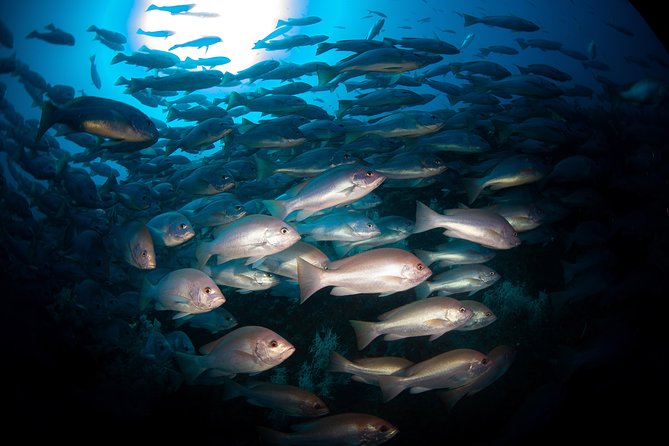
The wreck’s greatest strength is the life around it. Many reef excursions offer attractive coral and small fish, but the Yongala is known for bringing larger animals into the same area. The possibility of seeing a Queensland groper or a manta ray gives the site a different scale from a basic introductory reef visit.
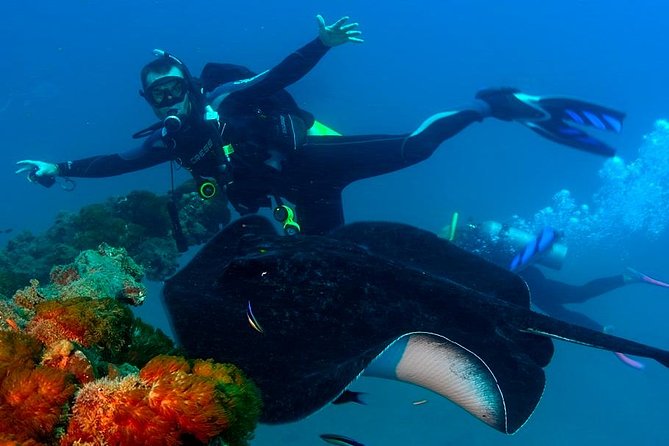
Turtles and sea snakes add another layer of interest. Eagle rays may pass over the wreck, while giant trevally and sharks can make the scene feel more wild and less like an aquarium. You may also see countless smaller tropical fish moving through coral-covered sections of the ship.
That wording matters: these are possible sightings, not guaranteed features of every descent. Marine life responds to season, conditions, visibility, and chance. The best approach is to appreciate the wreck itself and treat large-animal encounters as an extra reward.
The cooler months add the possibility of humpback whales during migration. Even if you do not descend at the moment a whale appears, surface watching can become a memorable part of the day. The boat crew’s awareness and your patience will matter more than any promise in a schedule.
Is the $350.73 price fair?
At $350.73 per person, this is a major activity expense. The value depends on how you measure the day. You are paying for transport from Townsville or Magnetic Island, two certified descents, tanks, weights, scuba equipment, lunch, drinks, crew support, and the opportunity to visit a protected wreck that is not easy to reach independently.
For a certified diver with only one day available, the package is efficient. You avoid paying separately for a boat transfer, equipment rental, meals, and a second excursion to see both the wreck and reef environment. The two-session format also gives you more time at the site than a single short descent.
The price is less attractive if you already own all your equipment, have plenty of time, or mainly want a shallow reef experience. The required A$20 guide fee and possible A$35 deep supplement can raise the final cost. Ask for the total payable amount if either charge applies to you.
I would also factor in the cost of a wasted day if you are poorly prepared for the conditions. This is not the place to discover that your certification is missing, your last descent was too long ago for comfort, or your fitness is not ready for a full day at sea.
What kind of diver will enjoy this most?
This tour suits a certified Open Water Diver who has at least six logged descents and is comfortable with a deeper wreck site. It is especially useful if you want the historic Yongala and Great Barrier Reef marine life in one day, rather than splitting them across separate bookings.
A diver with fewer than 15 logged descents can still participate, but must pay for a guide. That may be a good investment if you want more help with navigation and site awareness. You should be honest about your experience when booking and onboard.
This is not suitable for a first scuba experience. It is also a poor match if you dislike boat travel, struggle in choppy surface water, or want a relaxed beach-day pace. The moderate fitness requirement, early meeting time, depth, and two open-water sessions all point to an active day.
The trip can work well for a small group of certified friends with different experience levels, provided everyone understands the guide and depth rules. The maximum group size of 21 means you should not expect a private charter atmosphere.
Practical ways to make the day better
Arrive ready to move at the 7:00 am meeting time. Have your certification proof available, and make sure the operator has your height, weight, shoe size, logged descent count, and recent-dive date before the morning begins.
Use the history talk to give the wreck context before entering the water. It can help you notice details that would otherwise look like ordinary debris. Listen closely to the environmental guidance as well, since the wreck sits in a protected marine area.
Pay attention to the weather forecast, but remember that marine conditions can still change. Bring the recommended clothing, especially a light jumper in cooler months. Sun protection remains important even when the sky looks mild.
If you are sensitive to motion or worried about surface chop, ask the operator what conditions are expected before departure. One positive account specifically praised the crew for checking on safety when the water became rough, but you should still know your own limits.
The cancellation terms are friendly if your plans change. You can receive a full refund by canceling at least 24 hours before the start time. Changes or cancellations inside that window are not accepted for a refund. If poor weather cancels the trip, you are offered another date or a full refund. The same applies if the minimum number of participants is not met.
Should you book the SS Yongala trip?
I would book this for an appropriately qualified diver who wants a serious wreck experience and has just one day in the Townsville area. The site’s depth, protection, history, and concentration of marine life give it much more character than a standard reef outing. Included equipment, lunch, drinks, and transport also make the $350.73 price easier to justify.
I would pause if your recent scuba experience is limited, your certification only covers shallower water, or you want a quiet, highly personal boat trip. Check the extra guide and deep-water charges, prepare for a long day, and accept that sea conditions and wildlife are outside anyone’s control.
If you meet the experience rules and the Yongala is high on your list, this is a practical way to reach it. Go for the wreck first, the animals second, and the whale sightings as a lucky extra.
FAQ
Where does the SS Yongala tour start?
The meeting point is Fuel Wharf, Mariner’s Peninsula Subsidiary No. 104, 29 Mariners Drive, Townsville City, Queensland 4810. The listed start time is 7:00 am.
Does the tour include transport?
Yes. Return transport from Townsville or Magnetic Island to the Yongala site is included, and the activity ends back at the meeting point.
How many underwater sessions are included?
The tour includes two certified open-water scuba descents at the SS Yongala site.
What certification do I need?
You must be a certified diver, with Open Water Diver as the minimum qualification. You also need at least six logged descents before visiting the site.
Do divers with fewer than 15 logged descents need a guide?
Yes. A guide is compulsory for divers with fewer than 15 logged descents. The additional charge is A$20 per person, payable directly on the day.
Is there an extra charge for deeper descents?
Yes. An A$35 Adventure Dive Deep charge is mandatory if your experience limit is below 18 metres.
What happens if the trip is canceled because of weather?
You will be offered another date or a full refund. The same options apply if the minimum number of participants is not reached.
Just added around Australia
- J Ward Lunatic Asylum Ghost Tour★ 4.5 · 25 reviews
- Pinnacles Desert Sunset Stargazing Adventure Tour from Perth★ 5.0 · 25 reviews
- Blue Mountains Small Group Tour with Lunch, Zoo and Scenic World★ 5.0 · 25 reviews
- Ghost Tour & Dinner Norfolk Island★ 4.0 · 25 reviews
- Hobart Highlights Day Tour★ 4.8 · 25 reviews
- Half Day E-Bike Hire Echuca★ 5.0 · 25 reviews
- Wine Tasting Experience★ 5.0 · 25 reviews
- Melbourne Coffee Lovers Walk★ 4.8 · 25 reviews
Great Barrier Reef Trips, compared.
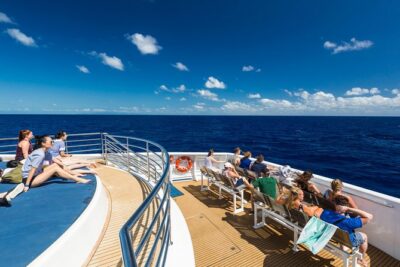
Great Barrier Reef Snorkeling and Diving Cruise from Cairns
Read our review →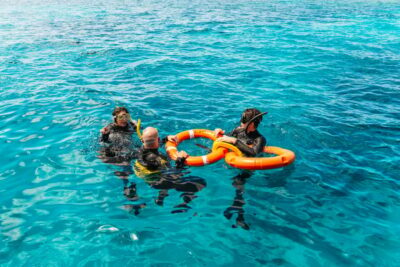
Great Barrier Reef Cruise by Premium Catamaran
Read our review →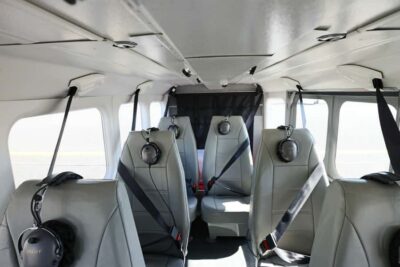
Outer Edges of The Great Barrier Reef Scenic Flight
Read our review →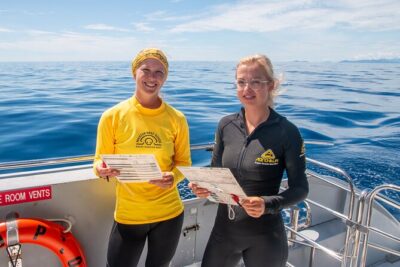
Passions of Paradise Great Barrier Reef Cruise by Catamaran
Read our review →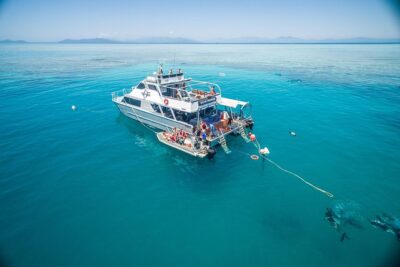
Ocean Freedom Great Barrier Reef Luxury Snorkel and Dive Cruise
Read our review →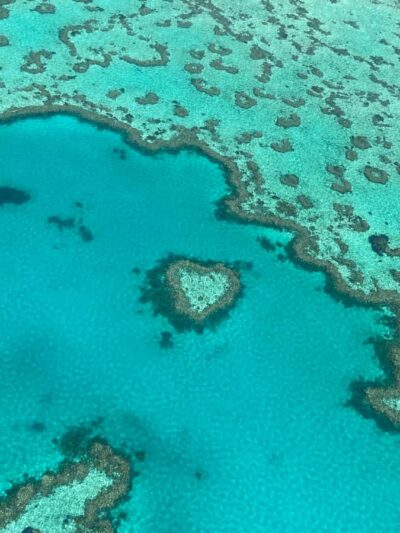
Whitsundays & Great Barrier Reef Scenic Flight
Read our review →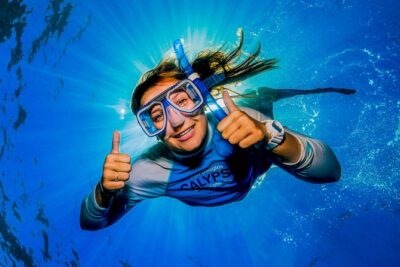
Calypso Outer Great Barrier Reef Cruise from Port Douglas
Read our review →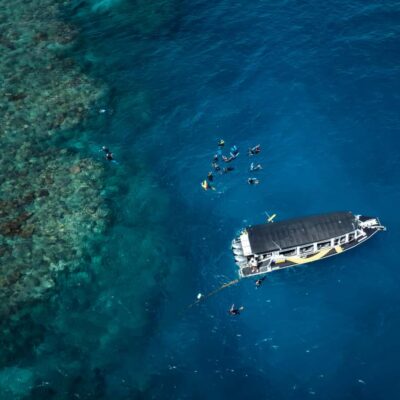
Great Barrier Reef Half-Day Snorkelling Tour
Read our review →Browse the lists this tour appears in