
Reviewed · FOOD & DRINK
Sydney: Chinatown Street Food & Culture Guided Walking Tour
Chinatown is best understood one bite at a time. This 150-minute walk mixes regional Chinese street food with stories about Chinese-Australian life, and I like that it gives you both a taste of the area and a useful restaurant guide for later. I also like the focus on Chinatown’s changing identity, not just its red gates and photo stops.
At $56 per person, the tour offers a lunch-sized amount of food rather than a full feast, so your expectations matter. The main drawback is that some of your time may be spent standing in the heat while listening to history, and one sample or drink may not feel like enough for the price if you came expecting a major food crawl.
In This Review
- Key points at a glance
- Starting at Paddy’s Markets and the Chinatown gates
- Four or five tastes from across China
- Chinatown’s story beyond the red gates
- The Friendship Garden and Chinatown landmarks
- A restaurant card you can use afterward
- Guide quality is central to the experience
- Dietary needs and what to bring
- How the $56 price holds up
- Who should book the Chinatown walk?
- FAQ
- How long does the Sydney Chinatown food tour last?
- How much does the tour cost?
- Where does the tour meet?
- How many food samples are included?
- Is the food enough for lunch?
- Can the tour cater to dietary requirements?
- Is the tour wheelchair accessible?
- What should I bring?
Key points at a glance
- Four or five regional samples: You try Chinese snacks from different parts of China, with soup dumplings among the foods praised by one participant.
- History with a human focus: The guide explains how Sydney’s Chinese community began in Chinatown and how the district continues to change.
- A practical restaurant bingo card: You leave with restaurant suggestions and advice on what to order, which can be more useful than a one-off tasting.
- A careful meeting point: Start outside Paddy’s Markets, across from the southern end of Dixon Street mall, on the correct side of the road.
- Guides bring the tour to life: Justin, Bunny, Eddie, Lucy, and Liz have all been praised for friendly, engaging presentations and strong food knowledge.
- Lunch, but not a feast: The food usually adds up to a meal, yet this is designed as an affordable snack-focused walk.
Starting at Paddy’s Markets and the Chinatown gates
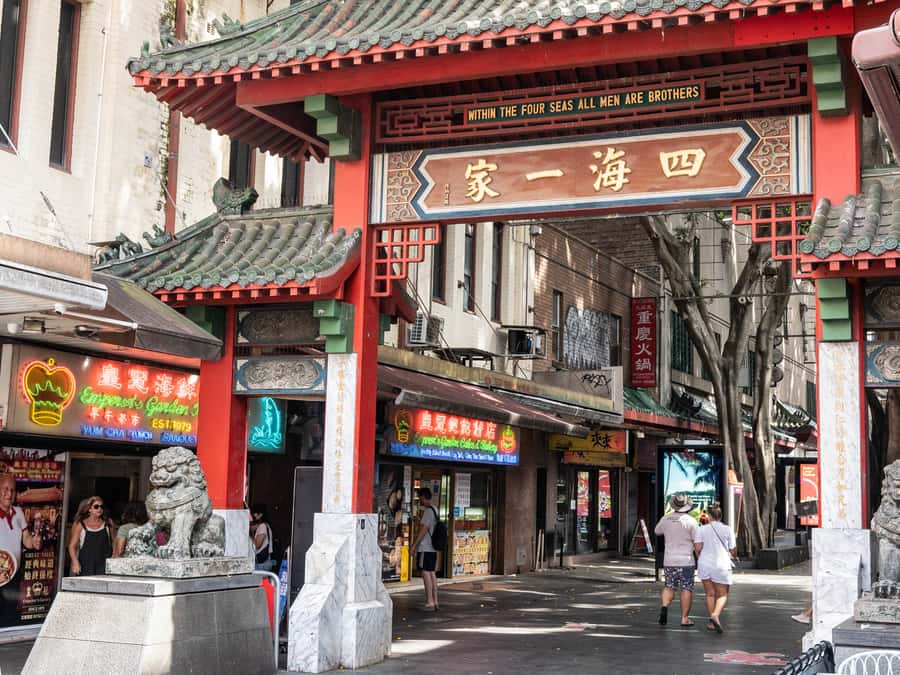
The tour begins outside Paddy’s Markets, directly across from the southern end of Dixon Street mall. This meeting point needs care. Look across the light rail tracks toward Emperor’s Garden restaurant, making sure it is Emperor’s Garden, not Emperor’s Garden BBQ. You should also see the Covent Garden hotel and Chinatown’s red gates.
That detailed description is worth taking seriously. The area has several restaurants with similar names, and waiting on the wrong side of the road could mean starting the afternoon with an unnecessary hunt for your guide.
From here, you are well placed to see the red gates and enter the Chinatown area on foot. The opening section helps you get your bearings before the tasting begins. You are not simply being marched from restaurant to restaurant. The guide uses the streets, signs, buildings, and public spaces to explain how the district came into being.
The tour is conducted in English, and the format is social and interactive. The strongest guide comments repeatedly point to Justin and Bunny, though Eddie, Lucy, and Liz have also led memorable outings. Justin has been praised for pairing food with history, while Bunny is especially good at keeping people involved with warmth and energy.
That difference matters. A food walk can feel flat if the guide only names each dish. Here, the best guides add context and invite conversation, making the walk feel more like a shared afternoon than a list of facts.
More Food Tours in Sydney
- Chef-Led Hunter Valley Gourmet Food and Wine Day Tour from Sydney
★ 5.0 · 728 reviews - Luxury Hunter Valley Wildlife & Wine Tasting Tour from Sydney
★ 5.0 · 652 reviews - Sydney Beer and Brewery Tour
★ 5.0 · 394 reviews
Four or five tastes from across China
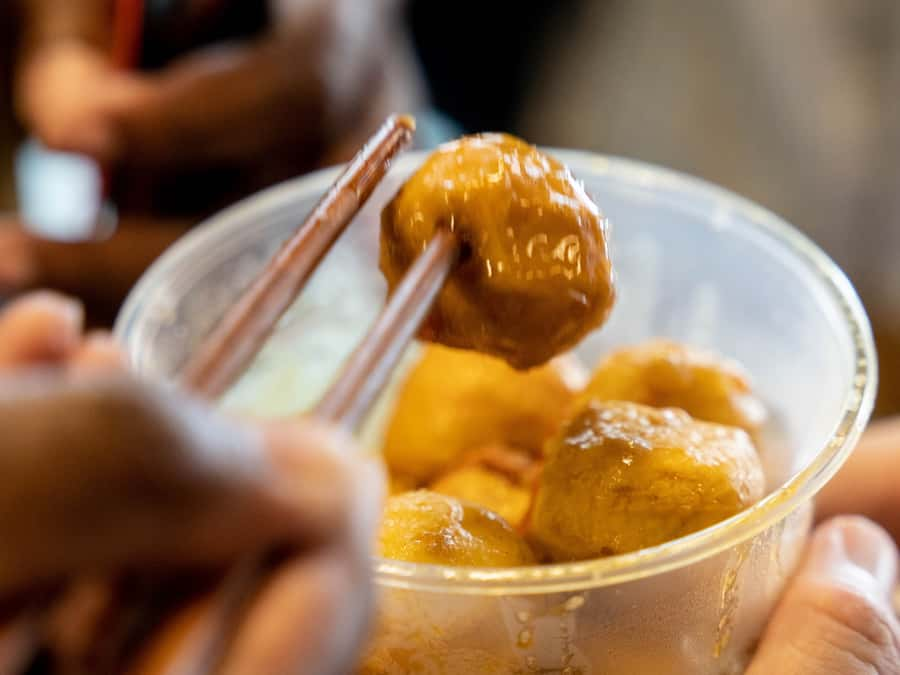
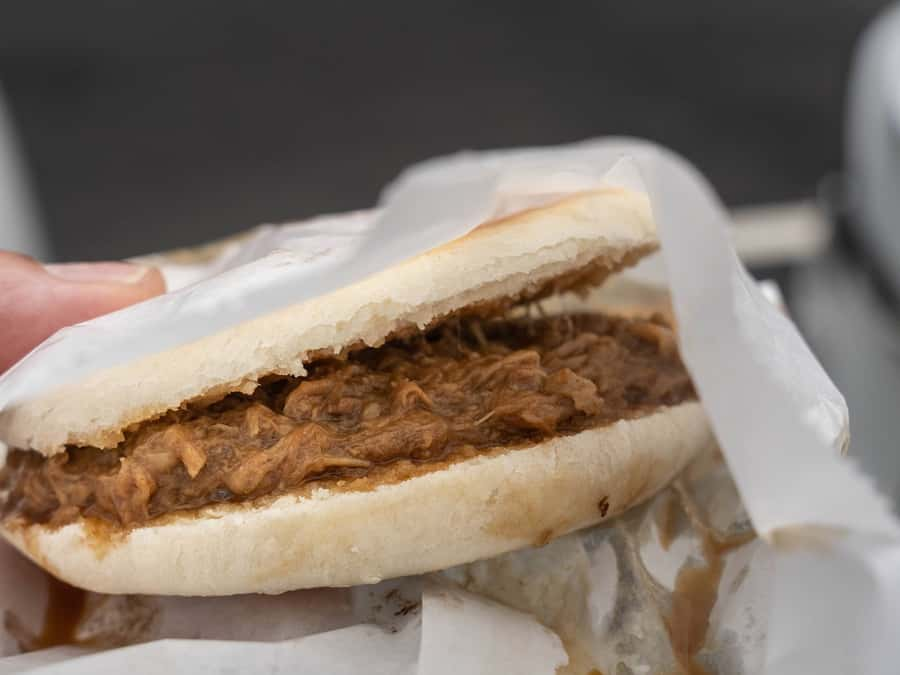
The food portion includes at least four samples, with the usual plan offering four or five regional Chinese street foods. The exact dishes are not fixed in the information provided, which is sensible for a walking tour that works with local restaurants and current availability.
You eat snacks designed to be carried and enjoyed on the move. That might mean small portions rather than a restaurant-style meal with a chair, table, and long pause. The emphasis is on variety: you get a quick introduction to food traditions from different parts of China instead of spending the whole tour on one dish or one regional style.
One especially praised sample was soup dumplings. They were described as outstanding, which gives you a useful clue about the kind of food experience to expect: familiar enough to enjoy quickly, but distinctive enough to make the stop memorable.
The tour provider says the total amount generally equals a lunch for most people. I would read that as enough to keep you going, not enough to satisfy someone arriving very hungry or hoping to replace a large meal. It is deliberately not a heavy food tour, and that keeps the price lower than many tasting experiences.
That lighter approach can be a plus. You will not spend two and a half hours feeling overfull while walking. You can also use the restaurant card afterward to choose a proper meal based on what caught your attention.
Still, the value depends on what you want. At $56, four or five samples plus a guided cultural walk can be fair, especially in central Sydney. If your main goal is to eat as much as possible, the number of tastings may leave you wanting more. I would plan a later meal or arrive having eaten something small, rather than treating this as a guaranteed feast.
Chinatown’s story beyond the red gates
The most important part of the tour is not the food count. It is the explanation of how Chinese-Australian life took root in this part of Sydney and how Chinatown has shifted over time.
Your guide discusses the community’s beginnings in Chinatown, the contributions Chinese-Australians have made, and the ways the district continues to evolve. This gives the food a setting. You are not just trying a snack from one region of China; you are learning how migration, business, family life, and cultural traditions helped shape a Sydney neighborhood.
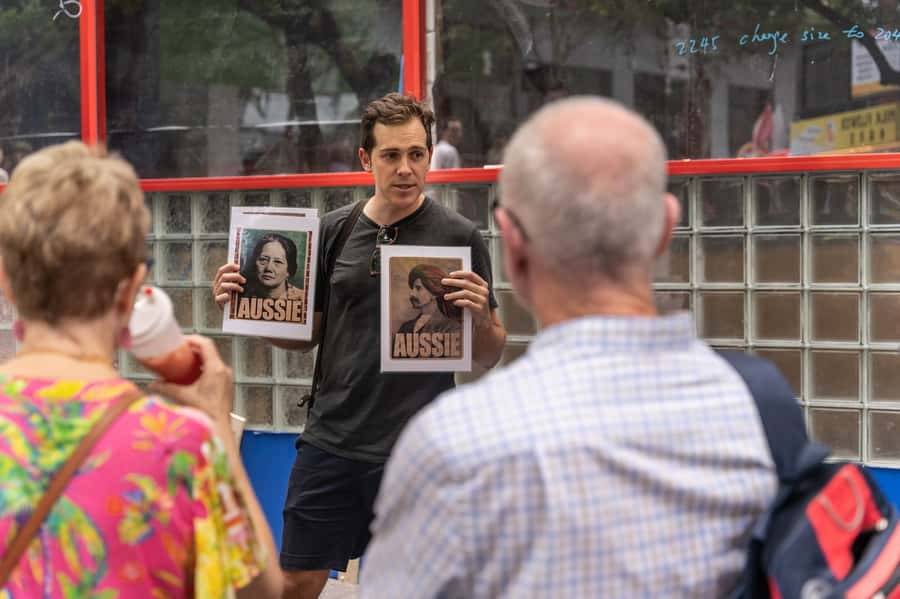
The history is presented in a fun, interactive way rather than as a formal lecture. Justin has used laminated photographs and documents to help explain Chinese history in Australia and Sydney. That sort of visual aid can make the past easier to follow, especially when a guide is covering several periods and ideas during a moving walk.
The balance is generally one of the tour’s strongest features. The guide’s food knowledge gives the tastings meaning, while the historical material keeps the afternoon from becoming a string of restaurant visits. Several guide assessments praised the mix of facts, food, and conversation.
There is a limit, though. On a hot day, standing outdoors for long explanations can become tiring. One participant felt the tour spent too much time in the heat and would have preferred more food discussion in shade or air conditioning. That is a fair concern, particularly in Sydney’s warmer months. Comfortable shoes, a hat, sunscreen, and a reusable water bottle are sensible, not optional extras.
The Friendship Garden and Chinatown landmarks
The route includes Chinatown’s famous sights, including the Friendship Garden and the red gates. These landmarks add visual interest and help connect the modern district with Chinese cultural traditions in Sydney.
The Friendship Garden offers a quieter change of pace from the streets around the restaurants. It gives the guide a place to discuss the cultural links represented by Chinatown and to show you a part of the area that you might otherwise pass without understanding.
The red gates, meanwhile, are the district’s most recognizable entrance and a natural orientation point. They are worth seeing, but the tour’s value comes from what the guide explains around them. A quick photograph tells you very little. The story of why Chinatown developed here, who helped build its identity, and how its role is changing tells you much more.
The walking route is compact enough to fit within 150 minutes, but you should still expect regular standing and movement. The activity is wheelchair accessible, an important practical advantage, though the experience remains a street walk with several food stops and outdoor sections.
More Walking Tours in Sydney
- Sydney Opera House Official Guided Walking Tour
★ 4.5 · 3,770 reviews - From Sydney: Blue Mountains Tour with Waterfall Walk & Lunch
★ 4.8 · 2,400 reviews - Sydney The Rocks Guided Walking Tour
★ 5.0 · 1,546 reviews - Sydney: The Rocks 90-Minute History Walking Tour
★ 4.7 · 1,092 reviews
A restaurant card you can use afterward
At the end, you receive a Chinatown restaurant bingo card covering recommended restaurants and what to order. This is one of the smartest features of the tour.
A tasting walk can be enjoyable but short-lived. You try a few foods, take a photo, and then forget the names by the next morning. The bingo card gives you a reason to return and a plan for ordering. It can help you avoid wandering into the first place with an open table when Chinatown is busy.
I would keep the card with your Sydney notes and use it to plan a second meal in the area. If you liked one regional style or a particular type of snack, you can follow the suggestions and build your own food outing later.
The guide also provides recommendations for things to try after the tour if you want more food. This is especially helpful because the included tasting is intentionally moderate. You are given a starting point rather than being told that four or five samples represent all Chinatown has to offer.
The card also adds value for repeat visitors and locals. You do not need to be a first-time visitor to enjoy the walk. If you already know the red gates and Dixon Street, the food advice and historical background can still give you a better reason to explore the area.
Guide quality is central to the experience
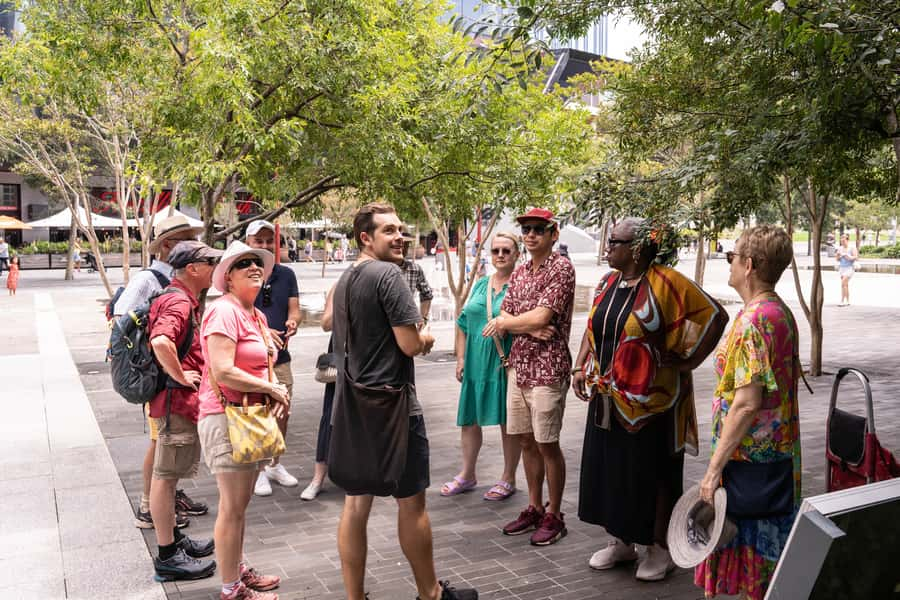
The tour’s success depends heavily on who leads it. The strongest praise goes to the guides’ personal style as much as their factual command.
Justin has been described as friendly, invested, and strong at linking the food to Chinatown’s past. Bunny is praised for her energy, warmth, and ability to involve everyone. Eddie brought positive energy and a strong grasp of both the district and its food. Lucy was noted for passion and enthusiasm, while Liz led a small group with a calm, welcoming approach.
That range suggests Local Sauce Tours puts real care into the guiding. It also means your experience may vary slightly with the person leading your group. The common thread is a focus on making the material accessible and enjoyable, not simply reciting dates and restaurant names.
A small group can make this format work especially well. One person described a group of four plus the guide as ideal. The supplied information does not promise a fixed group size, so I would not book expecting every departure to be tiny. Still, the format appears suited to conversation and questions rather than a large coach-style crowd.
If you enjoy asking about food, migration, local customs, or restaurant choices, you will get more from the walk than someone who wants to stay quiet and simply collect samples. The guide’s recommendations are most useful when you explain what you like to eat and what you need to avoid.
Dietary needs and what to bring
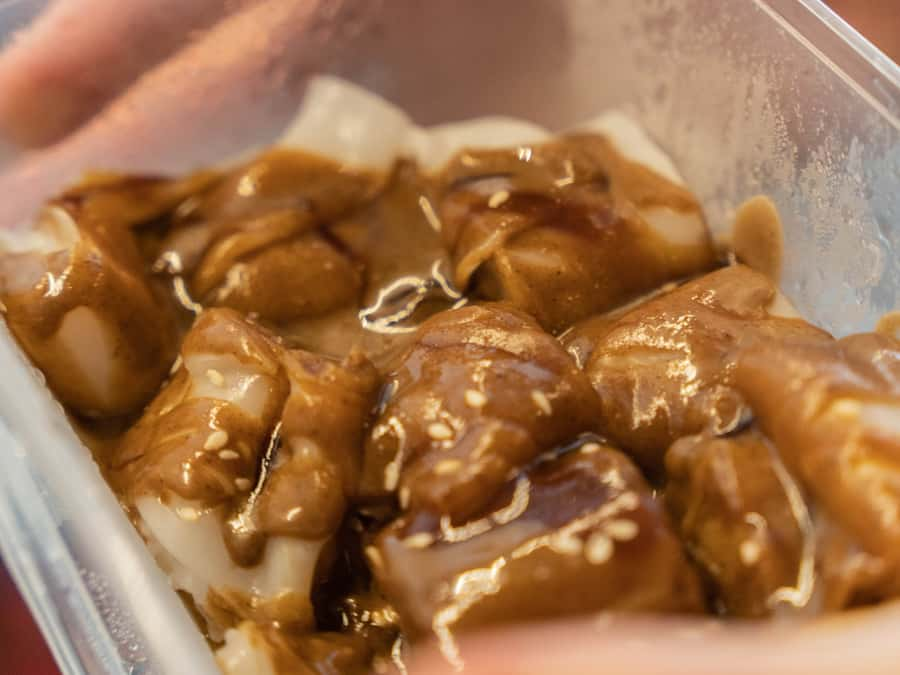
Vegetarians, vegans, people with gluten intolerance, and those with other dietary needs can join, but you must provide the details in advance. The one stated limitation is a vegan diet combined with gluten intolerance. The tour can handle one of those requirements, but not both together.
That is important because the food comes from several venues and is intended to be eaten while walking. Do not wait until the meeting point to mention a restriction. Advance notice gives the team a chance to plan suitable samples.
Bring comfortable shoes for the walk, a hat and sunscreen for outdoor sections, and a reusable water bottle. Bottled water is not included. One person also paid separately for a drink at a tea stand, so you should not assume a beverage is part of the package.
The tour is wheelchair accessible. Since the experience takes place on city streets and includes standing at food stops, it is still sensible to contact the provider ahead of time if you have specific mobility needs.
How the $56 price holds up
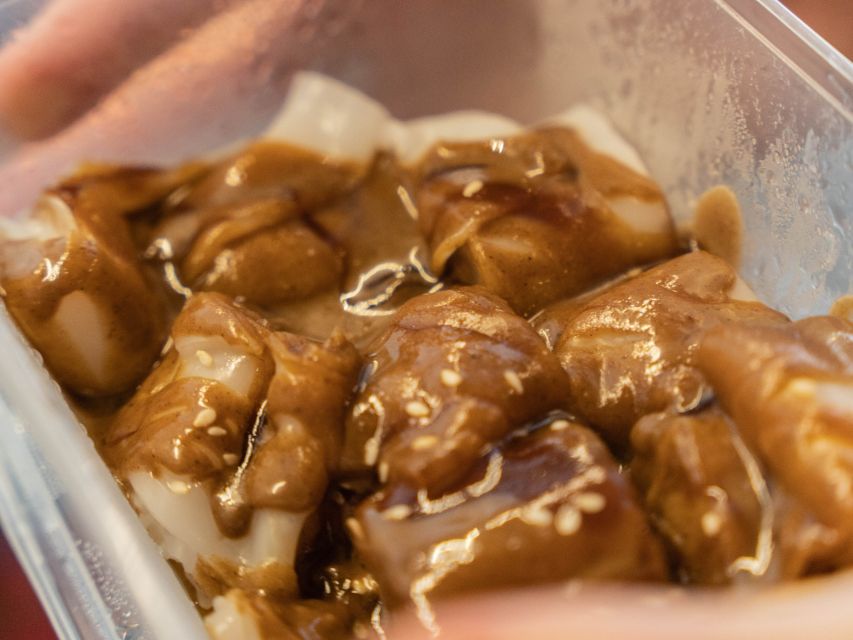
The $56 price is reasonable if you value the guide, cultural background, and follow-up restaurant advice along with the food. You are paying for two and a half hours of local orientation, four or five samples, shared photos after the tour, and a restaurant guide you can use later.
The value is less convincing if you judge the experience only by the amount of food. This is not a large meal with numerous full portions. The provider is clear that the tour is affordable because it avoids a heavy food format.
I see it as a good first-day activity in Sydney. It can help you understand the Chinatown area, learn where to return, and pick up ideas for later meals. It is also a useful choice if you prefer a guided introduction rather than reading menus and making random choices.
A $56 tour should still deliver well-timed stops, and the feedback suggests that the food locations and pacing can work very well. One person specifically praised the amount of food, stop locations, and timing. Another felt the food choices did not meet expectations. That difference is your warning to book for the complete experience, not for a lavish tasting menu.
The free cancellation policy allows cancellation up to 24 hours before the tour for a full refund. You can also reserve and pay later, which helps if your Sydney schedule is still shifting.
Who should book the Chinatown walk?
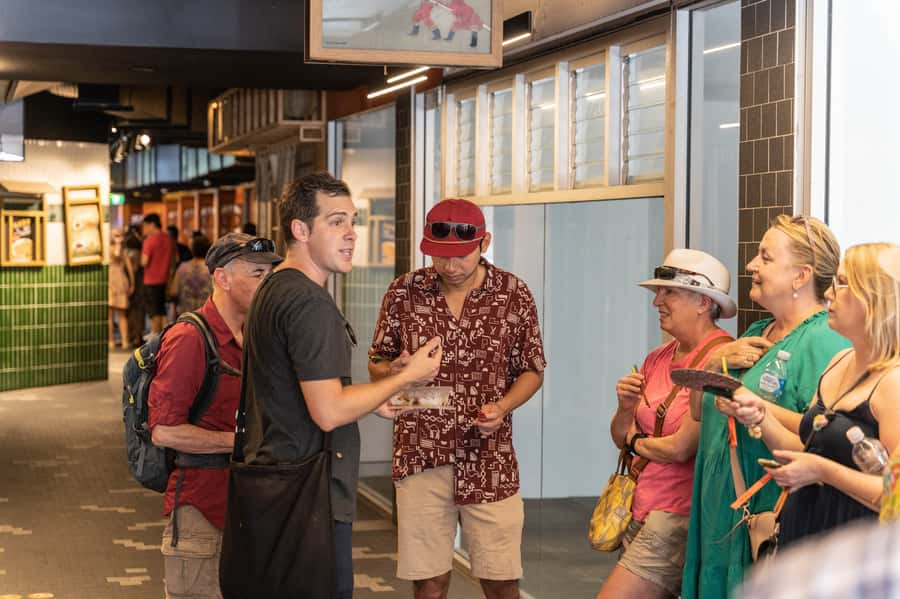
I would recommend this tour to you if you want a friendly introduction to Chinatown, enjoy small food samples, and like learning the story behind a neighborhood. It is particularly useful early in a Sydney stay, before you return on your own for a larger meal.
You should also consider it if you are interested in Chinese-Australian culture, enjoy asking questions, or want restaurant advice that goes beyond generic suggestions. The bingo card makes the experience useful after the walk ends.
I would hesitate if your top priority is quantity. You may find four or five snacks modest for $56, especially if you are very hungry. I would also think twice on an extremely hot day unless you are comfortable with outdoor standing and bring water, a hat, and sunscreen.
For most people, the best way to judge the tour is this: book it as a food-and-history walk with lunch-sized tasting, not as an all-you-can-eat crawl. If that balance suits you, the strong guide work, soup dumplings, Chinatown landmarks, and practical restaurant card make it a worthwhile way to spend 150 minutes.
FAQ
How long does the Sydney Chinatown food tour last?
The tour lasts 150 minutes, or two and a half hours.
How much does the tour cost?
The price is $56 per person.
Where does the tour meet?
It begins outside Paddy’s Markets, directly across from the southern end of Dixon Street mall. Look across the light rail tracks for Emperor’s Garden restaurant, the Covent Garden hotel, and Chinatown’s red gates.
How many food samples are included?
You receive four or five regional Chinese street foods, with a minimum of four samples included.
Is the food enough for lunch?
For most people, the total amount is equivalent to lunch. It is a lighter snack-focused food tour rather than a heavy meal.
Can the tour cater to dietary requirements?
Vegetarians, vegans, people with gluten intolerance, and other dietary needs are welcome if you provide the information in advance. The stated limitation is that the tour cannot cater to guests who are both vegan and gluten intolerant.
Is the tour wheelchair accessible?
Yes, the activity is listed as wheelchair accessible. It is still useful to contact the provider ahead of time with any specific mobility requirements.
What should I bring?
Bring comfortable shoes, a hat, sunscreen, and a reusable water bottle. Bottled water is not included.
Just added around Sydney
- Blue Mountains Small Group Tour with Lunch, Zoo and Scenic World★ 5.0 · 25 reviews
- Wine Tasting Experience★ 5.0 · 25 reviews
- Learn to Surf at Sydney’s Maroubra Beach★ 4.5 · 25 reviews
- Sydney: 1 hour Jet Ski Safari★ 4.7 · 25 reviews
- Hunter Valley All Inclusive, Wine, Chocolate Tasting and Lunch★ 4.0 · 25 reviews
- Sydney City, Harbour & Bondi Private Tour, with Airport pick up or drop off★ 4.5 · 25 reviews
- Forkabout Sydney foodie walking tour★ 5.0 · 25 reviews
- Naru Beach Night Kayak Tour★ 5.0 · 26 reviews
Food & Drink, compared.
Laid back, Yarra Valley Wine Tour: Wine, Cider, Gin, Beer + Choc
Read our review →
Bruny Island Food, Sightseeing, Guided Lighthouse Tour & Lunch
Read our review →
Epic Yarra Valley Wine Tour + Lunch, Chocolate & Gin/Beer Option
Read our review →
Barossa Premium Wine Tasting Tour & lunch Departs 7 days a week
Read our review →
Barossa Premium Wine Tasting tour & Winery Lunch
Read our review →
Bruny Island Food, Sightseeing & Lighthouse Day Tour
Read our review →
Bruny Island Traveller – Gourmet Tasting and Sightseeing Day Trip from Hobart
Read our review →Browse the lists this tour appears in