
Reviewed · SYDNEY OPERA HOUSE TOURS
Sydney: Eugene Onegin at Sydney Opera House
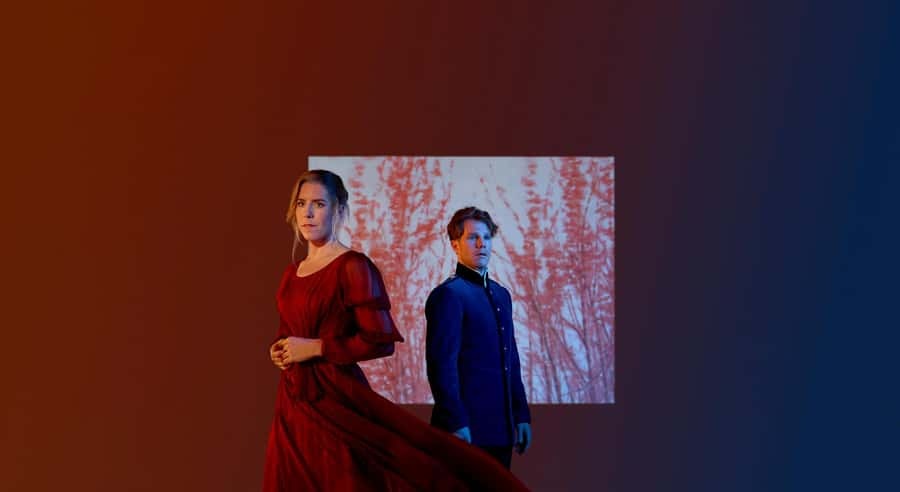
Some operas leave a long shadow. Eugene Onegin brings Tchaikovsky’s aching music to the Sydney Opera House in a production built around memory, missed chances, and regret. I like the grand setting and the thoughtful staging, especially the way older Tatyana and Onegin watch their younger selves make life-changing choices.
I also like the practical length: about 170 minutes with one interval, enough time for a full evening without turning the event into an endurance test. The main consideration is language. The opera is sung in Russian with English surtitles, and the story becomes much easier to follow if you read a little about the characters before arriving.
- Memory drives the staging: Tatyana and Onegin look back at the choices that shaped their lives.
- Tchaikovsky supplies the emotional force: The score moves from youthful longing to sorrow and regret.
- The Joan Sutherland Theatre is part of the evening: You are visiting one of Sydney’s defining buildings as well as seeing an opera.
- Strong international and Australian casting: Lauren Fagan appears as Tatyana, with Andrei Bondarenko as Onegin and Nicholas Jones as Lensky.
- Russian performance, English surtitles: You do not need to speak Russian, but you do need to keep an eye on the text.
- Plan for a possible gunshot: The production uses replica firearms and gunshots.
In This Review
- Why Eugene Onegin Works So Well in Sydney
- The Story: Tatyana’s Dream and Onegin’s Refusal
- Tchaikovsky’s Music Carries the Regret
- Lauren Fagan, Andrei Bondarenko, and Nicholas Jones
- What the Memory-Based Production Adds
- Your Evening at the Joan Sutherland Theatre
- The Interval and the 170-Minute Schedule
- Is the $98 Ticket Good Value?
- Who Will Enjoy This Opera Most?
- Final Verdict: Should You Book Eugene Onegin?
- FAQ
- Where is Eugene Onegin performed?
- How long does the performance last?
- What language is the opera performed in?
- Is there a dress code?
- How do I reach the Sydney Opera House by public transport?
- Can I bring a large bag?
- Are photography and filming allowed?
- Does the production contain gunshots?
- Is the performance wheelchair accessible?
- What happens if I arrive late?
Why Eugene Onegin Works So Well in Sydney
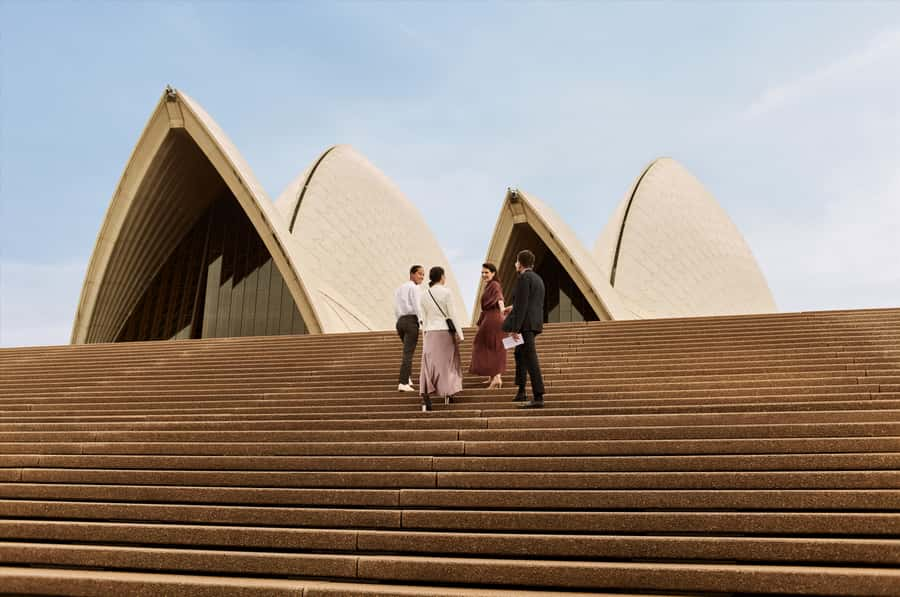
The Sydney Opera House can make a performance feel special before the curtain rises. You approach it from Circular Quay, walk past the harbor, and enter a building that is as much a part of Sydney’s identity as the opera itself. For many people, this will be their first visit inside the Opera House. That alone gives the night extra weight.
I like the pairing of place and story. Tchaikovsky’s opera concerns memory, lost opportunities, and the painful distance between what a person wants and what life permits. The Opera House gives that private drama a public setting, with the city and harbor outside and a large theatrical world inside.
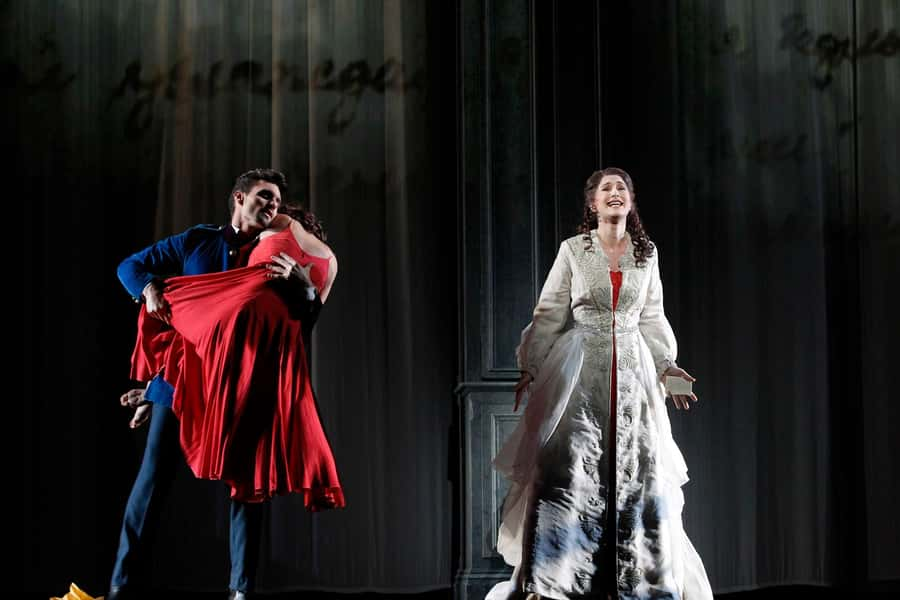
The production by Kasper Holten puts memory at the center. Rather than presenting the story as a simple series of romantic events, it lets Tatyana and Onegin look back at their younger selves. Their earlier decisions remain visible, almost like old scenes they cannot stop replaying.
That approach suits the opera’s subject. Onegin is not simply a cold man who rejects a young woman. Tatyana is not simply a lovesick heroine. Both are caught in the consequences of choices made at the wrong time, under the wrong emotional conditions.
Limelight described the production as hyper-intelligent and deeply moving. That praise points to its main strength: the staging asks you to think about how memory changes the meaning of an event. A rejection that seemed casual in youth can become devastating years later.
The Story: Tatyana’s Dream and Onegin’s Refusal
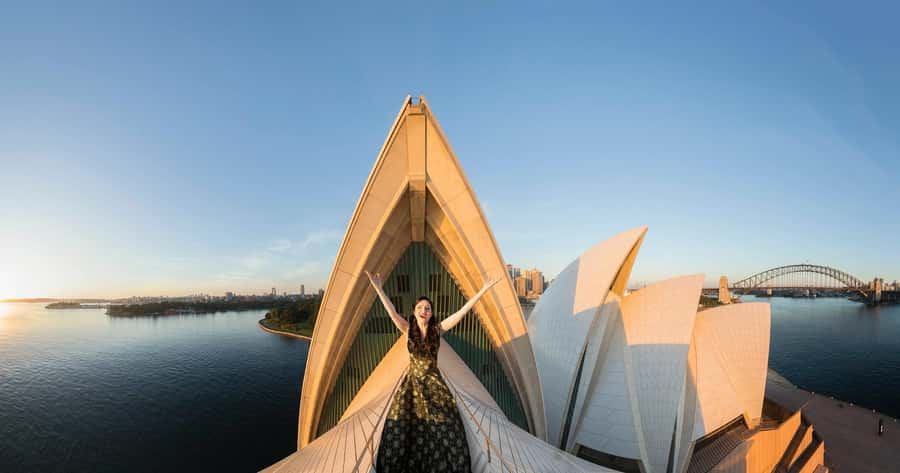
Tatyana begins as a dreamer. She has absorbed romantic stories and is ready to imagine her own grand love story. When Eugene Onegin enters her world, she believes she has found its hero.
Her feelings are direct and intense. Onegin, however, rejects her passion. He does not meet her emotional openness with the response she hopes for, and that decision becomes the first major turn in the opera.
This is where I find the work especially useful for first-time opera visitors. The central conflict is easy to understand even if you know little about Russian literature. You are watching two people who want different things at the same moment. The pain comes from knowing that life might have turned out differently.
The opera is based on Alexander Pushkin’s story, but you do not need to arrive as a literature student. It helps to remember only the basic outline: Tatyana loves Onegin, Onegin turns away, and the resulting choices lead toward tragedy and regret.
The emotional power comes from the gap between possibility and reality. Onegin could have answered Tatyana differently. Tatyana could have lived another kind of life. Yet each moment closes another door.
More Sydney Opera House tours:
- Sydney: Opera House Guided Tour with Entrance Ticket
★ 4.8 · 8,312 reviews - Sydney Opera House Official Guided Walking Tour
★ 4.5 · 3,770 reviews - Sydney: Sunrise Kayak, Opera House & Under Harbour Bridge
★ 5.0 · 869 reviews
Tchaikovsky’s Music Carries the Regret
Tchaikovsky’s score gives the story its emotional depth. This is not background music between lines of dialogue. The orchestral writing adds feeling to every stage of the relationship, from Tatyana’s romantic excitement to the sorrow that follows.
You can expect a Romantic sound filled with sweeping emotion and strong contrasts. The music gives the production room to move between private thought and public drama. It also helps bridge the language gap, since the feeling of a scene often reaches you through the orchestra before you have finished reading the surtitles.
I recommend arriving with patience rather than expecting a fast-moving plot. The opera’s power lies in mood, memory, and emotional change. If you prefer rapid action and constant stage movement, some passages may feel deliberate. If you enjoy music that lets a feeling develop, the pace becomes part of the pleasure.
The score also rewards attention to the characters rather than only the main plot. Tatyana’s inner life matters as much as the external events. Onegin’s regret matters because you have seen the earlier version of him, before he understands what he has lost.
Lauren Fagan, Andrei Bondarenko, and Nicholas Jones
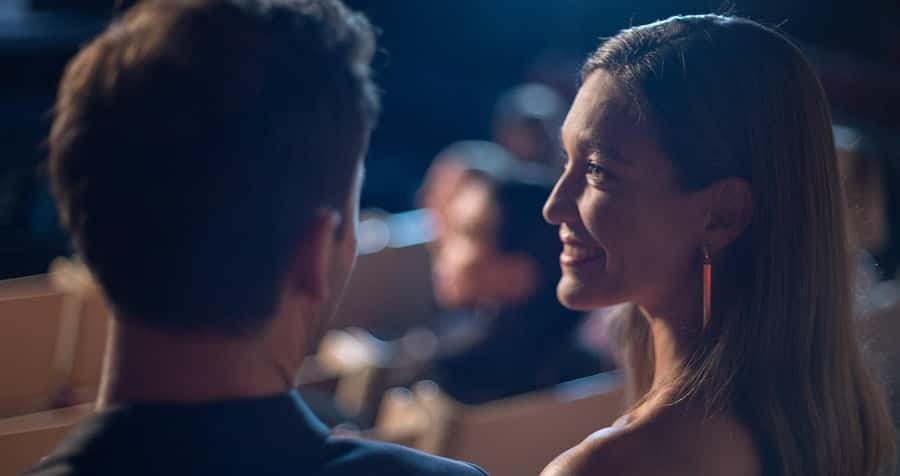
Lauren Fagan returns to the Opera Australia stage as Tatyana after her memorable performance as Suor Angelica in Il Trittico. That earlier role gives local audiences a clear reason to be interested in her return, but you do not need to know her previous work to follow her performance here.
Tatyana requires more than youthful romance. She must also carry the later weight of memory and regret. The role asks the singer to show a person changing over time, not simply moving through a series of plot points.
Andrei Bondarenko sings Onegin. The character must project confidence and detachment early in the story, then allow the cost of his choices to emerge. That change is central to the opera’s structure.
Nicholas Jones appears as Lensky, a rising Australian star. Lensky adds another emotional thread to the story and helps show the destructive results of pride, friendship, and impulsive decisions.
German conductor Anna Skryleva makes her Opera Australia debut. Her role is important because the orchestra must support both the singers and the production’s shifting time frame. The music has to feel large enough for the Opera House while remaining closely connected to the characters.
What the Memory-Based Production Adds
Kasper Holten’s staging gives you more than a straightforward period romance. Tatyana and Onegin watch their younger selves make decisions that will stay with them. As these memories gather on stage, the past becomes almost impossible to separate from the present.
That idea makes the opera feel psychologically sharp. You are not only watching events happen. You are watching people remember them, and memory is rarely neutral. A person may replay one moment for years, changing its meaning each time.
This staging should appeal to you if you enjoy opera that gives you something to consider after the curtain falls. It is not simply decorative. The production treats the story as a study of choices and consequences.
The drawback is that a memory-based structure may require more concentration than a simple linear presentation. Surtitles already ask you to divide your attention between the stage, the words, and the orchestra. When the staging moves between past and present, you may need to stay alert.
That is not a reason to avoid the performance. It is a reason to read the basic plot beforehand and arrive ready to watch carefully.
A few more Sydney trips worth weighing up
- All Inclusive Blue Mountain,Scenic World,Lunch,Koalas,ferry
★ 5.0 · 7,832 reviews - From Sydney: Blue Mountains Full-Day Trip
★ 4.5 · 4,471 reviews - Blue Mountains Small-Group Tour from Sydney with Scenic World,Sydney Zoo & Ferry
★ 5.0 · 3,709 reviews - Blue Mountain Small Group Scenic World, Wildlife, Waterfall
★ 4.8 · 3,428 reviews
Your Evening at the Joan Sutherland Theatre
The performance takes place at the Joan Sutherland Theatre on Level 1 of the Sydney Opera House. I would allow extra time before the opera, not only because late seating can be restricted, but because the building itself deserves a calm look.
You can reach the Opera House from Circular Quay in about 10 minutes on foot. Ferries, many buses, and trains stop at Circular Quay, making public transport the simplest option for most people. The walk also gives you the full approach to the building rather than dropping you directly at a side entrance.
A taxi can drop you at the roundabout at the end of Macquarie Street. After the performance, taxis can be hailed from the taxi rank at the end of Macquarie Street. This is useful to know before the final applause, especially if you do not want to work out your return route while the crowd is leaving.
There is no mandatory dress code. Wear something comfortable, and bring an extra layer because theatre temperatures can feel cool. The building is accessible to wheelchair users.
Large bags and items bigger than an A4 sheet of paper, 21 by 30 centimeters, must be left at the free cloakroom. Pack light if you can. A small bag means less waiting and fewer concerns during the performance.
Doors close at show time. If you arrive late, ushers may wait for a suitable pause before seating you. In practical terms, you should not treat the published start time as the time to reach the Opera House. Get to Circular Quay early, make the walk, collect your ticket, and find the theatre without rushing.
The Interval and the 170-Minute Schedule
The full performance lasts about 170 minutes, or roughly two hours and 50 minutes, including one interval. That makes it a substantial evening activity, but not an unusually long one for a major opera.
The interval gives you a chance to stretch, check the evening’s progress, and take photographs in permitted areas. Photography, filming, and sound recording are not allowed during the performance, but you can take photos before and after the show and during the interval.
Food and drinks are not included in the ticket price. You should plan to eat before the opera or budget separately for refreshments. The safest choice is to avoid arriving hungry, since the schedule leaves limited time for a full meal once the performance begins.
The single interval also helps divide the experience into manageable parts. You can settle into the story at the start, then return with a clearer sense of how Tatyana and Onegin’s choices are gathering force.
Is the $98 Ticket Good Value?
At $98 per person, this is not a casual drop-in activity. You are paying for a full opera production in one of the world’s most recognizable performance buildings, with an international cast, a major orchestra, and English surtitles.
I consider the price fair if you already want to see an opera or if visiting the Sydney Opera House is a major part of your Sydney plans. The evening combines the performance with the setting, so the value is not only the seat. It is also the chance to spend several hours inside the Opera House for a serious production of one of Tchaikovsky’s best-known works.
The value is less clear if you are looking only for a quick tourist activity. At nearly three hours, this requires a real evening commitment. You will need to plan transport, arrive early, and pay separately for food and drinks.
One detail needs checking before you pay: the supplied booking information says the included ticket is for Sunset Boulevard, while the experience itself is described as Eugene Onegin. That is a clear mismatch. Confirm the performance title, date, and seating details with Opera Australia or the booking seller before finalizing your plans.
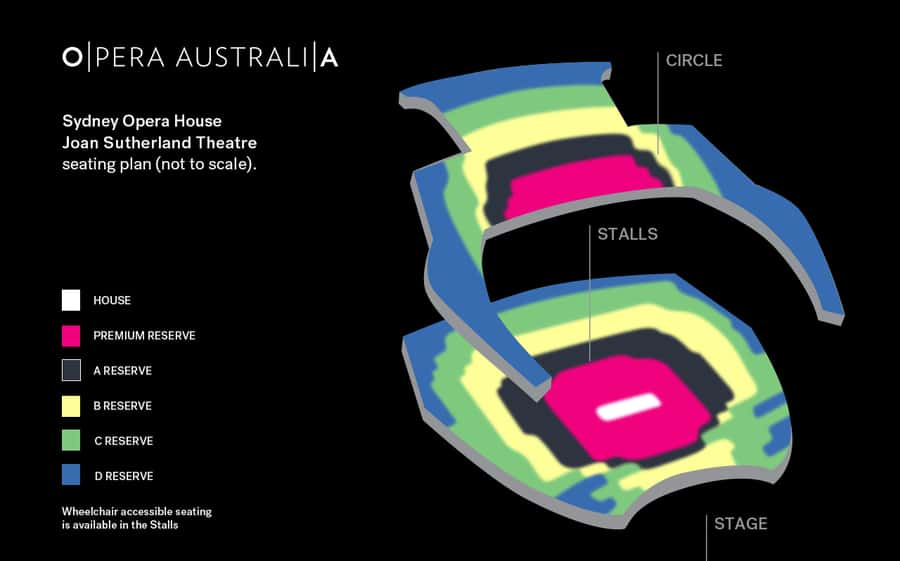
One booking review also raised concern that the assigned seats were not visible in advance. If your seat location matters, check exactly what is shown at checkout and ask about the seating arrangement before booking.
Who Will Enjoy This Opera Most?
I would recommend this performance to:
- First-time Opera House visitors who want a substantial cultural evening.
- Opera newcomers who enjoy stories about love, missed chances, and personal regret.
- Tchaikovsky fans who want to hear one of his most celebrated operas.
- Visitors comfortable reading English surtitles while listening to Russian.
- People who appreciate thoughtful stage direction rather than a purely traditional presentation.
- Anyone looking for a memorable Sydney night beyond sightseeing during the day.
You may want to choose another activity if you dislike subtitles, find slow-building drama frustrating, or need a short event with flexible arrival and departure times. The production also includes replica firearms and gunshots, so keep that in mind if those sounds could disturb you.
The audience response has been very strong, with a 4.6 rating from 58 reviews. The most praised points are consistent: the quality of the show and the special setting. One Australian audience member described seeing Sunset Boulevard as an emotional experience partly because of the tragedy and partly because of being inside such a beautiful theatre. Although that comment concerns a different production, it captures the added pull of an Opera House evening.
Other short responses simply call the show great and the venue special. That combination is the main reason to book. The Opera House is not a neutral box where the setting disappears. Its presence becomes part of your memory of the performance.
Final Verdict: Should You Book Eugene Onegin?
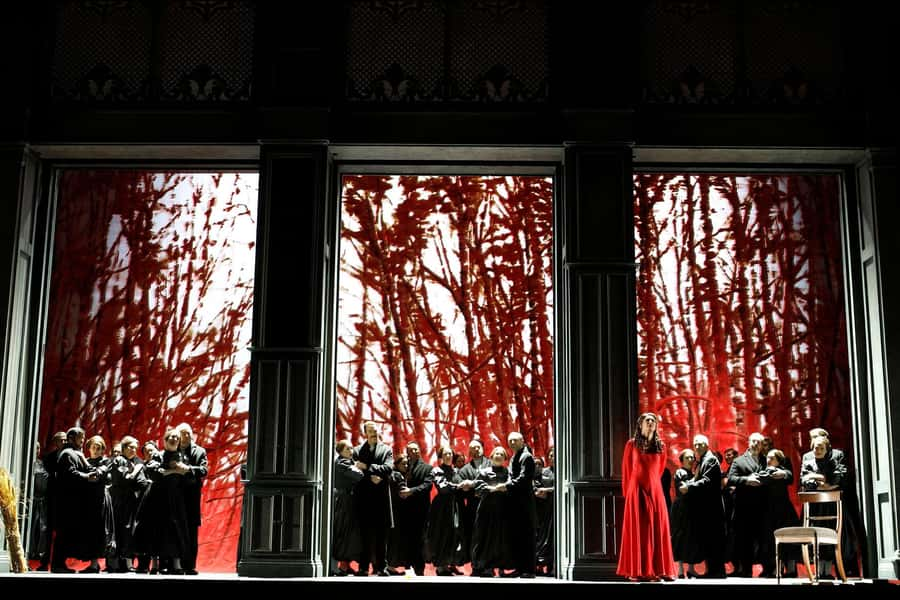
Book it if you want a serious, emotional opera night and like the idea of pairing Tchaikovsky with the Sydney Opera House. The memory-focused production, strong cast, English surtitles, and manageable 170-minute schedule make it a sound choice for both opera regulars and prepared newcomers.
Before booking, confirm the title because the supplied details contain the Sunset Boulevard error. Then check your seat information, plan to arrive early, and bring an extra layer.
If you do those few bits of homework, $98 is a reasonable price for a full Opera Australia production in an extraordinary venue. You are not just filling an evening. You are giving yourself a story about the life you might have lived, performed in a building you are unlikely to forget.
FAQ
Where is Eugene Onegin performed?
It is performed at the Joan Sutherland Theatre on Level 1 of the Sydney Opera House in New South Wales, Australia.
How long does the performance last?
The performance lasts approximately 170 minutes, or two hours and 50 minutes, including one interval.
What language is the opera performed in?
The opera is performed in Russian with English surtitles.
Is there a dress code?
There is no mandatory dress code. An extra layer of clothing is recommended for comfort.
How do I reach the Sydney Opera House by public transport?
Ferries, many buses, and trains stop at Circular Quay. From there, the Opera House is about a 10-minute walk.
Can I bring a large bag?
Items larger than an A4 sheet of paper, measuring 21 by 30 centimeters, must be left at the free cloakroom.
Are photography and filming allowed?
Photography, sound recording, and filming are not allowed during the performance. Photos are permitted before and after the show and during the interval.
Does the production contain gunshots?
Yes. The production features replica firearms and gunshots.
Is the performance wheelchair accessible?
Yes, the activity is wheelchair accessible.
What happens if I arrive late?
Ushers close the doors at show time and may wait for an appropriate pause before allowing latecomers into the theatre.
Just added around Sydney
- Blue Mountains Small Group Tour with Lunch, Zoo and Scenic World★ 5.0 · 25 reviews
- Wine Tasting Experience★ 5.0 · 25 reviews
- Learn to Surf at Sydney’s Maroubra Beach★ 4.5 · 25 reviews
- Sydney: 1 hour Jet Ski Safari★ 4.7 · 25 reviews
- Hunter Valley All Inclusive, Wine, Chocolate Tasting and Lunch★ 4.0 · 25 reviews
- Sydney City, Harbour & Bondi Private Tour, with Airport pick up or drop off★ 4.5 · 25 reviews
- Forkabout Sydney foodie walking tour★ 5.0 · 25 reviews
- Darling Harbour Explorer – Sea Kayaking Tour★ 5.0 · 26 reviews
Sydney Opera House Tours, compared.
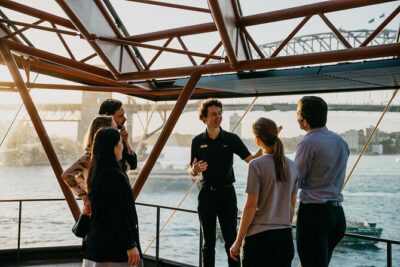
Sydney Opera House Official Guided Walking Tour
Read our review →
Sunrise Kayak, Opera House & Under Harbour Bridge
Read our review →
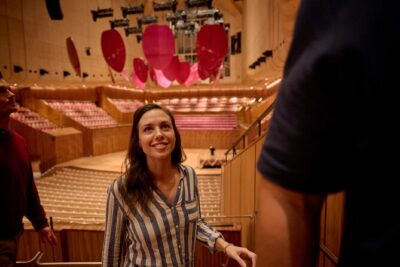
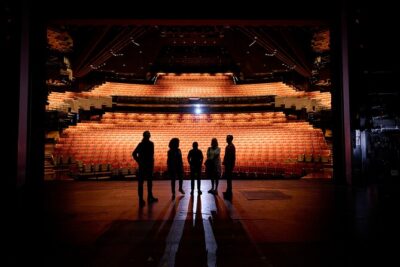
Sydney Opera House Backstage Guided Tour with Breakfast
Read our review →

Sydney Shore Excursion: Sydney Opera House Walking Tour
Read our review →Browse the lists this tour appears in