

Reviewed · AUSTRALIA
The Explorer – Cranbourne Gardens
Short ride, big garden, useful first look. The Explorer gives you a comfortable way to see the 15-hectare Australian Garden without wearing out your legs. I like the live commentary and the chance to cover far more ground than you could on foot in 25 minutes. The open-air minibus is also a real help for families, older visitors, and anyone with limited mobility.
I especially like that the ride mixes plant information with stories about the gardens, culture, and design. The main drawback is its short running time: this is an introduction, not a full visit. You will still want to walk afterward if you hope to explore the smaller garden scenes and paths at an easy pace.
In This Review
- Key things to know before you ride
- Why The Explorer makes sense at Cranbourne Gardens
- Starting at the Visitor Centre
- Red Sand Garden: a strong opening view
- Along the east coast section of the Australian Garden
- Howson Hill and the higher view
- Ian Potter Lake: water among the native planting
- Arid Garden and Dry River Bed
- Winding back through the Peppermint Garden
- What the commentary adds
- Mobility, comfort, and family use
- Is $10.76 good value?
- How I would plan the visit
- Should you book The Explorer?
- FAQ
- How long does The Explorer tour last?
- Where does The Explorer depart from?
- What does the tour include?
- Does the tour include transport to the gardens?
- Can children ride free?
- What happens if the weather is poor?
Key things to know before you ride
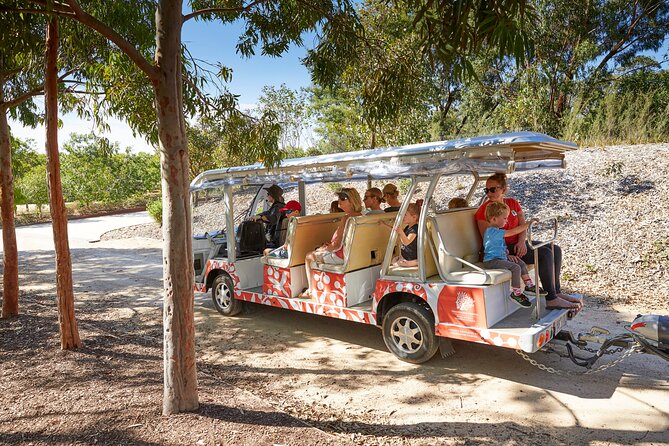
- The route covers major highlights: You pass the Red Sand Garden, Howson Hill, Ian Potter Lake, Arid Garden, and Dry River Bed.
- The trip lasts about 25 minutes: That makes it a smart opening circuit, but not a substitute for seeing the gardens on foot.
- Live commentary comes from your driver-guide: The talk covers native plants, garden design, history, cultural meaning, and nature.
- It suits a wide range of abilities: The bus helps visitors with mobility limits, while the gardens also offer level walking paths.
- Children can ride free on the Kids Explorer during school holidays: Check the booking details carefully, as a booking charge for children has caused confusion.
- The group is capped at 25 people: That keeps the ride fairly manageable, though you should not expect a private tour.
Why The Explorer makes sense at Cranbourne Gardens
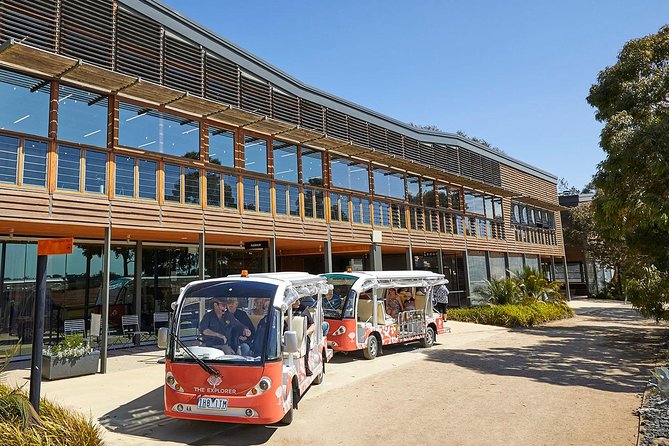
Royal Botanic Gardens Cranbourne is not a small city park you can glance at in half an hour. The Australian Garden covers about 15 hectares, or 37 acres, with broad planted areas, water features, winding paths, and separate garden zones. If you arrive with limited time, the sheer size can make your first decision surprisingly difficult: where do you start?
The Explorer solves that problem. You board at the Visitor Centre, settle into an open-air minibus, and get a quick orientation before choosing where to spend the rest of your visit. I like this approach because it gives you a mental map. Instead of walking at random, you can note the parts that deserve a closer look.
The price is listed at $10.76 per person. That is good value if you use the ride as a survey of the whole garden, especially when hot weather, tired children, or mobility concerns make long walks less appealing. It is less compelling if you expect a full guided tour with frequent stops or long explanations at every feature.
The bus is not designed to replace the gardens. Think of it as a practical opening chapter. You get the broad picture first, then return to the areas that caught your attention.
A few more Australia trips worth weighing up
- Full-Day Penguins and Wildlife Nature Experience from Melbourne
★ 5.0 · 150 reviews - Peninsula Hot Springs Spa Experience and Express Transfer Shuttle
★ 5.0 · 131 reviews - Cape Woolamai Sightseeing Cruise from San Remo
★ 4.5 · 72 reviews
Starting at the Visitor Centre
The ticket redemption point is Royal Botanic Gardens Cranbourne, at Ballarto Road and Botanic Drive in Cranbourne, Victoria. The Explorer departs from the Visitor Centre, which makes it easy to build into a larger visit.
You are not paying for transport from a hotel or another attraction. Getting to the gardens is your responsibility, and transport to and from the site is not included. That matters if you are planning a day trip from elsewhere on the Mornington Peninsula or combining the gardens with Phillip Island. The bus operates inside the gardens only.
The ride has a maximum of 25 people. That is small enough for the driver-guide’s commentary to feel personal, but the experience is still a shared circuit. Arrive ready to board rather than expecting an on-demand private vehicle.
The open-air design helps you see the plantings as you move through them. It also means conditions matter. The experience requires good weather, so keep the forecast in mind before setting aside a fixed time for the ride.
Red Sand Garden: a strong opening view
The tour begins at the Red Sand Garden, one of the most distinctive parts of the Australian Garden. Even without a long stop, the red soil gives the opening section a clear sense of place and shows how the garden uses Australian materials and plant communities to create a strong visual setting.
This is a good point for the commentary to explain how the gardens present Australian plants in designed spaces rather than simply displaying them as a collection. The ride gives you context as you pass through, so you can pay attention to the shape, color, and arrangement of the planting rather than wondering what you are looking at.
Do not expect a long pause here. The Explorer is a moving tour, and the value comes from seeing several areas in one sweep. If the Red Sand Garden catches your eye, remember it as a place to revisit on foot after the circuit.
Along the east coast section of the Australian Garden
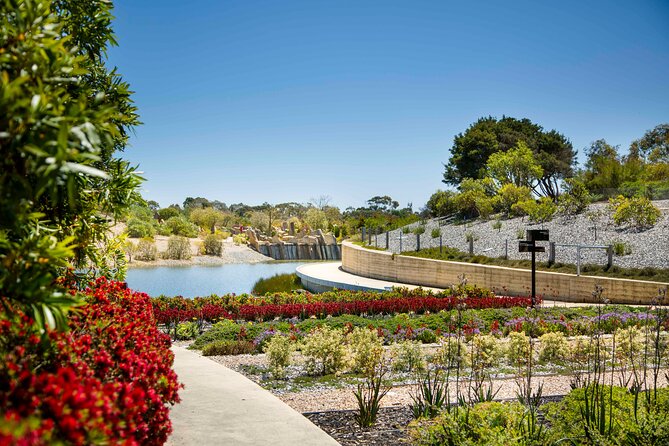
From the Red Sand Garden, the route travels along the east coast of the Australian Garden. This part helps show the range of plant life represented at Cranbourne and gives the driver a chance to connect individual gardens with broader stories about Australian nature.
The commentary is one of the main reasons to choose the bus instead of simply wandering alone. You hear information about plants, garden history, cultural significance, and the natural setting while the route unfolds. The quality of the experience depends partly on your driver-guide, but the strongest feedback points to friendly, entertaining, and well-informed hosts.
One driver, Peter, received special praise for his plant and garden knowledge. Another host was described as funny and welcoming, while a family found the ride entertaining enough to hold the children’s attention. Those details matter. A 25-minute tour can feel like a chore if the talk is flat, but a good host turns the transfer between sections into part of the visit.
The bus also lets you conserve energy for the areas where you want to walk. That is especially useful on a warm day, when covering the entire garden under your own power could leave you too tired to appreciate the later sections.
A completely different kind of day out in Australia:
- Sydney: Opera House Guided Tour with Entrance Ticket
★ 4.8 · 8,312 reviews - All Inclusive Blue Mountain,Scenic World,Lunch,Koalas,ferry
★ 5.0 · 7,832 reviews - Great Ocean Road Small-Group Eco Tour from Melbourne
★ 5.0 · 6,607 reviews - From Melbourne: Great Ocean Road, 12 Apostles, Wildlife Tour
★ 4.7 · 6,020 reviews
Howson Hill and the higher view
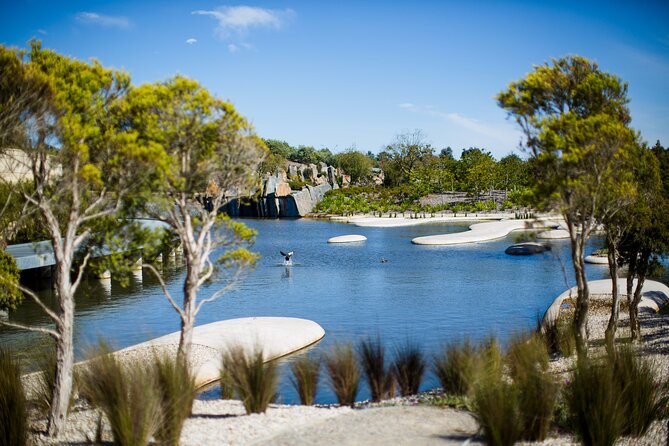
Howson Hill is one of the named highlights on the route. The hill gives the tour a change in level and helps you see how the Australian Garden is shaped as a series of spaces rather than one flat display.
From a moving bus, you get only a short look, so keep your expectations sensible. This is not a hilltop stop with a long viewing session. Instead, it is part of the overall circuit and a useful marker for understanding the garden’s layout.
If you have a family group, the changing scenery can be helpful. Children may find the movement between broad planting zones more interesting than a slow walk through one area. If you use a mobility aid or are managing low energy, the bus offers a way to experience the hill without making it a physical challenge.
Ian Potter Lake: water among the native planting

Ian Potter Lake adds a water feature to a route otherwise focused heavily on native plants and dry country settings. The change in texture and mood helps break up the ride, and the lake is one of the places where the garden’s planting and water design work together.
The bus gives you a quick introduction rather than a long lakeside visit. If you want stillness, close plant views, or time to take photographs, you will need to return on foot. The ride’s job here is to point out the feature and place it within the larger garden plan.
This is also where the guide’s nature interpretation can add value. You are not simply passing a body of water. You are hearing how the garden presents Australian environments through carefully planned spaces, with the lake acting as part of that story.
Arid Garden and Dry River Bed

The Arid Garden and Dry River Bed give the route a more rugged feel. These areas show how Australian garden design can use dry conditions, open ground, stone, and hardy plant forms to create a setting with its own character.
The bus is particularly useful here because these sections may be spread across a larger area than their names suggest. You get to see how the dry garden connects with the rest of the Australian Garden without spending your first half hour walking between features.
The Dry River Bed is also a good example of why commentary matters. Without explanation, it could look like a decorative channel. With the guide’s interpretation, you can better understand how such features fit into the garden’s treatment of Australian environments and water.
The limitation is the same as before: you pass through rather than stop for a long inspection. Keen gardeners may want to make notes during the ride and return later to study planting combinations, textures, and small details at walking speed.
Winding back through the Peppermint Garden
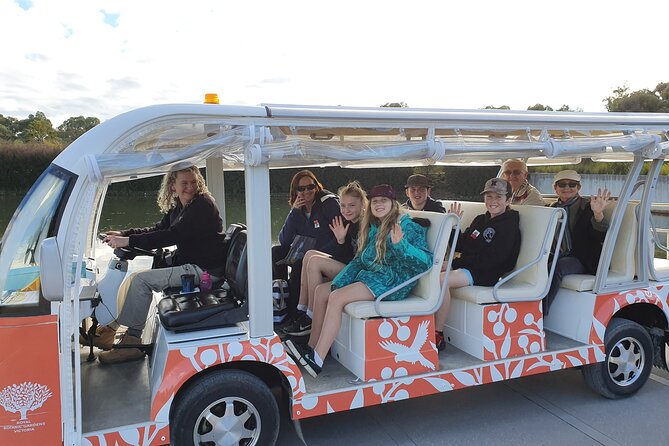
The route winds back through the Peppermint Garden before returning toward the starting point. This closing section gives you another look at the range of plant communities represented in the garden and brings the circuit back to a familiar point.
A return route is practical. You do not need to work out how to get back to the Visitor Centre from a distant part of the grounds, and you finish with a clearer idea of where you want to go next.
For a first-time visit, I would use the ride as reconnaissance. Pay attention to the areas you would like to explore slowly. The Peppermint Garden, the water areas, and the dry sections may appeal to different kinds of gardeners, so the bus helps you choose rather than commit blindly to one long walking loop.
What the commentary adds
The live talk is more than a list of plant names. The experience includes stories about the gardens’ history, their cultural significance, the design of the Australian Garden, and the natural world represented there.
That mix gives the ride its shape. You are not only looking at plants; you are learning why the spaces are arranged as they are. A good guide can also point out details that are easy to miss from a path, then give you the vocabulary to notice them later.
The best feedback focuses on this human element. Hosts are described as friendly, funny, and informative, with Peter singled out for his strong grasp of the plants and the gardens. I would not book the ride solely for a particular driver, since staffing can change, but the praise suggests that the guide is central to the experience.
The commentary also makes the bus a good choice for children. The Kids Explorer during school holidays is designed especially for families, with children riding free under that program. One family found the bus more interesting for the children because the driver made the trip entertaining as well as educational.
Mobility, comfort, and family use
The Explorer is a strong option if your group cannot comfortably walk across a 15-hectare garden. One visitor used the ride to help a mother with mobility issues see far more of the grounds than she otherwise could have managed.
That is the most practical reason to book. You can enjoy the broad views and main garden zones without making every part of the visit depend on stamina. The gardens also have level walking paths, so you can combine the bus with a gentler walk afterward.
Service animals are allowed, and most people can participate. The supplied information does not provide detailed vehicle specifications, so if you use a particular wheelchair or mobility device, confirm the arrangements before booking.
For families, the bus adds structure. A 25-minute circuit is short enough to hold attention, and the live talk gives children something to listen for as the scenery changes. During school holidays, look specifically for the Kids Explorer option. A booking problem was reported when a child was charged despite the free offer, so check the final price and the correct product before paying.
Is $10.76 good value?
At $10.76 per person, The Explorer is priced as a small add-on to a garden visit, not as a major sightseeing expense. I consider it good value if you are visiting for the first time, have only a few hours, or want to avoid a long walk in warm weather.
The value is strongest for three groups:
- A family that wants a quick overview before choosing where to walk.
- An older visitor or anyone with mobility limits.
- A gardener who wants context about the planting design and native flora.
The value is weaker if you already know the gardens well or prefer to explore every corner independently. You will still need time on foot for close inspection, photographs, and the smaller garden scenes.
A cafe is available at the gardens, which makes it easier to turn the bus ride into part of a relaxed day rather than a stand-alone attraction. The wider visit can include walking paths, water features, small garden settings, and the chance to spot wildlife. One visitor even saw a wallaby, though you should treat that as a fortunate possibility, not a promised part of the tour.
How I would plan the visit
I would take The Explorer early in the visit, not at the end. The circuit gives you an overview while your energy is still good, and you can then walk directly to the areas you liked most.
Allow more than 25 minutes for Cranbourne Gardens itself. The bus ride is fixed at about 25 minutes, but the garden is much too large for that to count as a complete visit. Give yourself time to walk, pause, look closely at plants, and enjoy the paths.
If you are visiting en route to Phillip Island, the bus is especially useful because it lets you see the main garden structure without spending the whole stop walking. You still need to allow time to reach the gardens and continue your journey, since transport to and from the attraction is not included.
Good weather matters. The bus is open-air, and the operator may cancel in poor conditions, offering another date or a full refund. You can cancel for a full refund up to 24 hours before the start time, but changes or cancellations inside that window are not accepted.
Should you book The Explorer?
Book it if you want a quick, friendly introduction to a very large garden. The ride is especially worthwhile for families, people with mobility concerns, first-time visitors, and anyone trying to fit Cranbourne Gardens into a busy day.
Skip it if your main goal is slow, independent plant study and you have plenty of energy and time. You will still want to walk after the circuit, so the bus is best viewed as a smart orientation tool rather than the whole attraction.
At $10.76, with live commentary and access to the garden’s main sections, I think it earns its place in a well-planned visit. Take the ride first, remember the areas that interest you, then explore those places at your own pace.
FAQ
How long does The Explorer tour last?
The Explorer tour lasts approximately 25 minutes.
Where does The Explorer depart from?
The bus departs from the Visitor Centre at Royal Botanic Gardens Cranbourne, Ballarto Road and Botanic Drive, Cranbourne VIC 3977, Australia.
What does the tour include?
The ticket includes a driver-guide, live commentary on board, and a professional guide.
Does the tour include transport to the gardens?
No. Hotel pickup and drop-off, along with transportation to and from the attraction, are not included.
Can children ride free?
Children ride free on the Kids Explorer Bus during school holidays. Check the booking details carefully to make sure the correct family option and price are applied.
What happens if the weather is poor?
The experience requires good weather. If it is canceled because of poor weather, you will be offered a different date or a full refund. Free cancellation is also available when you cancel at least 24 hours before the start time.
Just added around Australia
- Darwin Combo: The Bombing of Darwin Experience & Darwin Harbour Cruise★ 4.5 · 123 reviews
- Queensland: 90 Minute Capricorn Caves Explorer Tour★ 4.8 · 123 reviews
- Sydney Half Day Private Tour: See Sydney Opera House and Bondi★ 5.0 · 123 reviews
- Sydney Speed Boat Adventure Harbour Tour★ 5.0 · 124 reviews
- From Melbourne: Peninsula Hot Springs & Bathing Boxes Tour★ 4.8 · 124 reviews
- Rottnest Island Full-Day Trip With Guided Island Tour From Perth★ 4.5 · 124 reviews
- From Sydney: Explore Canberra Includes Buffet Lunch★ 4.3 · 124 reviews
- Fitzroy True Crime Walking Tour★ 5.0 · 124 reviews