
Reviewed · AUSTRALIA
Anna Bay: Irukandji Entry Pass with Shallows Encounter
Sharks here come right to your feet. Irukandji Shark and Ray Encounters in Anna Bay offers something far more personal than looking through aquarium glass: you step barefoot into the shallows, feed the animals, and gently pet rays as they glide around you. I especially like the close contact with the animals and the steady stream of practical marine information from the keepers. The main catch is simple: the $29 Entry Pass keeps you in very shallow water, so you may want to rent a wetsuit if you hope for more than wet ankles.
The two-hour visit works well for families, mixed-age groups, and anyone wanting a memorable activity away from the beach. I also like that you can stay mostly dry while still taking part. Just know that children under 12 need an adult beside them in the water, and the setup can feel a little unclear at first if you have not decided between ordinary clothes and a wetsuit.
In This Review
- Key points to know before you go
- What makes Irukandji different from an aquarium
- Arrival, safety briefing, and choosing your water option
- Fingill Lagoon: rays gliding over your feet
- Tropical Lagoon: sharks, rays, and the Big Shark Talk
- The role of the fish keepers
- How long two hours feels
- Is $29 good value?
- Comfort, clothing, and the practical details
- Who will enjoy this most?
- Should you book the Irukandji Entry Pass?
- FAQ
- How long does the Irukandji Entry Pass experience last?
- What animals can I see and touch?
- Can I feed the sharks and rays?
- Do I have to wear a wetsuit?
- Can I swim in the lagoons?
- What should I wear?
- Are children allowed to take part?
- Are showers available afterward?
- Is the experience wheelchair accessible?
Key points to know before you go
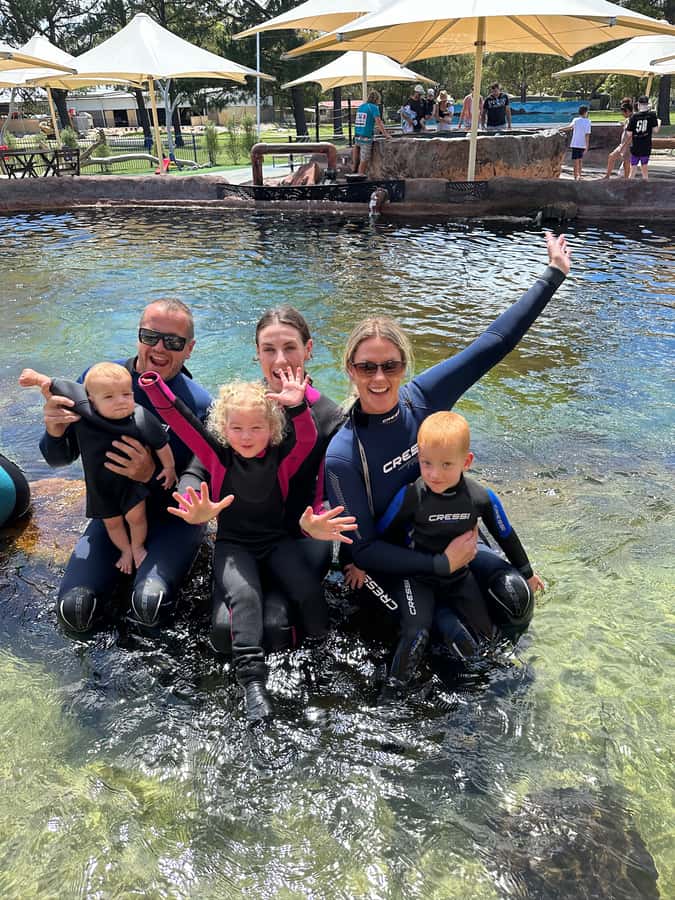
- Two natural-style lagoons: Meet rays in Fingill Lagoon, then see rays and several shark species in Tropical Lagoon.
- Hands-on feeding: You receive food and a feeding stick, letting you offer treats to sharks and rays under keeper supervision.
- Entry Pass means shallow water: You can wade barefoot with clothes over swimwear, but swimming is not allowed.
- Wetsuits open up more access: An upgrade or rental lets you go farther into the water and interact more fully.
- A strong family activity: Children and adults can take part, with talks that explain animal behavior and marine care.
- Plan for the weather: Warm showers are available afterward, but the water and air may feel chilly, especially in winter.
What makes Irukandji different from an aquarium
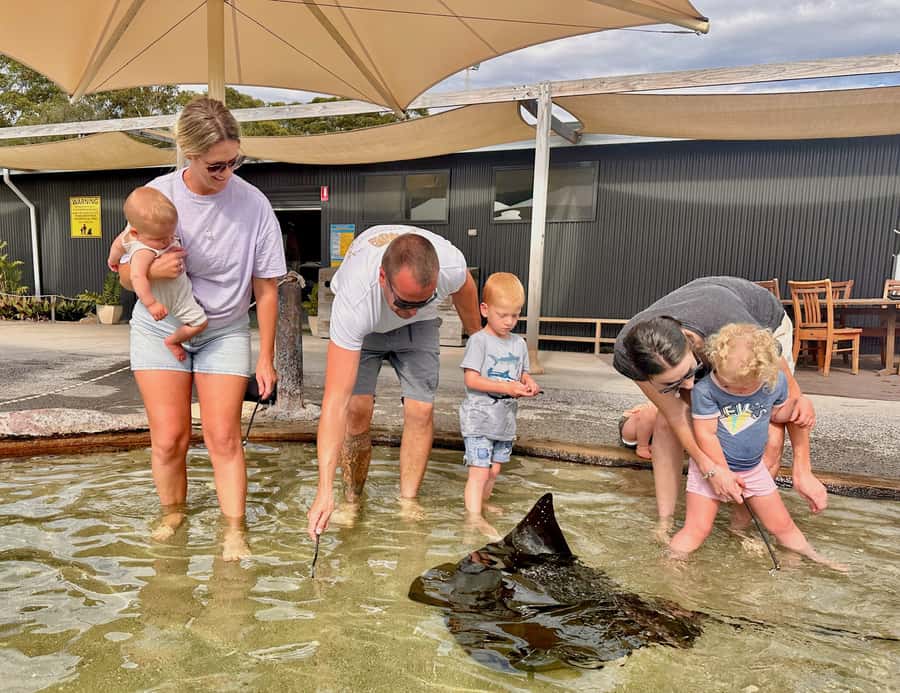
At a standard aquarium, you stand on one side of the glass. Here, you stand in the water with the animals. That change in position matters. A ray may slide across your feet, pause beside your ankles, or take food from the stick in your hand. You are not simply watching a feeding session. You are learning how to move calmly around living creatures.
The experience is designed around close contact, but the animals remain in their own lagoons and keepers stay nearby. Before you enter, staff explain how to behave around the sharks and rays, how to offer food, and how to touch the animals properly.
That guidance makes this a good first encounter for children who may be curious but nervous. The creatures are not presented as movie monsters. The talks focus on their habits, body shapes, skin, feeding, and place in the ocean. It is a small but useful lesson in replacing fear with respect.
The activity has a reported rating of 4.4 from 211 bookings, with especially strong praise for the friendly staff, animal talks, and chance to feed and pet the creatures. The most consistent message is that the value comes from interaction, not from the size of the facility.
Other Australia trips people book alongside this one:
- Sydney: Opera House Guided Tour with Entrance Ticket
★ 4.8 · 8,312 reviews - All Inclusive Blue Mountain,Scenic World,Lunch,Koalas,ferry
★ 5.0 · 7,832 reviews - Great Ocean Road Small-Group Eco Tour from Melbourne
★ 5.0 · 6,607 reviews
Arrival, safety briefing, and choosing your water option
When you arrive, staff guide you through the process and provide the equipment needed for the lagoon. The first decision is how wet you want to get.
With the basic Entry Pass, you wear your own clothes over swimwear and enter barefoot. The intended experience is wading, with your feet and lower legs in the water. You cannot wear shoes in the lagoon, and swimming is not permitted.
You can also use a wetsuit and go farther into the shallows. This is the better choice if you want a closer look at the sharks, more contact with the rays, or a warmer experience in cool weather. Several families found wetsuits particularly helpful in winter, and one parent noted that a young child enjoyed the visit more while wearing one.
I would decide before you arrive. The basic pass is perfectly workable if your priority is feeding rays from the edge and keeping most of your clothes dry. But if you picture yourself standing farther into the lagoon, the wetsuit option makes more sense. One family spent extra time sorting this out at the beginning and felt the children lost patience during the delay.
You may go barefoot or use a pair of souvenir socks that cover your toes. Reef-friendly sunscreen is required, and clothes must be worn on top of swimwear. These rules are practical, not fussy. They help protect the animals and keep the water suitable for close contact.
Fingill Lagoon: rays gliding over your feet
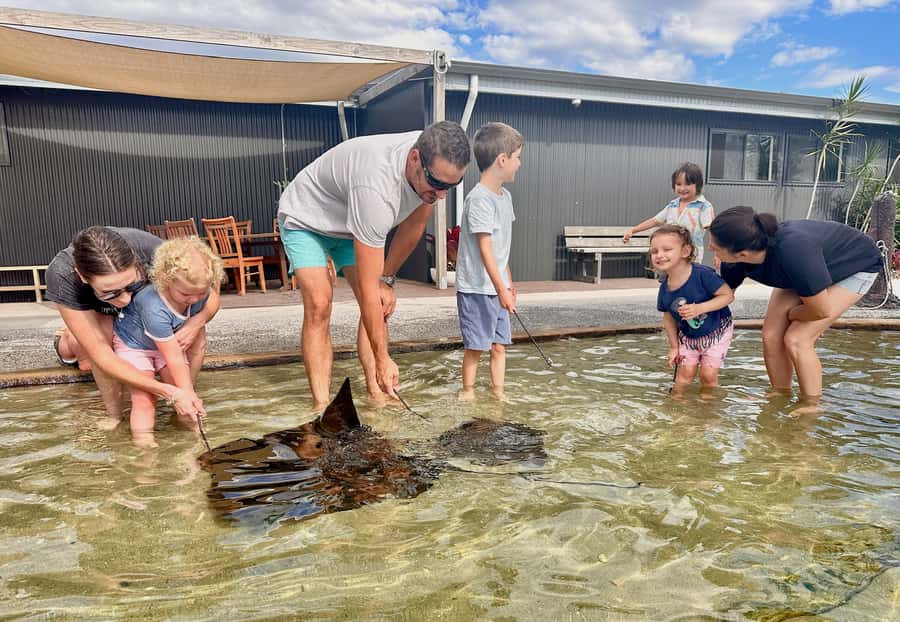
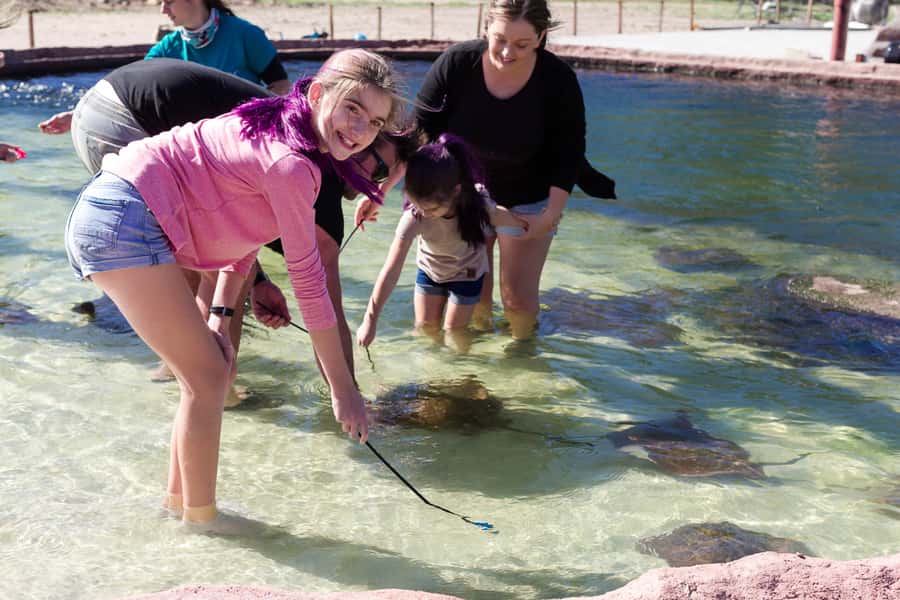
The first lagoon, Fingill, is the ray encounter. This is often the gentlest introduction to the whole visit. You receive a feeding stick and food, then follow a fish keeper around the pool while rays move through the shallows.
The rays are curious and accustomed to people. They may glide over your feet as they follow the food. You can reach down and feel the texture of their skin under the keeper’s instructions. That tactile moment is what makes this experience memorable. A photograph cannot quite prepare you for the sensation of a broad ray passing over your toes.
The feeding method gives you something to do, which helps children stay focused. Instead of standing still and waiting for an animal to appear, you hold out food and watch how the ray approaches. The keeper can also explain how rays feed and why calm movements are important.
This lagoon is likely to be the hit with younger children. A family with children ranging from toddler age to adults found that everyone could take part, while another family left with an eight-year-old who had become completely fascinated by stingrays.
Still, the basic pass may feel limited here if you want to reach farther into the pool. One parent found that only the feet and a small part of the legs went underwater. That is not a flaw in the activity, but it is an important difference between the Entry Pass and a wetsuit encounter.
Tropical Lagoon: sharks, rays, and the Big Shark Talk
The Tropical Lagoon brings a different mood. You will see more rays, along with zebra sharks and brown-banded bamboo sharks. These sharks are very different from the fast, frightening image many people carry in their heads. They move in a controlled way and allow you to observe their patterns and body shape at close range.
The keeper-led talk gives context as you feed and touch the animals. You learn about sharks, rays, and marine conservation while the animals swim around their pool. The staff are happy to answer questions, and their enthusiasm is one of the strongest parts of the visit.
At the Big Shark Talk, keepers invite people into the shallows while they bring up larger tawny nurse sharks and whitetip reef sharks. This is the moment many adults will remember best. It gives you a chance to see larger animals close by without the noise and distance of a large public aquarium.
The sharks may feel less smooth than the rays. One child-focused account found the shark skin surprisingly rough, while the rays felt gentle and friendly. That contrast is useful. You are not simply collecting a series of soft animal touches. You are noticing how different marine animals are built and how those bodies suit their lives.
The talks do take time. If your children want constant action, they may find longer explanations slow, especially when they can see animals nearby. I think the information is worth hearing, but families with short attention spans should set expectations before entering. The educational part is not filler. It is central to the experience.
A completely different kind of day out in Australia:
- From Melbourne: Great Ocean Road, 12 Apostles, Wildlife Tour
★ 4.7 · 6,020 reviews - Ocean Rafting: Whitehaven Beach, Snorkelling & Hill Inlet Lookout
★ 5.0 · 4,777 reviews - Laid back, Yarra Valley Wine Tour: Wine, Cider, Gin, Beer + Choc
★ 5.0 · 4,552 reviews - From Sydney: Blue Mountains Full-Day Trip
★ 4.5 · 4,471 reviews
The role of the fish keepers
The keepers are present around the animals, not just at the start and end. They guide you from pool to pool, explain what food to use, and help you interact safely. That personal attention makes a major difference, especially when a child is unsure about reaching toward a shark or ray.
Their work also keeps the activity calm. You are not left to guess where to stand or how to touch an animal. The keepers can point out which creatures live in each pool and explain why each one receives particular food.
Several families and groups praised the staff’s patience and warmth. That matters at an activity with a wide age range. A group of nine included people from 11 months to 70 years old, and the setup allowed everyone to enjoy the visit at their own pace.
If you have questions about the animals or marine conservation, ask them. The talks are built for learning, and the staff are described as happy to explain things rather than rushing people through.
How long two hours feels
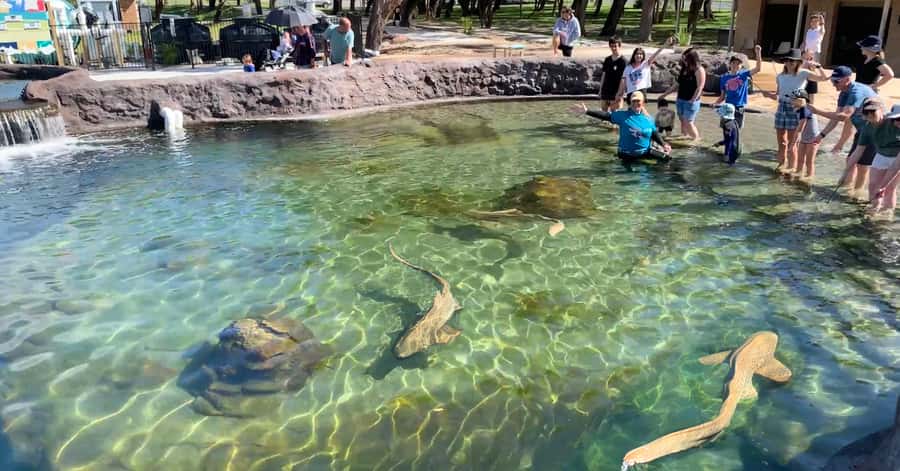
The advertised duration is two hours, with visits running throughout the day from 9 AM to 5 PM. To receive the full experience, arrive by 3:30 PM. Starting times depend on availability.
Two hours gives you enough room for the briefing, equipment, both lagoons, feeding locations, and talks. You should not expect two hours of uninterrupted animal contact. Some time goes into moving between areas, listening, and getting ready.
That rhythm is better for families than a quick, tightly timed encounter. You can watch how the animals behave, take turns feeding, and ask questions. It also means the visit may feel longer to a child who wants immediate contact.
Some people found the timing between activities less clearly explained than it could be. If you are booking an additional wetsuit encounter or another activity, ask staff at the start how the schedule works. The Entry Pass itself gives you access to the aquarium, shallows, feeding stations, and talks, but extra packages may not be included.
Is $29 good value?
At $29 per person, the Entry Pass is reasonably priced for a two-hour activity that includes animal contact, food, talks, aquarium admission, and hot shower facilities. I see the value in the fact that you are doing something, not just looking at displays.
Compared with a large aquarium ticket, this offers fewer exhibits but a more personal connection. If you prefer many species, large tanks, and long indoor viewing areas, this may feel modest. If you want to feed a ray and feel a shark move nearby, the price is easier to justify.
The basic pass is best value for you if:
- You want a family activity with an educational side.
- You are happy to wade only ankle or lower-leg deep.
- You do not need a full swim encounter.
- You want a shorter activity that fits into a day around Anna Bay.
The wetsuit upgrade makes better value for you if getting close to the animals is the main reason for booking. Several people specifically advised choosing a wetsuit from the start because the basic option can limit how far into the lagoon you go.
Package names and inclusions can be confusing, so read the booking details carefully. An Entry Pass does not automatically include every deeper encounter or snorkel option.
Comfort, clothing, and the practical details
Wear swimwear underneath clothes, but remember that clothes must remain on top. You enter the lagoon without shoes, and only reef-friendly sunscreen is allowed.
The water can feel cold, particularly in winter or on a gray day. Wetsuits help, and warm showers are available afterward. Bring a change of clothes if you choose the basic option and do not want to remain damp around the facility.
The activity is wheelchair accessible, although the lagoon itself has specific barefoot entry rules. If you need details about moving from the entry area into the water, contact the provider before booking.
Unaccompanied minors are not allowed. Children under 12 must have an adult with them in the water at all times. This is not a drop-off activity. Plan to take part with your child, not watch from a distant bench.
After the animal encounters, you can rinse off, dry with a towel, and visit the gift shop. It sells sustainable gifts, soft toys, snacks, and cold drinks. That gives the visit a gentle finish, though the shop is an add-on rather than a reason to come.
Who will enjoy this most?
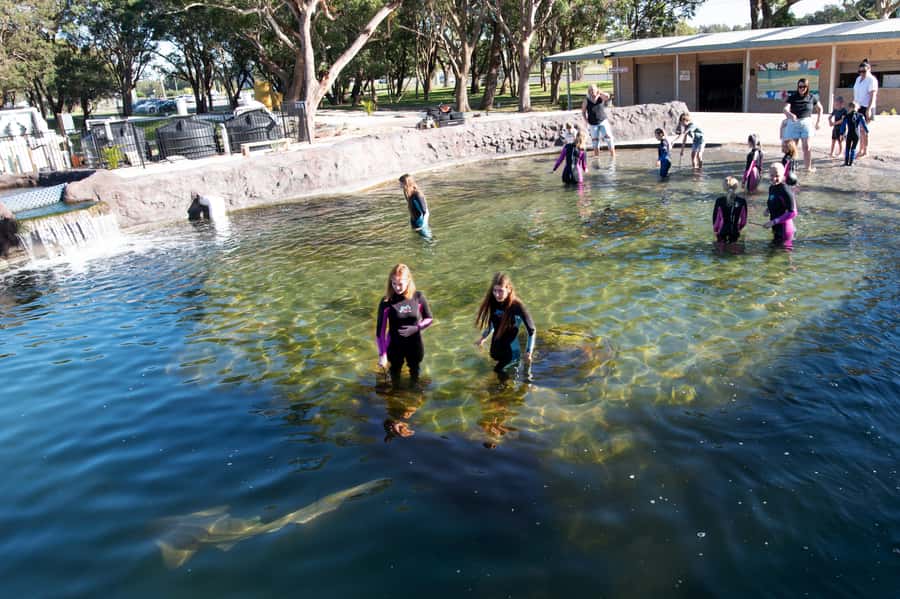
I would recommend Irukandji to families, curious adults, and anyone who wants a hands-on marine activity without committing to a full swimming session. It is also a good choice for a non-beach day, particularly when you want something linked to the sea but not dependent on open-water conditions.
Young children can enjoy the rays, though they need close adult supervision. Older children may get more from the shark talks and conservation explanations. Adults should not assume it is only for kids. The chance to stand beside a tawny nurse shark or feel a ray move across your feet has plenty of appeal at any age.
You may want to reconsider if you dislike cold water, do not want to get your feet wet, or expect a fast-moving adventure. This is wading, feeding, listening, and observing. The mood is calm and educational, with moments of excitement rather than nonstop thrills.
Should you book the Irukandji Entry Pass?
Book it if you want a personal, family-friendly meeting with sharks and rays at a fair price. The strongest reasons are the ray feeding in Fingill Lagoon, the shark encounters in Tropical Lagoon, and the patient keeper guidance throughout.
Choose the wetsuit option from the beginning if you want meaningful access beyond your ankles or if you are visiting in cool weather. Keep the basic pass if staying mostly dry is important and you are content to interact from the edge.
For a child who is fascinated by sea creatures, this can become one of the most memorable stops around Anna Bay. For adults, the conservation talks add purpose to the fun. Just allow time for the explanations, arrive early enough for the full two-hour visit, and check exactly which add-ons your booking includes.
FAQ
How long does the Irukandji Entry Pass experience last?
The experience lasts two hours. Tours run throughout the day from 9 AM to 5 PM, and you should arrive by 3:30 PM to receive the full experience.
What animals can I see and touch?
You can interact with rays in Fingill Lagoon and meet rays, zebra sharks, brown-banded bamboo sharks, tawny nurse sharks, and whitetip reef sharks in the Tropical Lagoon.
Can I feed the sharks and rays?
Yes. Food and a feeding stick are provided at various feeding locations, with keepers guiding you through the process.
Do I have to wear a wetsuit?
No. The Entry Pass allows you to wear your own clothes over swimwear and wade barefoot in the shallows. A wetsuit option is available if you want to go farther into the water.
Can I swim in the lagoons?
No. Swimming is not permitted. The activity involves wading in the water.
What should I wear?
Wear swimwear with clothes over the top. You must enter the lagoon without shoes, and only reef-friendly sunscreen is permitted.
Are children allowed to take part?
Yes, but unaccompanied minors are not allowed. Children under 12 must have an adult with them in the water at all times.
Are showers available afterward?
Yes. Hot shower facilities are included, along with access to towels for drying down afterward.
Is the experience wheelchair accessible?
Yes, the activity is listed as wheelchair accessible. Contact Irukandji Shark and Ray Encounters if you need details about specific access needs.
Just added around Australia
- Darwin Combo: The Bombing of Darwin Experience & Darwin Harbour Cruise★ 4.5 · 123 reviews
- Queensland: 90 Minute Capricorn Caves Explorer Tour★ 4.8 · 123 reviews
- Sydney Half Day Private Tour: See Sydney Opera House and Bondi★ 5.0 · 123 reviews
- Sydney Speed Boat Adventure Harbour Tour★ 5.0 · 124 reviews
- From Melbourne: Peninsula Hot Springs & Bathing Boxes Tour★ 4.8 · 124 reviews
- Rottnest Island Full-Day Trip With Guided Island Tour From Perth★ 4.5 · 124 reviews
- From Sydney: Explore Canberra Includes Buffet Lunch★ 4.3 · 124 reviews
- Fitzroy True Crime Walking Tour★ 5.0 · 124 reviews