
Reviewed · WALKING TOURS
Around the Square Adelaide Walking Tour
Adelaide’s past is written in stone. The Around the Square Adelaide Walking Tour makes a smart first morning in the city, using Victoria Square and nearby buildings to explain Adelaide’s founders, civic life, Indigenous connections, and distinctive architecture. I especially like the small-group format and the way the walk links buildings to real people, rather than offering a string of dates. The chance to see surviving features inside some buildings, when access allows, is another strong point.
The tour costs $36.93 per person and lasts about two hours. That is fair value for a guided introduction, particularly if you are new to Adelaide and want a quick sense of direction. The main drawback is simple: this is a walking tour in all weather, with a moderate amount of time on your feet, and some stops are brief outdoor explanations rather than full interior visits.
In This Review
- Key details before you book
- Why Victoria Square is a useful starting point
- St Francis Xavier Cathedral and Mary MacKillop
- Adelaide Town Hall sets the route
- Victoria Square, Tarntanyangga, and its statues
- The Torrens Building and the land title system
- The former Treasury Building and Adelaide’s government past
- John McDouall Stuart and the State Government quarter
- Courts, marble, and the Three Rivers Fountain
- Former office buildings and an engineering story
- Graeme’s storytelling makes the difference
- Price, group size, and practical value
- Who should book this Adelaide walk?
- Should you book the Around the Square Adelaide Walking Tour?
- FAQ
- Where does the Around the Square Adelaide Walking Tour start?
- What time does the tour begin?
- Where does the tour finish?
- How long does the walking tour last?
- How much does the tour cost?
- Is transport included?
- What is included in the price?
- How large can the group be?
- Does the tour operate in bad weather?
Key details before you book
- Start at Adelaide Town Hall at 10:00 am: The tour begins at 128 King William Street, a central and easy-to-find meeting point.
- Finish at Queen Victoria’s statue: You end in Victoria Square, also known as Tarntanyangga, rather than returning to the Town Hall.
- Graeme is the central strength: His stories, local knowledge, and relaxed delivery receive repeated praise, including from people who booked private or very small tours.
- The route covers more than the square: Expect civic buildings, courts, statues, former government offices, fountains, and architectural details around the area.
- Plan for a moderate walk: Wear comfortable shoes and bring clothing suited to the weather, since the tour operates in all conditions.
- Best for first-time visitors and history fans: It gives you useful context before you explore Adelaide on your own.
Why Victoria Square is a useful starting point
Victoria Square is not just an open patch of grass in the middle of Adelaide. It gives the guide a compact stage for explaining how the city developed, who held power, and how public space changed over time. The square is also known as Tarntanyangga, a name that points to its Indigenous connection and reminds you that Adelaide’s story did not begin with colonial settlement.
I like this focus because it avoids the usual city tour problem: racing from one sight to another with little time to connect the dots. Here, the buildings around the square become chapters in one story. You hear about government, law, religion, exploration, business, and public memory within a fairly small area.
The tour is described as easy-paced, but you still need a moderate level of fitness. There are several stops, and the group moves between them on foot. This is not a fast march, yet it is also not a seated sightseeing activity. If you have limited mobility, contact the operator before booking to check whether the route suits you.
More Walking Tours in Adelaide
- Ultimate Adelaide Walking Tour
★ 5.0 · 222 reviews - Cultural Caper Adelaide Walking Tour
★ 5.0 · 122 reviews - Welcome to Adelaide Walking Tour
★ 5.0 · 119 reviews
St Francis Xavier Cathedral and Mary MacKillop
The first substantial stop is St Francis Xavier Cathedral, where the guide discusses its importance, architectural features, earlier history, and role today. Even if you are not especially interested in religious buildings, this is a useful opening because the cathedral reflects the role of faith and community institutions in Adelaide’s growth.
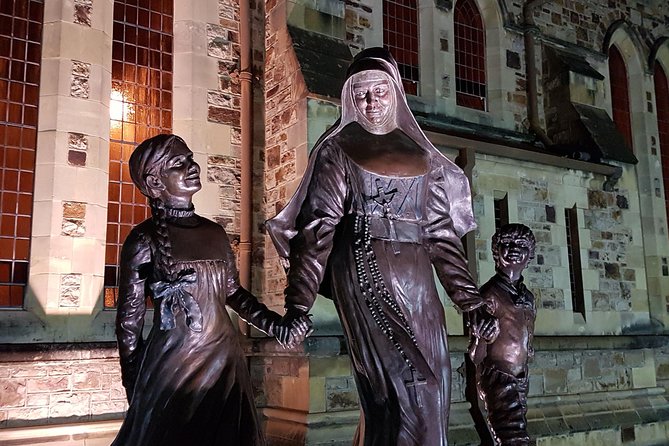
The visit to the cathedral is scheduled for about 10 minutes, followed by around five minutes at the statue of Mother Mary MacKillop. Her story adds a human edge to the stop. You hear about her sainthood, the order of nuns she founded, and the charity work linked to her life.
This is one of the tour’s better habits: a building is paired with a person. You are not left admiring a facade without knowing why it matters. The story of Mary MacKillop also brings questions of education, social care, and public service into the walk.
Admission is listed as free. The tour does not promise a full interior visit at every site, so you should think of this as a guided orientation to the cathedral and statue, not a dedicated cathedral tour.
Adelaide Town Hall sets the route
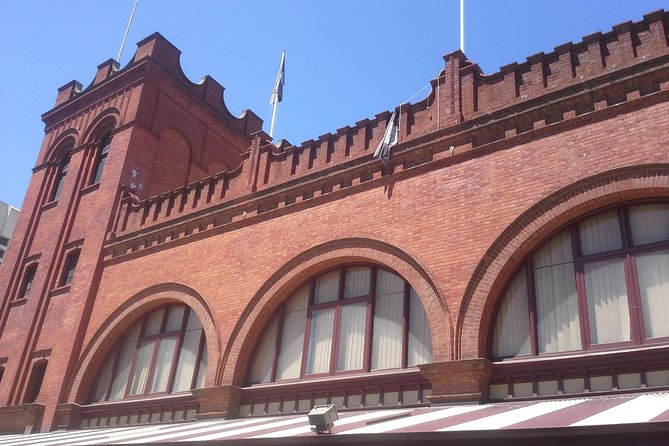
Adelaide Town Hall is both the starting point and an important early lesson in civic life. The guide introduces Adelaide’s development, explains the route and timing, and discusses early local government in South Australia.
This housekeeping talk matters more than it may sound. You learn what the two hours will cover, how the walk will proceed, and what kind of questions the guide can handle. Several people praised Graeme for being prepared, arriving on time, and answering questions without making the tour feel stiff.
The Town Hall also gives the walk a clear civic theme. Instead of treating Adelaide as a collection of attractive old buildings, Graeme explains how local government helped shape the city. That context makes later stops, particularly the courts and administrative buildings, easier to understand.
The meeting point is practical for anyone staying in central Adelaide. You need to arrange your own way there, as hotel pickup, drop-off, and transport between attractions are not included.
Victoria Square, Tarntanyangga, and its statues
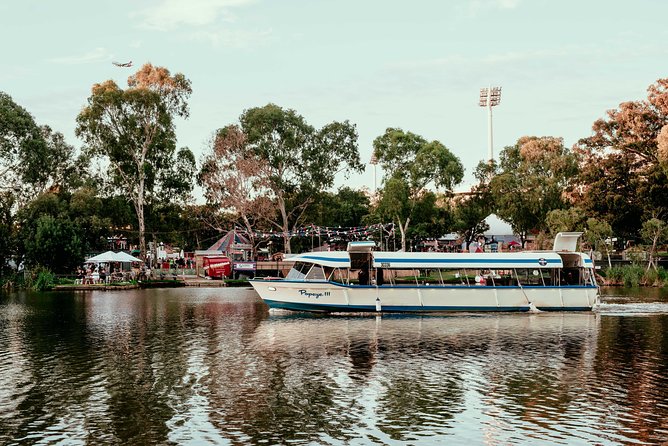
The tour then spends meaningful time in Victoria Square itself. About 10 minutes is devoted to the square’s past, development, and Indigenous links, followed by short discussions of the Queen Victoria statue and the Charles Cameron Kingston statue.
The Queen Victoria statue is also the official end point, so pay attention to where you finish. It is a useful place to continue exploring the city independently after the guide departs.
Charles Cameron Kingston gives the tour another chance to connect Adelaide’s public spaces with political figures. The exact depth of the discussion may depend on the group’s questions and pace, but the structure is clear: the guide uses statues not as decoration, but as prompts for discussing people and decisions that affected South Australia.
The square section lasts about 23 minutes in total, making it one of the longer parts of the route. That is helpful if you want orientation, but it may feel slow if your main interest is architecture rather than civic history.
A completely different kind of day out in Adelaide:
- Barossa Premium Wine Tasting Tour & lunch Departs 7 days a week
★ 5.0 · 1,475 reviews - Adelaide: Barossa Premium Wine Tasting tour & Winery Lunch
★ 4.8 · 1,452 reviews - Kangaroo Island Full Day Experience by Ferry Including Lunch
★ 4.5 · 1,202 reviews - Discover Barossa: 4 Wine Tastings, Gourmet Lunch, and Hidden Gems
★ 5.0 · 1,027 reviews
The Torrens Building and the land title system
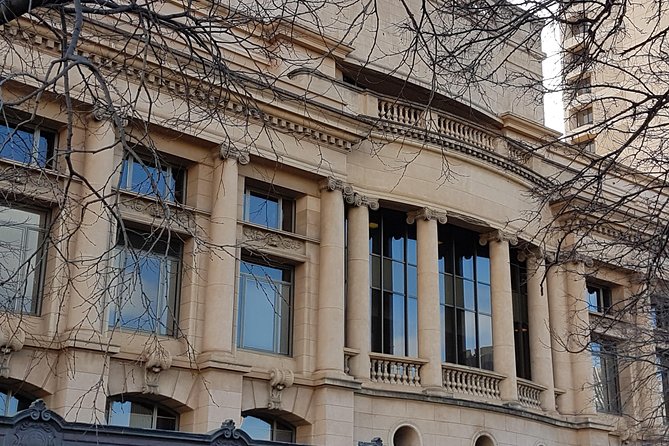
A short stop at the Torrens Building introduces Sir Richard Torrens and the land title system associated with him. The scheduled time is only four minutes, so do not expect a detailed legal lecture.
Still, this is an unusually useful detail for a city walk. Land ownership systems can sound dry in a textbook, but the guide connects the building and its occupants with a system that shaped property records in South Australia and beyond. It is a good example of how the tour finds stories in places you might otherwise pass without a glance.
The brief timing also shows how the walk is paced. Some stops receive a full explanation, while others act as quick links between bigger subjects. If you like a tightly edited tour, this works well. If you want to go inside every building, you may find the route too broad.
The former Treasury Building and Adelaide’s government past
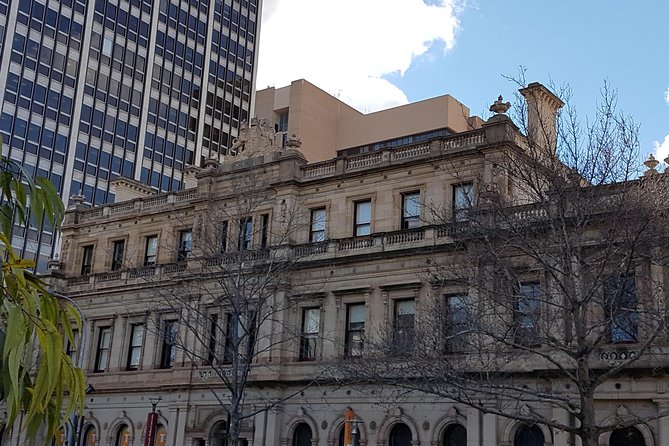
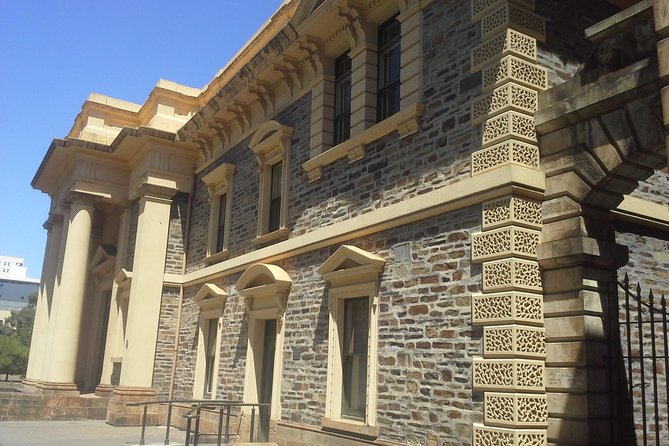
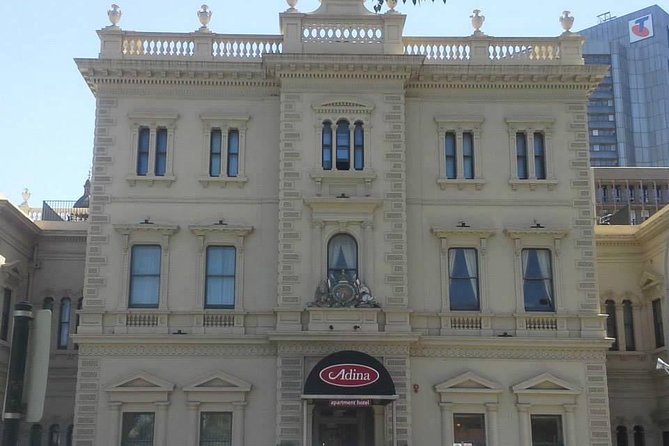
The Adina Apartments, formerly the Treasury Building, receives about 10 minutes. Here, the guide discusses the building’s past, its courtyard and tunnels, notable people who visited, and the role of Cabinet before 1968.
This stop sounds particularly good for anyone interested in how government worked before modern offices took over. The mention of tunnels and the courtyard adds physical detail, while the Cabinet connection gives the building political weight.
The former Treasury Building also shows how Adelaide’s older structures have changed use. A building that once housed government functions now serves a different purpose. That kind of change is central to understanding a living city, and it keeps the tour from becoming a simple celebration of old facades.
Several people appreciated being taken inside historic buildings when possible. That experience is not guaranteed at every stop, but if access is available, it can make this part of the tour much more memorable than looking through a barrier from the pavement.
John McDouall Stuart and the State Government quarter

The John McDouall Stuart statue gets about five minutes. The guide tells the story of Stuart’s exploration, his role in opening routes across the interior, and his later legacy.
Exploration stories often dominate Australian city tours, so the value here depends on how they are handled. The tour appears to place Stuart within the wider development of South Australia, alongside founders, officials, and institutions. That gives you more context than a simple account of a famous expedition.
A short stop at the State Admin Centre follows. The guide outlines the buildings’ current use by State Government ministers and staff. This helps you see the area as an active government quarter, not a museum district frozen in the past.
You should expect a quick overview rather than access to government interiors. The point is to understand what the buildings do and why they occupy such an important place in central Adelaide.
Courts, marble, and the Three Rivers Fountain
The South Australian Water Building receives a short explanation about its educational focus. Next comes the Dame Roma Mitchell Commonwealth Law Courts, where the guide outlines the building’s use, inhabitants, and the types of courts inside.
These stops are useful because they broaden the tour beyond churches, statues, and nineteenth-century civic buildings. You see how public institutions continue to operate in the same central area, often in buildings with their own design stories.
The Sir Samuel Way Court Building gets about 10 minutes and offers a more substantial architectural tale. The building once had a life as a department store, and its marble staircase remains a key feature. The guide also explains its current use and legacy.
I like this stop because it shows that Adelaide’s buildings can have several lives. A former store becoming part of the legal world is the sort of detail that sticks in your mind and changes how you read the street.
The Three Rivers Fountain follows, with around nine minutes devoted to its construction, meaning, and history. The fountain adds a visual break after several institutional buildings, and its story helps explain how public art and civic symbolism were used in the city.
Former office buildings and an engineering story
The final group of stops includes the former SGIC Building, former Harbour Board Building, and former MLC Building. Each receives a short explanation, with the Harbour Board Building getting particular attention for its engineering, architecture, and history.
This closing section is well suited to people who enjoy urban details. You may not know the companies or agencies connected with these buildings, but the guide gives you reasons to notice their forms and former purposes.
The short timings mean you will need to listen closely. They also prevent the tour from becoming repetitive. After two hours, you have seen a range of buildings and heard stories about law, insurance, government, commerce, exploration, religion, and public works.
One practical point: the itinerary lists the tour ending at the Queen Victoria statue in Victoria Square. Some past participants describe beginning and finishing around the Town Hall, so meeting arrangements may vary by the exact operating format. Confirm the current end point when booking, and do not plan a tight connection immediately afterward.
Graeme’s storytelling makes the difference
The strongest theme running through the feedback is Graeme’s delivery. He is described as friendly, prepared, articulate, enthusiastic, and passionate about Adelaide. People repeatedly valued his anecdotes, especially the less polished stories about founders and early residents, including accounts of drinking and personal flaws.
That matters. A city tour is only as useful as the person connecting the facts. Graeme appears to make room for questions and adjust to the group’s energy. One person joined alone and still received patient attention. Another small group found it easy to hear everything.
A visit inside the State Library’s Mortlock Library was also described as an unexpected bonus on one tour. It is not part of the stated route, so treat it as a possible addition rather than a promise. The same applies to entering other historic buildings. Access can depend on the day and the site.
Price, group size, and practical value
At $36.93 per person, this is not the cheapest way to walk around Victoria Square, since you can visit the public streets and statues without paying. You are paying for the interpretation: the connections between buildings, the stories behind names, and the chance to ask questions while you walk.
The value is strongest at the beginning of an Adelaide visit. After two hours, you should have a clearer sense of the central streets and a list of places worth revisiting on your own. The tour is also useful for anyone who has already seen the main sights but wants to understand what they were looking at.
The maximum is 20 people overall, with a maximum of 15 people per booking. That should keep the group manageable, though the experience may feel more personal if numbers are low. It has sometimes operated with only one or two people, which gives Graeme more room to adapt the route and answer questions.
The tour includes a local guide only. Food, drinks, transport, and hotel pickup are not included. Confirmation arrives at booking, and free cancellation is available up to 24 hours before the start time. A cancellation inside that window is not refundable.
Who should book this Adelaide walk?
I would choose this tour if you are visiting Adelaide for the first time, enjoy local stories, or prefer to understand a city before exploring it alone. It also suits repeat visitors who like architecture, government buildings, public monuments, and the people behind place names.
Families can join, but children must be accompanied by an adult. The relaxed pace suits many ages and abilities, according to the supplied experience details, but you still need moderate physical fitness and comfortable shoes.
I would not choose it if you want a long interior sightseeing tour, a food-focused walk, or transport between attractions. The experience is mainly about explanation, observation, and walking around a compact central area.
Should you book the Around the Square Adelaide Walking Tour?
Yes, if you want a compact and story-led introduction to Adelaide. The strongest reason to book is Graeme’s personal approach: he brings together civic buildings, statues, explorers, politicians, religious figures, and odd little details that are easy to miss on your own.
The tour offers good value at $36.93 when you use it as an orientation for the rest of your stay. Book it early in your visit, wear sensible shoes, allow for weather, and keep some time afterward to revisit the buildings or continue from the Queen Victoria statue. Skip it only if you prefer to sightsee independently or need a fully indoor activity.
FAQ
Where does the Around the Square Adelaide Walking Tour start?
It starts at Adelaide Town Hall, 128 King William Street, Adelaide, South Australia.
What time does the tour begin?
The stated start time is 10:00 am.
Where does the tour finish?
The tour finishes in front of the Queen Victoria statue in Victoria Square, also called Tarntanyangga.
How long does the walking tour last?
The tour lasts approximately two hours.
How much does the tour cost?
The listed price is $36.93 per person.
Is transport included?
No. Hotel pickup, hotel drop-off, and transportation to and from attractions are not included.
What is included in the price?
A local guide is included. Food and drinks are not included.
How large can the group be?
The activity has a maximum of 20 participants, with a maximum of 15 people per booking.
Does the tour operate in bad weather?
Yes. It operates in all weather conditions, so you should dress appropriately and wear comfortable shoes.
Just added around Adelaide
- Jacob’s Creek Double Barrel Experience★ 5.0 · 25 reviews
- McLaren Vale South Hop-On Hop-Off Winery Tour★ 5.0 · 25 reviews
- Adelaide City to Sea Bike Tour★ 5.0 · 26 reviews
- Best of SA, Hahndorf , Victor Harbor & d’arenberg ‘Cube’ Tour★ 4.5 · 26 reviews
- d’Arenberg Cube / McLaren Vale Regional Tour★ 4.5 · 26 reviews
- Barossa: Enjoy Wine, Lunch, Brewery, Chocolate & Wildlife★ 4.5 · 26 reviews
- Barossa Valley: Hot Air Balloon Flight★ 4.5 · 26 reviews
- Barossa Private Wine Tour★ 5.0 · 26 reviews
Walking Tours, compared.
Sydney Opera House Official Guided Walking Tour
Read our review →
Blue Mountains Tour with Waterfall Walk & Lunch
Read our review →
Ultimate Melbourne Walking Tour: History, Laneways & Culture
Read our review →
Great Ocean Road Tour Plus Koalas, Forest Walk and Morning Tea
Read our review →
Blue Mountains Small Group Tour with Waterfall Walk & Fresh Lunch
Read our review →
Maria Island Cruise and Guided Walk Day Tour with Lunch and Drinks
Read our review →Browse the lists this tour appears in