
Reviewed · HISTORICAL TOURS
Historical True Crime Walking Tour of East Sydney
Dark stories wear fine clothes here. This two-hour walk links Darlinghurst’s Victorian and Edwardian streets with crimes, gang fights, prostitution, drug dealing, and old Sydney justice. I like the easy Hyde Park meeting point and the way the tour adds social history to its murder tales. Guide Elliott receives especially strong praise for making the past clear and lively.
I also like that the walk is not a marathon. You cover a lot of ground in about two hours, but the route is manageable. The main consideration is subject matter: cold cases, killers, slums, and violence are central, so this suits curious adults more than anyone looking for a gentle architecture stroll.
In This Review
- Key points to know before you book
- Why East Sydney makes such a good crime walk
- Starting at Hyde Park at 11:00 am
- Entering Darlinghurst and the old streets of Razorhurst
- Sydney Gaol, hangmen, and the machinery of punishment
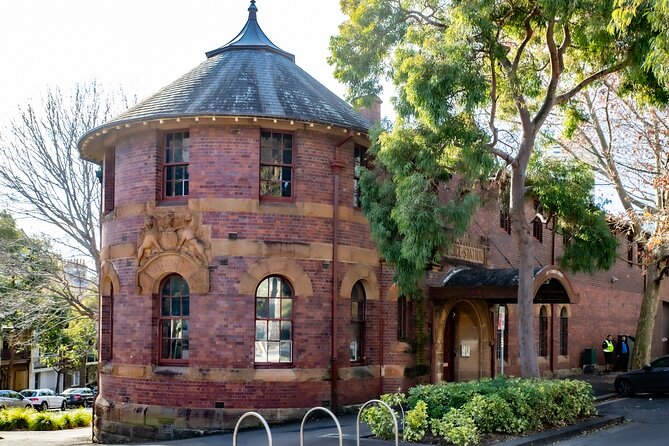
- The old police station and courthouse
- Finishing at Kinselas Hotel on Taylor Square
- Is $24 good value for two hours?
- Walking comfort, group size, and tone
- Who will enjoy this East Sydney tour most?
- Should you book the Historical True Crime Walking Tour?
- FAQ
- Where does the tour start?
- What time does the tour begin?
- How long does the experience last?
- Where does the tour finish?
- How much does the tour cost?
- How large can the group be?
- What areas does the tour cover?
- What historical periods are discussed?
- Can I cancel for a refund?
Key points to know before you book
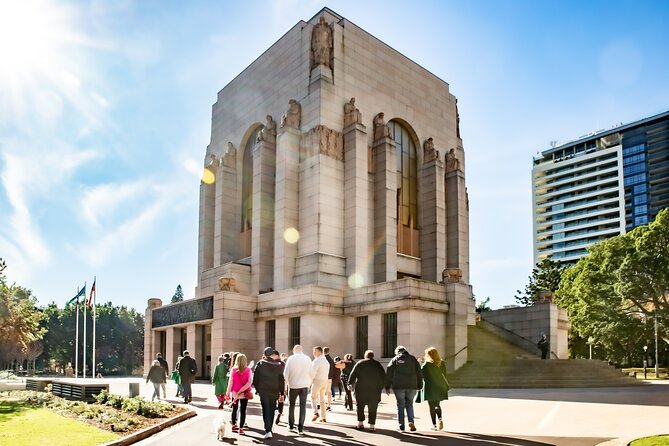
- Hyde Park begins the story: You hear about Aboriginal use of the park, an 1830 cricket match, the ANZAC Memorial, and a 1920s murder case.
- Darlinghurst was once called Razorhurst: Old gang conflicts and street violence give this polished inner-city suburb a darker edge.
- The route covers crime from 1860 to 1970: The stories reach well beyond one famous murder and place crime in its social setting.
- Elliott is a major strength: His delivery is praised for connecting murder cases with convict life, poverty, policing, and changing Sydney society.
- The finish is at Kinselas Hotel: A former 1930s funeral parlour now used as a bar, on Taylor Square and beside Sydney’s Mardi Gras setting.
- The group can reach 25 people: That keeps the price low, though a larger group may make it harder to hear every detail.
Why East Sydney makes such a good crime walk
Sydney’s dark past is not confined to a museum display. It sits beside grand terraces, busy roads, old courthouses, bars, and parks. That contrast gives this tour its punch. You are not only hearing about criminals. You are seeing the streets where the city’s social rules were tested and often broken.
Darlinghurst, also known as East Sydney, was considered Australia’s most dangerous suburb between 1890 and 1960. That label came from its slums, gang activity, prostitution, drug trade, and hard life around the gaol and police courts. Today, its architecture can look elegant and calm. The tour asks you to picture another version of the same streets.
I like that approach. A crime tour can become a parade of gruesome facts, but this route has a wider purpose. It shows how poverty, convict punishment, policing, nightlife, and public reputation shaped the suburb. The murder stories draw you in, then the social background helps explain why the area developed such a rough name.
The 5 out of 5 rating from 53 published ratings, along with a 100 percent recommendation figure, points to a consistently strong experience. The praise focuses less on theatrical shock and more on the guide’s ability to tell a good story while explaining the history around it.
More Walking Tours in Sydney
- Sydney Opera House Official Guided Walking Tour
★ 4.5 · 3,770 reviews - From Sydney: Blue Mountains Tour with Waterfall Walk & Lunch
★ 4.8 · 2,400 reviews - Sydney The Rocks Guided Walking Tour
★ 5.0 · 1,546 reviews
Starting at Hyde Park at 11:00 am
The meeting point is at Museum in Sydney, New South Wales 2000, near Hyde Park. The start time is 11:00 am, and the location is designed to be easy to find. That matters in Sydney, where a complicated meeting point can waste the first part of your morning.
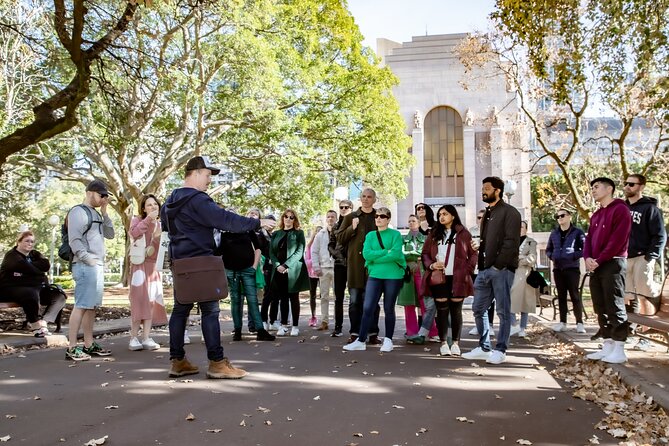
Hyde Park gives the tour a useful opening. Before the route turns toward Darlinghurst, you get a quick look at the park’s earlier roles and major landmarks. The stop lasts about 30 minutes and includes the ANZAC Memorial and pond.
One of the most valuable details is the reminder that Aboriginal people used Hyde Park before colonization. That places Sydney’s later crimes within a much older human story. The tour also covers the first cricket match between Australians and the English in 1830, an amusing bit of sporting history that shows how many layers can sit in one public park.
Then the tone darkens. You hear about a cold case murder from the 1920s. Because the case is tied to a real place rather than an abstract date, the story has more force. You can look around the park while considering how public spaces have changed, and how some crimes remain unresolved long after the headlines fade.
The Hyde Park portion is also a good test of the guide’s style. If you want only sensational crime facts, the broader background may feel like a slow start. I see it as a strength. The historical setting gives the later stories more weight and keeps the walk from feeling like a collection of disconnected shock tales.
Entering Darlinghurst and the old streets of Razorhurst
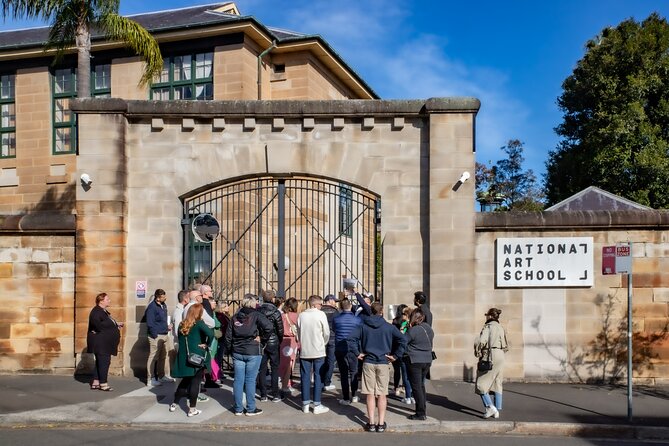
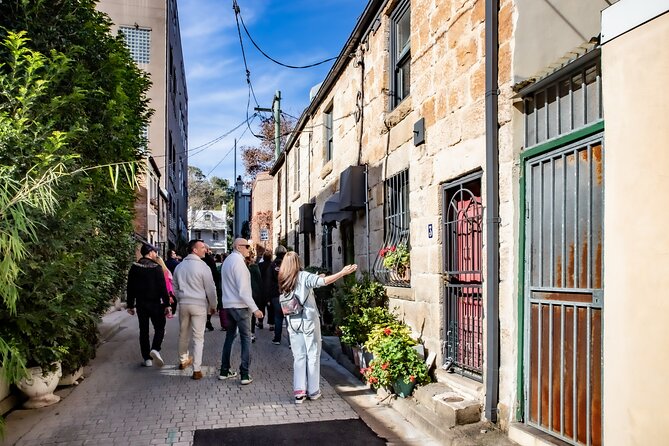
After Hyde Park, the tour moves into Darlinghurst. This is where most of the walking and storytelling take place, with about 90 minutes spent exploring streets and old lanes connected to crime between 1860 and 1970.
The name Razorhurst captures the old mood. It refers to an area known for gang fights, with knives and street violence forming part of its reputation. You will hear about criminals, prostitutes, and drug dealers, but the point is not simply to list bad behavior. The stories reveal how a neighborhood can gain a public identity and how that identity can linger after the streets change.
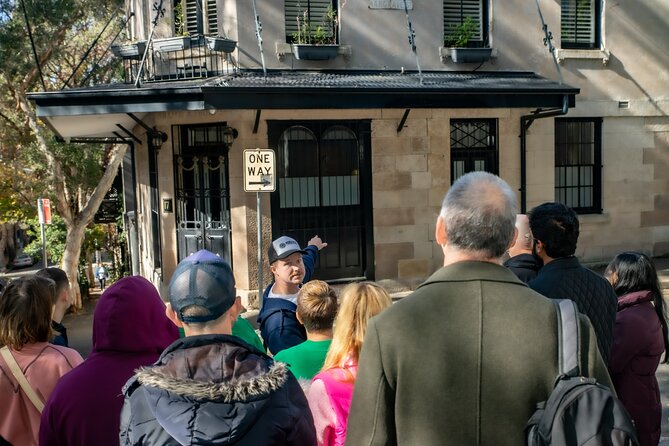
I like the way the route uses architecture as a counterpoint. Victorian and Edwardian buildings give you something attractive to look at while the guide explains murders, crime scenes, and social hardship. You may find yourself studying decorative facades one moment and hearing about a violent past the next.
The tour includes crime scenes associated with the Parkland Killer and the Mutilator Murders of the 1960s. These are among the darker sections, and the wording alone tells you what kind of material to expect. If you prefer light sightseeing, this may be uncomfortable. If you are interested in how notorious cases affect a neighborhood’s memory, these stops should be the main reason to come.
The coverage reaches from 1860 to 1970, so the tour can show change over time. You are not hearing only about one era or one type of offender. Convict-era institutions, nineteenth-century streets, twentieth-century gangs, and 1960s murder cases all become part of the same local story.
Sydney Gaol, hangmen, and the machinery of punishment
One of the strongest historical stops is the old Sydney Gaol, built by convicts in 1841. The building gives the tour a firm link to colonial punishment and the lives of inmates. You hear about the prisoners held there and the hangmen who carried out executions.
This section adds a needed layer to the crime stories. A tour focused only on murderers can make justice seem simple: bad person, punishment, case closed. The gaol shows a more complicated system, shaped by convict labor, harsh discipline, public fear, and official power.
The fact that convicts built the gaol is especially telling. It connects the people confined inside with the physical structure around them. The building was not just a backdrop for punishment. It was part of a system that controlled labor, movement, and behavior.
I would pay close attention here if you enjoy legal or prison history. It may be less graphic than the murder scenes, but it helps explain why Darlinghurst became such a key setting for stories about crime. The area contained both the people accused of wrongdoing and the institutions created to control them.
The tour does not list an entry ticket for the gaol or other stops. This is a street-based experience, so you should expect to view the area from outside rather than tour every building’s interior. That keeps the $24 price reasonable, but it also means the guide’s storytelling carries much of the experience.
More history tours in Sydney:
- Sydney: The Rocks 90-Minute History Walking Tour
★ 4.7 · 1,092 reviews - Sydney The Rocks Historical Pub Tour
★ 5.0 · 251 reviews - Sydney Convicts, History & The Rocks 2.5-Hour Walking Tour
★ 4.9 · 181 reviews - Sydney Photography Course in the Historic Rocks Area
★ 5.0 · 35 reviews
The old police station and courthouse
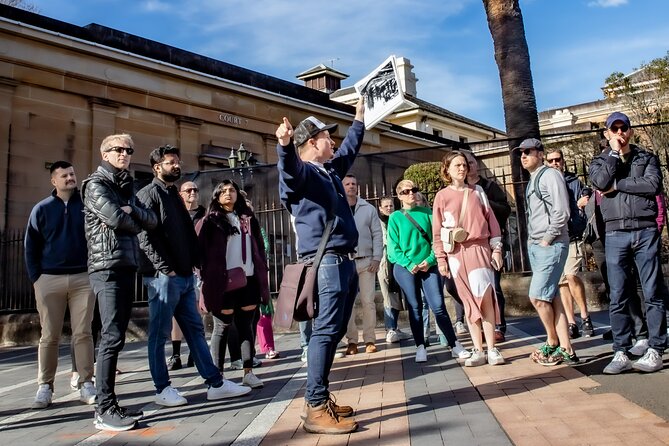
The next important stop is the old Police Station and Courthouse. Together with the gaol, these sites form a useful trio: arrest, trial, and punishment. You can follow the movement of a case through the institutions that once handled it.
This is where Elliott’s wider historical approach appears most useful. The strongest description of his work points to more than murder stories. He explains the social side of East Sydney from the convict years through the 1970s, helping you understand how policing and court life fit into the suburb.
That balance is important. Crime stories often focus on individual villains, but a police station and courthouse direct your attention to the city around them. Who was watched? Who was arrested? How did authorities respond to gang activity and poverty? The supplied details do not promise exact answers to every question, but the route is clearly built to place crime inside its setting.
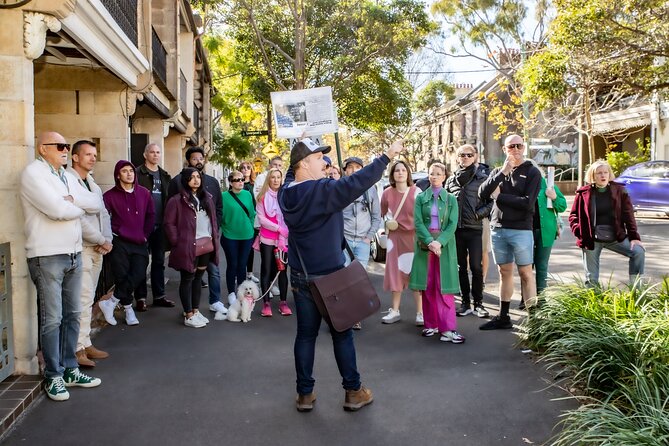
The tour is also described as entertaining, so you should expect a guide-led performance rather than a dry lecture. That can make two hours pass quickly. It also means the quality of the experience depends heavily on the guide’s delivery and the group’s ability to hear. With a maximum of 25 people, the group is limited, but it is not private.
Finishing at Kinselas Hotel on Taylor Square
The route ends at Kinselas Hotel, 383 Bourke Street, Darlinghurst, on Taylor Square. This former 1930s funeral parlour has been converted into a bar, making it a fitting final stop for a tour concerned with death, memory, and changing city life.
Taylor Square also provides one of Sydney’s best-known modern settings. It is associated with the city’s LGBT Mardi Gras, so the finish connects the old Darlinghurst of gaols and gang fights with a later identity shaped by nightlife, celebration, and queer culture.
That ending gives the route a sense of change. You begin with colonial and early twentieth-century history, move through crime scenes and institutions, and finish in a place now used for social life. The suburb is not frozen in its worst period. The old reputation remains part of the story, but it is only one part.
The ending is practical, too. You are left at a recognizable location in Darlinghurst rather than returned to the starting point. From there, you can continue exploring East Sydney or use nearby public transport. The information provided does not specify the exact transport options, so you should check your own route before booking if you need to reach a particular destination promptly.
Is $24 good value for two hours?
At $24, this is a modestly priced way to spend part of a Sydney day. You get a two-hour guided walk, several historic areas, crime stories from roughly 1860 to 1970, and context about convict life, policing, architecture, and social change.
The value rests in the guide rather than admission fees. You are paying for interpretation and access to stories you are unlikely to get from simply walking past the buildings. Elliott is repeatedly praised for strong historical knowledge and an engaging manner, which is encouraging because this tour depends on clear storytelling.
The cost also works well for people who want something different from Sydney’s standard attractions. You are not paying for a grand interior, a meal, or a long excursion. You are paying for a focused local walk that can fit around other plans.
The tradeoff is that you should not expect a large attraction experience. There are no included admissions listed, and the tour relies on public streets and exterior sites. If you want museum displays or access inside historic buildings, spend your money elsewhere. If you want a guide to make the streets speak, $24 is fair.
Walking comfort, group size, and tone
The walk lasts about two hours and requires a moderate level of physical fitness. One useful point is that you do not walk terribly far, despite the tour format. That makes it more approachable than a full-day city walk, though you should still be comfortable being on your feet.
The group can include up to 25 people. That is small enough to keep the route organized, but large enough to create a social feel. The tour description presents it as a chance to make new friends, and a group format can suit solo visitors who want company without committing to a private guide.
A larger group has one possible drawback. On a busy street, you may need to stay close to the guide to catch every detail. Arrive at the meeting point on time, keep within earshot, and avoid drifting behind when the group changes streets.
Service animals are allowed, and the experience is near public transportation. A mobile ticket is provided, which keeps the booking process simple. The tour requires good weather and a minimum number of participants. If poor weather or low numbers cancel the walk, you are offered another date or a full refund.
You can cancel for a full refund up to 24 hours before the 11:00 am start time. Changes or cancellations inside that window are not accepted for a refund, so do not leave the decision until the last minute.
Who will enjoy this East Sydney tour most?
I would choose this walk if you enjoy true crime but also want historical context. The stories cover murder, gang conflict, prostitution, drugs, prisons, and policing, yet the route also includes Aboriginal history, sport, architecture, and the changing character of Darlinghurst.
It suits first-time Sydney visitors who want to see a part of the city beyond the Opera House and Harbour Bridge. It also works for locals who know the streets but want to understand what happened there in earlier decades.
The tour may not suit young children or anyone sensitive to violent subject matter. The description openly centers on killers and murder cases, and the guide’s role is to entertain with those stories. You should also choose another activity if you want a quiet architecture tour with little discussion of crime.
For solo visitors, the group format can be a plus. For couples and friends, it offers a shared way to explore East Sydney. History students, crime enthusiasts, and anyone curious about the gap between a suburb’s modern image and its old reputation will get the most from it.
Should you book the Historical True Crime Walking Tour?
Book it if you want Sydney history with a darker edge, a manageable two-hour route, and a guide who can connect murder cases to the city’s wider social past. Hyde Park, Razorhurst, the old gaol, the courthouse, and Kinselas Hotel create a varied route rather than a single-theme stroll.
I would skip it if you dislike crime stories, need indoor attractions, or want a completely private experience. For everyone else, the $24 price is sensible, the meeting point is easy to locate, and the consistently high customer score supports the choice. Bring comfortable shoes, stay close to the guide, and expect East Sydney to look very different by the time you reach Taylor Square.
FAQ
Where does the tour start?
The tour starts at Museum in Sydney, New South Wales 2000, near Hyde Park.
What time does the tour begin?
The start time is 11:00 am.
How long does the experience last?
The walking tour lasts approximately two hours.
Where does the tour finish?
It finishes at Kinselas Hotel, 383 Bourke Street, Darlinghurst, on Taylor Square.
How much does the tour cost?
The listed price is $24.
How large can the group be?
The maximum group size is 25 people.
What areas does the tour cover?
It begins at Hyde Park and then spends most of the time in Darlinghurst, also known as East Sydney.
What historical periods are discussed?
The tour covers crime and local history from about 1860 to 1970, with a 1920s cold case discussed at Hyde Park.
Can I cancel for a refund?
Yes. You can cancel at least 24 hours before the experience start time for a full refund. Cancellations or changes made less than 24 hours before the start time are not refunded.
Just added around Sydney
- Blue Mountains Small Group Tour with Lunch, Zoo and Scenic World★ 5.0 · 25 reviews
- Wine Tasting Experience★ 5.0 · 25 reviews
- Learn to Surf at Sydney’s Maroubra Beach★ 4.5 · 25 reviews
- Sydney: 1 hour Jet Ski Safari★ 4.7 · 25 reviews
- Hunter Valley All Inclusive, Wine, Chocolate Tasting and Lunch★ 4.0 · 25 reviews
- Sydney City, Harbour & Bondi Private Tour, with Airport pick up or drop off★ 4.5 · 25 reviews
- Forkabout Sydney foodie walking tour★ 5.0 · 25 reviews
- Darling Harbour Explorer – Sea Kayaking Tour★ 5.0 · 26 reviews
Historical Tours, compared.
Ultimate Melbourne Walking Tour: History, Laneways & Culture
Read our review →
Puffing Billy Railway: Heritage Steam Train Journey
Read our review →
Morning World Heritage Cruise on the Gordon River from Strahan
Read our review →
Strahan: World Heritage Cruise on Gordon River with Lunch
Read our review →
Experience History onboard The Mary Valley Rattler
Read our review →
Snorkel & Dive the Reef: Sustainable, Scientific & Cultural Tour
Read our review →
Derwent River Historic Harbour Cruise From Hobart
Read our review →Browse the lists this tour appears in