
Reviewed · WALKING TOURS
Iconic Adelaide Walking Tour
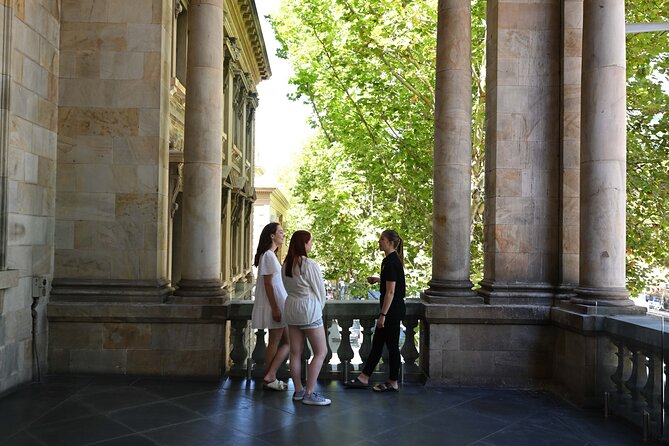
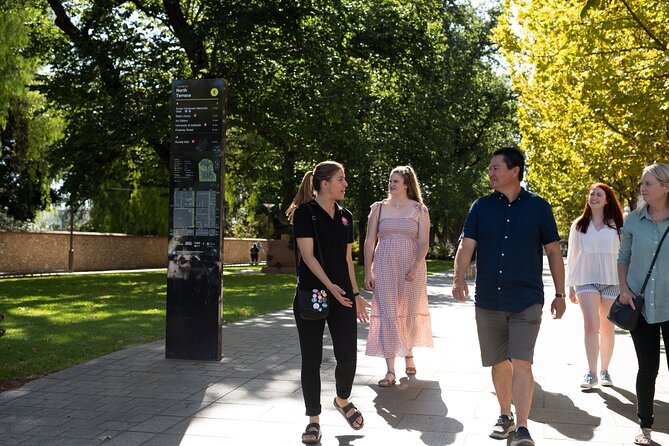
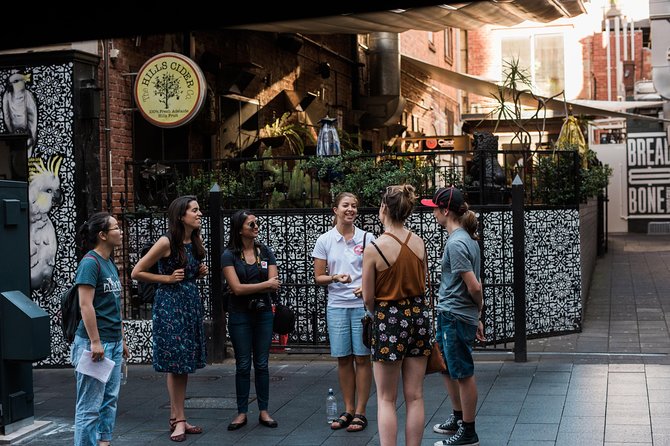
Adelaide rewards walkers. This three-hour tour takes you through the northern half of the city center, linking Rundle Mall, the North Terrace Cultural Precinct, the Riverbank area, and Adelaide’s grand civic buildings. I like the local angle, especially the stories shared by Adelaide-born guides such as Katina and Andrea, and I like that the route includes lesser-seen corners as well as the main sights. The small group, capped at 10 people, should also make it easier to ask questions.
The tour moves at an easy pace, with time to pause and refresh along the way. The only real consideration is that it stays outdoors and requires good weather, so a hot, wet, or windy day could affect comfort. At $57.45 per person, it is not the cheapest way to see the city, but the price is fair if you value personal commentary, local anecdotes, and a quick grounding in Adelaide’s past and present.
In This Review
- Key points at a glance
- Why this Adelaide walk works well early in your visit
- Starting beneath the Mall’s Balls
- Looking inside the Mortlock Wing
- Crossing into the Riverbank Precinct
- Parliament House and the city’s beginnings
- Town Hall on King William Street
- Adelaide Arcade and the quieter finish
- What the three-hour pace feels like
- A small group with a local voice
- Is $57.45 a fair price?
- Who should book this walk?
- Booking, weather, and cancellation details
- Should you book the Iconic Adelaide Walking Tour?
- FAQ
- How long is the Iconic Adelaide Walking Tour?
- How much does the tour cost?
- Where does the tour start?
- Where does the tour finish?
- How many people can join the tour?
- What sights are included?
- Is the State Library included?
- Are admission tickets included?
- Can I cancel for a full refund?
- What happens if bad weather cancels the tour?
Key points at a glance
- Adelaide-born guides: Katina and Andrea bring personal knowledge and plenty of stories about the city.
- Six central stops: The route covers Rundle Mall, the State Library, Festival Centre, Parliament House, Town Hall, and Adelaide Arcade.
- Small group size: A maximum of 10 people gives the walk a more personal feel than a large city tour.
- Easy three-hour pace: The schedule allows pauses rather than racing from one landmark to the next.
- Strong first-day choice: The central route helps you understand Adelaide’s layout before exploring farther afield.
- Simple city-center finish: You end near the starting point, outside Adelaide Arcade on Rundle Mall.
Why this Adelaide walk works well early in your visit
I see this tour as an orientation walk first and a sightseeing tour second. In a few hours, you get a sense of Adelaide’s central layout, its cultural quarter, its government buildings, and its connection to the Riverbank area. That matters because Adelaide’s center can seem spread out when you first arrive, even though many major sights are within a manageable walking distance.
The northern half of the central district gives the tour a useful balance. You are not spending the whole time in one shopping street, and you are not being taken only to formal monuments. Instead, the route shifts between public art, old buildings, libraries, theaters, civic institutions, and covered arcades.
I especially like the promise of local anecdotes. A guide who grew up in Adelaide can explain not only what a building is, but also how the city remembers it, uses it, or talks about it. That personal layer is often what turns a standard city walk into something you remember.
The tour is also a good fit if you have only a short stay. It does not try to cover every suburb or attraction. It gives you a useful central-city base, then leaves you free to spend the rest of your day at museums, shops, restaurants, or other parts of South Australia.
More Walking Tours in Adelaide
- Ultimate Adelaide Walking Tour
★ 5.0 · 222 reviews - Cultural Caper Adelaide Walking Tour
★ 5.0 · 122 reviews - Welcome to Adelaide Walking Tour
★ 5.0 · 119 reviews
Starting beneath the Mall’s Balls
The meeting point is the Mall’s Balls at 100 Rundle Mall. The name alone gives you a clue that Adelaide does not take public art too seriously. These polished stainless-steel spheres, officially known as Spheres, have become one of the city’s most recognizable meeting points.
The opening stop lasts about 15 minutes. You can expect the guide to explain the sculpture’s quirky stories and use it as an introduction to Adelaide’s character. This is a smart place to begin because Rundle Mall is easy to find, central, and full of daily city life.
You should arrive ready to walk, but not expecting a strenuous hike. The tour is designed at a leisurely pace, with chances to stop along the way. Comfortable shoes still matter, since three hours on paved streets can feel long in poor footwear.
Rundle Mall also gives you a practical reference point for later. The tour returns close to here at the end, so you can continue shopping, find lunch, or use the area as a base for the rest of your day.
Looking inside the Mortlock Wing
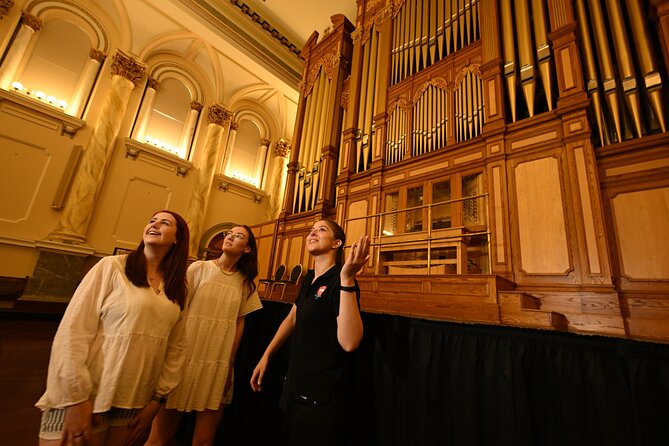
The next stop is the State Library of South Australia, with about 10 minutes set aside for the Mortlock Wing. This is one of the most attractive interiors on the route and a welcome change from walking along open streets.
The Mortlock Wing is admired for its grand reading-room design and its cultural importance. The guide uses the space to explain more about South Australia’s past, the role of libraries, and the stories held inside the building. Even a short visit can help you see the library as more than a place filled with books.
Ten minutes is enough for a quick look, but it is also one of the tour’s limitations. You should not expect a long, self-guided visit through every section of the library. The value here comes from seeing the interior and hearing the explanation, then deciding if you want to return later on your own.
I like this stop because it adds texture to the walk. Adelaide is not presented only through statues and official buildings. A library brings in education, memory, research, and public life, which makes the city feel more complete.
Crossing into the Riverbank Precinct
The route then reaches the Adelaide Festival Centre, with around 15 minutes in the Riverbank area. This section shows a different side of the city, one linked to performance, public events, and the riverfront.
The Festival Centre is a major landmark, and the guide also talks about Adelaide Oval during this part of the route. That pairing helps you understand how the Riverbank area has become an important meeting place for culture and sport.
The stop is less about entering a venue and more about seeing how the district fits together. You hear about the Festival Centre, look toward the wider Riverbank area, and gain context for Adelaide Oval. The short timing means you should think of this as a guided introduction rather than a full visit to either attraction.
This part may appeal most to anyone interested in Adelaide’s cultural life. It also gives the walk some visual variety after the library and shopping district. If you have tickets for a performance or sporting event later, the guide’s comments may help you understand the setting before you return.
A completely different kind of day out in Adelaide:
- Barossa Premium Wine Tasting Tour & lunch Departs 7 days a week
★ 5.0 · 1,475 reviews - Adelaide: Barossa Premium Wine Tasting tour & Winery Lunch
★ 4.8 · 1,452 reviews - Kangaroo Island Full Day Experience by Ferry Including Lunch
★ 4.5 · 1,202 reviews - Discover Barossa: 4 Wine Tastings, Gourmet Lunch, and Hidden Gems
★ 5.0 · 1,027 reviews
Parliament House and the city’s beginnings
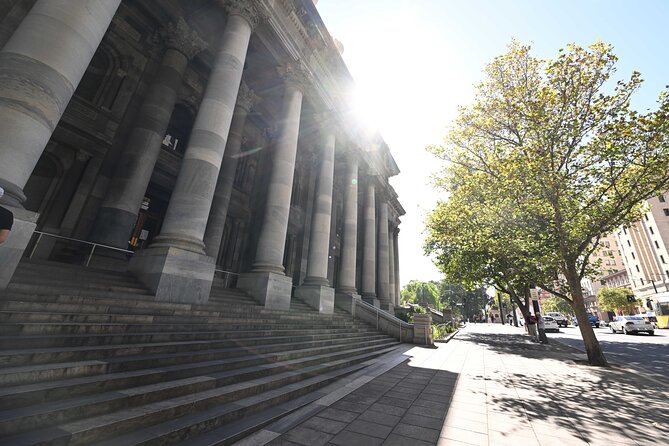
The walk continues past Parliament House of South Australia for about 10 minutes. This stop focuses on the institution’s stories and the origins of the city.
Parliament House is a useful place to discuss how Adelaide developed as a planned city and how public decisions shaped South Australia. The guide’s role is important here because the exterior alone may not tell you much. Personal stories and historical context make the building easier to read.
You should not expect a parliamentary tour or an interior visit based on the information provided. The stop is a walk-past explanation, so visitors who want a detailed look inside will need to make separate plans.
Still, I think this is a valuable part of the route. It connects architecture with government and gives you a better sense of why the center contains such formal public buildings. The tour does not treat Adelaide as a collection of attractive façades. It explains what these places have meant to the city.
Town Hall on King William Street
The Town Hall stop lasts about 10 minutes and takes place from King William Street. The guide discusses the building and shares stories tied to Adelaide’s historical and cultural past.
The location keeps you in the center of the city, where traffic, offices, shops, and public buildings meet. That setting helps you see Town Hall as a working civic landmark rather than an isolated museum object.
Again, the emphasis is on viewing and commentary from outside. If you are hoping to enter the building, attend an event, or inspect its rooms, this tour does not promise that. The benefit is the guide’s explanation, which gives the Town Hall a role in the wider story of Adelaide.
This is also a good moment to ask questions. With a maximum of 10 people, you should have a better chance of speaking directly with the guide than you would on a large coach or street walk. Katina’s warm replies to past participants suggest a guide who takes the personal side of the job seriously.
Adelaide Arcade and the quieter finish
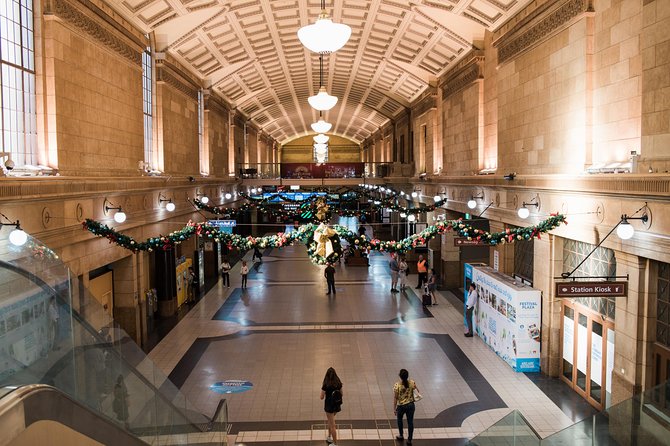
The final stop is Adelaide Arcade, where the group spends about 15 minutes. The arcade gives you a chance to step away from the open street and hear stories from both the past and the present.
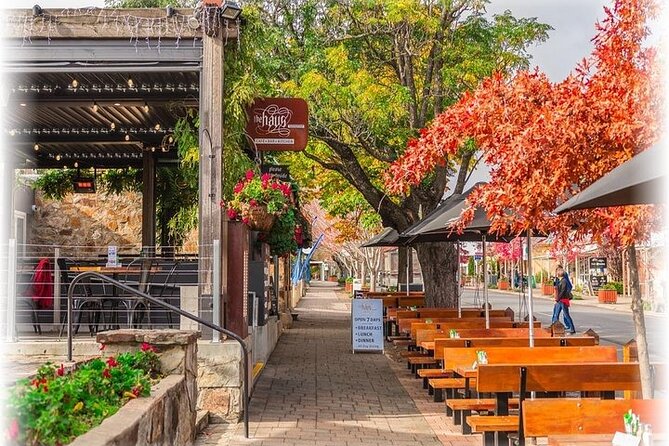
Covered arcades are useful on a walking tour because they offer a change of pace. You can look at the shopfronts and interior details while getting a short break from traffic and weather. The guide also uses the space for stories that connect Adelaide’s older commercial life with the city you see today.
The tour ends at 109 Rundle Mall, close to the starting point and near the fountain outside Adelaide Arcade. I like this arrangement because you do not finish in an unfamiliar suburb or need to arrange transport back to your hotel area.
The final location is practical, too. You can continue along Rundle Mall, return to the State Library, stop for food, or ask the guide what to do next. The tour specifically encourages questions about later plans, and that advice can be especially useful if Adelaide is new to you.
What the three-hour pace feels like
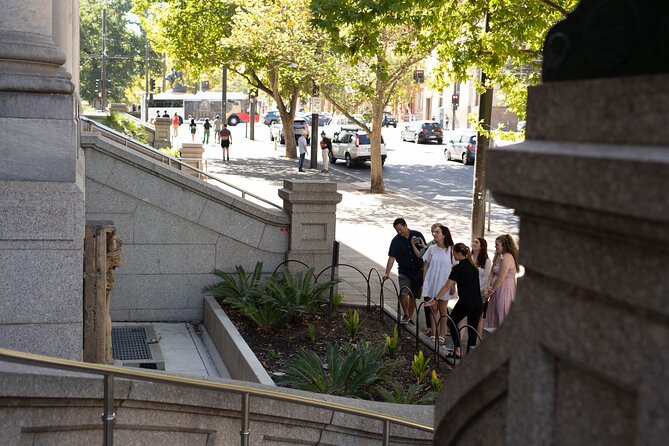
The advertised duration is about three hours, although one past outing ran for roughly two and a half hours. That small variation is worth keeping in mind. A walking tour can finish earlier or later depending on questions, group size, street conditions, and how long the guide spends at each stop.
The listed stop times add up to about 75 minutes, leaving roughly 90 minutes for walking, transitions, explanations, and pauses. That suggests a relaxed route rather than a nonstop march. You will still want sensible footwear, water, and weather-appropriate clothing.
I would not choose this experience if you want to enter every building or spend a long time taking photographs at each sight. The route covers six locations in one session, so the focus is breadth and interpretation.
I would choose it if you prefer to see several parts of the city while learning how they connect. The walk gives you enough structure to avoid wandering without purpose, but it does not consume your entire day.
A small group with a local voice
The group limit of 10 is one of the strongest features. Small groups tend to make city walks easier to follow, especially when the guide is explaining stories on a busy street. You can usually hear more clearly, ask questions without holding up a large crowd, and keep a comfortable pace.
Katina is identified as a born-and-raised Adelaidean, and her style comes through in the personal, story-led approach. One participant described her as a walking encyclopaedia after learning about Adelaide’s history, art, music, culture, architecture, and modern life. That range is important because the tour is not limited to one subject.
Andrea also receives praise for informative commentary and for making Adelaide’s history interesting. If your booking happens to be led by Andrea rather than Katina, you can expect the same general focus on local history and city context, though each guide will naturally tell the stories in a different way.
The best way to get value from the small group is to ask questions. Ask about places you pass after the tour, neighborhoods you plan to visit, or how to spend the rest of your day. The guide’s local recommendations are part of what separates this from simply following a map.
Is $57.45 a fair price?
At $57.45 per person, this is a mid-priced city walking tour. You are paying for about three hours of a guide’s time, a group capped at 10 people, and commentary that covers history, art, music, architecture, culture, and current Adelaide.
The value is strongest if you are visiting Adelaide for the first time. A good orientation can save you time later because you understand where key areas sit and which places deserve a longer visit. The advice at the end can also help you shape the rest of your schedule.
The value is weaker if you mainly want free entry to attractions. All six stops are viewed without an admission charge, and the walk does not include extended indoor visits. You are paying for the guide and the interpretation, not for tickets.
I think the price is reasonable for someone who enjoys stories and personal contact. It is less compelling for an independent visitor who prefers to read plaques, follow a phone map, and set their own pace. The mobile ticket keeps the booking simple, but the real product is the human commentary.
Who should book this walk?
I would suggest the tour to:
- First-time visitors who want a clear introduction to Adelaide.
- Short-stay visitors with only a few hours for central sightseeing.
- People who enjoy history, public buildings, art, music, and architecture.
- Solo visitors who want a small social group without committing to a full-day excursion.
- Anyone who wants local suggestions for what to do after the walk.
- Visitors who prefer a gentle city walk with regular pauses.
I would think twice if you need wheelchair-specific route details, since the available information confirms that most people can participate but does not describe every surface or entrance. Service animals are allowed, and the meeting point is near public transportation.
This is also not the right choice if your main goal is to tour the inside of Parliament House, Town Hall, the Festival Centre, or the State Library at length. The route offers brief visits and outside commentary, with the Mortlock Wing receiving a short look inside.
Booking, weather, and cancellation details
You receive confirmation at the time of booking, and the tour uses a mobile ticket. It is commonly booked about 21 days ahead, so I would reserve early if your dates are fixed.
Free cancellation is available up to 24 hours before the start time for a full refund. Changes or cancellations made inside that 24-hour window are not accepted for a refund.
Good weather is required. If poor weather cancels the experience, you can choose another date or receive a full refund. The tour also needs a minimum number of participants, and if that number is not reached, you will be offered another date or experience, or a full refund.
Should you book the Iconic Adelaide Walking Tour?
Book it if you want a friendly, story-led introduction to central Adelaide. The route covers more than the usual shopping street, and the mix of the Mortlock Wing, Riverbank area, Parliament House, Town Hall, and Adelaide Arcade gives you a useful sense of the city’s character.
The strongest reasons to go are the small group, the Adelaide-born guides, and the range of subjects covered. Katina and Andrea appear to bring real enthusiasm to the walk, and the personal stories are likely to be more useful than a bare list of dates and building names.
Skip it if you want long interior visits, a self-directed pace, or a tour focused on one attraction. For most first-time visitors, though, the $57.45 fee buys a sensible three-hour introduction and a better starting point for exploring the rest of Adelaide.
FAQ
How long is the Iconic Adelaide Walking Tour?
The tour lasts approximately three hours, although the actual duration may vary slightly.
How much does the tour cost?
The price is $57.45 per person.
Where does the tour start?
It starts at the Mall’s Balls at 100 Rundle Mall, Adelaide SA 5000, Australia.
Where does the tour finish?
It finishes at 109 Rundle Mall, near the fountain outside Adelaide Arcade.
How many people can join the tour?
The tour has a maximum group size of 10 people.
What sights are included?
The route includes Rundle Mall, the State Library of South Australia, Adelaide Festival Centre, Parliament House of South Australia, Adelaide Town Hall, and Adelaide Arcade.
Is the State Library included?
Yes. The tour includes a short look inside the Mortlock Wing of the State Library of South Australia.
Are admission tickets included?
The listed stops have free admission, and the experience does not list separate entrance fees.
Can I cancel for a full refund?
Yes. You can cancel at least 24 hours before the start time for a full refund.
What happens if bad weather cancels the tour?
You will be offered a different date or experience, or a full refund.
Just added around Adelaide
- Jacob’s Creek Double Barrel Experience★ 5.0 · 25 reviews
- McLaren Vale South Hop-On Hop-Off Winery Tour★ 5.0 · 25 reviews
- Adelaide City to Sea Bike Tour★ 5.0 · 26 reviews
- Best of SA, Hahndorf , Victor Harbor & d’arenberg ‘Cube’ Tour★ 4.5 · 26 reviews
- d’Arenberg Cube / McLaren Vale Regional Tour★ 4.5 · 26 reviews
- Barossa: Enjoy Wine, Lunch, Brewery, Chocolate & Wildlife★ 4.5 · 26 reviews
- Barossa Valley: Hot Air Balloon Flight★ 4.5 · 26 reviews
- Barossa Private Wine Tour★ 5.0 · 26 reviews
Walking Tours, compared.
Sydney Opera House Official Guided Walking Tour
Read our review →
Blue Mountains Tour with Waterfall Walk & Lunch
Read our review →
Ultimate Melbourne Walking Tour: History, Laneways & Culture
Read our review →

Great Ocean Road Tour Plus Koalas, Forest Walk and Morning Tea
Read our review →
Blue Mountains Small Group Tour with Waterfall Walk & Fresh Lunch
Read our review →
Maria Island Cruise and Guided Walk Day Tour with Lunch and Drinks
Read our review →Browse the lists this tour appears in