
Reviewed · SURF LESSONS
Learn to Surf at Noosa on the Sunshine Coast
Your first wave may arrive sooner than expected. This two-hour Noosa surf lesson gives beginners a clear introduction to surfing, with a professional instructor, soft boards, rash shirts or winter wetsuits, and time in waist-deep water. I especially like the gradual teaching plan and the beautiful sandy beach setting.
I also like the choice of morning or afternoon classes, which makes it easier to fit surfing around a Noosa day. The main point to consider is group size. The advertised maximum is seven people, but one busy holiday session had 22 students with four instructors, so personal attention may vary.
In This Review
- Key points to know before booking
- Why Noosa is a good place to learn
- Meeting at Claude Batten Drive
- Getting the right board and clothing
- The beach lesson starts with safety
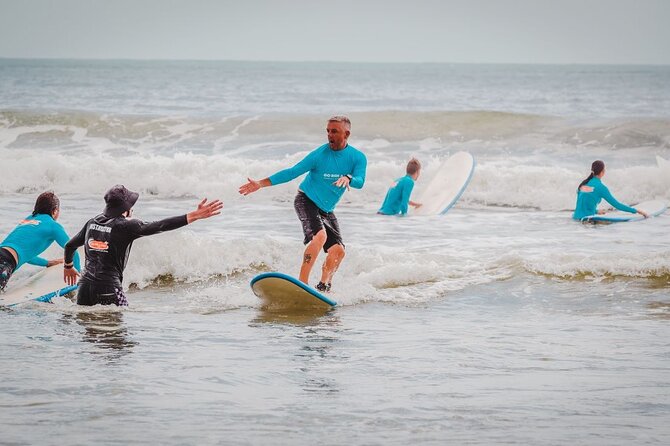
- Catching the first waves in waist-deep water
- Returning to shore for the stand-up technique
- Spending the rest of the lesson in the water
- What the $60.25 price really covers
- Who will enjoy this Noosa surf lesson?
- Weather, safety, and comfort
- Booking, cancellation, and practical details
- Should you book this Noosa surf lesson?
- FAQ
- How long does the surf lesson last?
- Where does the lesson begin?
- How early should I arrive?
- Is equipment included?
- Is the class suitable for complete beginners?
- Are morning and afternoon classes available?
- Is food or drink included?
- What happens if bad weather cancels the lesson?
Key points to know before booking
- You start at Beach Access No. 11: Meet at the trailer in the car park on Claude Batten Drive, 15 minutes before class.
- The lesson builds in stages: You receive a safety talk and beach instruction before trying your first waves in waist-deep water.
- Equipment is supplied: You get a soft beginner board and a long-sleeved rash or sun shirt, with a wetsuit supplied in winter.
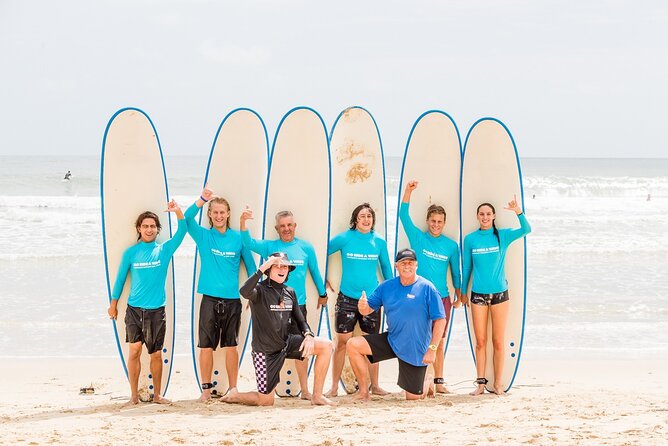
- Beginners are the main audience: The class suits first-timers, children, families, and people polishing basic skills.
- The class lasts about two hours: Much of the lesson takes place in the water, with instructors helping you catch waves and stand.
- The value is strong at $60.25: The price includes the guide and equipment, though you need to arrange your own food, drinks, and usual transport.
Why Noosa is a good place to learn
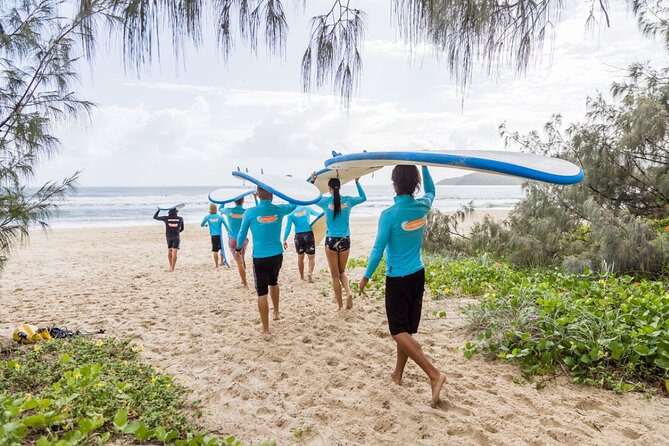
Noosa gives this lesson a pleasant setting from the start. You are not learning on an anonymous stretch of coast. You are heading toward Noosa Heads, where the beach scenery is part of the reward, even during the moments when your board is upside down and you are trying to remember which foot goes forward.
The class takes place on a sandy beach, and one particularly useful detail from the session descriptions is that the first waves are taken in waist-deep water. That matters for a beginner. You are not being sent straight into powerful surf before learning how to handle the board.
The water conditions can still vary. One first-time surfer found the sea a little rough but managed to stand several times. Another session took place in rain, yet the supplied wetsuits kept the group comfortable. This is a reminder that surfing is weather-dependent, but a grey day does not automatically ruin the lesson.
Noosa also works well for families. Children aged 12 and 14 have enjoyed the class, and a parent described seeing a 12-year-old stand on the board as the highlight of the day. Since the activity is open to all ages and skill levels, it can suit a mixed family group, although each person will progress at a different pace.
More surf lessons in Australia:
- Bondi Beach: 2-Hour Surf Lesson Experience for Any Level
★ 4.9 · 935 reviews - Byron Bay: 2-Hour Small Group Surf Lesson
★ 4.8 · 657 reviews - Learn to Surf at Surfers Paradise on the Gold Coast
★ 5.0 · 491 reviews
Meeting at Claude Batten Drive
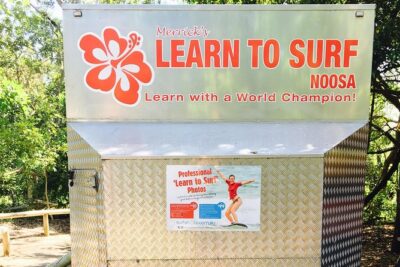
You meet 15 minutes before the lesson at the provider’s trailer in the car park at Beach Access No. 11, Claude Batten Drive, Noosa Heads. That early arrival is useful, not ceremonial. The staff need time to organize equipment, fit you with the right clothing, and choose a suitable board.
The meeting point is near public transportation, but the directions deserve attention. One participant found the location instructions could have been clearer, so I would allow extra time rather than trying to find the trailer at the last moment.
Bring only what you need for the lesson. Food and drinks are not included, and there is no meal or refreshment stop built into the two-hour schedule. The activity ends back at the same meeting point.
Some people have received pickup and drop-off at their accommodation, but that should not be treated as a standard part of the booking. The stated start and end point is Claude Batten Drive.
Getting the right board and clothing
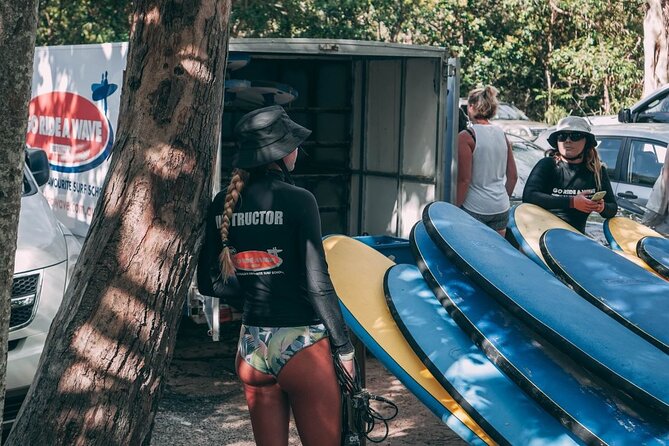
Once you arrive, the team supplies a long-sleeved rash or sun shirt. In winter, you receive a wetsuit instead. This is a practical inclusion, since the shirt protects you from the sun and board friction, while the wetsuit helps on cooler days.
You are also fitted with a soft beginner surfboard. Soft boards are a sensible choice for an introductory class because they are designed for stability and are less intimidating than a narrow performance board. The correct size matters, especially when you are learning to balance and stand.
There is no need to hire a board separately or buy specialist clothing for this session. The $60.25 price includes all necessary equipment and a professional guide. You will still need to think about whatever personal items, food, drinks, and transport you require outside the lesson.
After equipment is sorted, you walk to the beach. This short transition is part of the routine, and it keeps the meeting point organized rather than filling the car park with boards and wet clothing.
The beach lesson starts with safety
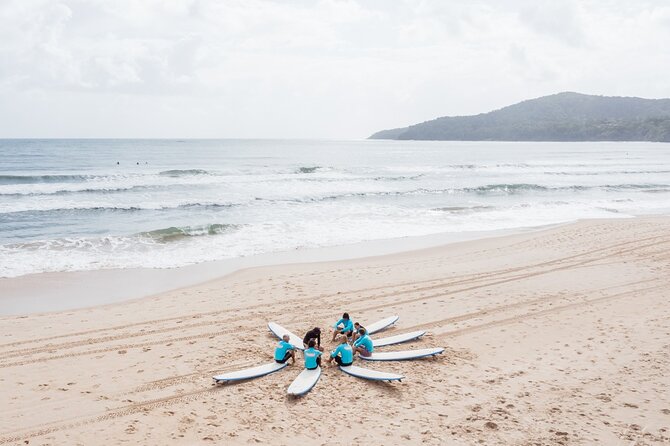
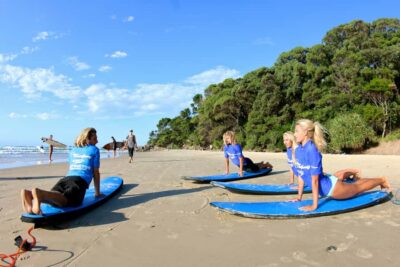
The first formal step is a safety talk. This is followed by basic instruction on the sand, where you can focus on the sequence without waves pushing your board around.
For a first lesson, this order makes sense. Surfing looks simple from the beach, but the timing is not. You need to understand how to lie on the board, how to position yourself, how to handle the board safely, and how to move your feet when a wave begins to carry you.
The teaching style seems to be straightforward and active rather than classroom-heavy. Strong sessions have been led by instructors including Sisi, Rose, Cece, Marit, Hannah, Scott, Georgia, Valentine, Eugenio, Reezy, and Valentino. The most praised instructors were patient, encouraging, and good at explaining the movements in simple terms.
Scott was particularly good at tailoring the lesson to individual needs, while Marit was praised for following up with everyone and offering small corrections. Sisi was credited with helping beginners catch waves and stand up. These details matter because your first lesson depends as much on clear timing and encouragement as it does on the surf itself.
One caution is worth noting. A less successful session felt confusing, and the instructions were not as direct as the participant had hoped. Another person felt the coach did not share attention evenly and was uncomfortable with physical contact during instruction. If you prefer very explicit explanations or do not want hands-on correction, tell the instructor clearly before entering the water.
A few more Australia trips worth weighing up
- Seafood Lunch Cruise
★ 5.0 · 914 reviews - Noosa: Afternoon Cruise through the Noosa Everglades
★ 4.5 · 906 reviews - Noosa Heads: 2 Hour Surf Experience on the Sunshine Coast
★ 4.9 · 644 reviews - Maleny Botanic Gardens Bird Aviary Experience Ticket
★ 4.5 · 579 reviews
Catching the first waves in waist-deep water
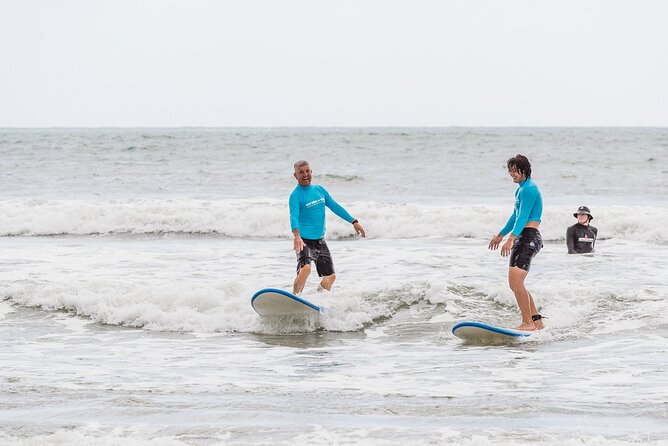
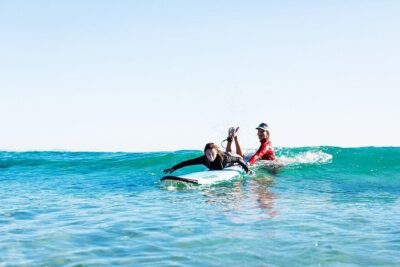
After the beach instruction, you carry the board into the water and try your first few waves in waist-deep water. This is the most useful part of the class for building confidence. You can feel how the board moves while still having a manageable depth beneath you.
The instructor helps position you for a wave and offers guidance as you try to ride it. You may not stand on the first attempt. That is normal. Surfing requires you to combine balance, timing, and a quick movement from lying down to standing, all while the water is moving under you.
The goal is not to perform a long ride. It is to understand the feeling of being carried by a wave and to get a first taste of standing on the board. Several people managed to stand multiple times, and some groups had everyone upright by the end of the session. You should treat that as a realistic possibility, not a promise.
The beach’s sandy bottom is a real comfort for beginners. It does not remove every risk, and you still need to follow the safety briefing, but it makes the early practice feel less daunting than a rocky or crowded shoreline.
Returning to shore for the stand-up technique
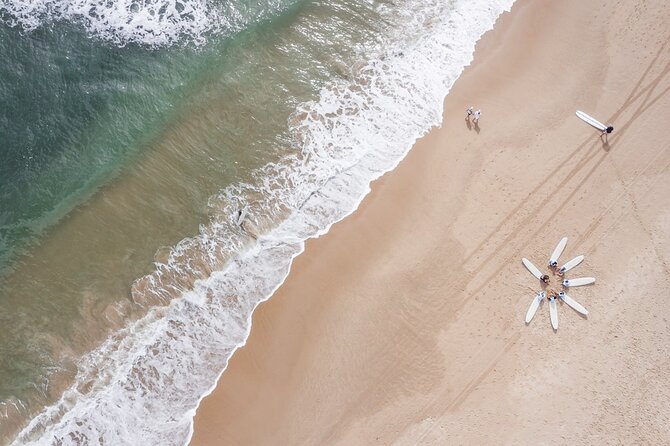
The class then returns to the beach for more detailed instruction on how to stand up. This pause is important because your first attempts in the water reveal what needs more explanation.
The stand-up movement is often where beginners struggle. You need to move quickly without pushing the board off balance. A good instructor can show the sequence, watch your position, and reduce it to a few simple actions you can remember once you are back in the water.
This is also where a smaller group has a clear advantage. With fewer people, the instructor can watch your attempt and give a useful correction instead of offering only general advice. The best sessions appear to provide plenty of individual help, while larger groups can feel more like repeated practice with occasional feedback.
The group size information needs a little care. The activity is listed with a maximum of seven participants, and some sessions had two instructors with nine people. However, during a busy holiday period, one class had 22 surfers and four instructors. The ratio was still roughly one instructor for every five or six students, but a compact area can feel crowded when everyone is learning at once.
If close coaching is your top priority, ask about the expected group size before booking. This is especially useful for nervous beginners, children, or anyone who has tried surfing before and wants technical feedback rather than a general introduction.
Spending the rest of the lesson in the water
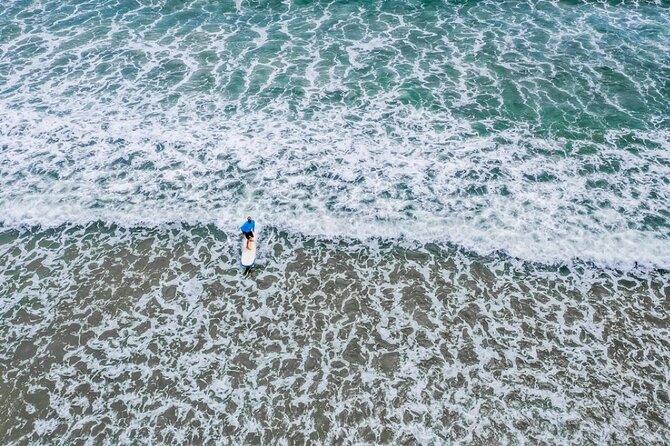
After the second beach briefing, you return to the water for the main practice period. The instructor assists people as they try to catch waves and stand on the board.
This section is where the lesson becomes fun rather than theoretical. You can expect plenty of failed attempts, a few awkward falls, and, with some luck and timing, a short ride that feels like a major personal achievement. The instructors are there to help send you toward suitable waves and give tips as you go.
The strongest teaching approach is encouraging without taking over. One person praised the instructors for showing the technique, then allowing students to try independently. That is the right balance. You need enough help to catch a wave, but you also need to feel the board and make your own adjustments.
People who already have a lesson or two behind them can use this time to polish their basics. The class is not only for absolute beginners. You can work on balance, timing, getting to your feet faster, or simply becoming more comfortable in the surf.
Still, this is an introductory two-hour lesson, not a private coaching session. If you want detailed technical analysis after every ride, a private or smaller class may suit you better. The group format is more social and usually better value, but it cannot provide uninterrupted one-to-one attention.
What the $60.25 price really covers
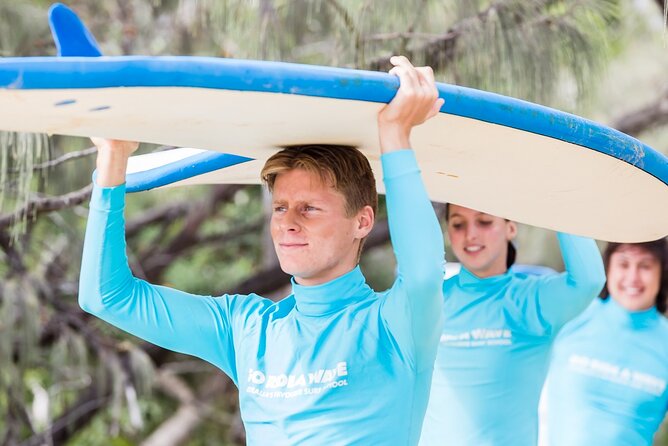
At $60.25 per person, the lesson is reasonably priced for a two-hour activity that includes an instructor, board, and surf clothing. You are paying for more than equipment hire. A guide selects the board, explains safety, helps you enter the water, and gives you a better chance of catching a suitable first wave.
That support has value. Hiring a board and watching a few online videos might cost less, but it would not provide the same help with water safety, positioning, or timing. One unhappy participant preferred self-guided practice, but that approach is not ideal for everyone, especially if this is your first time in the ocean.
The price becomes better value if you stand up several times or decide to book another lesson. Some children and adults enjoyed the first class enough to return the next day. A second session can be useful because the first lesson takes care of the basic uncertainty, leaving you more time to work on consistency.
There are limits. Food and drinks are not included, and the class does not promise photographs, accommodation transfers, or private instruction. Think of the cost as a compact introduction with equipment and teaching included, not a full day at the beach.
Who will enjoy this Noosa surf lesson?
I would recommend it most strongly to:
- First-time surfers who want safe, structured guidance
- Families with children old enough to participate in the activity
- Couples or friends looking for an active two-hour outing
- Visitors who want to try surfing without buying clothing or hiring a board
- Beginners who learn best through encouragement and repeated practice
- Former beginners who want to regain confidence on a soft board
You should think twice if you dislike group activities or need constant personal feedback. A crowded holiday session may not feel as personal as a quieter class. You might also prefer another plan if poor weather would seriously affect your day, since the activity requires good weather and may be cancelled.
The flexible morning and afternoon choices are helpful. You can fit the lesson around other Noosa plans, though you should leave enough time to arrive 15 minutes early and avoid relying on perfect last-minute transport connections.
Weather, safety, and comfort
The experience requires good weather. If conditions are poor and the class is cancelled, you are offered another date or a full refund. That policy protects you from losing the booking, but weather can still affect your holiday schedule.
Rain alone does not necessarily make the lesson unpleasant. A group that surfed on a rainy day stayed warm in the wetsuits provided and still had a good time. The more important question is whether the conditions allow the class to run safely.
The safety talk comes before the water work, and the activity is intended for most people who can participate in a beginner surf class. You should listen closely, follow the instructor’s directions, and be honest about your ability and comfort level.
The sandy beach and waist-deep starting area help make the lesson approachable. Even so, the sea is not a swimming pool. Conditions can be rougher on some days, and your experience may involve more falling than standing.
Booking, cancellation, and practical details
You receive confirmation at the time of booking, and the activity accepts mobile tickets. You need to cancel at least 24 hours before the start time to receive a full refund. Changes or cancellations made within 24 hours are not accepted for a refund, with cut-off times based on local time.
Allow time to find the trailer at Claude Batten Drive, particularly if you are unfamiliar with Noosa Heads. The class ends back at the meeting point, so you can plan the rest of your day from there.
Because food and drinks are excluded, plan those separately. Also remember that the published meeting point is the car park, not your accommodation. Any pickup arrangement should be confirmed rather than assumed.
Should you book this Noosa surf lesson?
Book it if you want a friendly, practical first taste of surfing without arranging equipment or trying to teach yourself. The two-hour format is long enough to explain the basics and give you repeated attempts, while the sandy beach, soft boards, and waist-deep starting water make the first steps less intimidating.
I would be more cautious if your booking falls during a school holiday and you strongly value one-to-one coaching. Ask about the expected class size, and request clear guidance if you are nervous or need extra help. At its best, this lesson gives you exactly what a first surf should provide: simple instruction, patient encouragement, a few memorable waves, and a good reason to try again tomorrow.
FAQ
How long does the surf lesson last?
The lesson lasts approximately two hours.
Where does the lesson begin?
You meet at the provider’s trailer in the car park at Beach Access No. 11 on Claude Batten Drive, Noosa Heads, Queensland 4567.
How early should I arrive?
You should arrive 15 minutes before the lesson begins.
Is equipment included?
Yes. The activity includes a professional guide, a soft beginner surfboard, and necessary surf clothing. You receive a long-sleeved rash or sun shirt, or a wetsuit in winter.
Is the class suitable for complete beginners?
Yes. The lesson is designed for all skill levels, including people who have never surfed before.
Are morning and afternoon classes available?
Yes. You can choose a morning or afternoon class when booking.
Is food or drink included?
No. Food and drinks are not included.
What happens if bad weather cancels the lesson?
If poor weather causes the activity to be cancelled, you are offered a different date or a full refund.
Just added around Australia
- From Goolwa: Half-Day Coorong Experience★ 4.9 · 129 reviews
- Great Ocean Road Lux Tour Max 11 Hotel Pickup★ 4.8 · 129 reviews
- Kangaroo Island Scenic Nature and Wildlife Day Tour★ 5.0 · 129 reviews
- Blue Mountains Small-Group Insider Tour from Sydney★ 4.5 · 130 reviews
- McLaren Vale Small Group Wine Tour★ 5.0 · 130 reviews
- Virtual Room – 40-50min VR Escape Game Adventure for 2+ Players★ 5.0 · 130 reviews
- Melbourne City Highlights Small Group Tour★ 5.0 · 131 reviews
- Darwin: Adelaide River Half-Day Jumping Crocs Cruise★ 4.3 · 130 reviews
Surf Lessons, compared.
Bondi Beach: 2-Hour Surf Lesson Experience for Any Level
Read our review →
Learn to Surf at Surfers Paradise on the Gold Coast
Read our review →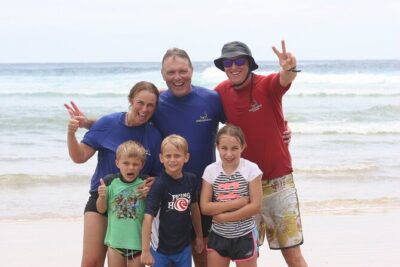
Merrick’s Noosa Learn to Surf: 2 Hour group surfing lesson
Read our review →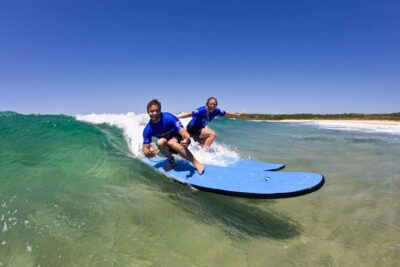
Browse the lists this tour appears in