
Reviewed · WALKING TOURS
Melbourne Sports Walking Tour
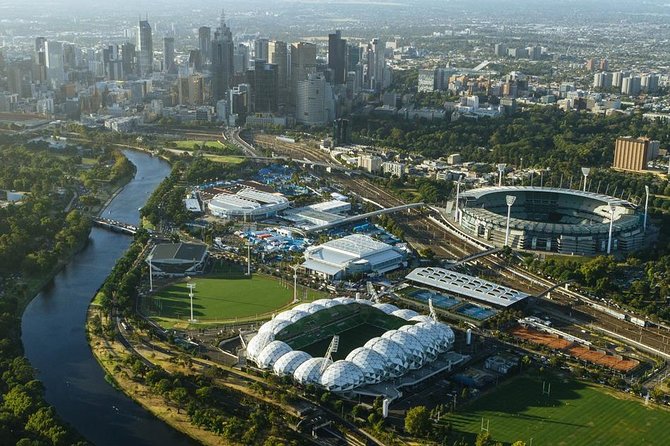
Melbourne plays its story in public. This two-hour walk links the Yarra River, Rod Laver Arena, Melbourne and Olympic Parks, AAMI Park, and the Melbourne Cricket Ground, giving you a useful introduction to the city’s sporting culture without spending a day inside one stadium. I like the small maximum group of eight, which should make it easy to ask questions, and I like that the route connects several major venues rather than treating each one as a separate stop.
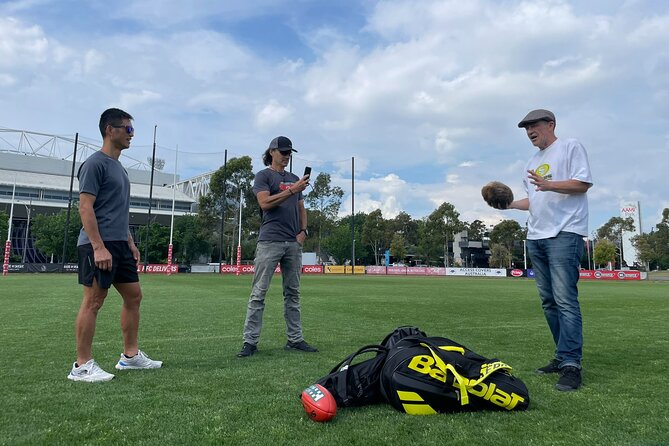
The guides bring more than basic dates to the walk. Ben, Terry, Cathy, Greg, and Brian are praised for their stories about athletes, sporting rules, the Australian Open, the 1956 Olympic Games, and the MCG. One possible drawback is that stadium access can vary. The walk takes you through the sporting precinct, but you should not assume that you will enter every arena or see an active match.
In This Review
- Key points at a glance
- Starting beside the Yarra River at Princes Bridge
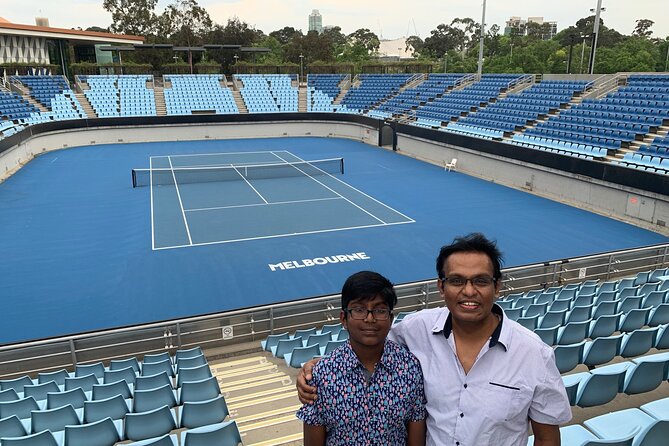
- Rod Laver Arena and the Melbourne Park tennis precinct
- Melbourne and Olympic Parks, with 1956 in the frame
- AAMI Park, where soccer and rugby take over
- Finishing at the Melbourne Cricket Ground
- Why the small group changes the experience
- What $63.12 buys you
- Who should book this walk?
- Booking details worth knowing
- Should you book the Melbourne Sports Walking Tour?
- FAQ
- Where does the Melbourne Sports Walking Tour begin?
- Where does the tour finish?
- How long does the tour last?
- How many people can join the tour?
- Does the tour include entry into every stadium?
- What happens if bad weather cancels the tour?
Key points at a glance
- A small group of eight: You get a better chance to ask about Australian football, cricket, tennis, rugby, soccer, and horse racing.
- A clear Federation Square to MCG route: The walk begins near Princes Bridge and finishes at the MCG, with public transport nearby at the end.
- Five major sporting stops: You see the Yarra River, Rod Laver Arena, Melbourne and Olympic Parks, AAMI Park, and the MCG.
- The 1956 Olympics take center stage: Melbourne’s Olympic past is explained on location, not as a detached history lesson.
- Good guide-led storytelling: Ben, Terry, Cathy, Greg, and Brian have been praised for personal stories, venue details, props, photos, and explanations of sporting rules.
- A fair price for a focused tour: At $63.12 per person, the value depends on how much you enjoy sport and guided interpretation.
Starting beside the Yarra River at Princes Bridge
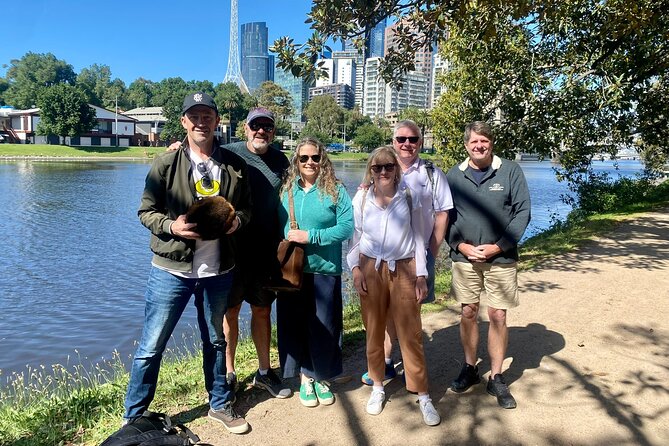
The practical meeting point is at Princes Bridge, near Federation Square. This is an easy place to reach in central Melbourne, and the tour begins with a walk along the Yarra River before heading into the sporting precinct.
The river stop lasts about 15 minutes and does more than provide a pleasant opening view. You learn why the Yarra matters to Melbourne’s sporting identity and how the river relates to the city’s major venues and public spaces. I like this beginning because it gives the tour a sense of place before the stadium names start coming at you.
You are not simply being moved from one arena to the next. The river helps connect central Melbourne with the large sports complex east of the city center. That connection is useful if you are still getting your bearings.
This is also an outdoor walk, so the weather matters. The experience requires good weather, and a poor-weather cancellation leads to another date or a full refund. If you are visiting during a hot spell, pay attention to the start time. Ben has adjusted a meeting time to avoid the worst heat for one group, though you should confirm the details for your own booking rather than count on a schedule change.
More Walking Tours in Melbourne
- Ultimate Melbourne Walking Tour: History, Laneways & Culture
★ 5.0 · 1,451 reviews - Great Ocean Road Tour Plus Koalas, Forest Walk and Morning Tea
★ 4.5 · 1,068 reviews - Great Ocean Road 12 Apostles & Rainforest Walk with Morning Tea
★ 4.5 · 549 reviews
Rod Laver Arena and the Melbourne Park tennis precinct
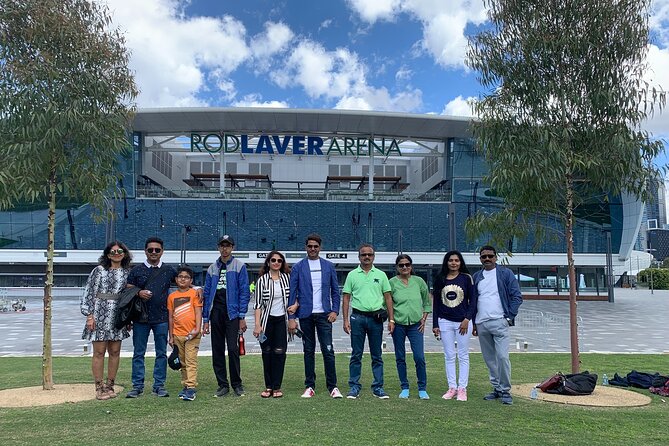
The next stop brings you to Rod Laver Arena and Melbourne Park, the part of the route most likely to appeal to tennis fans. You walk through the complex for roughly 15 minutes and hear about the Australian Open and the facilities used during the tournament.
The guide-led approach is valuable here because the tour is not only about recognizing a famous building. Ben has been praised for explaining the venues, taking photographs in front of the arenas, and sharing details about players appearing at the Australian Open. One group even had the chance to play on one of the courts, although that should be treated as a possible bonus, not a promised feature.
The experience may be especially good during the Australian Open period, when the precinct has a clear connection to current competition. Still, the walk does not include a guaranteed match ticket or a stated inside tour of Rod Laver Arena. You are seeing the tennis center as part of a guided route, not booking a seat for a tournament session.
That distinction matters. If you want formal stadium access, check the arrangements before paying. If you want context, stories, and a look at the complex from the tour route, this stop should be one of the strongest parts of the morning.
Melbourne and Olympic Parks, with 1956 in the frame
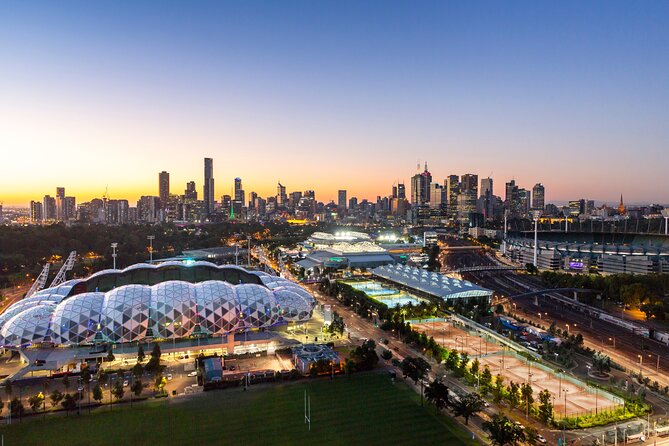
From Melbourne Park, the walk continues through Melbourne and Olympic Parks. This section takes about 10 minutes, but its subject is much larger than its allotted time: the 1956 Olympic Games held in Melbourne.
The Olympics gave Melbourne a major international sporting role, and the guide explains why this precinct still matters. You get a local account of the venues and their place in the city’s sporting development rather than a general discussion of the Olympic movement.
I appreciate the way this stop adds historical depth to the tour. Tennis, cricket, football, and rugby are easy subjects to understand through stadiums and players. The Olympics show how Melbourne’s sporting identity also reaches into civic pride and international events.
The short stop means you should expect a concise explanation, not a full Olympic history seminar. If the 1956 Games are your main reason for booking, ask questions while you are there. The group size gives you a better chance to steer the conversation toward the details you care about.
AAMI Park, where soccer and rugby take over
AAMI Park is Melbourne’s main soccer and rugby stadium, and the tour spends about 10 minutes here. This stop broadens the experience beyond the city’s best-known tennis and cricket venues.
Australian sport can be difficult to place if you are visiting from overseas. Australian football, rugby, soccer, cricket, horse racing, and tennis each have their own traditions, rules, and following. A guide can make those differences clearer, especially if you have questions about how the games are played.
Ben has used props and explanations of sporting rules to make the subject easier to follow. Brian has also been praised for explaining Melbourne’s sporting legacy and the significance of the MCG. Those details suggest that the tour works best when you take part in the conversation instead of walking silently behind the guide.
AAMI Park is also a useful reminder that Melbourne’s sports culture is not built around one code. If you only know the city through the Australian Open or cricket, this stop gives you a wider view.
A completely different kind of day out in Melbourne:
- Great Ocean Road Small-Group Eco Tour from Melbourne
★ 5.0 · 6,607 reviews - From Melbourne: Great Ocean Road, 12 Apostles, Wildlife Tour
★ 4.7 · 6,020 reviews - Laid back, Yarra Valley Wine Tour: Wine, Cider, Gin, Beer + Choc
★ 5.0 · 4,552 reviews - Great Ocean Road Reverse Itinerary Boutique Tour – Max 11 Guests
★ 5.0 · 4,186 reviews
Finishing at the Melbourne Cricket Ground
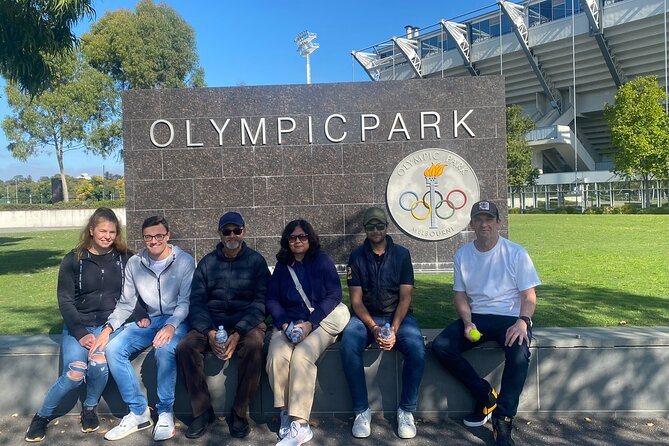
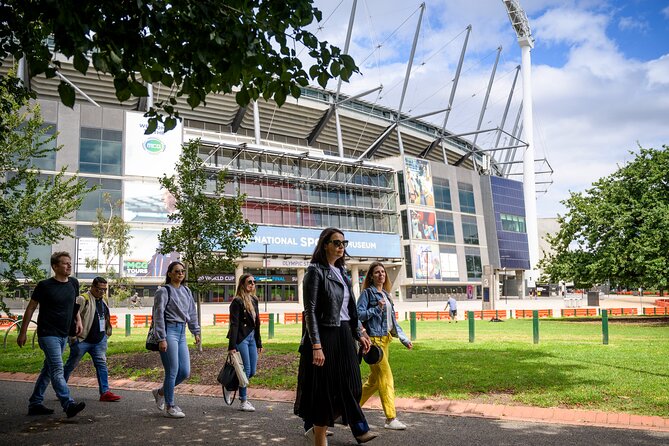
The tour ends at the Melbourne Cricket Ground, usually called the MCG, after about 15 minutes at the final stop. The MCG is presented as the home of Australian sport, and it provides the strongest final image of Melbourne’s sporting identity.
The guide’s explanation can cover more than the building itself. You may hear about cricket, Australian football, major events, athletes, and the role the ground plays in Melbourne life. The precise stories depend on your guide, but the focus is clearly on the MCG as a symbol of the city’s sporting culture.
Greg’s tour was praised for being interesting and well informed, but one practical limitation came through clearly: you may not see inside some of the stadiums. The same point applies here. The walk finishes at the MCG, but the information provided does not promise an interior stadium tour, a changing-room visit, or admission to a match.
That is not a flaw if you want an introduction to the venue and its place in Melbourne. It is a limitation if your main goal is to explore the MCG’s interior. You can ask the guide what is open on the day, but do not book this walk expecting guaranteed access.
The ending is convenient. The MCG is about a 10-minute walk from Federation Square, and several nearby train and tram stops make it easy to continue sightseeing or return to your accommodation.
Why the small group changes the experience
The maximum group size is eight people. That is a meaningful feature for a walking tour built around questions and stories.
A large group can make a sports tour feel like a moving lecture. With eight or fewer people, you have more room to ask why a venue matters, how a sport is played, or which athletes are associated with a particular event. The guides have been praised for being friendly, personal, and entertaining, so the format appears designed for conversation rather than a fixed speech.
The guide names connected with the experience include Ben, Terry, Cathy, Greg, and Brian. Their strengths may differ, but the praise points in the same direction: clear explanations, local stories, athlete anecdotes, and a willingness to help with photographs or wider Melbourne advice.
Ben has even helped a visitor with ideas about what else to see and how to get there. That kind of practical help can be useful on your first day in the city, especially because the walk finishes close to several transport options.
The small group also means the experience may feel more personal for families and couples. Infants aged 0 to 4 are free, and service animals are allowed. Most people can take part, though you should remember that the tour is a two-hour walk through an outdoor precinct.
What $63.12 buys you
At $63.12 per person, this is not the cheapest way to walk around Melbourne. You are paying for a focused route, a guide, sporting context, and the chance to ask questions in a small group.
The price makes more sense if you have a strong interest in tennis, cricket, Australian football, soccer, rugby, or the Olympic Games. It also works well for someone who wants a themed introduction to Melbourne rather than a standard city orientation.
The value is less obvious if you only want to see the outside of the stadiums and take a few photographs. Much of the route can be viewed without a ticket, and stadium entry is not guaranteed. In that case, you are paying mainly for the guide’s interpretation.
I think the best value comes from the human element. Cathy has shared stories about athletes she has met. Ben has brought props, explained rules, taken photos, and offered further sightseeing help. Those details turn a series of buildings into a connected story.
The tour is commonly booked about 22 days ahead, which suggests you should not leave it until the last morning of a short Melbourne visit. Book early if you want a particular date, especially around major sporting events.
Who should book this walk?
I would recommend it to sports fans who want local context without committing to a full match day. It is also a good fit for visitors who recognize names such as Rod Laver Arena and the MCG but want to understand how the venues fit into Melbourne.
Families with older children may enjoy the mix of movement, stadiums, Olympic stories, and simple explanations of sporting rules. Younger children may find two hours of sports history less engaging, though infants aged 0 to 4 are free.
This tour is less suitable if you want a standard history tour of central Melbourne, guaranteed access inside every venue, or a schedule built around sitting down. It is also not the best choice if wet or very hot weather would spoil your day, since the tour relies on outdoor walking and good conditions.
Ask plenty of questions. The format rewards curiosity, and the guide’s value increases when you tell them which sports or events interest you most.
Booking details worth knowing
You receive confirmation when you book, and the tour uses a mobile ticket. The start point is at Princes Bridge in Melbourne, Victoria 3000, near Federation Square. The end point is the MCG on Brunton Avenue in Richmond.
You can cancel for a full refund up to 24 hours before the start time. Cancellations or changes made less than 24 hours before the experience are not accepted for a refund. Cut-off times use Melbourne local time.
The tour can be canceled because of poor weather. In that case, you are offered another date or a full refund. Since the route ends at the MCG rather than returning to the starting point, allow a little extra time afterward if you have a fixed reservation elsewhere.
Should you book the Melbourne Sports Walking Tour?
Book it if you want Melbourne explained through sport, not just photographed through stadium walls. The small group, strong guide feedback, Olympic context, and route from the Yarra River to the MCG make it a focused and friendly way to understand one of the city’s defining passions.
Skip it if you need guaranteed indoor access or have little interest in sport. At $63.12, the tour earns its price through stories and conversation, not admission tickets. For tennis fans, cricket followers, Olympic history enthusiasts, and curious first-time visitors, that can be a worthwhile trade.
FAQ
Where does the Melbourne Sports Walking Tour begin?
The tour begins at Princes Bridge in Melbourne, near Federation Square.
Where does the tour finish?
It finishes at the Melbourne Cricket Ground on Brunton Avenue in Richmond. The MCG is about a 10-minute walk from Federation Square and is close to several train and tram stops.
How long does the tour last?
The tour lasts approximately two hours.
How many people can join the tour?
The maximum group size is eight people.
Does the tour include entry into every stadium?
No specific stadium admission is guaranteed. The route visits or passes through the sporting precinct, and one experience included access to a tennis court, but you should not assume that every venue will be open inside.
What happens if bad weather cancels the tour?
Because the tour requires good weather, poor conditions may lead to cancellation. You will be offered another date or a full refund.
Just added around Melbourne
- Melbourne Coffee Lovers Walk★ 4.8 · 25 reviews
- Phillip Island Medium Size Group Tour★ 4.5 · 25 reviews
- Melbourne: 1-Hour Hot Air Balloon Flight at Sunrise★ 4.6 · 25 reviews
- Marvellous Melbourne: A Self-Guided Audio Tour★ 4.5 · 26 reviews
- Melbourne to Adelaide: 2-Day Great Ocean Road Grampians Tour★ 4.8 · 26 reviews
- Puffing Billy Steam Train and Penguins Wildlife Tour★ 5.0 · 26 reviews
- Melbourne City Scenic Helicopter Ride★ 5.0 · 26 reviews
- Airport Transfers – Chauffeur Car & Limo Services of Melbourne★ 5.0 · 27 reviews
Walking Tours, compared.
Sydney Opera House Official Guided Walking Tour
Read our review →
Blue Mountains Tour with Waterfall Walk & Lunch
Read our review →
Ultimate Melbourne Walking Tour: History, Laneways & Culture
Read our review →
Great Ocean Road Tour Plus Koalas, Forest Walk and Morning Tea
Read our review →
Blue Mountains Small Group Tour with Waterfall Walk & Fresh Lunch
Read our review →
Maria Island Cruise and Guided Walk Day Tour with Lunch and Drinks
Read our review →Browse the lists this tour appears in