
Reviewed · 2-HOUR EXPERIENCES
Surfers Paradise: 2 Hour Surf Experience on the Gold Coast
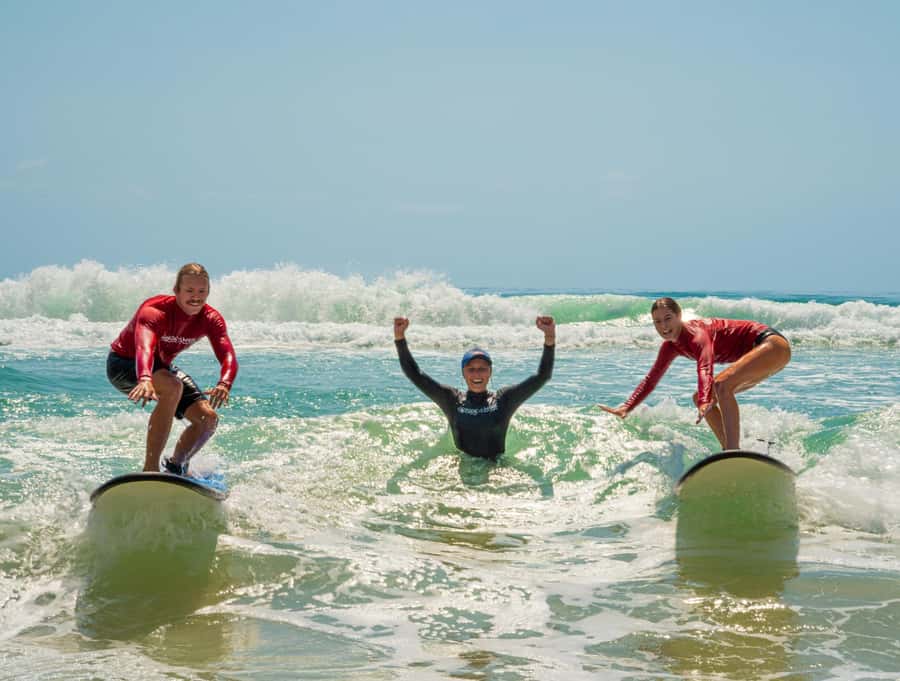
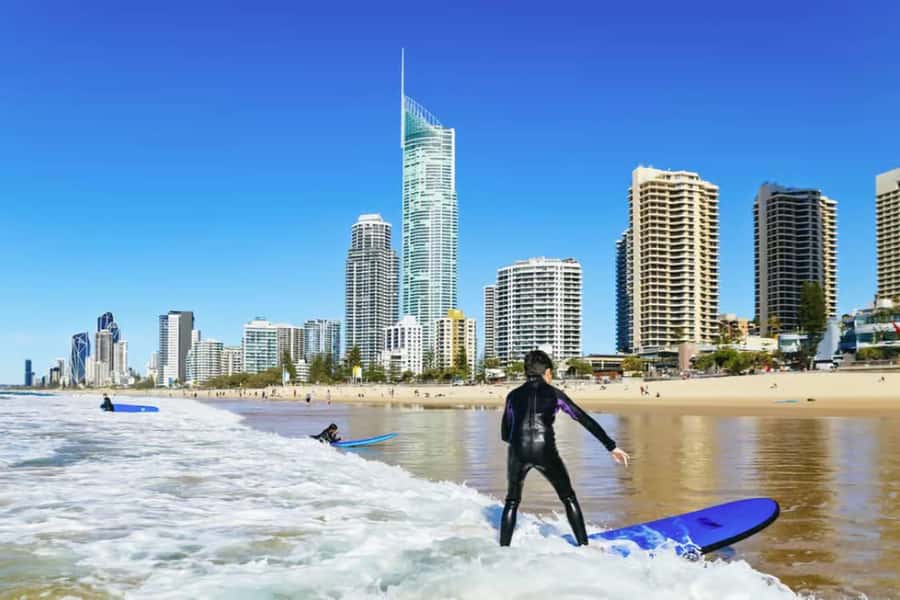
Your first wave can change the whole day. This two-hour lesson puts you on the golden sand of Surfers Paradise Beach, with a soft-top board, rash shirt or wetsuit, and a Level 1 qualified instructor to guide you through the basics. You learn safety, wave choice, board control, and the famous pop-up before spending much of the session in waist-deep water.
I like the friendly, patient instruction, especially the way guides such as Taj, Hudson, Danny, Jack, Ciara, Trent, and Kal have helped beginners one at a time. I also like the low barrier to entry: at $59 per person, the lesson includes the board, protective clothing, sunscreen, and two hours of teaching. The main consideration is that rough seas or rain can make the lesson tiring, and two hours is enough for a first taste, not a full surfing education.
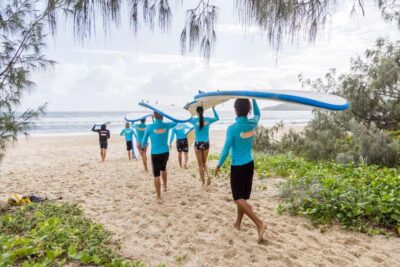
You meet near Cavill Avenue, close to the Surfers Paradise sign, then carry your board to the beach. Most beginners can expect to practise on the sand, paddle into small waves, and make several attempts at standing. Even so, the outcome depends on sea conditions, fitness, confidence, and how quickly your body learns the pop-up.
In This Review
- Key points before you book
- Meeting at Cavill Avenue before the beach
- Getting fitted with a board and rash shirt
- Sand practice makes the first wave easier
- Waist-deep water and your first rides
- The instructors are the main reason it works
- Standing up on the first lesson
- How weather and waves affect the experience
- Is two hours enough for $59?
- Who should take this lesson?
- Practical tips for a better session
- FAQ
- Where does the surf lesson meet?
- How early should I arrive?
- How long is the surf lesson?
- What equipment is included?
- What should I bring?
- Can children take part?
- Is the lesson suitable for complete beginners?
- What language is used during the lesson?
- Can I cancel the booking?
- Should you book the Surfers Paradise surf experience?
Key points before you book
- First-time friendly: The lesson starts with safety, positioning, wave awareness, and board control before you enter the water.
- A real Surfers Paradise setting: You learn on the famous golden-sand beach, not in a pool or artificial wave facility.
- Two hours in the water: The session is long enough to practise repeatedly, but many people finish pleasantly worn out.
- Equipment is included: You receive a soft-top surfboard, long-sleeved rash shirt or wetsuit, and sunscreen.
- Children need careful planning: Children under 8 cannot take part. Children under 9 must have a parent who is not taking the lesson available to enter the water and assist.
- Strong customer rating: The experience has a 4.9 rating from 1,132 bookings, with praise focused on encouragement, clear teaching, and safety.
Meeting at Cavill Avenue before the beach
Allow extra time and arrive 20 minutes before your lesson. The meeting point is shop 26A in the Paradise Center, next door to Hungry Jacks and just off the beach end of Cavill Avenue.
This is a handy central location if you are already staying around Surfers Paradise. It is close to the well-known Surfers Paradise sign, so you should not need to search along the full length of the beach. You check in, collect your equipment, and get ready before walking onto the sand.
Bring swimwear and a towel. Food and drinks are not included, and there is no mention of towel or changing supplies being provided, so pack what you need. The operator supplies sunscreen, but I would still apply your own before arriving if you have a preferred brand or sensitive skin.
One practical point is easy to overlook: you carry the soft-top board between the shop and the beach. One participant found this tiring, particularly for anyone without strong arms. It is not a serious problem for most people, but you should know that the lesson begins before your feet reach the water.
A few more Gold Coast trips worth weighing up
- Surfers Paradise: 2-Hour Gold Coast Sightseeing Cruise
★ 4.2 · 342 reviews - 2 Hour Ultimate Learn to Surf Adventure
★ 5.0 · 235 reviews - Broadbeach: 2 Hour Surf Experience on the Gold Coast
★ 4.9 · 225 reviews
Getting fitted with a board and rash shirt
The equipment is designed for beginners rather than experienced surfers. A soft-top board is forgiving and more stable than a narrow hard board, which gives you a better chance of learning the basic movement without worrying about every wobble.
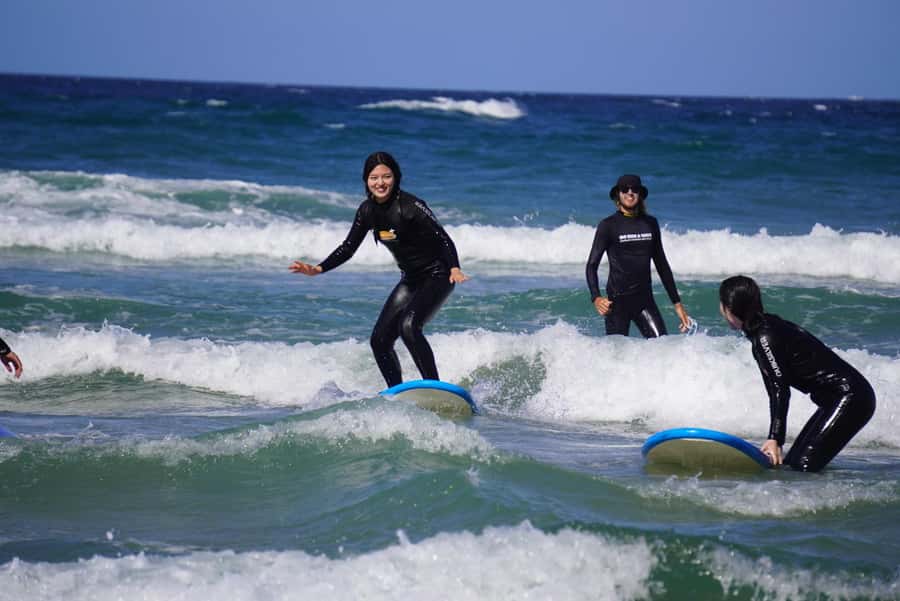
You receive a long-sleeved rash shirt or wetsuit, depending on the conditions and what you need. One lesson took place in torrential rain and wind, and an instructor noticed a participant was cold, then returned to get a wetsuit. That small act says something useful about the teaching style: the staff appear to watch how people are coping, not just repeat a standard talk.
Your board is large enough to help you find balance while lying down and kneeling. It is also safer for a beginner group than handing first-timers small performance boards. You will not look like a competition surfer, but that is not the point. You are trying to catch a wave, stand briefly, and learn what to do next.
Sand practice makes the first wave easier
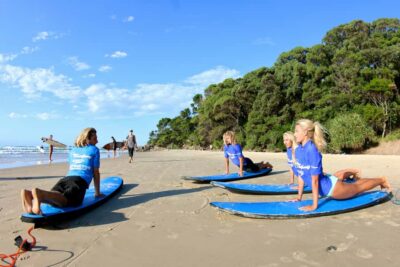
The session begins with a safety briefing and a demonstration of the core movements. You learn how to position yourself on the board, identify suitable waves, control the board, and move from lying down to standing.
The sand lesson matters. Trying to remember foot placement while a wave pushes you around is difficult, so practising first gives your body a rough pattern to follow. You work on the pop-up, including where your hands go and how to bring your feet underneath you.
The teaching is broken into useful stages. First, you learn how to catch a wave and keep the board moving. Then you work on standing. This order makes sense because a perfect pop-up is not much use if you have not caught a wave or pointed the board in the right direction.
Several people found the sand practice particularly helpful. One participant summed it up neatly: standing on the beach is much easier than standing in moving water. That is obvious once you try it, but the dry practice gives you a better chance when the real attempt begins.
Waist-deep water and your first rides
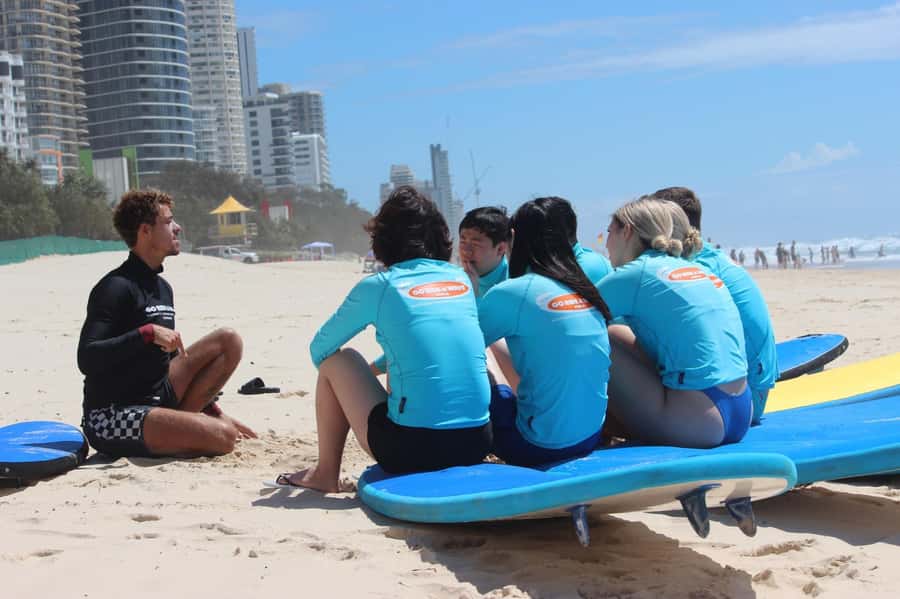
After the briefing, you head into the surf with your instructor. The description places beginners in waist-deep waves, a useful depth for learning while staying close enough to the beach for assistance.
Your first task is not to stand like a film star. You learn to feel the wave push the board, keep your weight in the right place, and avoid letting the nose tip too far down. Instructors help with positioning and timing, then send you toward a suitable wave when the moment is right.
This is where the value of the lesson becomes clear. A beginner on their own may paddle at the wrong time, choose a wave that is too strong, or turn the board poorly. An instructor can give a quick correction and help you try again before frustration sets in.
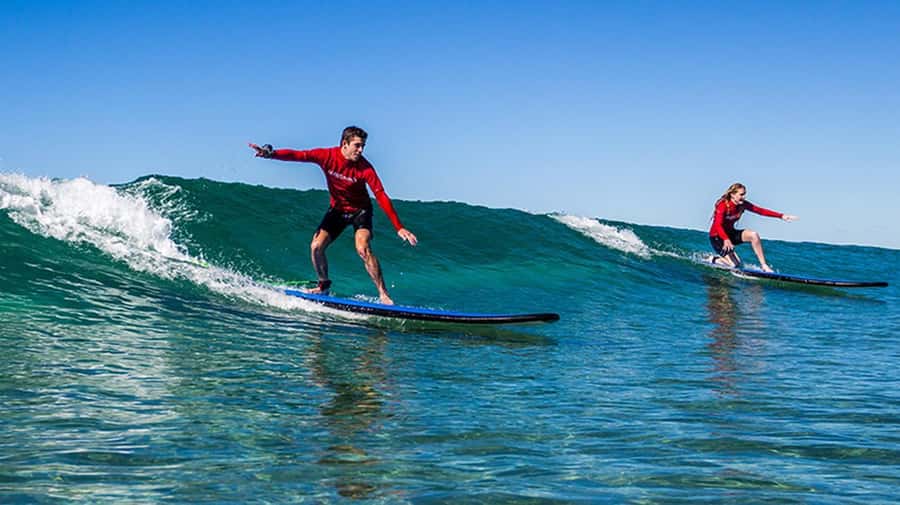
You should expect plenty of repetition. You may catch a wave while lying down, lose balance while kneeling, and occasionally pop up for a second before falling. That is normal progress, not failure. One first-timer managed to stand several times because the instructor kept giving practical feedback after each attempt.
A completely different kind of day out in Gold Coast:
- Surfers Paradise, Gold Coast Jet Boat Ride: 55 Minutes
★ 5.0 · 1,499 reviews - Moreton Island: Dolphin & Tangalooma Wrecks Snorkel Cruise
★ 4.5 · 1,039 reviews - Gold Coast: Australian Outback Spectacular Dinner & Show
★ 4.6 · 974 reviews - Whale Watching Tour with Spirit of Gold Coast
★ 4.5 · 884 reviews
The instructors are the main reason it works
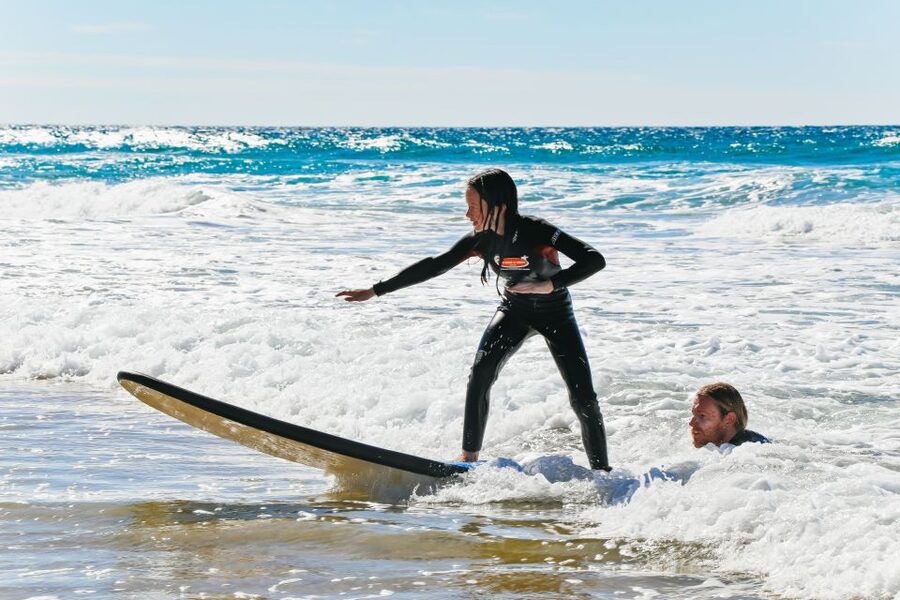
The most praised part of this experience is the teaching. People repeatedly point to clear instructions, patience, encouragement, and personal help in the water.
Named instructors receive frequent praise. Taj helped a group of six first-timers stay comfortable and safe. Danny was described as informative and supportive. Jack and Ciara encouraged a whole group to stand, while Hudson gave special attention to a young child. Trent and Taj kept working with a participant until she managed to stand.
Those examples matter because group lessons can easily become a queue where you wait for help. Here, the instruction appears to include repeated rounds of individual attention. One participant even received extra one-to-one teaching during the session, while another large family group said the instructors divided their attention well among children and adults.
The group size is not specified, so I would not promise a private lesson. You should expect to share the beach and instructors with other beginners. Still, the teaching team seems to make a real effort to move around the group and correct people rather than simply demonstrate once and leave you to struggle.
The lesson is conducted in English. Clear demonstrations help, but you should be comfortable following spoken safety instructions in English.
Standing up on the first lesson
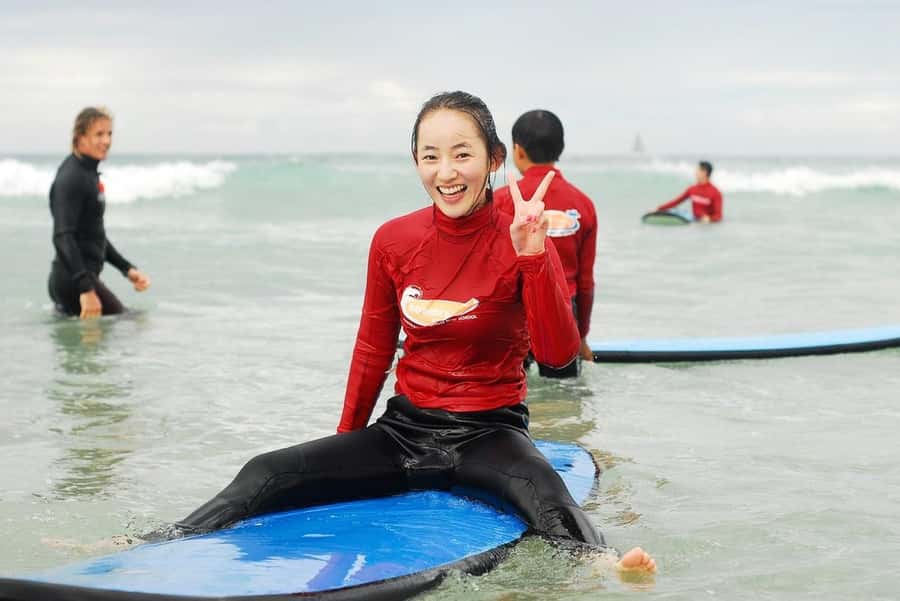
The promise of standing on your first lesson is appealing, and many people do manage it. Children aged 9, 10, 11, and 14 have stood up during sessions, as have adults with no previous surfing experience.
Treat this as a realistic aim, not a guaranteed result. Sea conditions vary, and several people describe rough water, wind, rain, or limited confidence. One participant enjoyed the lesson in harsh conditions but admitted that the rough sea made it harder to commit. Another person, who was nervous in the water, felt safe and grew more confident with steady help.
The best approach is to measure success in stages. If you catch a wave lying down, you are learning. If you reach your knees, you are closer. If you stand for a moment and ride toward the beach, you have achieved the big first milestone.
Do not expect polished turns or long rides after two hours. One person noted that you cannot do much in such a short time, though the session still teaches useful basics. That is fair. This is an introduction that may leave you ready to practise again, not a shortcut to advanced surfing.
How weather and waves affect the experience
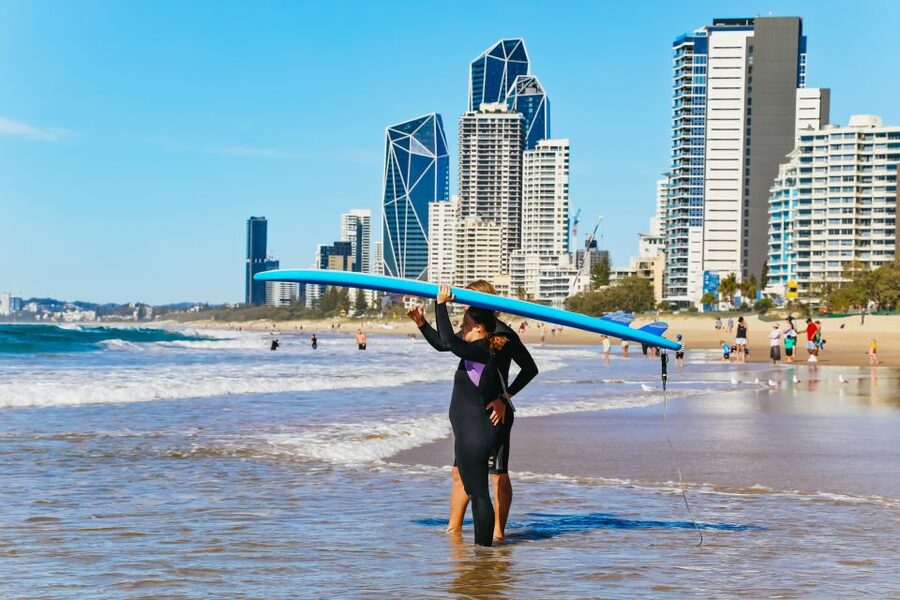
Surfing depends on the ocean you get on the day. Calm, manageable waves make it easier to focus on board control. Rougher conditions can add excitement, but they also make the lesson harder and more tiring.
The good news is that the instructors work with the conditions in front of them. In difficult surf, they help people find a workable area, keep the group spaced out, and focus on safe attempts. One participant appreciated that the team maintained space in a fairly tight surfing area.
Rain does not automatically ruin the session. A group surfed in heavy rain and wind and still had a good time, helped by friendly instructors and warm equipment. Still, you should be ready for a workout. Surfing uses your arms, legs, stomach, and balance, and several people described the lesson as hard work.
If you are nervous in open water, say so early. The instructors have been praised for building confidence and explaining safety before asking people to attempt a wave. You should not feel pressured to act like an experienced surfer on your first day.
Is two hours enough for $59?
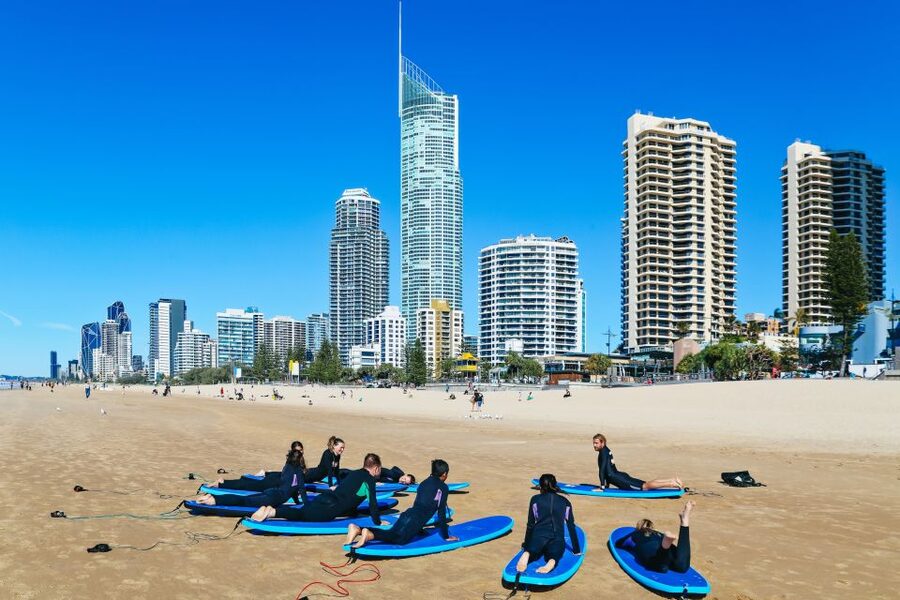
At $59, this is a fair introduction to surfing, particularly because the price includes the board, rash shirt or wetsuit, sunscreen, and two hours of instruction. You are not paying only for beach access. You are paying for structured teaching and help with the parts that are hardest to learn alone.
Two hours also suits the activity. Surfing is physically demanding, especially when you are paddling, carrying a board, getting knocked off balance, and repeatedly walking back into position. Several people felt tired by the end, while others thought the time was just right for a starter session.
The value is strongest if you are visiting the Gold Coast and want to try surfing without committing to a longer course. You can find out if you enjoy the water, learn basic safety, and decide if you want more practice.
If you already surf regularly, the lesson may feel basic. It can still work as a refresher, especially if you are visiting and want a simple way to get back into the waves. One experienced participant called it a useful refresher despite having surfed several times before.
For a deeper start, the operator also offers a 1.5-hour private lesson and a progressive course of three two-hour lessons. The private option should suit someone who wants concentrated attention, while the three-lesson course makes more sense if you want to build skills rather than enjoy a single holiday activity.
Who should take this lesson?
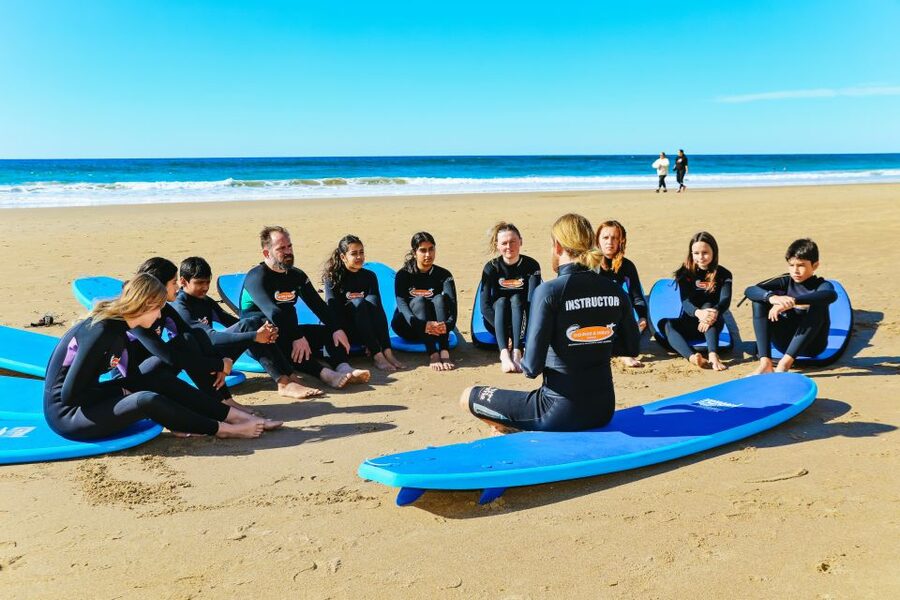
I would recommend it to first-timers, couples, families with eligible children, and visitors who want an active morning or afternoon near the center of Surfers Paradise.
It is particularly useful for:
- Adults who have always wanted to try surfing but feel unsure where to start.
- Families with children aged 8 and over, provided the age and supervision rules are followed.
- People who want a safe introduction before hiring a board on their own.
- Visitors who want a memorable Gold Coast activity without spending a full day away from Surfers Paradise.
- Beginners who value encouragement more than advanced technique.
It may be less suitable if you dislike physical exertion, feel uncomfortable in waist-deep surf, or want a quiet beach activity. You should also think twice about booking if you expect guaranteed sunshine or calm water. The lesson goes ahead in conditions that can include rain, wind, and rough waves, and those conditions affect how much you can learn.
Practical tips for a better session
Arrive early enough to avoid rushing through check-in. Wear swimwear under your supplied rash shirt or wetsuit, and bring a towel for afterward.
Listen closely during the sand demonstration. The instructors explain safety signs, wave identification, and positioning before you enter the water, and those details are more valuable than they may seem when you are excited to start.
Expect to fall. That is part of the lesson, and it is better to focus on the next attempt than to worry about looking graceful. Keep your eyes on the board and follow the instructor’s timing advice.
If you are visiting with children, check the age requirements carefully. Children under 8 are not accepted. Children under 9 need a participating parent who does not take the lesson but can enter the water to assist.
Photography is not clearly included. One participant wished there had been a chance to buy good-quality photos afterward, so bring your own expectations. You may prefer to ask about photo options before the lesson rather than assume that the ride will be documented.
Cancellation is flexible: you can cancel up to 24 hours before the lesson for a full refund, and you can reserve now and pay later. Starting times vary, so check availability when you choose your date.
FAQ
Where does the surf lesson meet?
Meet at shop 26A in the Paradise Center, next door to Hungry Jacks and just off the beach end of Cavill Avenue. The location is close to the famous Surfers Paradise sign.
How early should I arrive?
You should arrive 20 minutes before the lesson begins. This allows time to meet the instructor, get equipment, and prepare.
How long is the surf lesson?
The surf lesson itself lasts two hours. Available activity times are listed as 2 to 6 hours, so check the available starting times when booking.
What equipment is included?
The price includes a soft-top surfboard, a long-sleeved rash shirt or wetsuit, sunscreen, and two hours of instruction from a Level 1 qualified surf instructor.
What should I bring?
Bring swimwear and a towel. Food and drinks are not included.
Can children take part?
Children under 8 are not suitable for this activity. Children under 9 must be accompanied by a parent who is not participating in the lesson but can enter the water to assist.
Is the lesson suitable for complete beginners?
Yes. The lesson covers safety, positioning, wave identification, board control, catching waves, and standing up. It is designed as an introduction, though your results depend on conditions and confidence.
What language is used during the lesson?
Instruction is provided in English.
Can I cancel the booking?
You can cancel up to 24 hours in advance for a full refund. You can also reserve your place and pay later.
Should you book the Surfers Paradise surf experience?
Book it if you want a friendly, active introduction to surfing in an iconic Gold Coast setting. The $59 price is reasonable for the board, clothing, sunscreen, and two hours of qualified instruction, and the repeated one-to-one help gives beginners a better chance of catching a wave and standing.
I would choose this lesson over trying to teach yourself, especially if you are nervous about the water or want to learn basic safety before surfing alone. Just keep your expectations sensible: you may stand on your first day, but you will not master surfing in two hours. For that, book the three-lesson course. For a memorable first taste, this is a strong choice.
Just added around Gold Coast
- Surfers Paradise Sightseeing Sunset River Cruise★ 4.5 · 131 reviews
- Surfers Paradise: Guided Gold Coast Amphibious Bus Tour★ 4.5 · 133 reviews
- Gold Coast: Dreamworld 1-Day Entry Ticket★ 4.3 · 134 reviews
- ArtVo Gold Coast – Queensland’s First Trick Art Gallery★ 5.0 · 139 reviews
- Gold Coast: Snorkelling in Wave Break Island★ 4.1 · 143 reviews
- Gold Coast 2 hour Sunset Sailing Cruise with Drinks&Tasting Plate★ 5.0 · 143 reviews
- 30 min Jet Ski Safari★ 5.0 · 154 reviews
- Catch a Crab Tour with Optional Seafood Lunch★ 4.5 · 155 reviews
2-Hour Experiences, compared.

Bondi Beach: 2-Hour Surf Lesson Experience for Any Level
Read our review →
Noosa Heads: 2 Hour Surf Experience on the Sunshine Coast
Read our review →
Surfers Paradise: 2-Hour Gold Coast Sightseeing Cruise
Read our review →Browse the lists this tour appears in