
Reviewed · WALKING TOURS
Sydney Walking Tour including The Rocks (small group)
Sydney’s best stories are found on foot. This 2.5-hour walk links Hyde Park, Macquarie Street, the Royal Botanic Garden, and The Rocks with a guide who explains how Indigenous culture, convict life, colonial power, and modern Sydney fit together. I especially like the maximum group size of 16 and the route’s useful finish at Campbells Cove, close to Circular Quay, the Opera House, and Harbour Bridge.
I also like the tour’s first-day value. Guides such as Lily, Leilani, and Lele have been praised for clear storytelling, good pacing, shade stops, and helpful suggestions for places to return to later. The main caution is simple: this is a genuine city walk, not a short sightseeing stroll. You will cover many streets in warm weather, so comfortable shoes, sunblock, and a hat matter.
In This Review
- Key points before you book
- Why this Sydney walk works well on your first day
- Starting at Hyde Park and Sydney’s first public buildings
- Queen’s Square, the Rum Hospital, and Macquarie Street
- The Botanic Garden and stories of Aboriginal Sydney
- Macquarie Place, Customs House, and the route to The Rocks
- Entering The Rocks through its narrow lanes
- Finishing at Campbells Cove with harbour views
- The guides and the pace of the walk
- Who should book this Sydney tour?
- Price, cancellation, and practical details
- Should you book it?
- FAQ
- How long is the Sydney walking tour?
- What time does the tour start?
- Where does the tour meet?
- Where does the tour end?
- How many people can join the tour?
- What places does the route visit?
- Is the tour physically difficult?
- Is the tour suitable in sunny weather?
- Can I cancel for a full refund?
Key points before you book
- A 150-minute introduction: The route gives you a broad first look at Sydney rather than focusing on one museum or landmark.
- Small groups up to 16: A limited group makes it easier to hear the guide and ask questions.
- A mostly easy route: Much of the walk trends downhill, though you still need moderate fitness and comfortable footwear.
- Sydney’s many layers: Indigenous culture, colonial buildings, convict stories, law, religion, trade, and modern city life all appear along the way.
- The Rocks in detail: Suez Canal, Nurses Walk, Playfair Street, Argyle Street, George Street, and Campbells Cove reveal the older waterfront district.
- A useful finishing point: The tour ends near Circular Quay, the harbour, local pubs, The Rocks weekend market, the Opera House, and Harbour Bridge.
Why this Sydney walk works well on your first day
At $32.28 per person, this is priced like a modest city orientation rather than a costly sightseeing package. You are not paying admission to a museum or for a private vehicle. Instead, the value comes from the route, the guide’s local explanation, and the amount of ground covered in 150 minutes.
I like that the tour connects places you might otherwise visit separately. Hyde Park, Macquarie Street, the Royal Botanic Garden, Customs House, and The Rocks can feel like unrelated stops when you see them on your own. A guide gives you the thread between them, helping you understand how Sydney grew from an Indigenous place into a colonial port and then a modern city.
The timing also helps. Starting at 10:30 am gives you a full morning and leaves the afternoon open for museums, harbour sights, shopping, or a longer visit in The Rocks. Several guides have also pointed out free places and suggested locations to revisit, which adds value beyond the official route.
The 16-person limit is important. A large walking group can turn a city tour into a game of trying to hear from the back. With a smaller group, the guide can pause, answer questions, and check that people are keeping up. Lily receives especially strong praise for making people comfortable, explaining complicated subjects clearly, and keeping the mood light.
The drawback is that the tour moves at a steady pace. Five-minute stops are enough for an explanation and a look from outside, but not for a full visit inside each site. If you want long time at St. Mary’s Cathedral, Hyde Park Barracks, or the Royal Botanic Garden, you will need to return later.
More Walking Tours in Sydney
- Sydney Opera House Official Guided Walking Tour
★ 4.5 · 3,770 reviews - From Sydney: Blue Mountains Tour with Waterfall Walk & Lunch
★ 4.8 · 2,400 reviews - Sydney The Rocks Guided Walking Tour
★ 5.0 · 1,546 reviews
Starting at Hyde Park and Sydney’s first public buildings
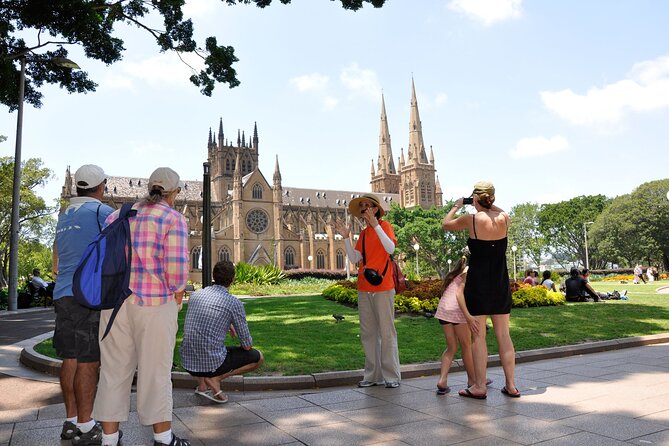
Meet at the Archibald Memorial Fountain in the northern part of Hyde Park, at 110 Elizabeth Street. This is a practical central meeting point near public transport, and the fountain is an easy landmark to identify.
Hyde Park begins the tour with open lawns, statues, and the Anzac Memorial. It is Australia’s oldest park, so the stop gives you an immediate sense of Sydney as a planned civic city, not only a harbour postcard. The five-minute stop is brief, but the guide uses it to set the scene before the streets become more tightly packed.
St. Mary’s Cathedral follows. Its Gothic form brings a European visual note to the centre of Sydney and points to the importance of Catholic life in the city. You should expect to view the building from outside rather than spend time touring its interior.
At Hyde Park Barracks, the subject turns sharper. This UNESCO World Heritage site began as a convict prison and later became an immigration depot. The building links the city’s polished public spaces with the difficult lives of people who arrived under punishment or in search of a new start.
That contrast is one of the tour’s strengths. Sydney’s grand buildings can look impressive while hiding stories of forced labour, strict control, and hardship. A good guide keeps those parts of the past in the same frame as the architecture.
Queen’s Square, the Rum Hospital, and Macquarie Street
Queen’s Square places you in Sydney’s legal and civic centre. The Supreme Court and Law Courts Building surround the square, giving the guide a chance to explain how government, law, and colonial authority shaped the growing settlement.
The next stop is Sydney Eye Hospital, also known in this context as the Rum Hospital. It was Australia’s first public hospital, built through a deal involving rum. That unusual arrangement is exactly the kind of memorable detail that helps a short walking tour stick in your mind.
Macquarie Street receives a longer stop of about 10 minutes. It is one of the most useful sections for architecture and public life, with Parliament House and Government House among the important buildings along the route. The street shows how early leaders created institutions and grand symbols of power.
I appreciate the change of scale here. The walk moves from a park to a cathedral, then to a former prison, a legal square, a hospital, and a major government street. You get a quick but coherent lesson in how a capital city organizes religion, punishment, health, law, and politics.
The stops remain short, so take notes if a building catches your interest. This tour is designed to tell you what deserves a longer return visit, not to replace those visits.
The Botanic Garden and stories of Aboriginal Sydney
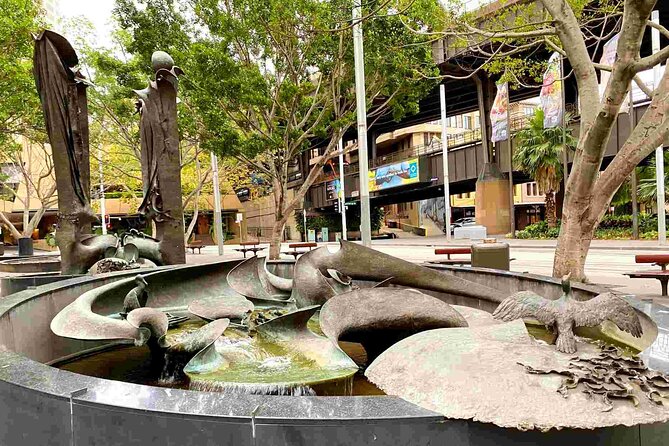
The Royal Botanic Garden offers a welcome change from stone and traffic. You will see a major public garden with Australian and international plant life, but the guide also connects the site to Aboriginal culture.
That cultural context matters. Sydney’s story did not begin with European arrival in 1788. The tour frames the city through 60,000 years of history, bringing Indigenous knowledge and presence into the same account as convict struggles and colonial expansion.
The stop is about five minutes, so you should not expect a full garden walk. Think of it as a useful introduction and a prompt to return if you want more time among the plants and harbour-side paths.
Nearby, the Sydney Conservatorium of Music occupies the former government stables. The building once housed the Governor’s horses and carriages, and its current use gives the site a pleasing connection between colonial function and present-day culture.
The Edge of the Trees adds another thoughtful pause. This artwork reflects the meeting of Aboriginal and European cultures. It is a good reminder that the tour is not limited to old stone buildings. Sydney’s past is also explored through public art and the way the city chooses to remember its beginnings.
A completely different kind of day out in Sydney:
- Sydney: Opera House Guided Tour with Entrance Ticket
★ 4.8 · 8,312 reviews - All Inclusive Blue Mountain,Scenic World,Lunch,Koalas,ferry
★ 5.0 · 7,832 reviews - From Sydney: Blue Mountains Full-Day Trip
★ 4.5 · 4,471 reviews - Blue Mountains Small-Group Tour from Sydney with Scenic World,Sydney Zoo & Ferry
★ 5.0 · 3,709 reviews
Macquarie Place, Customs House, and the route to The Rocks
Macquarie Place Park is small, but its importance is out of proportion to its size. It was Sydney’s first public space and contains historic reminders of the early city. This is a classic example of why walking with a guide helps: a small park can be easy to pass without understanding why it matters.
Customs House shifts the focus to trade and the harbour. The building once oversaw ships and goods arriving in Sydney, linking the city’s civic centre with its role as a port. You begin to see how streets, laws, warehouses, and waterfront activity worked together.
By this point, the route has covered a lot of ground. The individual stops may only last five minutes, but the steady sequence creates a broad picture. I would not choose this walk if your priority is sitting quietly in one garden or spending an hour inside a single historic building.
I would choose it if you want help with orientation. The route gives you a mental map of central Sydney, showing how Hyde Park connects to Macquarie Street, the harbour, Circular Quay, and The Rocks. That can make the rest of your visit easier to plan.
Entering The Rocks through its narrow lanes
The Rocks is where the tour becomes more intimate. Instead of broad streets and official buildings, you move through sandstone structures, old lanes, and spaces linked to Sydney’s convict and waterfront past.
The main stop lasts about 20 minutes. That is longer than most earlier pauses, and rightly so. The Rocks has the strongest sense of place on the route, with older streets and buildings that make the city’s early years easier to picture.
Suez Canal is a narrow laneway with a darker reputation. It was once associated with criminals and shadowy characters, and the guide uses it to bring out the rougher side of early The Rocks. It is a small space, but a memorable one.
Nurses Walk offers a different story. The lane recalls the early nurses who used it and the demanding conditions they faced. It shows that The Rocks was not simply a district of convicts and criminals. It was also a working neighborhood shaped by ordinary people and essential services.
Playfair Street continues the close-up look at the district. Its preserved character helps you imagine how activity once filled these lanes. Argyle Street then widens the story, showing a street that changed from an early commercial centre into part of the present entertainment and visitor district.
George Street brings old and new Sydney together. The route here helps you notice how heritage buildings, shops, food venues, and modern city life now share the same corridor. The district can feel busy at times, but the historic details are what make it worth slowing down.
Finishing at Campbells Cove with harbour views
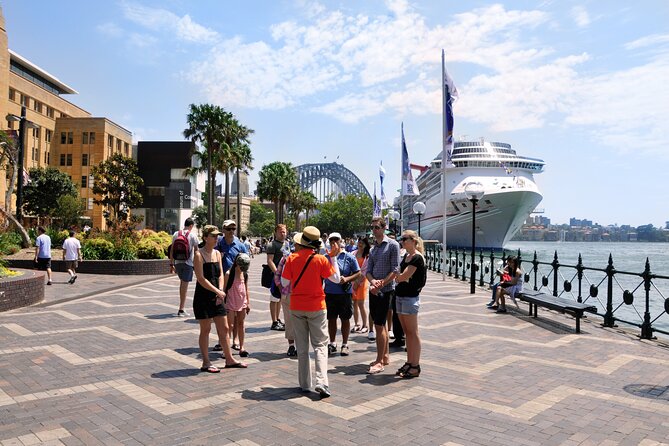
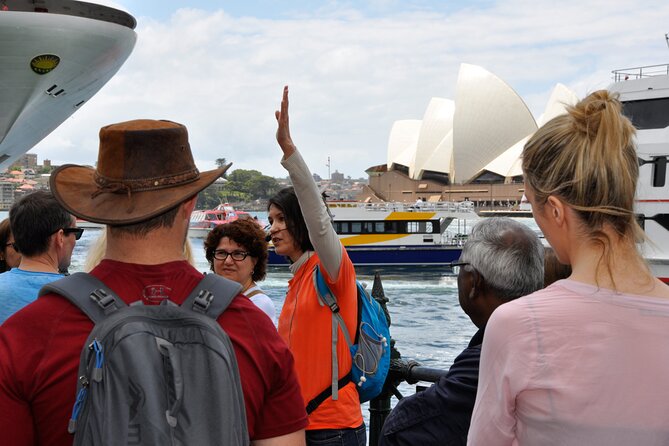
The final stop is Campbells Cove, at 4 Circular Quay West. This is an excellent place to finish because the harbour opens up after the tighter streets of The Rocks.
From here, you can see the Sydney Opera House and Harbour Bridge. The view gives the tour a satisfying visual ending, connecting the older waterfront district with the symbols most people associate with Sydney.
The location is also practical. You can continue to Circular Quay, find a pub or meal in The Rocks, browse the weekend market, or walk toward the Opera House and Harbour Bridge. The end point is not an isolated drop-off. It places you in one of Sydney’s most useful areas for the rest of the day.
I would plan lunch or another activity nearby rather than rushing away. The tour has already pointed out places that deserve more time, and The Rocks is the natural area for a second look at the lanes you passed quickly.
The guides and the pace of the walk
The strongest praise goes to the guides, especially Lily. She is described as friendly, clear, humorous, and highly informed, with a talent for explaining people, buildings, art, founders, and urban growth without making the walk feel like a lecture.
Leilani and Lele are also praised for conversation, pacing, and keeping everyone included. The important point is not one guide’s personality alone. The experience depends on a guide who can make many short stops feel connected.
The heat deserves attention. On hot days, Lily has adjusted stops to use shade where possible and checked that people were comfortable. That is helpful, but it cannot remove Sydney’s sun. Bring water, a hat, and sunblock, and wear shoes you can trust for a 2.5-hour city walk.
The walk is generally described as easy, with much of it downhill. Still, the overall distance and standing time require moderate physical fitness. If you dislike walking or have medical concerns, this may feel more demanding than the word easy suggests.
Who should book this Sydney tour?
I would recommend it most strongly to first-time visitors. The route gives you context before you spend several days exploring individual museums, gardens, churches, and harbour attractions.
Families can also benefit because the walk keeps changing subject and scenery. Convict stories, the Rum Hospital, narrow lanes, public art, and harbour views give younger visitors different things to notice, though the amount of walking may not suit everyone.
Repeat visitors are not automatically left out. The route includes less familiar corners of The Rocks, and the guides have taken returning visitors to streets and sites they had never seen. If you already know Sydney’s main landmarks, the value depends on your interest in stories and overlooked details.
This is not the right pick for a slow photography tour, a food tour, or an interior visit to major buildings. Most stops are outside, and the schedule favors breadth over long exploration.
Price, cancellation, and practical details
At $32.28 per person, the tour offers solid value for a small-group walk lasting around 150 minutes. The maximum of 16 people is a meaningful feature, especially when the guide is explaining details on a busy city street.
A mobile ticket keeps the booking simple. Confirmation is provided at booking, service animals are allowed, and the meeting point is near public transportation. The tour is free to cancel up to 24 hours before the local start time for a full refund. Changes or cancellations inside that window are not refunded.
Should you book it?
Book this walk if you want a well-paced first look at Sydney with real historical context, a small group, and a guide who can point out what to revisit later. The combination of central Sydney, Aboriginal perspectives, colonial institutions, The Rocks lanes, and the harbour finish is unusually useful for the price.
Skip it if you want lengthy interior visits or cannot manage 2.5 hours on foot. For most first visits, though, the route is a smart opening move. Start with the walk, then use the rest of your stay to explore the places that caught your attention.
FAQ
How long is the Sydney walking tour?
The tour lasts approximately 2 hours and 30 minutes.
What time does the tour start?
The tour starts at 10:30 am.
Where does the tour meet?
The meeting point is the Archibald Memorial Fountain in northern Hyde Park, at 110 Elizabeth Street, Sydney.
Where does the tour end?
The tour ends at Campbells Cove, 4 Circular Quay West, in The Rocks.
How many people can join the tour?
The maximum group size is 16 travelers.
What places does the route visit?
The route includes Hyde Park, St. Mary’s Cathedral, Hyde Park Barracks, Queen’s Square, Sydney Eye Hospital, Macquarie Street, the Royal Botanic Garden, the Sydney Conservatorium of Music, The Edge of the Trees, Macquarie Place Park, Customs House, The Rocks, Suez Canal, Nurses Walk, Playfair Street, Argyle Street, George Street, and Campbells Cove.
Is the tour physically difficult?
The walk is generally described as easy and mostly downhill, but you should have moderate physical fitness and be prepared to walk for about 2.5 hours.
Is the tour suitable in sunny weather?
Yes, but you should bring sunblock and a hat. Guides may use shade when available, though Sydney’s sun can still make the walk tiring.
Can I cancel for a full refund?
Yes. You must cancel at least 24 hours before the local start time to receive a full refund. Changes or cancellations made less than 24 hours before the start are not accepted or refunded.
Just added around Sydney
- Blue Mountains Small-Group Insider Tour from Sydney★ 4.5 · 130 reviews
- Virtual Room – 40-50min VR Escape Game Adventure for 2+ Players★ 5.0 · 130 reviews
- Hunter Valley Wines, 2-Course Lunch, Cheese & Chocolate Tour★ 5.0 · 132 reviews
- Kayak to Goat Island in Sydney Harbour with Local★ 5.0 · 133 reviews
- Sydney: Harbour Cruise with Charcuterie Board & Drinks★ 4.6 · 135 reviews
- Sydney: Sydney Opera House VIP Backstage Tour and Breakfast★ 4.8 · 136 reviews
- Sydney: Big Night Out Pub Crawl with Local Party Hosts★ 4.3 · 137 reviews
- Sydney’s Chinatown Street Food and Stories Walking Tour★ 5.0 · 139 reviews
Walking Tours, compared.
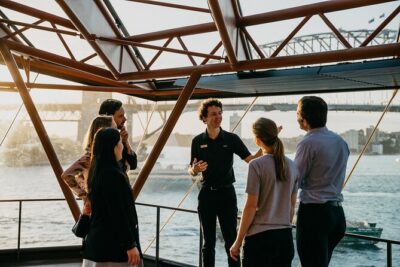
Sydney Opera House Official Guided Walking Tour
Read our review →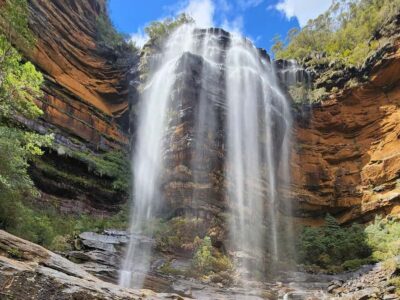
Blue Mountains Tour with Waterfall Walk & Lunch
Read our review →
Ultimate Melbourne Walking Tour: History, Laneways & Culture
Read our review →
Great Ocean Road Tour Plus Koalas, Forest Walk and Morning Tea
Read our review →
Blue Mountains Small Group Tour with Waterfall Walk & Fresh Lunch
Read our review →
Maria Island Cruise and Guided Walk Day Tour with Lunch and Drinks
Read our review →Browse the lists this tour appears in