
Reviewed · GREAT OCEAN ROAD DAY TRIPS
Torquay: 2 Hour Surf Experience on the Great Ocean Road
Your first wave can change your whole beach day. This beginner lesson at famous Torquay Beach gives you a friendly, practical introduction to surfing, with warm full-length wetsuits and softboards supplied. I like the clear mix of safety instruction and hands-on practice, and I like that qualified coaches stay close enough to offer personal help rather than leaving you to guess what to do. The main catch is the cold water, plus the chance of a busy beach or small rocks in the shallows.
You do not need to be a natural athlete or a strong surfer to enjoy this session. The instructors work with first-timers and intermediate beginners, and coaches such as Tim, Izzy, Will, Joel, Sara, Matt, and Daniel have earned praise for patience, encouragement, and clear teaching. Give yourself extra time before the lesson, since check-in begins 15 minutes early and the meeting point can vary by booking option.
In This Review
- Key Points Before You Book
- Why Torquay Is a Fine Place to Start Surfing
- Check-In, Wetsuits, and Getting Ready
- The First Beach Lesson: Safety Before Speed
- Waist-Deep Water and Your First Small Waves
- The Pop-Up: Where the Lesson Gets Exciting
- What the Coaches Do Well
- The Cold Water, Crowds, and Other Trade-Offs
- Who Will Enjoy This Torquay Lesson Most
- Practical Tips for a Better Session
- Should You Book the Go Ride A Wave Experience?
- FAQ
- How long is the Torquay surf experience?
- How much does the lesson cost?
- What equipment is included?
- What should I bring?
- Do I need previous surfing experience?
- Can children take part?
- Is private instruction available?
- Can I cancel the booking?
Key Points Before You Book
- Torquay Beach is the classroom: You learn at one of Australia’s best-known surf beaches, right on the Great Ocean Road.
- Most of the gear is included: Your booking covers a full-length wetsuit, soft surfboard, sunscreen, changing rooms, and hot showers.
- The lesson builds in stages: You begin with safety and board skills on the sand, then move into waist-deep water before practising the pop-up.
- First waves are a realistic goal: Several beginners managed to stand during their first lesson, though conditions and fitness affect each person’s result.
- Cold water is part of the deal: The wetsuits help, but one two-hour session can still feel chilly.
- Families should check the age rules: Children under 8 cannot take part, and children under 9 need a non-participating parent who can enter the water to help.
Why Torquay Is a Fine Place to Start Surfing
Torquay is widely known as Victoria’s surf capital, so this is not a lesson held in some forgettable patch of water. You are learning at Torquay Beach, a famous stop on the Great Ocean Road and a natural setting for your first attempt at catching a wave.
That location adds a sense of occasion, but it also brings a practical issue. Torquay Beach can draw plenty of people, especially on sunny days. One participant wished the lesson had taken place on a quieter section of sand. The school does mark boundary lines for its group, which helps create a defined practice area, but you should still expect other beach users nearby.
The beach itself can also change from day to day. One beginner found small rocks in the water annoying. That is not a flaw unique to this lesson. Beaches are shaped by tides and weather, and your entry may not feel perfectly smooth. Wear the supplied wetsuit carefully and listen to the instructor about where to walk and where to place your board.
I like the setting because the lesson feels connected to real surf culture. You are not simply practising a dry-land activity indoors. You are learning how the waves move, how to position your board, and how to keep your body safe in the ocean.
More Great Ocean Road day trips:
- Great Ocean Road Small-Group Eco Tour from Melbourne
★ 5.0 · 6,607 reviews - From Melbourne: Great Ocean Road, 12 Apostles, Wildlife Tour
★ 4.7 · 6,020 reviews - Great Ocean Road Reverse Itinerary Boutique Tour – Max 11 Guests
★ 5.0 · 4,186 reviews
Check-In, Wetsuits, and Getting Ready
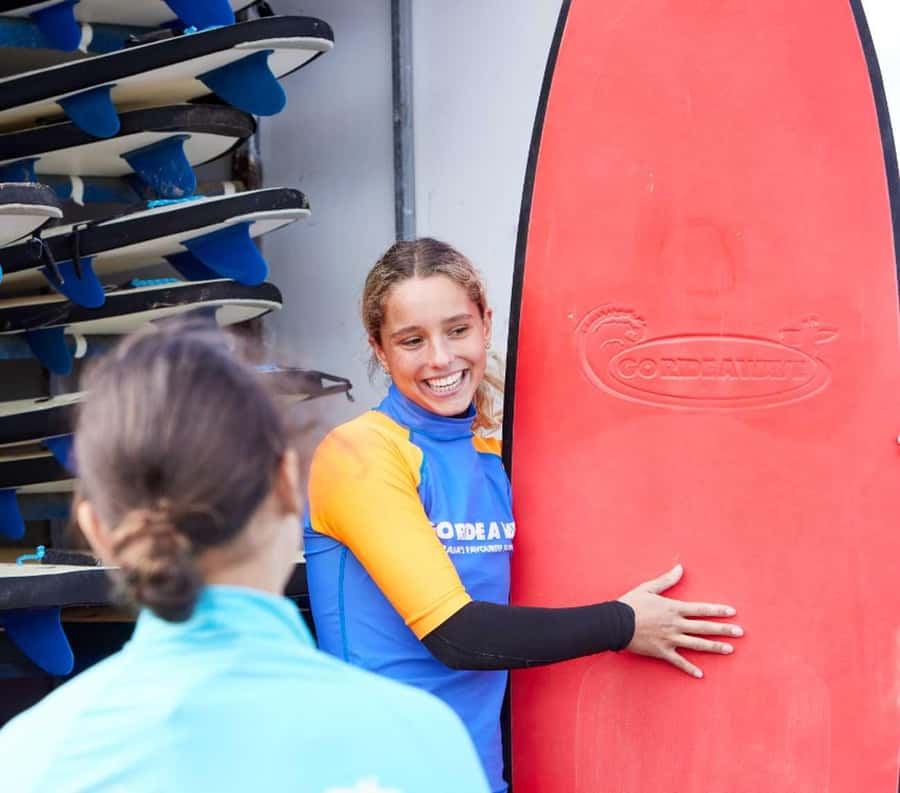
Arrive 15 minutes before your scheduled start. You check in at the surf shop, where staff provide a full-length wetsuit and a soft surfboard suited to your height and ability.
The wetsuit matters in Victoria. Even when the sun is bright, the water can feel cold, especially during a long beginner session when you are repeatedly waiting for waves. A full-length suit gives you warmth and some protection from the board and sand. It will not make the water tropical, but it helps you stay focused on learning rather than counting the minutes until you can get out.
You need to bring your own swimwear and towel. Sunscreen, hot showers, and changing rooms are included, which makes the session easier to manage as part of a Great Ocean Road day. You can finish, rinse off, change clothes, and continue with your plans without carrying a pile of wet equipment.
The equipment choice is sensible for beginners. Softboards are more forgiving than hard performance boards, giving you a stable platform while you learn balance and board control. They are not glamorous, but your first lesson is about staying upright and safe, not looking like a professional.
The First Beach Lesson: Safety Before Speed
Once everyone is suited up, your group heads from the shop to the beach. The lesson starts on the sand with a safety briefing and a basic explanation of how to handle the board.
This part may feel less exciting than the water, but it is where the session earns its value. You learn about positioning, board control, and the basic movements required to stand. A good beginner lesson reduces confusion before you meet the waves, and the coaches here put real attention on those first steps.
You also receive guidance on how to behave around other surfers and how to stay within the practice area. That matters at a popular beach. A beginner concentrating on balance can easily forget where the board is pointing or who is nearby, so clear boundaries and simple instructions make the session calmer.
The coaches use a step-by-step approach rather than assuming you already understand surf terms. That suits the mixed ability level. Some people in a group may have never surfed, while others may have tried once or twice. The instructors work to give each person useful advice instead of delivering one speech and sending everyone off.
The strongest praise for the coaching focuses on encouragement. Several beginners described instructors who were patient, friendly, and attentive to individual needs. One coach helped a 55-year-old non-swimmer become less afraid of the water and feel the rhythm of the waves. That is a useful reminder that success here is not measured only by standing up.
Waist-Deep Water and Your First Small Waves
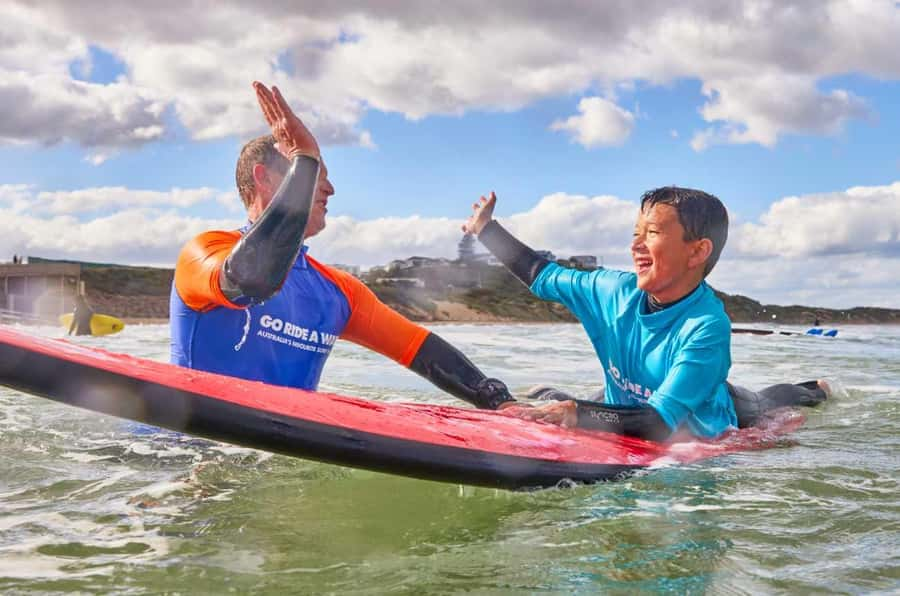
After the dry-land introduction, you wade into waist-deep water and begin trying small waves. This is where the lesson becomes physical. You will carry or push your softboard, turn it toward the beach, lie on it, and feel how the water moves beneath you.
Your first goal is not a dramatic ride. It is learning to catch a small wave without losing control. The coach helps you understand when to start moving, where to place your body, and how to keep the board pointing in the right direction.
This stage can be tiring. Beginners often paddle at the wrong time, lift their head too far, or shift their weight in a way that sends the board off course. That is normal. You will get more from the experience if you treat each attempt as useful practice instead of expecting a perfect ride straight away.
The shallow-water format also helps build confidence. You are not immediately sent far from shore to manage a large board and unfamiliar waves. You can focus on the feel of the water and the timing of the wave while the instructor remains nearby.
The reviews show that the teaching works for a wide range of ability. One couple included a person surfing before and another on only a second attempt, and the coach was able to help both. That makes this a good choice if you are joining a friend or partner who has slightly more experience than you.
A few more Australia trips worth weighing up
- Melbourne: 2-Hour City Highlights River Cruise
★ 4.1 · 1,804 reviews - Surfers Paradise: 2 Hour Surf Experience on the Gold Coast
★ 4.9 · 1,132 reviews - Bondi Beach: 2-Hour Surf Lesson Experience for Any Level
★ 4.9 · 935 reviews - Sydney: 2-hour Express Whale Watching Cruise
★ 4.2 · 756 reviews
The Pop-Up: Where the Lesson Gets Exciting
After you have practised catching waves, the group returns to the beach for detailed instruction on the pop-up. This is the movement that takes you from lying on the board to standing on it.
The instructor breaks the action into manageable steps. You learn where to place your hands, how to bring your feet underneath you, and how to keep your balance once you rise. It sounds simple until you try it while a wave is pushing the board, which is why the sand practice is useful.
Then you return to the water and put the movement into practice. The coach offers individual tips while you try to repeat the steps under real conditions. Some people stand quickly. Others spend most of the lesson improving their timing or getting comfortable with the board.
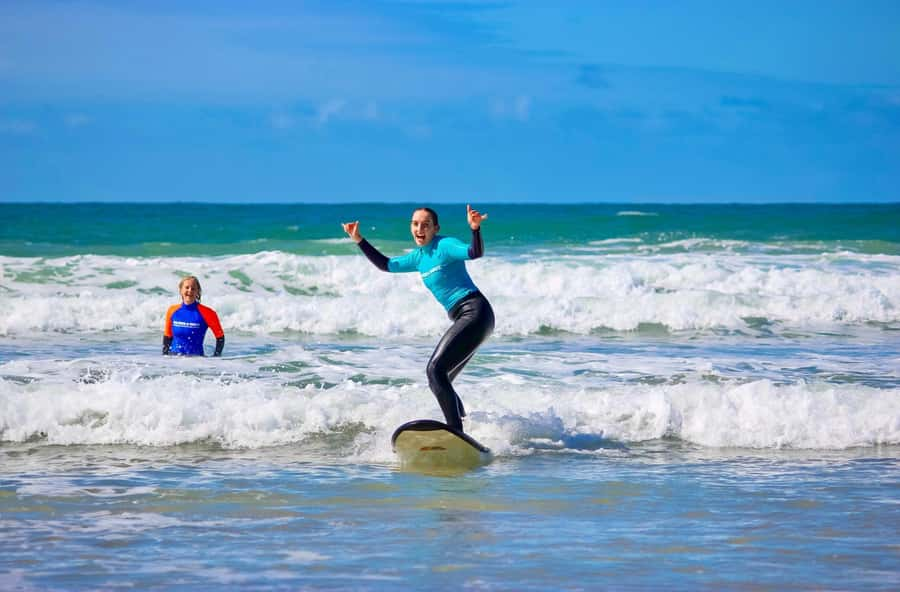
Several participants managed to stand during the session, including children who were new to surfing and adults taking their first lesson. That is an encouraging sign, but I would not treat it as a promise. Wave size, weather, balance, strength, and confidence all affect the result.
A better measure of success is progress. You may catch a wave lying down, stand for a second, or simply learn how to fall safely and reset your board. Each one is a useful win. The coach’s job is to help you build confidence, not to force a photo-ready moment.
What the Coaches Do Well
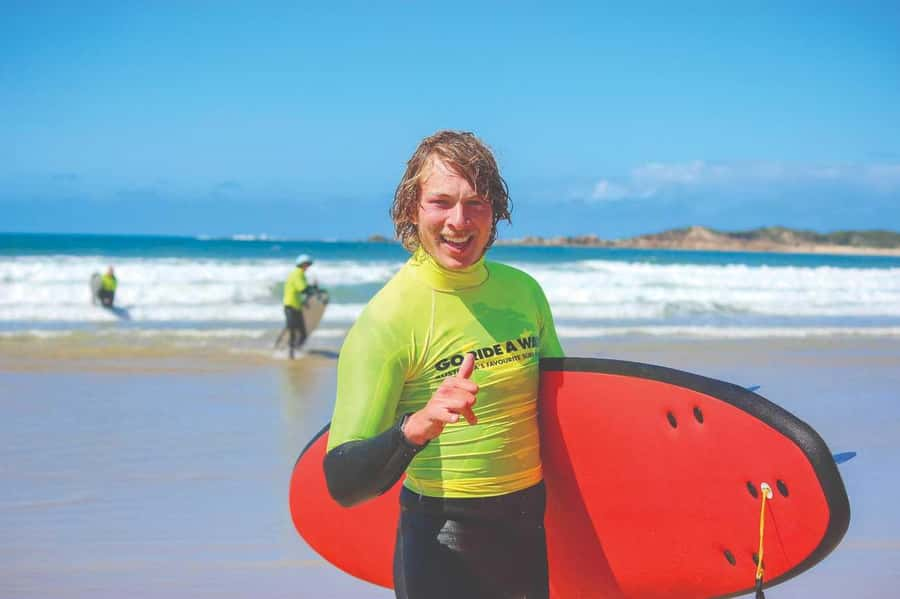
The most praised part of this experience is the teaching. Coaches are described as friendly, encouraging, and easy to understand, with particular praise for Tim, Izzy, Will, Joel, Sara, Matt, Daniel, Stephan, Tano, and Ou.
Names matter here because the instructor shapes your day. A patient coach can make cold water and repeated falls feel fun. A rushed coach could make the same conditions frustrating. The feedback attached to this school points strongly toward staff who stay positive and give people room to learn.
Joel received special praise for making a participant feel welcome and supported. Izzy was noted for her patience with beginners and for offering plenty of useful tips. Tim was credited with explaining the lesson clearly while keeping two hours in cold water enjoyable.
The class also appears to suit younger children within the permitted age range. Parents reported that their children were standing and riding by the end, with instructors taking care around smaller participants. Still, do not confuse a family-friendly teaching style with a lesson for very young children. Children under 8 are not suitable, and children under 9 need a parent who is not taking the lesson to enter the water and assist.
The Cold Water, Crowds, and Other Trade-Offs
At $59 per person, the experience offers good value if you want a proper introduction rather than a brief equipment rental. The price includes two hours of coaching, a wetsuit, a softboard, sunscreen, hot showers, and changing facilities. Renting a board and wetsuit separately would not give you the same safety guidance or structured practice.
The value is strongest for a first-timer. You get instruction before entering the water, help during the attempts, and equipment matched to your height and skill level. If you already surf confidently, a group beginner session may feel too basic, even though the activity is also suitable for experienced intermediates.
Cold water is the clearest drawback. One participant specifically noted how the instructor made two hours in chilly water enjoyable, which tells you both things at once: the coaching helps, but the temperature is noticeable. Bring warm clothes for afterward and use the hot shower before heading back onto the road.
Crowding can also affect the feel of the class. Torquay is popular, and one person preferred a less busy part of the beach. The marked lesson boundaries help, but you cannot control every sunbather or swimmer. If personal space matters to you, consider a private group option if available for your chosen time.
Small rocks may appear in the water, depending on the section of beach and conditions. They were mentioned as an annoyance, not as a reason the lesson failed. Pay attention during the entry and follow the coach’s directions instead of rushing toward the waves.
Who Will Enjoy This Torquay Lesson Most
I would recommend this for adults, teenagers, families with eligible children, couples, and friends who want an active stop on the Great Ocean Road. It works especially well for people who are curious about surfing but do not want to buy gear or commit to a long course.
It is also a good match for anyone nervous around the ocean. The session begins with safety, takes you into waist-deep water, and keeps the instructor close during practice. A non-swimmer may need to think carefully before booking, but one participant with a strong fear of the water gained confidence during the lesson.
You should choose the longer progressive course if you want to build a real surfing habit. The school also offers a 1.5-hour private lesson and a three-lesson course, both better suited to people who want more personal attention or steady development.
If you are travelling with mixed abilities, this group class makes sense. A first-timer and someone with a little previous experience can receive different tips during the same session. Strong intermediate surfers, however, may want more challenging waves and a more advanced format.
Practical Tips for a Better Session
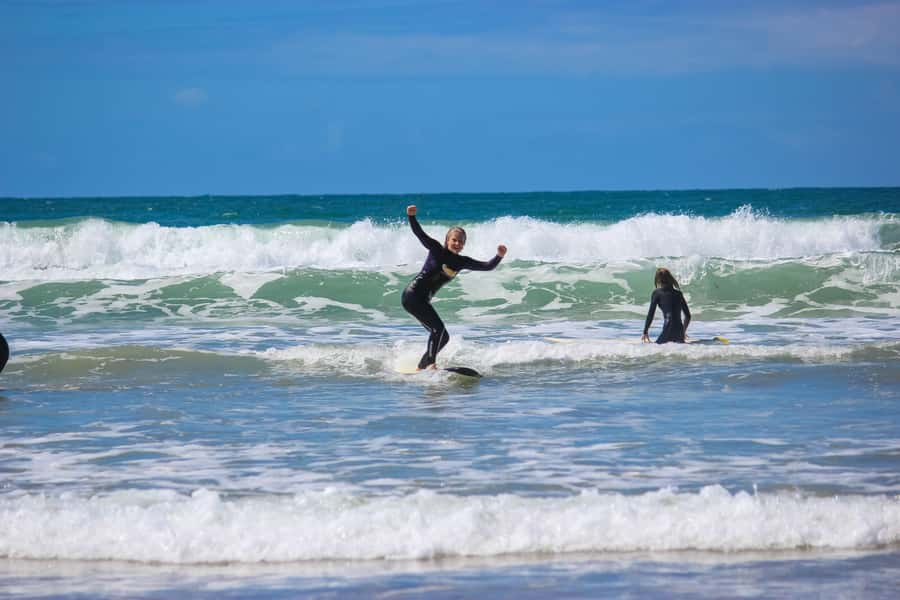
Check the weather forecast before you book or travel to Torquay. One participant specifically advised choosing a sunny day, and the reason is practical: sun makes waiting on the beach more pleasant, helps you warm up after the water, and gives the beach a better feel.
Arrive early enough to handle check-in without stress. The required arrival time is 15 minutes before the lesson, and the meeting point may vary depending on the option you choose, so check your booking details carefully.
Wear swimwear under the wetsuit and bring a towel. Pack warm clothing for afterward, even if the day feels mild. You will appreciate a dry layer after two hours in the water.
Listen closely during the sand instruction. The pop-up can feel awkward, but the movements become easier once you have rehearsed them. Do not waste the first several waves trying to stand before you know how to position the board.
Finally, expect to fall. That is part of learning, not proof that you are bad at surfing. The instructors’ strongest quality is their ability to keep beginners trying, so use their advice after each attempt.
Should You Book the Go Ride A Wave Experience?
Book it if you want a well-supported first taste of surfing at a famous Victorian beach. The $59 price is fair for two hours of instruction plus the main equipment and changing facilities, and the teaching receives consistently warm praise.
You should go in with realistic expectations. You may stand on your first day, but you may also spend much of the lesson learning to catch waves, balance, and handle the board. The water can be cold, the beach may be busy, and small rocks are possible.
For most beginners, those drawbacks are manageable. Choose a sunny forecast, arrive early, bring a towel and warm clothes, and let the coach set the pace. If you want personal attention, ask about a private lesson. If you want lasting progress, choose the three-lesson course. For a memorable two-hour introduction on the Great Ocean Road, this is an easy activity to recommend.
FAQ
How long is the Torquay surf experience?
The surf lesson provides two hours of instruction. The activity listing gives an overall duration range of 90 minutes to 6 hours, so check the available option and start time when booking.
How much does the lesson cost?
The listed price is $59 per person.
What equipment is included?
You receive a full-length wetsuit, a soft surfboard, sunscreen, and two hours of instruction from a Level-1 qualified surf coach. Hot showers and changing rooms are also included.
What should I bring?
Bring swimwear and a towel. You may also want warm clothes for afterward because the water can feel cold.
Do I need previous surfing experience?
No. The lesson is designed for first-timers and is also suitable for experienced beginners and intermediates.
Can children take part?
Children under 8 are not suitable for the lesson. Children under 9 must have a parent who is not participating in the lesson enter the water to assist, and a wetsuit will be provided.
Is private instruction available?
Yes. A private group option is available, and the school also offers a 1.5-hour private lesson.
Can I cancel the booking?
You can cancel up to 24 hours in advance for a full refund. A reserve-now-and-pay-later option is also available.
Just added around Australia
- Private Transfer from Sydney Airport to Sydney (CBD)Hotel or Port★ 4.5 · 24 reviews
- Sydney: “Vivid Sydney” Festival of Light Sightseeing Cruise★ 4.3 · 24 reviews
- McLaren Vale Private Luxury Wine Tour – Full Day★ 5.0 · 24 reviews
- Alice Town And Country Half Day Sunset Tour – Small Group★ 4.5 · 24 reviews
- Kangaroo Island: Half-Day Tour Guided Coach Tour★ 3.2 · 24 reviews
- Granite Skywalk Porongurups★ 4.5 · 24 reviews
- Shore Excursion Melbourne, Sights, Kangaroos, Koalas Lunch & Wine★ 5.0 · 24 reviews
- Shuttle from Airlie beach to Proserpine airport★ 3.5 · 24 reviews
Great Ocean Road Day Trips, compared.
Great Ocean Road Small-Group Eco Tour from Melbourne
Read our review →

Great Ocean Road Reverse Itinerary Boutique Tour – Max 11 Guests
Read our review →
Great Ocean Road Tour w/ Deluxe Minibus & Top-Rated Guide
Read our review →
Great Ocean Road Extended–Top Stops&London Bridge
Read our review →

Great Ocean Road Full-Day Sunset Eco Tour from Melbourne
Read our review →
Great Ocean Road Tour Plus Koalas, Forest Walk and Morning Tea
Read our review →Browse the lists this tour appears in