
Reviewed · ULURU & RED CENTRE TOURS
Uluru, Kata Tjuta and Kings Canyon Camping Safari from Alice Springs
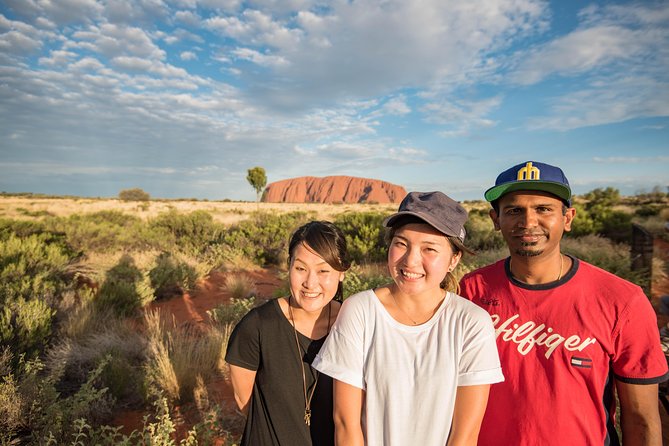
The Red Centre rewards early risers. This three-day safari links Uluru, Kata Tjuta, and Kings Canyon with sunrise walks, sunset views, guided hikes, meals, and camping. I like the compact route and the chance to see the rock formations at cool hours, before the outback heat builds. I also like the strong cultural focus, including a Maruku Arts walk with an Aboriginal and Torres Strait Islander guide. The main caution is simple: this is an active camping trip, not a soft hotel tour, and heat, long drives, and basic facilities can test you.
The trip is led by small-group guides, with a maximum of 23 people, and several guides have earned praise for their calm organization and good storytelling. Names that come up include Lorrie, Ty, Mishka, Renée, Ryan, Troy, Lachie, Libbi, and Asha. I would book this for scenery, company, and convenience, but I would read the camping description carefully before paying the $713.66 price.
In This Review
- Six things to know before you book
- Alice Springs to Uluru before breakfast
- Kata Tjuta: 36 domes and a worthwhile first hike
- Uluru sunset, changing color, and a long day
- Uluru sunrise and the base walk
- Cultural Centre and Maruku Arts
- Kings Canyon camp and the reality of glamping
- Kings Canyon rim walk and the Garden of Eden
- Meals, guides, and the group rhythm
- The $713.66 question: is the value fair?
- Heat, fitness, and what to pack
- Should you book this Red Centre safari?
- FAQ
- Where does the tour start?
- What time is pickup?
- Where does the tour finish?
- How long does the tour last?
- What places does the safari visit?
- Are meals included?
- Is accommodation included?
- How fit do I need to be?
- How many people can join the tour?
- Can I cancel for a full refund?
Six things to know before you book
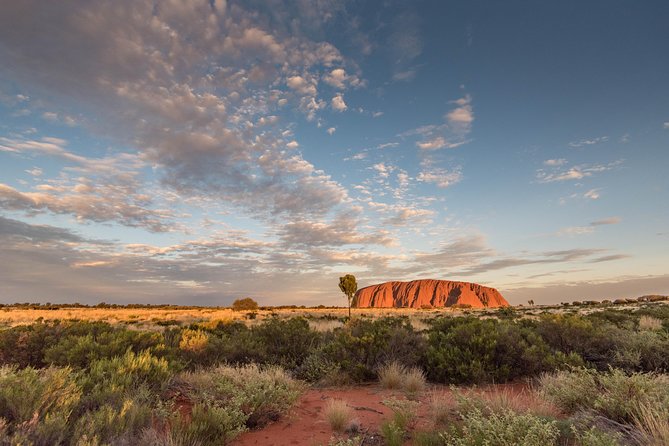
- Uluru appears at both sunset and sunrise, giving you two very different views of the sacred monolith.
- Kings Canyon’s rim walk is the physical highlight, with steep sections, high gorge walls, and the Garden of Eden.
- Kata Tjuta gets a proper afternoon hike, rather than a quick roadside photo stop.
- The trip covers long distances, including more than 400 kilometers from Alice Springs to Uluru.
- Camping varies by night, from tent cabins with beds, lights, and sometimes fans to rougher camp conditions.
- You need moderate fitness, sturdy shoes, sun protection, and a good plan for hot weather.
Alice Springs to Uluru before breakfast
Pickup is at 5:40 a.m. from Stay at Alice Springs Hotel on Leichhardt Terrace. That is an early start by any measure, but it makes sense here. The Red Centre is vast, and the first day involves a long run south toward Uluru-Kata Tjuta National Park.
You will spend a fair amount of time on the coach. That is not a flaw in the route so much as a fact of Australian geography. The three headline sights are far apart, and this safari packs them into roughly 72 hours. The coach gives you a chance to rest between walks, but you should not expect a leisurely road trip with frequent stops.
The maximum group size is 23. That is small enough for the guide to keep an eye on the group, yet large enough to create the friendly campfire feeling this trip is known for. You may be sharing meals and chores with people from several countries, including young adults on working visas as well as older couples and families.
The early hours also help with safety and comfort. Several walks begin around sunrise or finish before the strongest heat of the day. In summer or during hot weather, temperatures can reach 41 to 43 degrees Celsius. Even in cooler seasons, direct sun and dry air can catch you off guard.
A few more Uluru trips worth weighing up
- Ocean Safari Great Barrier Reef Experience in Cape Tribulation
★ 5.0 · 902 reviews - Kangaroo Island 75-Minute Coastal Safari
★ 5.0 · 607 reviews - Marine Eco Safari – Swim with Manta Rays
★ 5.0 · 493 reviews
Kata Tjuta: 36 domes and a worthwhile first hike
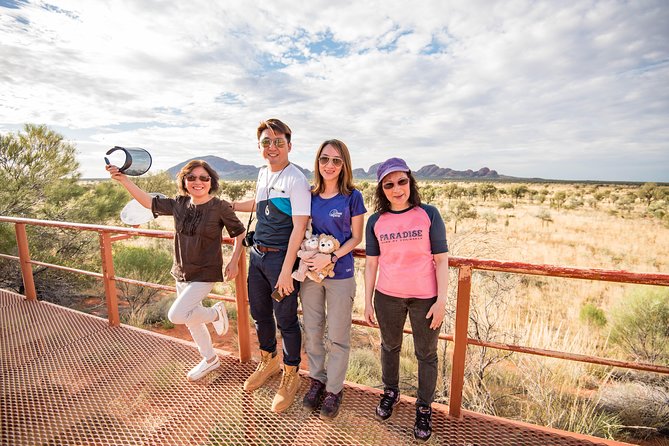
Kata Tjuta means many heads, and the name fits. The site is made up of 36 rounded domes that rise from the surrounding plain. It feels different from Uluru, less like one immense monolith and more like a cluster of giant stone forms with narrow valleys and folds.
The afternoon stop allows about two hours for a guided hike. That is a useful amount of time because Kata Tjuta deserves more than a quick photograph from the car park. Your guide can help explain the plants, animals, geology, and cultural meaning of the area while you walk.
The timing has a tradeoff. Afternoon light can bring strong color to the domes, but it can also mean heat. Carry water and use the slower pace your body needs. The stated fitness level is moderate, but the walks are not casual strolls. You should be comfortable walking on uneven ground and handling several hours of activity across the day.
I like having Kata Tjuta on the first afternoon. It gives you an immediate sense of the scale of the Red Centre, while the guide can establish the practical rhythm of the trip: walk, listen, drink water, return to camp, and help with the evening meal.
Uluru sunset, changing color, and a long day
As evening arrives, you head to Uluru for sunset. The rock changes color as the light shifts, from warm red and orange to deeper tones as the sun drops. The stop lasts about an hour and includes snacks, adding a small social touch before the first night outdoors.
Do not expect Uluru to look the same at sunset as it does at sunrise. At sunset, the fading light strikes the rock and makes its surface appear to glow. Sunrise offers a different effect, with the rising sun behind you lighting Uluru against a still-shadowed plain.
One important point is that the sunset experience is not presented as a luxury drinks event. Some operators may offer champagne, but that is not something you should count on here. The appeal is the rock itself, the quiet shift in light, and the chance to begin the trip at one of Australia’s most powerful natural and cultural places.
Uluru is a sacred site to the Anangu people, and a respectful visit matters. The tour places value on First Peoples’ culture and on caring for the land. That approach adds meaning to the walks rather than treating the park as a collection of photo stops.
Uluru sunrise and the base walk
Day two starts before dawn. You travel to Uluru for sunrise, then spend up to four hours walking around the base. This is one of the best parts of the schedule because the morning air is cooler, the light is soft, and the rock appears to glow above the darker plain.
The base walk gives you a close look at Uluru’s caves, grooves, waterholes, and weathered surfaces. From a distance, the rock can seem smooth and simple. Up close, it has more texture and detail than a photograph suggests.
The full walk can be demanding. One account describes a route of about 10 kilometers, so prepare for several hours on your feet. Knee problems, extreme heat, and lack of sleep can make this section harder than the word walk implies. Your guide may explain the pace and local conditions, but you still need to judge your own limits.
Lachie was praised for dropping the group away from other crowds at sunrise, creating a quieter start. That detail matters. The sight is more affecting when you have room to stand still, listen, and watch the light arrive instead of competing for a viewing spot.
The rock’s spiritual meaning should also shape how you behave. The former practice of climbing Uluru has ended, and the visit is best approached through the base walk, cultural interpretation, and observation. You are not simply checking off a famous landmark. You are entering a place of continuing importance to its traditional custodians.
A completely different kind of day out in Uluru:
- Segway the FULL base of Uluru
★ 5.0 · 449 reviews - Uluru (Ayers Rock) Sunset + Outback Barbecue Dinner & Star Talk
★ 4.0 · 426 reviews - Full Uluru Base Walk at Sunrise Including breakfast
★ 5.0 · 408 reviews - Kings Canyon Day Trip from Ayers Rock (Uluru)
★ 4.5 · 380 reviews
Cultural Centre and Maruku Arts
After lunch, the itinerary allows about 30 minutes at the Uluru-Kata Tjuta Cultural Centre. That is enough for a quick introduction, but it is not enough if you want time to browse carefully, read the displays, and shop for art.
You might find locally made art and crafts connected to First Peoples of Australia. If that interests you, I would keep your visit focused and ask the guide what deserves priority. The short stop is one of the weaker time allocations in the program, especially after a long base walk.
The Maruku Arts stop adds a more personal cultural element. The planned 30-minute interpretive walk is led by an Aboriginal and Torres Strait Islander guide. This is valuable because it moves beyond general facts and gives you a chance to hear cultural perspectives connected to the place.
The walk has not always operated exactly as planned, so you should treat it as an important scheduled element rather than a guaranteed long session. When it runs, it can be one of the most meaningful parts of the trip. The guide’s role is not decoration. It helps connect the rock, the stories, and the living culture of the region.
Kings Canyon camp and the reality of glamping
After Uluru, the group travels to a campsite within Watarrka National Park, near Kings Canyon. This is a major transfer day, with driving, walking, meals, and camp duties spread across a long stretch.
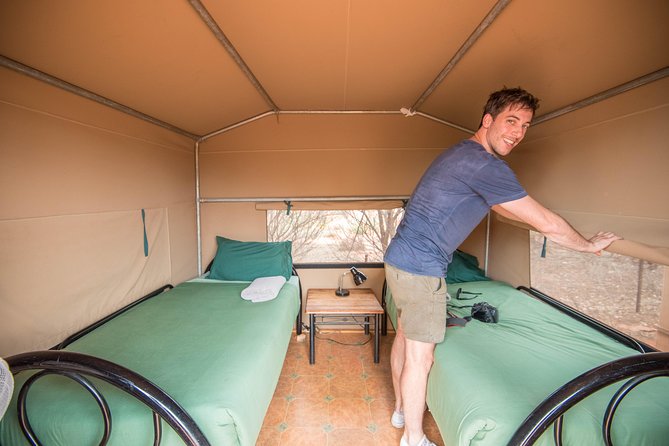
The term glamping needs a careful reading. The more comfortable setup uses tent cabins with real beds, steel frames, lights, and in some cases a fan. That is a big step up from sleeping directly on the ground. Some arrangements use swags, which are outdoor sleeping bags or bedrolls designed for Australian camping.
The camps are not hotel rooms. Facilities can be basic, and conditions may vary between the first and second night. One campsite has been described as comfortable and well equipped, while another may have older cots, little or no power, limited lighting, and rougher bathrooms. Outdoor showers and toilets are part of the experience, and privacy may be limited.
The practical lesson is to ask exactly what accommodation type your booking includes. If you are in a tent cabin, you may not need a sleeping bag. If you are sleeping in a swag, you do. Confusing messages about this item have caused needless stress, so confirm it before leaving Alice Springs.
Camping also means shared work. You may help chop vegetables, prepare meals, wash dishes, or set up parts of camp. That is not a hidden fee or a punishment. It is how a small outback group functions. Still, camp organization depends heavily on the guide, and some departures may feel slower or less orderly than others.
Kings Canyon rim walk and the Garden of Eden
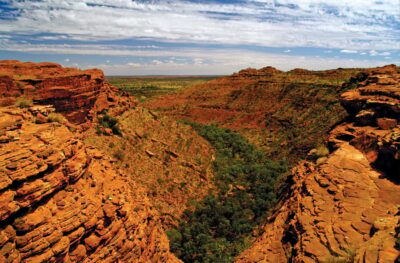
Day three brings the trip’s grand finale: Kings Canyon in Watarrka National Park. The gorge has sheer walls hundreds of meters high, layered rock, narrow passages, and sheltered sections where the terrain feels cooler than the open desert.
The main walk is the Kings Canyon rim walk, often around 10 kilometers and lasting up to four hours. The opening climb can be strenuous, especially after two early mornings, but the reward is excellent views from the top. You see the canyon from above, then move through changing rock shapes and dramatic drops.
The Garden of Eden is a particularly beautiful section. Its water and plant life offer a striking contrast to the dry country around it. This is one reason I would choose the rim walk if you are physically ready. It gives you the full experience rather than a short look from below.
You should be honest about your knees, balance, and heat tolerance. The walk is not suitable for everyone, and guides cannot remove every steep or uneven section. If you need to stop, do so early rather than trying to keep pace until you are exhausted.
Kings Canyon may surprise you. Uluru is the symbol most people know, but the canyon often becomes the scenic favorite because it combines height, color, rock texture, and a sense of discovery. The tour earns its price more convincingly when you complete this walk.
Meals, guides, and the group rhythm
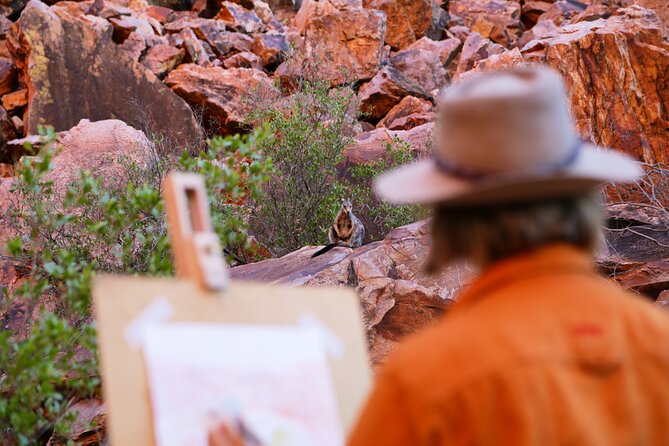
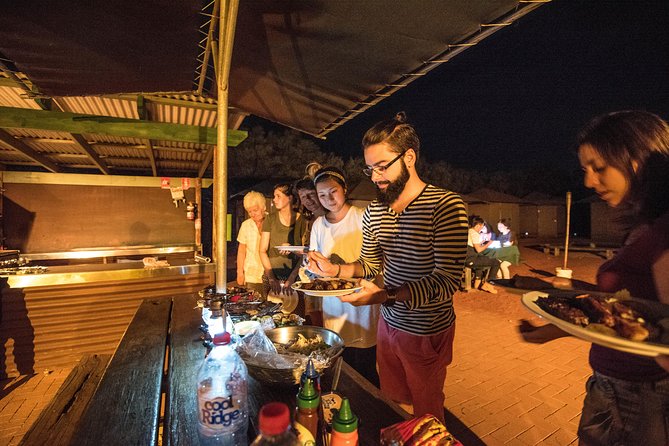
Meals are included, and most accounts describe them as fresh, plentiful, and better than expected for a camping trip. Food can include cooked dinners, wraps, burgers, chicken wings, and other straightforward group meals. Tap water is the standard drink, so bring your own insulated water bottle and plan for electrolytes in hot weather.
Food preparation is part of the social side of the trip. You are not eating at a restaurant every evening. You may sit around the fire, share stories, and work together before dinner. That helps create the camaraderie many people value most.
The guide can make or break a trip like this. Ty was praised for managing the route, cooking, driving, and keeping people entertained. Lorrie earned similar praise for organization and care. Mishka, Renée, Ryan, Troy, Lachie, Libbi, and Asha were also singled out for warmth, safety, cultural information, or good timing.
You should remember that the guide may carry a heavy workload. On some departures, the guide handles driving, cooking, camp duties, and commentary with limited help. That can lead to late meals or rushed evenings. A cooperative group makes the whole operation work better.
The $713.66 question: is the value fair?
At $713.66 per person, this is not a budget bus ride. It is also not an expensive hotel-based escape. The price includes round-trip transport from Alice Springs, national park access, guided walks, meals, accommodation, and a three-day route through places that are difficult to connect without your own vehicle.
I see the strongest value in the transport and planning. You do not need to arrange a long drive through remote country, find campsites, organize park visits, or work out how to reach Kings Canyon after Uluru. The guide also adds interpretation and keeps the schedule moving.
The weaker value appears if you expect polished glamping. Basic camps, shared chores, outdoor facilities, and a variable second night can make the price feel high. One very negative experience also described missing meals, a canceled cultural walk, and poor camp facilities. Those problems are not presented as the normal experience, but they show why expectations matter.
For me, the price makes sense if you value access, guided hikes, and seeing all three major sites in a short time. It makes less sense if you mainly want a private room, long showers, slow mornings, or full control over your meals.
Heat, fitness, and what to pack
You need moderate physical fitness. The program may include a 10-kilometer Uluru base walk, a substantial Kata Tjuta hike, and the Kings Canyon rim walk. Add early wake-ups, long coach rides, and camp work, and the three days become physically demanding.
Pack:
- A wide-brimmed hat
- Sturdy walking shoes
- Insulated water bottles
- Electrolytes
- Sun protection
- Warm layers for early mornings
- A sleeping bag if you are assigned a swag
- A small battery light for the tent area
Do not judge the weather by the temperature in Alice Springs. Conditions around the parks can be severe, with reported temperatures above 40 degrees Celsius. People over 70 or anyone with heat-sensitive medical concerns should think carefully about the season and the length of the walks.
The reward for the early starts is real. You walk before the worst heat, reach major viewpoints with fewer people around, and see the rock under changing light. The schedule is tiring, but it is designed around the environment rather than against it.
Should you book this Red Centre safari?
Book it if you want Uluru, Kata Tjuta, and Kings Canyon in one organized trip, and you like walking, shared meals, early mornings, and outdoor nights. It is especially good for solo visitors who want an easy way to meet people, and for visitors who do not want to drive long remote distances themselves.
Think twice if you need reliable power, private bathrooms, air conditioning, generous downtime, or a predictable hotel standard. Also be cautious during extreme heat, and confirm your sleeping arrangement before departure.
My choice would be the tent cabin option, plus the Kings Canyon rim walk, sturdy shoes, extra water capacity, and a flexible attitude. With those expectations, this safari offers a powerful introduction to the Red Centre and a practical way to see far more than Uluru alone.
FAQ
Where does the tour start?
The tour starts at Stay at Alice Springs Hotel, 11 Leichhardt Terrace, Alice Springs NT 0870, Australia.
What time is pickup?
The stated start time is 5:40 a.m.
Where does the tour finish?
The activity ends back at the meeting point in Alice Springs.
How long does the tour last?
The tour lasts approximately three days.
What places does the safari visit?
It visits Uluru, Kata Tjuta, Uluru-Kata Tjuta Cultural Centre, Maruku Arts, and Kings Canyon in Watarrka National Park.
Are meals included?
Yes, meals are included. The trip information describes them as delicious, and many departures include fresh-cooked and plentiful food.
Is accommodation included?
Yes, camping accommodation is included. The setup may be tent cabins with beds or swags, depending on the arrangement booked.
How fit do I need to be?
A moderate level of physical fitness is required. The program includes guided hikes at Kata Tjuta, around Uluru, and at Kings Canyon.
How many people can join the tour?
The maximum group size is 23 people.
Can I cancel for a full refund?
You can receive a full refund if you cancel at least six full days before the experience start time. Cancellations two to six full days before departure may receive a 50 percent refund, while cancellations less than two full days before departure are not refunded.
Just added around Uluru
- Afternoon Kata Tjuta Small Group Tour★ 4.5 · 138 reviews
- Uluru (Ayers Rock) to Alice Springs One-Way Shuttle★ 4.5 · 150 reviews
- Uluru Sunrise (Ayers Rock) and Kata Tjuta Half Day Trip★ 4.5 · 156 reviews
- Alice Springs to Ayers Rock (Uluru) One Way Shuttle★ 4.5 · 156 reviews
- Small Group Uluru Sunset Viewing Tour★ 4.5 · 159 reviews
- Uluru Morning Guided Base Walk★ 4.5 · 160 reviews
- Highlights of Uluru Including Sunrise and Breakfast★ 5.0 · 184 reviews
- Best of Uluru & Segway★ 5.0 · 186 reviews
Uluru & Red Centre Tours, compared.
Ayers Rock Day Trip from Alice Springs Including BBQ Dinner
Read our review →
Uluru: Field of Light Sunrise Tour with Hot Drinks
Read our review →
Kings Canyon: Full-Day Tour from Ayers Rock Resort
Read our review →
Yulara: Uluru & Kata Tjuta 25-Minute Helicopter Experience
Read our review →
Yulara: Uluru Sunrise and Kata Tjuta Day Trip by Bus
Read our review →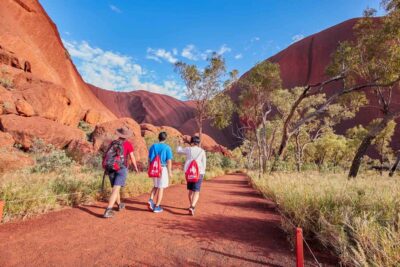
Uluru: Sacred Sites & Sunset Tour with Wine & Cheeseboard
Read our review →Browse the lists this tour appears in