
Reviewed · ULURU & RED CENTRE TOURS
Uluru: National Park Astronomy Tour with Telescope and Photo
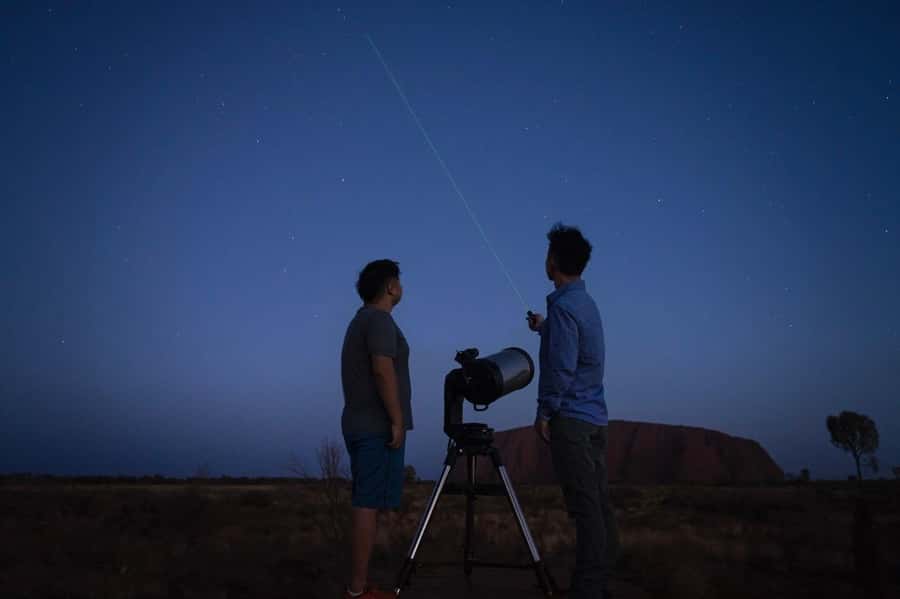
Stars hit differently at Uluru. This 150-minute evening tour takes you beyond resort lights for a clear view of the southern sky, with telescopes, laser-guided constellation talks, and Indigenous astronomy stories. I especially like the excellent guides and the included long-exposure photograph with Uluru behind you. The main drawback is that large groups can mean queues for the telescopes and photo.
This is not just a quick look upward from your hotel grounds. You ride into Uluru and Kata Tjuta National Park, settle onto a folding stool with a blanket if needed, and spend real time learning what you are seeing. I also like that beginners are welcome, while keen sky-watchers can bring a camera and tripod. Moonlight, cloud, and group size can shape the evening, so expectations matter.
In This Review
- Key things to know before you book
- Leaving the resort for a darker Uluru sky
- Learning the southern sky with lasers and stories
- What the telescopes can reveal
- The Uluru night photograph
- Moon phases and clouds can change the show
- Is $91 good value?
- What to bring for a comfortable evening
- Who should book this Uluru astronomy tour?
- Should you book it?
- FAQ
- How long does the Uluru astronomy tour last?
- Is hotel pickup and drop-off included?
- Do I need a National Park pass?
- What languages are available?
- What can I see through the telescopes?
- Is the professional photograph included?
- Can I bring my own camera?
- What should I wear?
- Can I cancel the booking?
Key things to know before you book
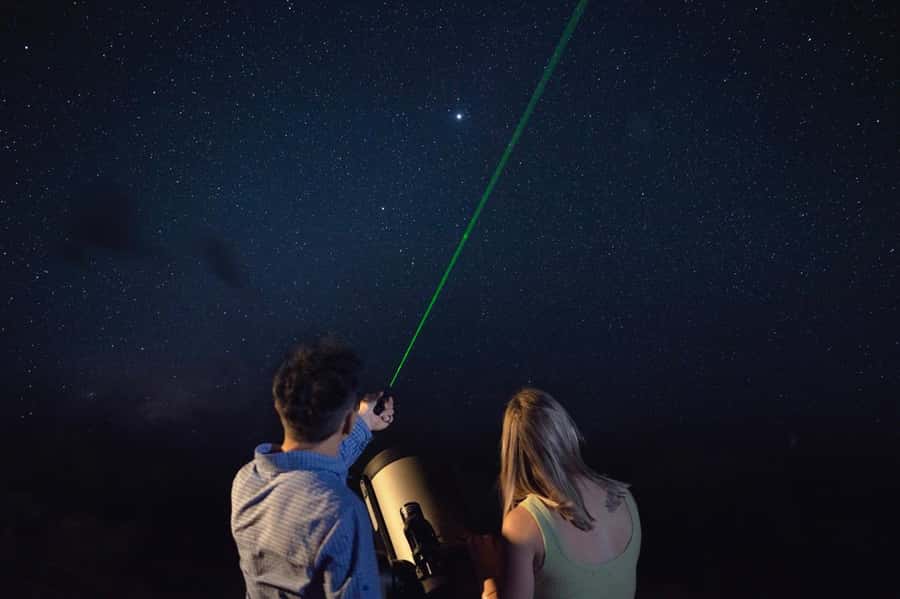
- The best views come after leaving the resort lights: The tour drives to a darker place in the National Park, where the Milky Way and faint stars are easier to see.
- Telescopes add detail your eyes cannot catch: Depending on the night, you may see planets, Saturn’s rings, nebulae, star clusters, the Moon, or other distant objects.
- The guides mix science with Indigenous sky knowledge: Neil, Lucy, Zack, Olina, Ollie, and other guides have been praised for clear explanations, humor, and warm assistance.
- Your booking includes a professional digital photo: You are photographed beneath the stars with Uluru as the backdrop.
- Cold weather is a real possibility: Bring warm layers, closed-toe shoes, and water. Blankets are available, but you should not rely on a thin jacket.
- Large groups can slow the evening: Some departures use two full buses and only three telescopes, with photo queues reported at 45 to 60 minutes.
Leaving the resort for a darker Uluru sky
Your evening begins with pickup from your accommodation. Look for the Atrip bus, and check your email for the confirmed pickup schedule on the day of the tour. The drive to the viewing site is part of the practical appeal. You do not need to arrange your own transport, and you do not need to carry a National Park pass for this activity.
The exact pickup time depends on availability and the date. Allow roughly two and a half hours for the complete outing, including the ride out and return to your hotel. One account describes the drive as about 20 minutes from the resort, though timing can vary.
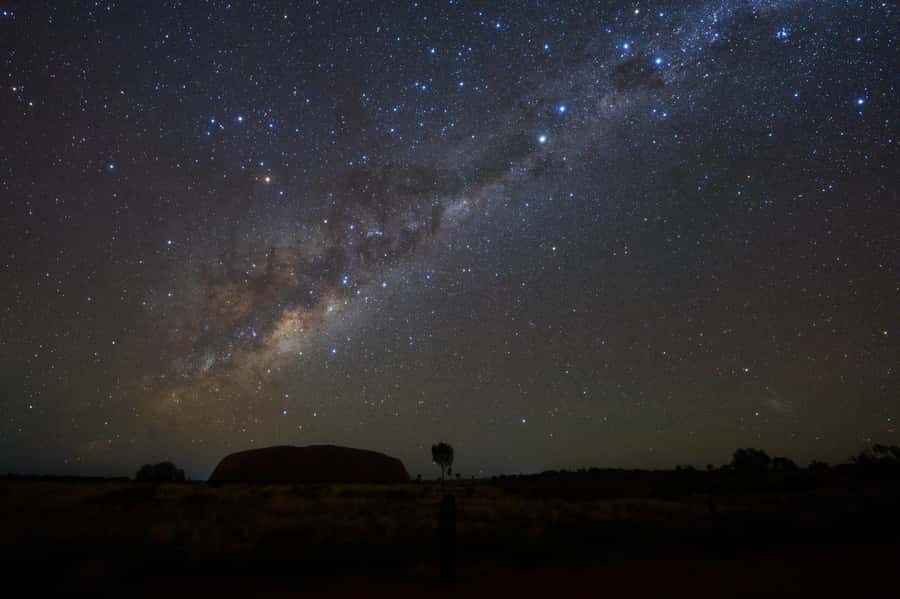
The important point is the change in lighting. Around the resort, artificial light can wash out faint stars. Once you reach a darker area in the National Park, the sky becomes the main event. On a clear night, the Milky Way can look broad and bright, not like the pale strip you may have seen from a city.
You will usually be shown to a prepared viewing area with folding stools or benches. Blankets are available, which is a thoughtful touch in the cooler months. In April and May, the temperature can feel surprisingly low after sunset, while summer evenings may remain warm. Pack layers instead of guessing from the daytime forecast.
More national park tours:
- Litchfield National Park and Jumping Crocodile Cruise
★ 5.0 · 2,119 reviews - Grampians National Park Small-Group Eco Tour from Melbourne
★ 5.0 · 761 reviews - From Port Arthur: Tasman Island Wilderness Cruise
★ 4.9 · 704 reviews
Learning the southern sky with lasers and stories
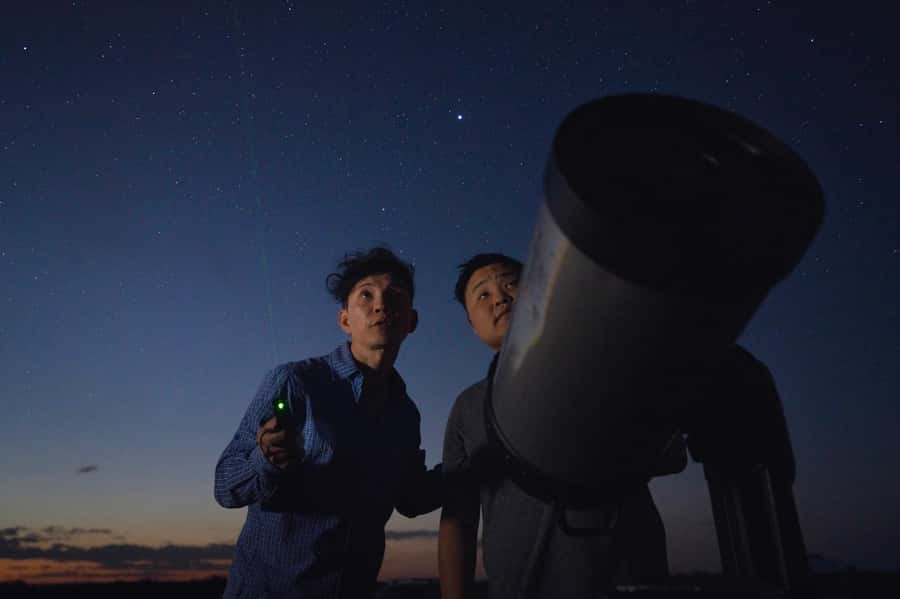
The first part of the stargazing session helps you get your bearings. A guide uses a laser pointer to identify stars and constellations, then explains what makes the Australian night sky different from what you may know at home.
The guides have been praised for making difficult subjects understandable. Neil is often singled out for clear explanations, while Lucy has been appreciated for her friendly storytelling. Zack and Olina have also helped people with phone photography and general questions. The tone appears relaxed rather than academic, which suits first-time sky-watchers.
I like the mix of current astronomy and Indigenous sky knowledge. You are not simply given a list of star names. The guides explain how the sky has been read and used by First Nations people, alongside basic science about stars, planets, and the wider universe. This gives the session a stronger sense of place than a standard astronomy talk.
The balance can vary with the guide and the audience. One person wanted more scientific detail, while another found the astronomy explanations almost too technical. That is normal with a subject this broad. If you already follow astronomy, ask questions during the open discussion. If you are new to it, listen for the big visual points and do not worry about remembering every name.
The group setting has one weakness. When people chat during the talk, it can be difficult to hear every word, especially outdoors. A small microphone could help on busy departures. The guides are enthusiastic, but the experience is better when everyone gives the explanations their full attention.
What the telescopes can reveal
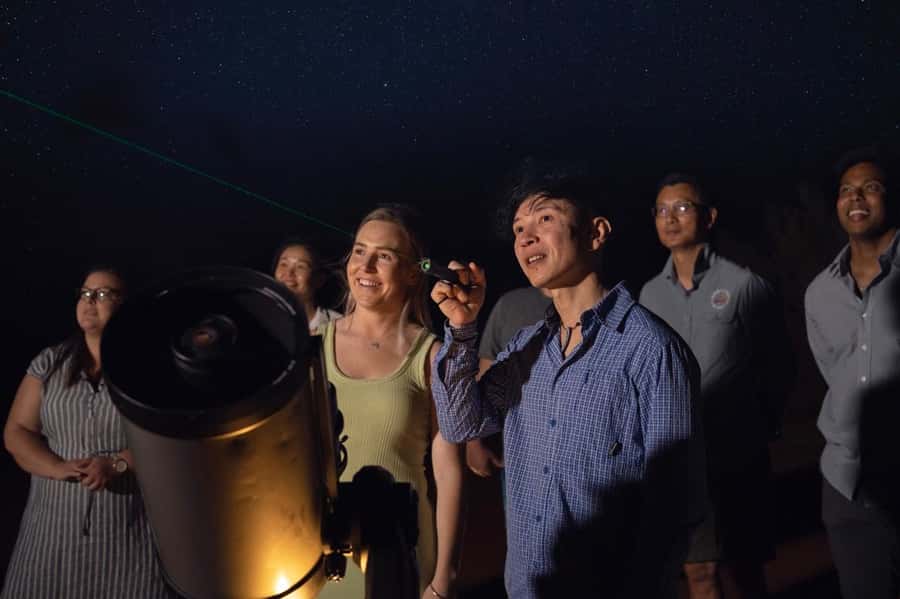
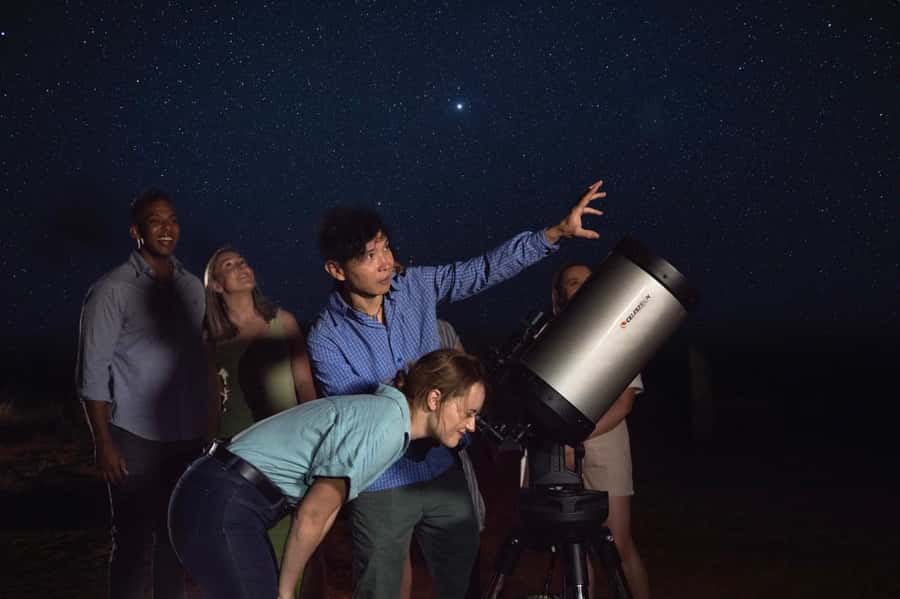
The telescopes are the practical heart of the outing. Looking at a star field with your naked eye is wonderful, but a telescope gives the evening a clear focus. Instead of simply being told that a planet or nebula is overhead, you get a chance to see it directly.
The objects available depend on the season, time, cloud, and moon. Past viewing sessions have included Saturn and its rings, the Moon, planets, nebulae, star clusters, the Pleiades, and Alpha Centauri. A few people even reported seeing Pluto. You should treat those sightings as possibilities rather than promises, since the sky changes from night to night.
Binoculars are also available. They are useful for scanning larger areas of the sky and can help while you wait for a telescope. The guides explain what you are looking at, which matters because a faint patch of light can be easy to miss without context.
The biggest practical issue is waiting. A busy outing may include two buses and three telescopes, and one person reported a 45 to 60-minute queue for the photo. Another person felt an additional telescope would have improved the flow. You will still be surrounded by stars while you wait, but the time can feel long if your main reason for booking is telescope access.
The setup is better suited to casual discovery than private observation. You may get only a short turn at each instrument, particularly on a full departure. For most first-time visitors, that is enough to create a memorable look at Saturn or a distant cluster. Serious amateur astronomers may prefer a smaller specialist session.
The Uluru night photograph
The included digital photograph is more than a generic group snapshot. You have an individual professional photograph taken beneath the stars, with Uluru forming the backdrop. The long-exposure style captures the dark sky in a way that a normal phone photo often cannot.
This is one of the tour’s strongest extras. The image gives you a lasting reminder of the evening, and it solves a common problem: you can enjoy the sky without spending the whole time trying to make your own camera work.
The photo process does take time. Each person or group needs to decide who will appear in the frame, and long-exposure photography cannot be rushed in the same way as a quick portrait. If many people want separate images, the queue can become the slowest part of the night.
Be ready when your turn arrives. Decide in advance whether you want an individual photo, a couple’s shot, or a family picture. The precise delivery timing for the digital file is not stated, so do not expect to receive it during the tour. One person was still waiting after a holiday departure.
If you bring your own camera, pack a tripod and be prepared to experiment. The tour is suitable for basic night-sky photography, and the guides may help with phone settings. Several people received help getting better phone images, though you should not expect a full photography workshop.
A few more Yulara trips worth weighing up
- Uluru: Field of Light Sunrise Tour with Hot Drinks
★ 4.6 · 572 reviews - Uluru 15-Minute Helicopter Experience
★ 4.9 · 548 reviews - Yulara: Uluru & Kata Tjuta 25-Minute Helicopter Experience
★ 4.8 · 536 reviews - Yulara: Uluru Sunrise and Kata Tjuta Day Trip by Bus
★ 4.5 · 469 reviews
Moon phases and clouds can change the show

Astronomy tours depend on conditions you cannot control. A clear, moonless night is usually best for seeing the Milky Way and faint stars. A bright full or first-quarter moon can make the outing feel less star-packed, even though the Moon itself may look spectacular through a telescope.
One evening was affected by a bright moon, with fewer visible stars. Another person found that the Milky Way had already moved out of the best position by the time the group arrived. Cloud can also delay the show or soften the view. Even so, the guides can still discuss the sky and point out brighter objects.
If your priority is the Milky Way, check the moon phase before booking if your dates are flexible. A new moon period gives you the best chance of a darker sky, but it is not required for a worthwhile night. A bright Moon, Saturn, or a clear view of the planet itself can provide a different kind of highlight.
The National Park setting remains valuable even when conditions are imperfect. Complete darkness, quiet desert air, and Uluru’s silhouette give the session a strong sense of place. Still, you should book this as a weather-dependent activity, not a guaranteed catalogue of celestial objects.
Is $91 good value?
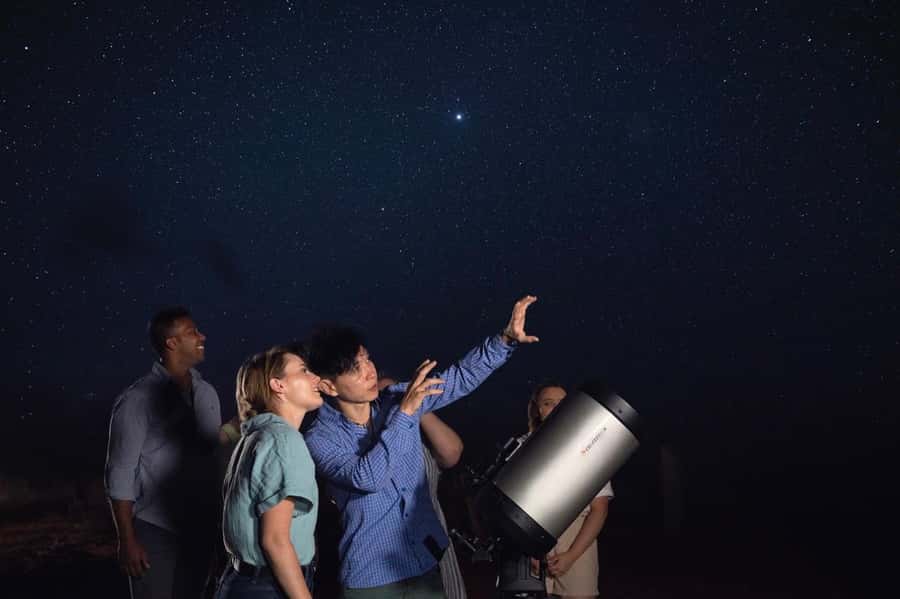
At $91 per person, the price is reasonable if you value the complete package rather than telescope time alone. You receive hotel pickup and drop-off, a guide, access to telescopes and binoculars, the prepared viewing setup, the astronomy talk, and a professional digital photograph.
A separate private photography session could cost more than the tour, while a casual stargazing walk would not normally include transport into a darker National Park location. The included photograph is particularly helpful if you want a polished keepsake without carrying specialist equipment.
The value drops slightly on a very crowded night. If you spend a large part of the session waiting for a telescope or photo, you may feel that the two and a half hours could have been better spread out. The experience is strongest when the group is manageable and the guides can answer questions without rushing.
I would consider it good value for couples, families, and first-time astronomy visitors. Teenagers have enjoyed the combination of lasers, planets, stories, and photography. If you already own serious astronomy equipment, the shared format may feel basic, but the National Park location and southern sky still add appeal.
The activity has a 4.4 rating from 357 ratings, which fits the overall picture: very strong guide and sky praise, with occasional concerns about queues, moonlight, sound, and group size.
What to bring for a comfortable evening
Pack more warmly than you think you need, especially from April through September. The desert can feel mild during the day and cold after dark. Blankets are provided, but warm layers give you more freedom to concentrate on the sky instead of your fingers.
You should bring:
- Warm clothing, ideally in layers
- Closed-toe shoes
- A reusable water bottle
- A camera and tripod if you want to try your own night photography
A phone can work for basic star photos, but you may need to adjust its night mode or exposure settings. Guides have helped people improve their phone results, so ask early rather than waiting until the final minutes.
Wear shoes that are comfortable for walking between the bus and the viewing area. One person suggested that more lighting on this short walk would be useful, so keep your footing in mind and avoid rushing in the dark.
Who should book this Uluru astronomy tour?
I would recommend it if you want an evening activity that feels different from a standard sunset lookout. It is especially good for people who have never seen the Milky Way clearly, families with older children, couples wanting a memorable photograph, and anyone curious about the southern sky.
It also works for beginners. You do not need to know constellations or own a camera. The guides explain the basic ideas, point out the important objects, and make room for questions.
You may want to think twice if you dislike waiting in groups or want a quiet, private astronomy session. Large departures can create queues, and outdoor talks are not always easy to hear when people are chatting. You should also check the moon phase if seeing the faintest stars is your main goal.
The tour provider offers English and Chinese guides. Pickup is included, and you can cancel up to 24 hours ahead for a full refund or reserve now and pay later, which helps if your Uluru schedule is still shifting.
Should you book it?
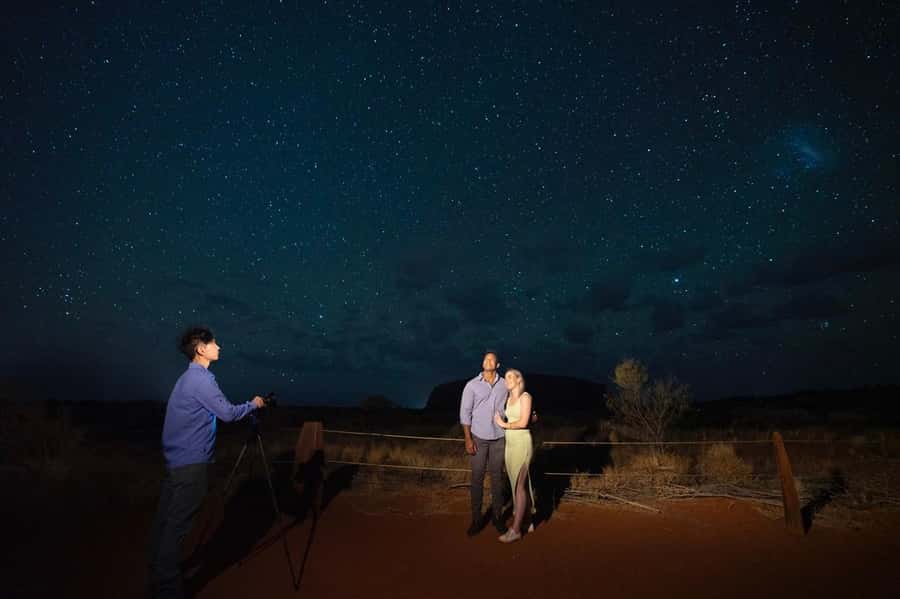
Yes, if you want the full Uluru night-sky experience without organizing transport or equipment yourself. The combination of a dark National Park location, clear guides, Indigenous astronomy stories, telescope viewing, and a professional Uluru photograph gives the evening real substance.
Book it with sensible expectations. The exact planets depend on the night, moonlight can reduce the number of visible stars, and busy departures may involve queues. If the sky is clear and your group is not too large, this can become one of the most memorable things you do at Uluru. For $91, I think it earns a place on your itinerary.
FAQ
How long does the Uluru astronomy tour last?
The tour lasts 150 minutes, including the stargazing session and transport to and from your accommodation.
Is hotel pickup and drop-off included?
Yes. Pickup and drop-off are included. Look for the Atrip bus, and check your email for the confirmed pickup schedule on the day.
Do I need a National Park pass?
No. You do not need to bring your own National Park pass for this tour.
What languages are available?
The live tour guide is available in English and Chinese.
What can I see through the telescopes?
Depending on the conditions and time of year, you may see planets, Saturn’s rings, the Moon, nebulae, star clusters, the Pleiades, Alpha Centauri, or other distant celestial objects.
Is the professional photograph included?
Yes. A digital professional photograph taken beneath the stars with Uluru in the background is included.
Can I bring my own camera?
Yes. You can bring your own camera and tripod if you want to take night-sky photographs.
What should I wear?
Bring warm clothing and closed-toe shoes. A reusable water bottle is also recommended. Blankets are available during the stargazing session.
Can I cancel the booking?
Yes. You can cancel up to 24 hours in advance for a full refund. You can also reserve your place and pay later.
Just added around Yulara
- Yulara: Uluru and Kata Tjuta Sunset Helicopter Tour★ 4.9 · 148 reviews
- Uluru: Small Group Guided Tour with Sunset Refreshments★ 4.8 · 190 reviews
- Uluru: Sunset, Sparkling Wine, Cheeseboard & Gourmet BBQ★ 4.4 · 193 reviews
- Best of Uluru – Segway and Walking Tour★ 4.8 · 204 reviews
- Uluru Highlights Small Group Morning Tour + Picnic Breakfast★ 4.8 · 212 reviews
- Uluru 1.5-Hour Sunset Tour with Sparkling Wine & Cheeseboard★ 4.3 · 226 reviews
- Uluru, Kata Tjuta & Kings Canyon Camping Tour★ 4.8 · 228 reviews
- Uluru: Guided Walking Tour at Sunrise with Light Breakfast★ 4.6 · 256 reviews
Uluru & Red Centre Tours, compared.

Ayers Rock Day Trip from Alice Springs Including BBQ Dinner
Read our review →
Uluru: Field of Light Sunrise Tour with Hot Drinks
Read our review →
Kings Canyon: Full-Day Tour from Ayers Rock Resort
Read our review →
Yulara: Uluru & Kata Tjuta 25-Minute Helicopter Experience
Read our review →
Yulara: Uluru Sunrise and Kata Tjuta Day Trip by Bus
Read our review →
Uluru: Sacred Sites & Sunset Tour with Wine & Cheeseboard
Read our review →Browse the lists this tour appears in