
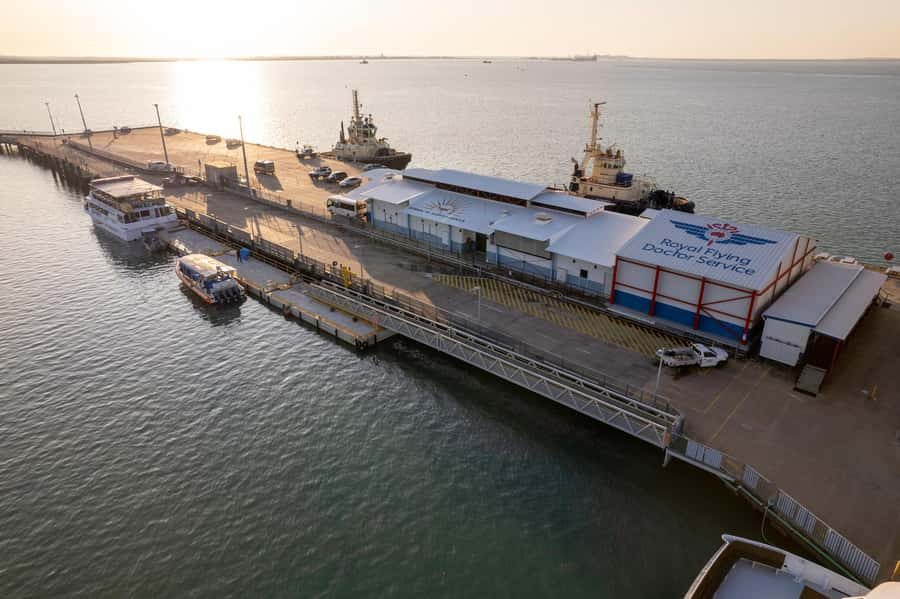
Reviewed · DARWIN & TOP END TOURS
WWII Bombing of Darwin & Royal Flying Doctor Service
Darwin’s wartime story comes alive here. I like the mix of VR, holograms, and audio because each format gives the past a different voice. I also like that you can step inside a decommissioned RFDS Pilatus PC-12, rather than only reading about medical flights. The only drawback is that the visit is self-guided, so you will need to manage your own pace and make sure you arrive well before closing.
At $21 per person, this is a strong-value indoor attraction in Darwin, especially if you want history presented in a way that works for both adults and older children. Plan on about 1.5 hours, though one recent booking found it easy to stay longer than expected because there are several ways to explore the same subjects.
In This Review
- Key points to know before you go
- Why the RFDS and Darwin bombing belong together
- Arriving at Stokes Hill Wharf
- Seeing the RFDS story through the aircraft
- Reaching the 1942 bombing through modern technology
- The holographic cinema and timed sessions
- How long to allow, and why the visit can stretch
- Is $21 good value?
- Who will get the most from this experience?
- Practical planning at Stokes Hill Road
- My verdict on the two stories
- Should you book the RFDS Darwin Tourist Facility?
- FAQ
- Where is the Royal Flying Doctor Service Darwin Tourist Facility?
- How long does the experience take?
- What does the experience cover?
- Are VR experiences included?
- Are holographic presentations included?
- Is the visit guided?
- What time is last entry?
- Is the facility wheelchair accessible?
- Can I cancel my booking?
Key points to know before you go
- Two major Northern Territory stories share one stop: the Royal Flying Doctor Service and the Bombing of Darwin Harbour.
- The 1942 bombing story uses VR, holographic cinema, and the Window of the 1942 bombing platform.
- The RFDS section includes a decommissioned Pilatus PC-12 aeromedical aircraft.
- Allow 1.5 hours, and arrive early because last entry is 3:00 PM on normal trading days and 2:00 PM on public holidays.
- The visit is self-guided, with staff available to help and headset audio translators included.
- The experience is wheelchair accessible, and English is the host language.
Why the RFDS and Darwin bombing belong together

This facility presents two Australian stories that seem separate at first but share a common setting: Darwin and the Northern Territory.
The Royal Flying Doctor Service began aeromedical operations in the Northern Territory in 1939. The service grew from the need to bring medical help across vast distances, where roads and hospitals could be far apart. The exhibition uses that story to show how aviation became part of everyday medical care in remote Australia.
The second story turns to the Bombing of Darwin Harbour in 1942. These raids brought the Second World War directly to Australian soil and caused fear, destruction, and loss in Darwin. Instead of treating the event as a list of dates, the facility uses personal stories, visual effects, and interactive technology to show what the raids meant for people who experienced them.
I find the pairing useful because it gives you two different views of the Northern Territory. One is about service, endurance, and medical access. The other is about war, survival, and sudden danger. Together, they make a visit to Stokes Hill Wharf more meaningful than a quick museum stop.
A few more Darwin trips worth weighing up
- Litchfield National Park and Jumping Crocodile Cruise
★ 5.0 · 2,119 reviews - Adelaide River Cruises – Jumping Crocodile Experience
★ 5.0 · 997 reviews - Sunset 3-Hour Cruise from Darwin with Dinner and Sparkling Wine
★ 5.0 · 980 reviews
Arriving at Stokes Hill Wharf
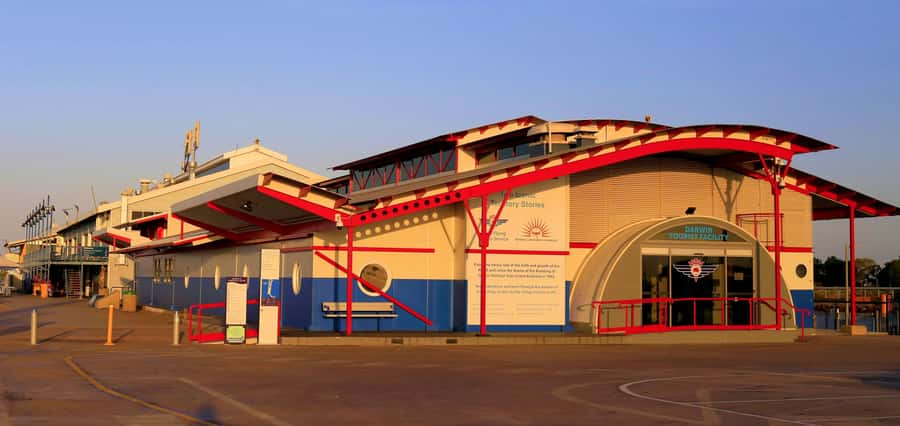
The RFDS Darwin Tourist Facility is at 45 Stokes Hill Road, Darwin City, NT 0800. On arrival, a staff member gives you an outline of the facility and explains the timing for the holographic cinema sessions and the Window of the 1942 bombing platform.
That short introduction matters. This is not a tour where a guide leads you from room to room at a fixed pace. You explore on your own, but the staff can help you understand the order of the displays and avoid missing timed elements.
The attraction offers skip-the-ticket-line entry, which keeps the arrival simple. You should still check the available starting time when booking, since the ticket is valid for six months rather than being tied to a single travel date.
Seeing the RFDS story through the aircraft
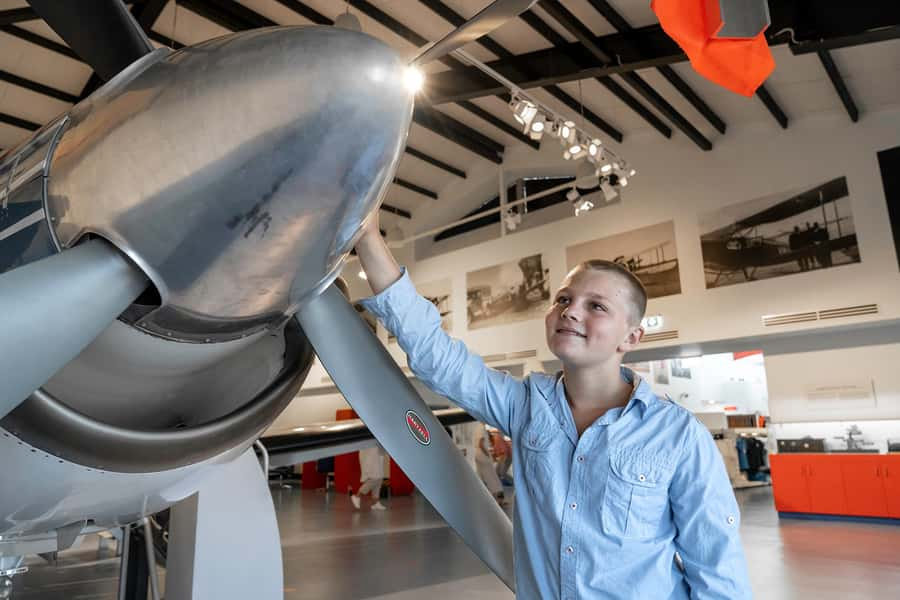
The RFDS section is likely to be the most tangible part of your visit. You can admire a decommissioned Pilatus PC-12 that was used as an aeromedical plane, giving you a better sense of the aircraft at the center of the service.
A plane on display can explain more than a wall panel. You can see the scale of the cabin and consider how medical care had to be delivered in an aircraft built for movement, not for the comfort of a hospital room. The display helps connect the service’s history with the practical work of flying doctors and medical teams.
The exhibition also follows the birth and growth of the RFDS. You learn how its aeromedical operations began in the Northern Territory in 1939 and how the service became an important part of life in remote areas.
The strongest point here is the connection between technology and human need. Aircraft made it possible to reach people who could not easily reach a medical facility. The display is not just about planes. It is about distance, time, and the difference that medical help can make when roads are limited.
Reaching the 1942 bombing through modern technology
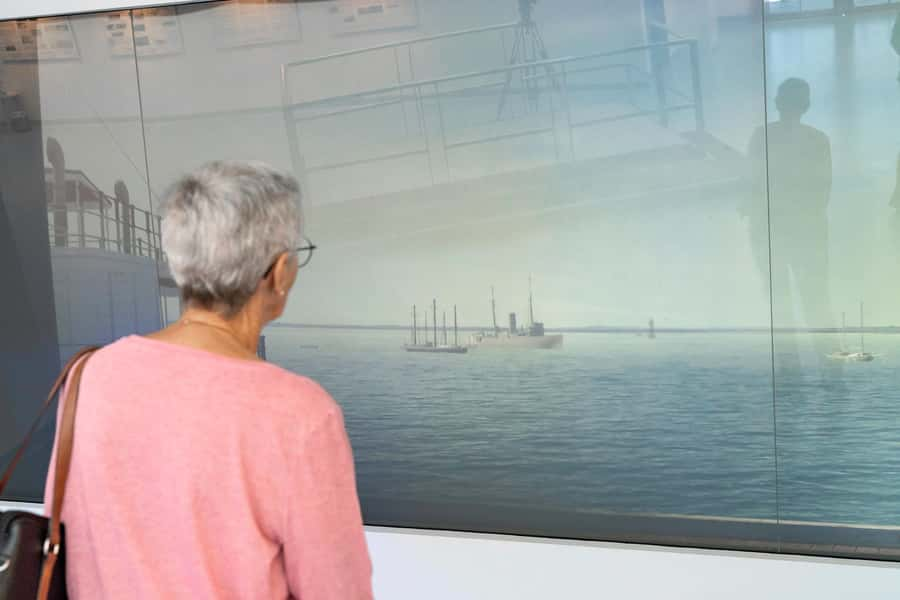
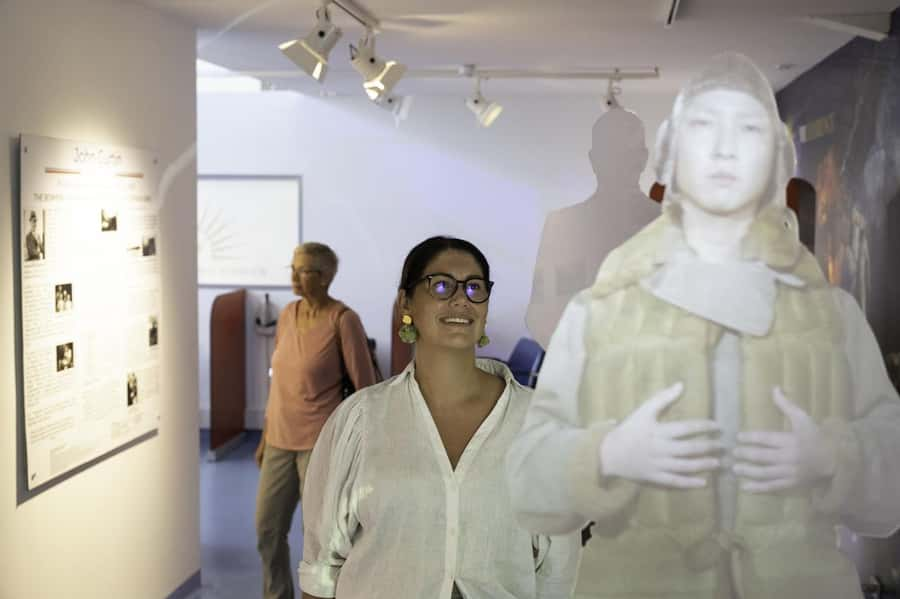
The Bombing of Darwin Harbour section takes a different approach. It uses state-of-the-art technology to recreate the drama of the raids, including VR experiences, holographic storytelling, and the Window of the 1942 bombing platform.
The Window is one of the timed elements, so pay attention when staff explain the session schedule. It is worth planning around rather than wandering past and discovering later that you missed it.
The VR experiences give the story a more immediate quality. Instead of only looking at photographs or reading captions, you experience the subject through a simulated visual setting. The two virtual reality experiences are included in the admission price, so you do not need to budget extra for them.
Holograms add another layer. They bring stories of heroes and survivors into the exhibition in a way that feels more personal than a standard display. The aim is not simply to show what happened in 1942, but to help you understand the human response to the raids.
Technology can sometimes become a distraction in a museum. Here, it has a clear job. The screens, VR, and holographic cinema are used to make a difficult event easier to picture. A booking from the United States praised the different ways of learning about both subjects and noted that the newer technology encouraged a longer visit. That matches the practical reality: the displays are varied enough that you may spend more time here than planned.
A completely different kind of day out in Darwin:
- From Darwin: Litchfield Park Tour & Jumping Crocodile Cruise
★ 4.9 · 829 reviews - Charles Darwin Dinner Cruise
★ 4.5 · 820 reviews - Kakadu Day Tour from Darwin with Offroad Dreaming
★ 5.0 · 776 reviews - Cape Adieu Darwin Sunset Dinner Cruise
★ 5.0 · 750 reviews
The holographic cinema and timed sessions
The holographic cinema sessions are part of the facility’s schedule, not simply an exhibit you start whenever you like. When you arrive, ask the staff member to confirm the session times and the timing for the Window of the 1942 bombing platform.
This is one reason I recommend arriving early. You will have more freedom to arrange the self-guided sections around the scheduled presentations. If you arrive close to last entry, you may have to move quickly and could have less choice about when to see each part.
The holographic format gives the bombing story a dramatic presentation, but the subject itself is serious. Expect accounts of survival and courage rather than light entertainment. The strongest value comes from taking your time with the stories and then using the interactive displays to fill in the wider picture.
The facility also offers headset audio translators. The supplied information identifies English as the language of the host and attraction, while the translators provide added help for visitors who need language support.
How long to allow, and why the visit can stretch
The recommended time is 1.5 hours for the full facility. That is enough time to view the main displays, experience the VR elements, see the aircraft, and attend the relevant presentation sessions without racing from one section to another.
Still, you may stay longer. The experience uses several formats, and the two main stories are presented through more than one type of display. You might first watch a holographic presentation, then return to an interactive exhibit to understand a detail that caught your attention.
A recent booking rated the experience highly and specifically noted that the visit lasted longer than expected because of the number of ways to learn. That is useful advice for planning your day. Do not place this attraction between two tightly timed activities unless you are comfortable leaving before seeing everything.
Last entry is 3:00 PM on normal trading days and 2:00 PM on public holidays. These times matter more than the stated 1.5-hour visit length. If last entry is at 2:00 PM, arriving at 1:45 PM will not give you a proper visit.
Is $21 good value?
At $21 per person, I consider this a good-value Darwin activity. You receive entry to the full facility, a self-guided tour, headset audio translators, two VR experiences, and holographic cinema sessions.
The value is strongest if you enjoy history but do not want a conventional museum made up only of text panels. You receive several ways to approach the subject, and the technology gives the visit a clear point of difference.
It is also a practical choice for a hot or rainy part of the day because the experience is indoors. The attraction offers enough material for about 1.5 hours, with the possibility of staying longer, so the admission cost compares well with other paid activities that occupy less time.
The main limit is that this is not a personally led historical tour. You will not have a guide explaining every detail as you walk. Staff are available to assist, but the responsibility for pace and attention rests with you.
Who will get the most from this experience?
I would recommend the facility to anyone interested in Australian military history, aviation, emergency medicine, or the development of services in remote areas.
It should also suit families with older children who learn better through screens, simulations, and interactive displays than through long written explanations. The technology gives younger visitors something active to do, while the stories provide enough substance for adults.
It is a good fit for visitors who want a focused Darwin attraction rather than a full-day excursion. You can understand the main subjects in 1.5 hours, then continue exploring Stokes Hill Wharf or the rest of Darwin.
People who prefer a quiet, guide-led museum may find the self-guided format less satisfying. The displays are built around participation and presentation, so you should be willing to read, watch, listen, and try the VR experiences at your own pace.
Practical planning at Stokes Hill Road
The meeting point is the RFDS Darwin Tourist Facility at 45 Stokes Hill Road. The host or greeter speaks English, and the site is wheelchair accessible.
On arrival, ask for three details:
- The order staff suggest for the self-guided displays
- The next holographic cinema session
- The timing for the Window of the 1942 bombing platform
Those questions will help you plan the visit instead of guessing when to move on. The facility is designed so staff can assist as required, but it is still your job to keep track of timed sessions.
You can cancel up to 24 hours in advance for a full refund. The reserve-now, pay-later option also gives you flexibility if your Darwin schedule is not fixed. Since the ticket remains valid for six months, you have a generous period in which to use it, subject to available starting times.
My verdict on the two stories
The RFDS display gives the visit its human service story. The aircraft makes the subject concrete, and the account of operations beginning in the Northern Territory in 1939 provides a clear starting point.
The bombing display supplies the drama. VR, holographic cinema, and the Window platform help you picture the raids and hear about the people affected by them. Heroic survival stories give the historical facts a human center.
I like that the facility does not rely on one presentation style. A visitor who finds a long audio panel tiring can move to a visual display. Someone who wants more context can spend longer with the story sections. The mix makes the admission useful even if you arrive with different levels of interest in the two subjects.
The best advice is simple: give yourself the full 1.5 hours, arrive well before last entry, and treat the timed presentations as part of your plan.
Should you book the RFDS Darwin Tourist Facility?
Yes, I would book it if you want an informative Darwin activity with strong visual and interactive elements. At $21, the price is reasonable for the amount included, and the combination of the RFDS aircraft, VR, holograms, and WWII storytelling gives you more variety than a basic exhibit.
Book it especially if you have an interest in aviation, Australian history, or real stories of survival. Skip it only if you strongly prefer a live guide or have no time to stay for the full presentation schedule.
For most visitors, the practical choice is to set aside 1.5 hours, arrive early in the day, and use the staff introduction to plan the timed sections. That approach lets you see both sides of Darwin’s story without rushing.
FAQ
Where is the Royal Flying Doctor Service Darwin Tourist Facility?
It is located at 45 Stokes Hill Road, Darwin City, Northern Territory, Australia.
How long does the experience take?
You should allow 1.5 hours to view the facility in its entirety. You may stay longer because the attraction presents its subjects in several different formats.
What does the experience cover?
It covers the history and growth of the Royal Flying Doctor Service and the Bombing of Darwin Harbour in 1942.
Are VR experiences included?
Yes. Admission includes two virtual reality experiences.
Are holographic presentations included?
Yes. Holographic cinema sessions are included with entry.
Is the visit guided?
The tour is self-guided. Staff members are available to assist, and a staff member provides an outline of the facility and the timing of the scheduled sessions when you arrive.
What time is last entry?
Last entry is at 3:00 PM on normal trading days and 2:00 PM on public holidays.
Is the facility wheelchair accessible?
Yes, the facility is wheelchair accessible.
Can I cancel my booking?
Yes. You can cancel up to 24 hours in advance for a full refund. You can also reserve now and pay later, subject to the available booking conditions.
Just added around Darwin
- 5 Day Kakadu Katherine Gorge Litchfield 4WD Camping Adventure★ 5.0 · 26 reviews
- Kakadu National Park Scenic Flight &Yellow Water Cruise★ 5.0 · 28 reviews
- Darwin: Small Group 2-Hour Heritage Walk★ 4.9 · 28 reviews
- Darwin Harbour Cruise★ 4.9 · 28 reviews
- Darwin City Sightseeing Tour★ 4.0 · 29 reviews
- Jumping Croc Cruise, Berry Springs, Fogg Dam & Humpty Doo Pub★ 5.0 · 29 reviews
- Litchfield National Park Waterfalls & Wildlife Adventure Tour★ 5.0 · 30 reviews
- Litchfield Park & Jumping Crocodile Cruise★ 5.0 · 37 reviews
Darwin & Top End Tours, compared.
Litchfield National Park and Jumping Crocodile Cruise
Read our review →
Adelaide River Cruises – Jumping Crocodile Experience
Read our review →
Sunset 3-Hour Cruise from Darwin with Dinner and Sparkling Wine
Read our review →
Litchfield Park Tour & Jumping Crocodile Cruise
Read our review →

Kakadu Day Tour from Darwin with Offroad Dreaming
Read our review →
Browse the lists this tour appears in