
Reviewed · HISTORICAL TOURS
Darwin: Small Group 2-Hour Heritage Walk
Darwin’s story is written in its streets. This two-hour walk brings together World War II history and Cyclone Tracy, while a local guide explains how the city rebuilt itself into a modern multicultural capital. I like the relaxed pace and the chance to reach places a bus cannot, especially with guide John’s friendly, personal commentary. The small group, limited to 10 people, also leaves room for questions.
I also like the strong value at $41 per person, particularly if you have only a short time in Darwin. You get a useful orientation, local stories, public art, tropical plants, and important civic buildings without paying for transport. The main drawback is the heat: there are few places to sit or rest, so you need a reasonable level of fitness, water, sunscreen, and a hat.
In This Review
- Key points to know before you book
- Why this short walk works so well in Darwin
- Starting beneath the John McDouall Stuart statue
- Following Darwin’s early civic story
- Understanding the WWII bombing of Darwin
- Seeing the city after Cyclone Tracy
- Government House, Parliament House, and the Supreme Court
- A route made for photographs and small discoveries
- How demanding is the two-hour walk?
- Is $41 good value for two hours?
- Who will get the most from this Darwin walk?
- Booking advice and final decision
- FAQ
- How long does the Darwin heritage walk last?
- Where does the tour begin?
- How can I identify the guide?
- Where does the walk finish?
- How many people can join the tour?
- Is the tour conducted in English?
- What should I bring?
- Is the walk suitable for children and people with low fitness?
Key points to know before you book
- John McDouall Stuart statue meeting point: Look for the guide in a bright orange shirt at Raintree Park.
- A 10-person maximum: The small group keeps the walk conversational and may feel almost private if numbers are low.
- Darwin’s defining disasters: WWII bombing and Cyclone Tracy are central to the story, not quick footnotes.
- Historic buildings on foot: See the old courthouse, police station, Brown’s Mart Theatre, and Palmerston Town Hall ruins.
- Two hours at a sensible pace: The route is designed for sightseeing rather than a hard workout, but rest stops are limited.
- English commentary only: You need to be comfortable following spoken explanations in English.
Why this short walk works so well in Darwin
Darwin can be easy to underestimate. At first glance, it may seem like a modern tropical city with wide streets, government buildings, public art, and palms. On foot, though, you begin to see the layers beneath that modern appearance.
This walk is useful because it connects places with events. The guide does not simply point at an old building and name it. You hear how Darwin developed, how war changed the city, how Cyclone Tracy caused enormous damage, and how the town found a new identity after repeated setbacks.
That local framing is the main reason to book. A map can show you Government House or Parliament House, but it cannot explain why certain buildings matter, how the city’s past still shapes its layout, or how Darwin’s population reflects many cultures today.
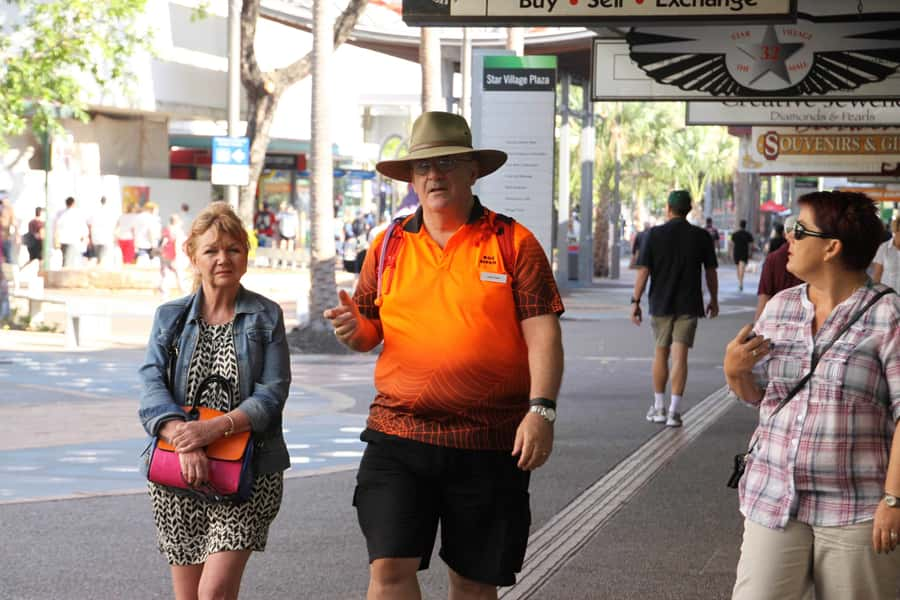
John is the guide named in the strongest feedback, and his style appears to be a major part of the experience. He is described as personable, enthusiastic, and generous with information. One particularly useful detail is that he pays attention to sun protection and hydration, which matters during a Darwin walk.
The tour also suits people who prefer a gentle introduction rather than a packed sightseeing schedule. You have two hours to look around, take photographs, ask questions, and notice details that would be easy to miss from a vehicle.
More history tours in Darwin:
- Bombing of Darwin WWII Heritage Tours
★ 5.0 · 261 reviews - Darwin History and Wartime Experience Tour
★ 5.0 · 144 reviews - Darwin Heritage Walk
★ 4.5 · 101 reviews
Starting beneath the John McDouall Stuart statue
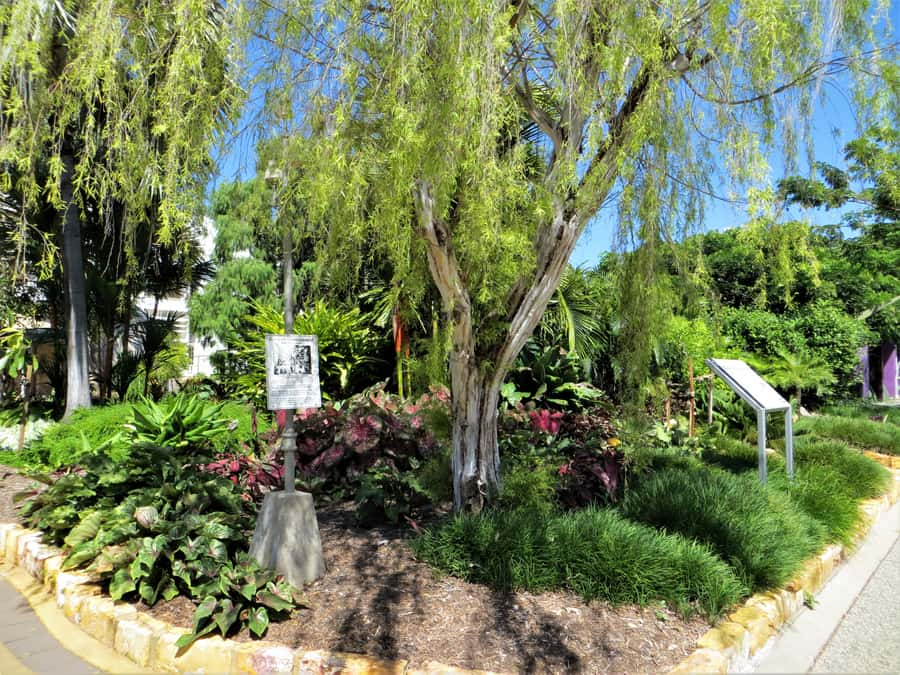
The walk begins under the John McDouall Stuart statue in Raintree Park. This is a simple meeting point, but arrive with enough time to identify your guide. The bright orange shirt should make the group easy to find.
Starting in a park gives the walk a calm beginning. You are not being rushed straight into a major attraction. Instead, you meet the guide, settle into the group, and begin following the paths associated with Darwin’s early development.
The group size is capped at 10 people, and the tour needs at least two paying guests to operate. That is a useful point to remember if you are planning around a very quiet travel period. With only two people, the format can feel close to a private walk. With a full group, it remains far more personal than a large coach excursion.
The meeting point also means you need to arrange your own way there. Hotel pickup and drop-off are not included. Food and drinks are not included either, so bring water rather than expecting to buy refreshments along the route.
Following Darwin’s early civic story
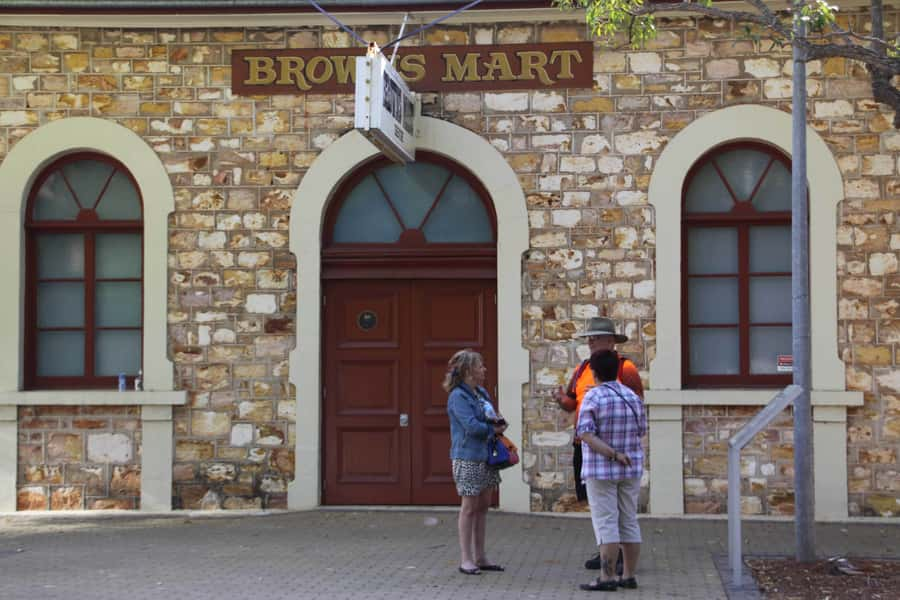
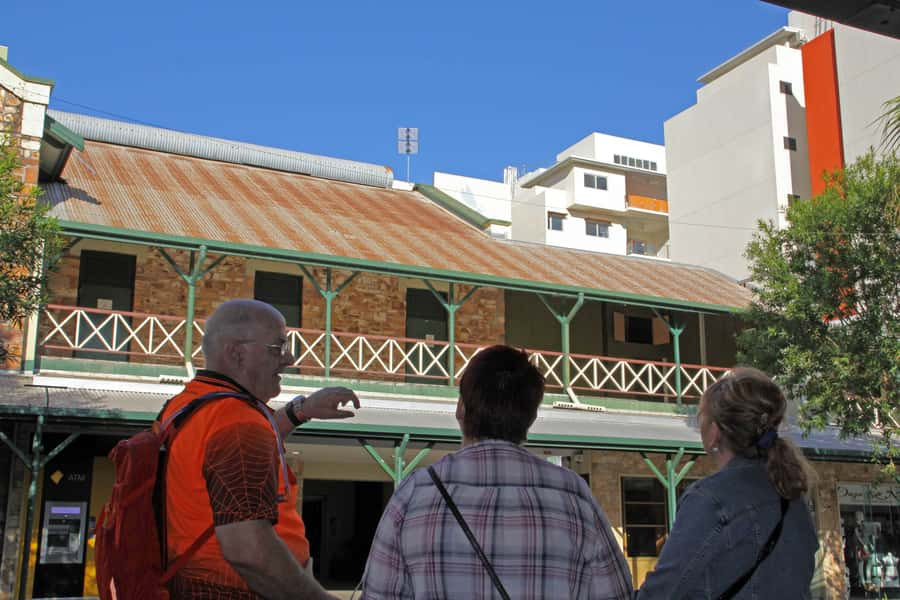
The route leads through central Darwin and introduces the city through its surviving and reconstructed buildings. Among the important sights are the old courthouse and police station, Brown’s Mart Theatre, and the ruins of Palmerston Town Hall.
These places help explain what Darwin looked like before modern redevelopment. They also show how much the city has had to rebuild. The wording around these buildings matters: several have been painstakingly reconstructed, so you are not simply seeing untouched colonial remains. You are seeing a mixture of original material, preservation work, and renewal.
That makes the walk more interesting than a basic old-town tour. Darwin’s past is not presented as frozen in place. The city has been damaged, rebuilt, altered, and rebuilt again. The guide’s role is to help you understand that process.
Brown’s Mart Theatre adds a cultural angle to the route. Government buildings tell you about administration, while a theatre points to the social life of the town. The old police station and courthouse bring in the practical side of early civic life. Each stop gives you a different piece of the city’s character.
You should expect sightseeing rather than entry into every building. The supplied details describe viewing these places as part of the walking route, so do not book this expecting a museum tour or an interior-heavy program.
Understanding the WWII bombing of Darwin
World War II is one of the central themes of the walk. Darwin’s wartime bombing changed the town’s role and its place in Australian history, and the guide uses the streets and civic buildings to explain that period.
This section is valuable because it gives scale to an event that can otherwise feel distant. You are not only hearing a date or a short military fact. You are walking through the city connected to the story, with buildings and public spaces providing a physical setting.
The commentary is in English and delivered live, which suits you if you enjoy asking questions or hearing a story shaped around the group. John’s explanations are repeatedly praised for being detailed without making the walk feel rushed. That balance matters. Two hours can disappear quickly if the guide races through names and dates.
If you prefer a formal military museum with displays and artifacts, this walk will not replace that experience. Its strength is context. It gives you a citywide introduction and helps you understand why Darwin’s older buildings and rebuilt areas matter.
More walking tours:
- Sydney Opera House Official Guided Walking Tour
★ 4.5 · 3,770 reviews - From Sydney: Blue Mountains Tour with Waterfall Walk & Lunch
★ 4.8 · 2,400 reviews - Sydney The Rocks Guided Walking Tour
★ 5.0 · 1,546 reviews - Ultimate Melbourne Walking Tour: History, Laneways & Culture
★ 5.0 · 1,451 reviews
Seeing the city after Cyclone Tracy
Cyclone Tracy is another major part of Darwin’s story. The storm caused profound damage, and its effects are tied to the city’s rebuilding and modern character.
For you, this is one of the best reasons to take the walk early in a Darwin visit. It gives you a clearer sense of why the city may look different from older Australian settlements. The guide can connect the visible architecture and public spaces with the forces that shaped them.
The tour does not present Darwin as a place defined only by disaster. Instead, the story moves from damage to recovery and then to the city’s present-day identity. That balance is important. You get the difficult history, but you also see the city as a living place rather than an open-air memorial.
The route includes opportunities to photograph architecture, public artworks, tropical plants, and wildlife. The exact sightings will vary, so bring a camera without expecting a guaranteed wildlife encounter. You may find that the small details, rather than one major attraction, become your favorite part of the walk.
Government House, Parliament House, and the Supreme Court
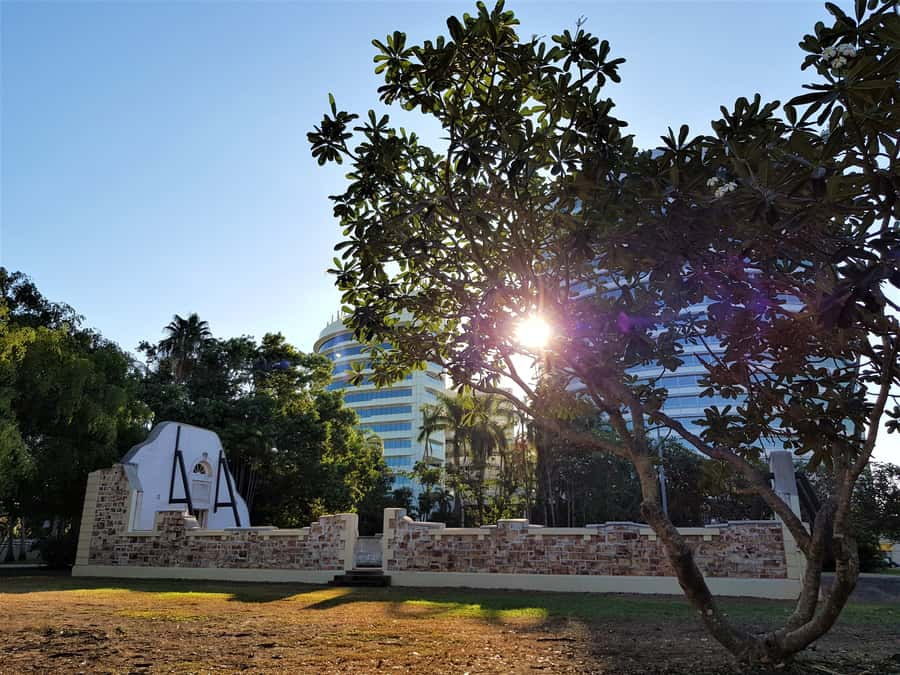
The civic heart of the route includes Government House, Parliament House, and the Supreme Court of the Northern Territory. Together, these buildings show Darwin as the administrative center of the territory.
For a first-time visitor, this is a useful way to understand the city’s modern role. Government House adds a link to the territory’s formal past, Parliament House represents current political life, and the Supreme Court brings in the legal system. Seeing them together creates a clearer picture than viewing each building separately.
The architecture also gives you a break from a purely historical narrative. Darwin is not only about pioneers, wartime bombing, storms, and reconstruction. It is also a working capital with institutions that shape life across the Northern Territory.
Keep your camera ready, but listen closely as well. The value here comes from the explanation around the buildings. Without commentary, you might take a photograph and move on. With John’s local perspective, the civic center becomes part of the larger story of how Darwin grew.
A route made for photographs and small discoveries
Walking gives you access to details that disappear from a bus window. You can stop for a closer look at public artworks, examine architectural features, and notice tropical plants along the streets.
The tour is described as leisurely, and several comments praise the sensible pace. That does not mean you can wander off or stop for long whenever you like. It means the group is intended to move steadily, with time to take in the surroundings and hear the commentary.
There are also opportunities to see wildlife. No specific animals are promised, and conditions will affect what appears, but the inclusion of plants and wildlife gives the route a broader feel. You are not simply moving between official landmarks.
This is where the small group helps. A guide can respond to questions, point out something nearby, or adjust the explanation to the people present. One of the strongest themes in the feedback is John’s willingness to answer questions and add personal anecdotes.
How demanding is the two-hour walk?
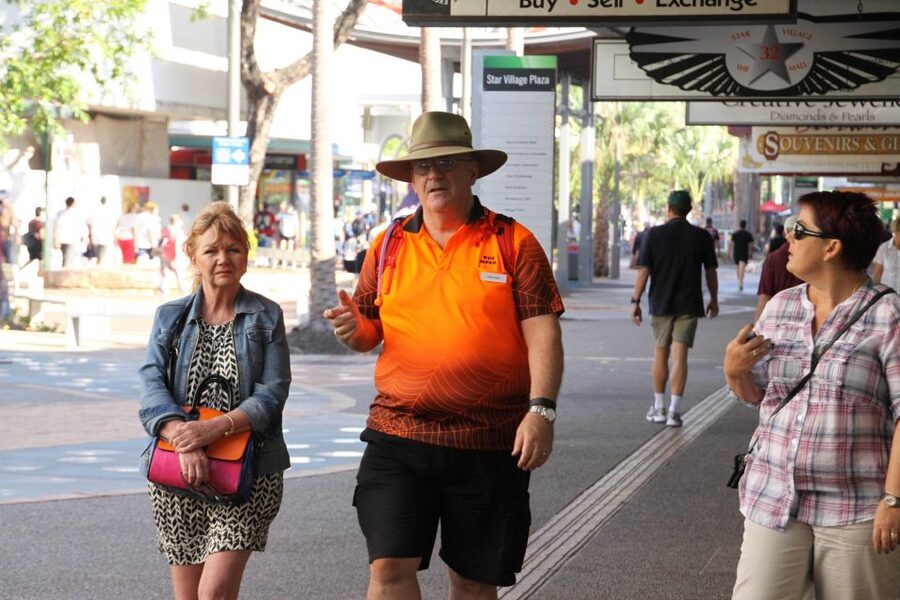
The route is level enough to be described as a walking tour at a sensible pace, but the operator clearly warns that you need a reasonable level of fitness. There are not many places to stop, sit, and rest.
That warning should guide your decision. Two hours may sound easy, but Darwin’s heat can make a steady walk more tiring than the distance suggests. Wear comfortable shoes, use sunscreen, bring water, and take a sun hat. Hand sanitizer or tissues are also recommended.
Bare feet, smoking, and pets are not allowed, although assistance dogs are permitted. Children under 10 are not considered suitable for this activity. The walk is a better match for adults and older children who can listen, keep moving, and manage the heat.
If you have low fitness or need frequent seating, this is probably not the right introduction to Darwin. You might prefer a sightseeing option with regular vehicle transfers or more indoor stops. If you walk comfortably for two hours, the route should feel manageable, especially since the pace is not intended to be strenuous.
Is $41 good value for two hours?
At $41 per person, this walk is priced below many longer sightseeing activities, but its value depends on what you want from Darwin. You are paying for a local guide, live English commentary, and a focused introduction to the city. Transport, food, and entry tickets are not part of the price.
I consider that fair value for a first visit. The tour reaches central landmarks without adding the cost and delay of a vehicle. It also gives you information that can improve the rest of your stay. After two hours, you should have a better sense of which buildings, stories, and public spaces deserve another look.
The price is especially attractive if your time is limited. One Australian couple described it as a good use of a short visit, and that is exactly how I would frame it. You are not trying to cover every Darwin attraction. You are getting a compact orientation that makes the city easier to understand.
The value is less clear if you already know Darwin well or want entry into attractions. This is a guided street-level experience, not a full-day tour or a ticket bundle.
Who will get the most from this Darwin walk?
I would choose this tour for a first visit, a short stay, or the opening morning of a longer Northern Territory trip. It is also a good choice if you usually take a walking tour when arriving in a new city and want local context before exploring alone.
You will likely enjoy it if you:
- Like history explained through real streets and buildings
- Prefer a small group to a coach tour
- Want a relaxed pace with time for questions
- Enjoy photography and public art
- Have a reasonable level of fitness
- Can follow live commentary in English
You may want another option if you need frequent rest stops, are traveling with children under 10, dislike walking in the sun, or want a tour centered on food and drink. Those are not included here.
I would also avoid treating this as a substitute for every Darwin attraction. Its purpose is to introduce the city’s development, heritage, government center, and public spaces. It works best as a foundation for your own exploring.
Booking advice and final decision
Book this Darwin walk if you want a human-scale introduction to the city. John’s cheerful delivery, local stories, and attention to hydration appear to be central strengths, and the 4.9 rating from 28 reviews supports the view that the tour is consistently well received.
The best practical plan is to wear light, comfortable clothing, bring water and sun protection, and arrive under the John McDouall Stuart statue ready to walk. Leave room in your day afterward for your own photographs or a second look at a building that caught your attention.
I would skip it only if the heat, limited seating, or English-only format creates a real problem. For most visitors who can comfortably walk for two hours, this is a fairly priced, personal way to learn why Darwin looks the way it does.
FAQ
How long does the Darwin heritage walk last?
The guided walk lasts two hours.
Where does the tour begin?
It begins under the John McDouall Stuart statue in Raintree Park.
How can I identify the guide?
The guide will be wearing a bright orange shirt.
Where does the walk finish?
It finishes at Knuckey Street and the Esplanade in Darwin City, Northern Territory.
How many people can join the tour?
The group is limited to 10 participants, and at least two paying guests are required for the tour to operate.
Is the tour conducted in English?
Yes. The live commentary is provided in English only.
What should I bring?
Bring a sun hat, camera, sunscreen, water, and hand sanitizer or tissues.
Is the walk suitable for children and people with low fitness?
Children under 10 and people with a low level of fitness are not considered suitable for this activity. You also need to be comfortable walking for two hours, since there are few places to sit and rest.
More 2-Hour Experiences
- Corroboree Billabong Wetland Cruises – 2 hour Sunset Cruise
★ 5.0 · 214 reviews - Darwin Harbour: 2-Hour Gaze and Graze Sunset Cruise
★ 4.6 · 165 reviews - Melbourne: 2-Hour City Highlights River Cruise
★ 4.1 · 1,804 reviews - Surfers Paradise: 2 Hour Surf Experience on the Gold Coast
★ 4.9 · 1,132 reviews
Just added around Darwin
- 5 Day Kakadu Katherine Gorge Litchfield 4WD Camping Adventure★ 5.0 · 26 reviews
- Kakadu National Park Scenic Flight &Yellow Water Cruise★ 5.0 · 28 reviews
- Darwin Harbour Cruise★ 4.9 · 28 reviews
- Darwin City Sightseeing Tour★ 4.0 · 29 reviews
- Jumping Croc Cruise, Berry Springs, Fogg Dam & Humpty Doo Pub★ 5.0 · 29 reviews
- Litchfield National Park Waterfalls & Wildlife Adventure Tour★ 5.0 · 30 reviews
- WWII Bombing of Darwin & Royal Flying Doctor Service★ 4.8 · 34 reviews
- Litchfield Park & Jumping Crocodile Cruise★ 5.0 · 37 reviews
Historical Tours, compared.

Ultimate Melbourne Walking Tour: History, Laneways & Culture
Read our review →
Puffing Billy Railway: Heritage Steam Train Journey
Read our review →
Morning World Heritage Cruise on the Gordon River from Strahan
Read our review →
Strahan: World Heritage Cruise on Gordon River with Lunch
Read our review →

Experience History onboard The Mary Valley Rattler
Read our review →
Snorkel & Dive the Reef: Sustainable, Scientific & Cultural Tour
Read our review →
Derwent River Historic Harbour Cruise From Hobart
Read our review →Browse the lists this tour appears in