
Reviewed · HISTORICAL TOURS
Bombing of Darwin WWII Heritage Tours
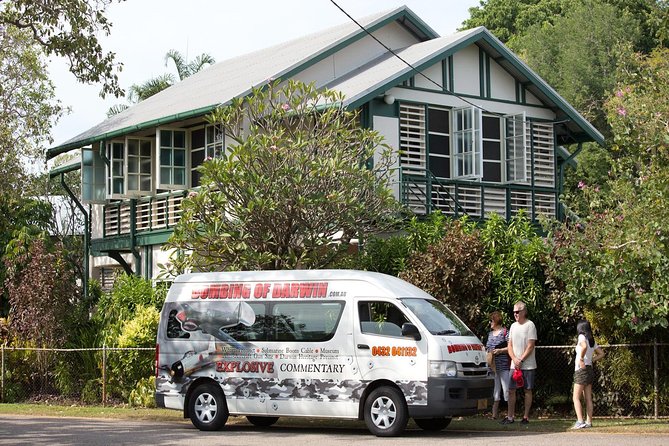
History feels different when it comes from a family story. This four-hour Darwin tour combines the 1942 Japanese air attacks with a local city tour, and I like the way guide Garry adds personal connections, photographs, humor, and stories that are not easy to find in standard guidebooks. I also like the included visit to the Darwin Aviation Museum, where aircraft and wartime displays give the morning a clear focus.
The main caution is the vehicle. Although the tour can take up to 11 people, one recent booking used a car rather than a minibus, and a tall older passenger found the rear seating tight and awkward to access. At $42, the tour offers good value, but you should be comfortable with the possibility of compact transport.
In This Review
- Key points before you book
- Why Darwin’s wartime story matters
- Meeting Garry at 8:30 am
- Seeing Darwin through the bombing
- One hour inside the Darwin Aviation Museum
- Personal stories instead of only official history
- How the small group affects the morning
- What you receive for $42
- Who will enjoy this tour most
- Timing, cancellation, and practical planning
- Should you book the Bombing of Darwin WWII Heritage Tour?
- FAQ
- How long is the Bombing of Darwin WWII Heritage Tour?
- What time does the tour begin?
- Is pickup offered?
- Is admission to the Darwin Aviation Museum included?
- How long do you spend at the Darwin Aviation Museum?
- How many people can join the tour?
- Can I cancel for a full refund?
Key points before you book
- Garry’s family connection: His father served in the Royal Australian Navy during World War II, and several uncles also served.
- A personal account of the bombing: The tour looks at Darwin through individual stories, not only dates, aircraft, and casualty figures.
- Darwin Aviation Museum included: Plan on about one hour with aircraft from several Australian war conflicts.
- A useful city orientation: You see parts of modern Darwin, along with city and harbor sights, while learning how the war changed the town.
- Small-group format: The maximum group size is 11, allowing more conversation than a large coach tour.
- Morning timing: The tour begins at 8:30 am and lasts about four hours, making it easy to fit into a day of sightseeing.
Why Darwin’s wartime story matters
Darwin is often introduced through its tropical weather, outdoor life, and distance from Australia’s southern cities. The bombing of Darwin on February 19, 1942, adds a far more serious layer to the city’s identity. This was the first time the Australian mainland came under attack during World War II, yet the subject is still less familiar to many Australians than the major campaigns overseas.
This tour focuses on that gap. You are not simply shown a few plaques and told that bombs fell here. Garry explains the event through people, places, military activity, and the aftermath. His approach gives you a sense of how a remote northern town became a wartime base and why the attacks had such a strong effect on local life.
I like that the tour also links the war years with later Darwin experiences. One review specifically mentions stories about Cyclone Tracy, showing that the commentary is not limited to 1942. That wider view helps you understand Darwin as a place shaped by more than one disaster.
More history tours:
- Darwin History and Wartime Experience Tour
★ 5.0 · 144 reviews - Ultimate Melbourne Walking Tour: History, Laneways & Culture
★ 5.0 · 1,451 reviews - Puffing Billy Railway: Heritage Steam Train Journey
★ 4.6 · 1,195 reviews
Meeting Garry at 8:30 am
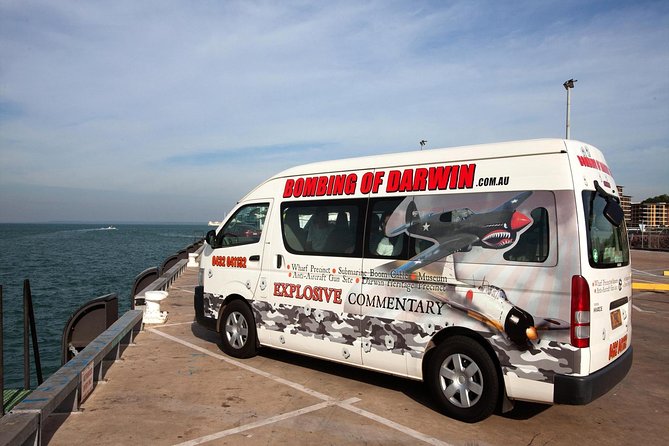
The tour starts at 8:30 am, with pickup offered. That early start is useful in Darwin, where a morning outing can be more comfortable than an afternoon spent in the heat. It also leaves you with much of the day available afterward.
The experience is mobile-ticket friendly, and the meeting area is near public transportation. Confirmation is normally sent at booking, though a booking made within one day of departure is confirmed as soon as possible, subject to availability.
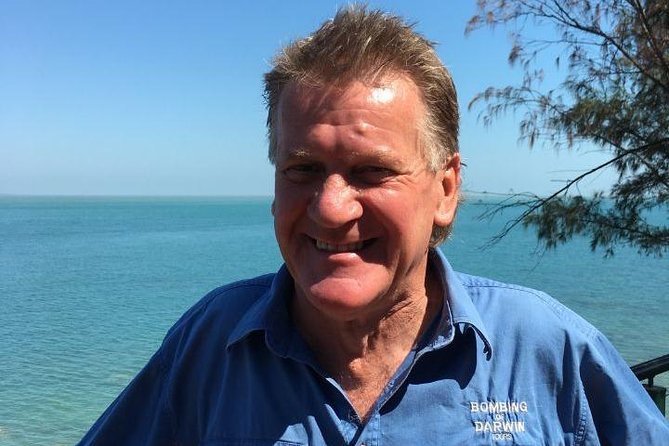
Garry is the central reason this tour feels different from a basic sightseeing transfer. His delivery is described as warm, funny, and highly informed. He uses family stories, photographs, and local anecdotes to give shape to the account. He has also written a book about the bombing of Darwin, which some people choose to buy after hearing his presentation.
You should expect an active spoken tour rather than a formal museum lecture. Garry drives, points out places connected with the war, and keeps the discussion moving between historical facts and modern Darwin. The humor is part of his style, although some jokes may not suit every listener. The subject includes wartime violence and loss, so the light moments work best as pauses in a serious story.
Seeing Darwin through the bombing
Much of the value comes from seeing locations tied to the attacks while the story unfolds. The exact sequence of the stops is not fully specified, so you should not expect a fixed list of named sites with a long visit at each one. Instead, the tour appears to combine driving, short looks at significant areas, and commentary from the vehicle.
That format matters. Darwin’s wartime past is spread across the city, and a guide can connect separate places into one timeline. As you pass through modern streets, Garry explains what the area meant during the war and points out present-day landmarks. Several reviews praise the tour as a useful way to get a feel for Darwin, even beyond the military subject.
I especially like this mix of past and present. You do not view World War II as a sealed-off museum topic. You see a living city while learning how its harbor, airfields, military facilities, and civilian population fitted into the wider conflict.
The tour also aims to discuss the personal side of the bombing. Garry has collected stories about people who lived through the attacks and what happened afterward. That approach can make the history easier to grasp than a list of statistics. It also gives you a better sense of why the event remained a sensitive and sometimes poorly explained part of Australian history.
One hour inside the Darwin Aviation Museum

The Darwin Aviation Museum is the clearest scheduled stop. Admission is included, and you spend about one hour there. The collection includes aircraft from most Australian war conflicts, so the museum offers more than a narrow display about the bombing alone.
For anyone interested in aviation or military history, this is likely the tour’s strongest physical attraction. Aircraft make wartime technology easier to understand, especially after Garry has explained the role of Darwin and the attacks. You can connect the machines in the gallery with the earlier stories about air raids, defense, and Australia’s wartime position.
The museum also provides a change of pace. After listening to commentary in the vehicle and visiting city locations, you get time to look at substantial objects rather than only passing landmarks. The stop is long enough to be useful, but not so long that it takes over the morning.
A practical point: the museum is one part of a four-hour experience, not the whole tour. If you want a full morning at an aviation collection, this may feel brief. If you want a wider account of Darwin’s war years with one solid museum visit included, the balance works well.
The museum’s setting also allows views of Darwin city and the harbor. Those sights are not just scenic extras. They help place Darwin geographically and explain why the harbor and northern position mattered during wartime.
A few more Darwin trips worth weighing up
- Litchfield National Park and Jumping Crocodile Cruise
★ 5.0 · 2,119 reviews - Adelaide River Cruises – Jumping Crocodile Experience
★ 5.0 · 997 reviews - Sunset 3-Hour Cruise from Darwin with Dinner and Sparkling Wine
★ 5.0 · 980 reviews - From Darwin: Litchfield Park Tour & Jumping Crocodile Cruise
★ 4.9 · 829 reviews
Personal stories instead of only official history
The strongest praise for this tour centers on Garry’s storytelling. He is repeatedly described as engaging, funny, passionate, and able to explain detailed material without making the morning feel dry. That combination is important because the bombing of Darwin can be difficult to understand if you only encounter it as a short paragraph in a general history book.
Garry’s own family link gives the subject a local voice. His father served in the RAN during the war, and several uncles also served. He has spent time researching the bombing, and his book reflects that interest. You should still treat the tour as a guided interpretation rather than an academic seminar, but the personal connection gives the commentary unusual focus.
The stories also reach beyond famous names. Garry discusses ordinary people, local reactions, and lesser-known details. This is where the tour can add value even if you have already read a little about the attacks. Instead of repeating only the most familiar facts, he tries to show what the event meant on the ground.
His use of humor will appeal to many people, particularly if you enjoy a guide who speaks freely rather than reading from a script. It may not be your ideal style if you prefer a solemn, tightly structured presentation from start to finish. The best way to think of it is a local storyteller’s tour, with serious history delivered in an informal voice.
How the small group affects the morning
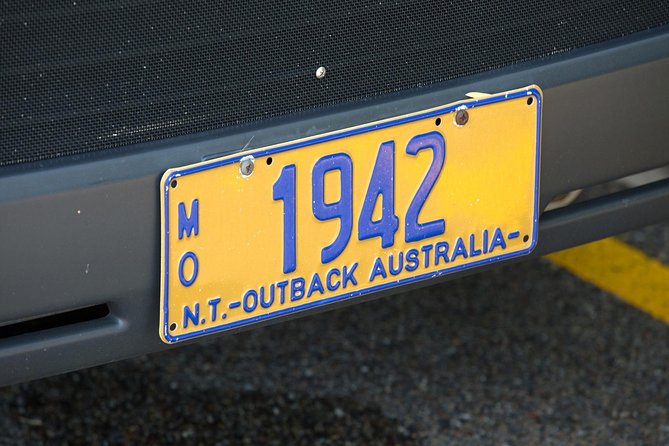
The maximum group size is 11. That is small enough for the guide to respond to questions and adjust the conversation, at least more easily than on a large coach outing. The tour description also emphasizes personal attention and flexibility.
Small groups are especially useful on a subject like this. You may want to ask about a family connection, a particular aircraft, or something you noticed while passing a site. A quieter group also helps you hear spoken commentary during the drive.
The tradeoff is that group size and vehicle type may vary. One booking used a car instead of an 11-seat vehicle, and two people placed in the back found the seating cramped. A six-foot passenger near age 70 had difficulty getting in and out. If you have mobility concerns, a larger build, or trouble with low rear seats, ask about the vehicle before paying.
The supplied information says most people can participate, but it does not give detailed accessibility specifications. I would not assume step-free access, generous legroom, or a particular vehicle model. The tour is near public transportation and pickup is offered, but the exact pickup arrangement should be confirmed when booking.
What you receive for $42

At $42, this is a reasonably priced half-day experience. The fee includes the guided commentary, transport during the tour, pickup as offered, and admission to the Darwin Aviation Museum. You are also paying for local interpretation, not just a ride between attractions.
The value is strongest if you want several things at once: a Darwin orientation, wartime history, personal stories, and an aviation museum. Booking these pieces separately could take more planning, and you might not hear the same connected narrative from a standard city outing.
The price is less compelling if you only want to see aircraft. Since the museum visit lasts about one hour within a four-hour tour, the rest of the value comes from Garry’s explanations and the drive around Darwin. You should book this because you want the storytelling, not simply because the museum is included.
The high overall rating, 4.9 from 261 ratings with 98 percent recommending it, fits the tour’s strengths: personal delivery, strong subject knowledge, good humor, and an easy way to see the city. Those numbers do not remove the seating concern, but they suggest the guide’s performance is a major part of what people are paying for.
Who will enjoy this tour most
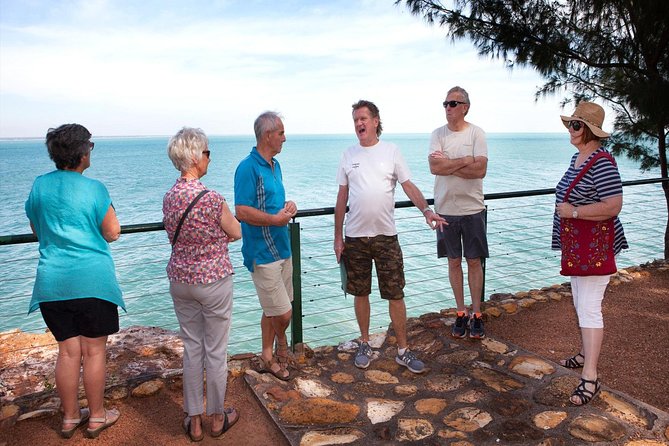
I would recommend the tour to anyone interested in Australian military history, local history, aviation, or the way communities respond to disaster. It is also a smart first-day activity because the driving portion helps you understand Darwin’s layout and gives you context for later sightseeing.
Families with older children may find the personal stories more memorable than a standard museum label. Australians who know little about the bombing may appreciate the explanation of an event often covered only briefly in school. The tour also suits visitors who want an honest local perspective rather than a polished, large-scale production.
It may be less suitable if you dislike long periods of spoken commentary, prefer to explore independently, or need guaranteed spacious seating. The tour is also not designed as a full museum day. Its appeal comes from the mix of movement, interpretation, photographs, aircraft, and local anecdotes.
You do not need to be a military specialist. Garry’s role is to explain the subject in a way that works for a general audience. His humor and modern city references help keep the material approachable.
Timing, cancellation, and practical planning
Allow roughly four hours, starting at 8:30 am. Because the tour includes pickup and a mobile ticket, it should be straightforward to add to a Darwin schedule, but keep your morning free rather than planning another fixed appointment immediately afterward.
Free cancellation is available if you cancel at least 24 hours before the start time. Cancellations made less than 24 hours before departure are not refunded, and changes within that period are not accepted. The tour also requires a minimum number of participants. If that minimum is not reached, you are offered another date or experience, or a full refund.
Wear something comfortable for a morning that combines vehicle travel, sightseeing, and about an hour at the museum. The supplied details do not specify walking distances or special equipment, so ask the operator if you need precise information for mobility planning.
Most people can participate, but the seating report deserves attention. If you are tall, older, or uncomfortable climbing into a rear seat, contact the provider before booking and ask what vehicle is expected for your date.
Should you book the Bombing of Darwin WWII Heritage Tour?
Book it if you want Darwin’s wartime story told by a local guide with a personal connection and a strong interest in the subject. Garry’s family background, research, photographs, humor, and book give the tour a voice that a general sightseeing route is unlikely to match. The included aviation museum and city views make the $42 fee good value for a four-hour morning.
Think twice if your priority is comfort above all else, especially if you need roomy seating. Also skip it if you want a museum-only visit or a precisely itemized itinerary with long stops at every historic location.
For most history-minded visitors, I would choose this tour early in a Darwin stay. It gives you a clearer sense of the city, explains a major but often overlooked part of Australia’s past, and leaves you with stories that are easier to remember than dates alone.
FAQ
How long is the Bombing of Darwin WWII Heritage Tour?
The tour lasts approximately four hours.
What time does the tour begin?
The scheduled start time is 8:30 am.
Is pickup offered?
Yes, pickup is offered as part of the experience.
Is admission to the Darwin Aviation Museum included?
Yes, admission to the Darwin Aviation Museum is included.
How long do you spend at the Darwin Aviation Museum?
The scheduled museum visit lasts about one hour.
How many people can join the tour?
The maximum group size is 11 people.
Can I cancel for a full refund?
Yes, if you cancel at least 24 hours before the experience start time. Cancellations made less than 24 hours in advance are not refunded.
Just added around Darwin
- Darwin: Adelaide River Half-Day Jumping Crocs Cruise★ 4.3 · 130 reviews
- From Darwin: Litchfield National Park Small-Group Day Trip★ 4.7 · 131 reviews
- Litchfield National Park Day Tour & Berry Springs, Max 11 Guests★ 4.5 · 131 reviews
- Golden Eye Sunset Jet Skiing in Darwin★ 5.0 · 139 reviews
- Litchfield & Berry Springs VIP Adventure Day Tours (group of 11)★ 5.0 · 142 reviews
- Darwin History and Wartime Experience Tour★ 5.0 · 144 reviews
- “Cage Of Death” Crocodile Swim and Entry to Crocosaurus Cove★ 4.8 · 150 reviews
- Litchfield National Park Tour with Wetlands or Crocodile Cruise★ 5.0 · 149 reviews
Historical Tours, compared.
Ultimate Melbourne Walking Tour: History, Laneways & Culture
Read our review →
Puffing Billy Railway: Heritage Steam Train Journey
Read our review →
Morning World Heritage Cruise on the Gordon River from Strahan
Read our review →
Strahan: World Heritage Cruise on Gordon River with Lunch
Read our review →

Experience History onboard The Mary Valley Rattler
Read our review →
Snorkel & Dive the Reef: Sustainable, Scientific & Cultural Tour
Read our review →
Derwent River Historic Harbour Cruise From Hobart
Read our review →Browse the lists this tour appears in