
Reviewed · NATIONAL PARKS
From Darwin: Kakadu Wilderness Escape & Rock Art Day Tour
Kakadu rewards an early start. This 12-hour tour from Darwin packs ancient rock art, crocodile country, wetlands, and huge Top End views into one very long but worthwhile day. I especially like the chance to visit Ubirr and Cahills Crossing in the same outing, and the option to choose between a jumping crocodile cruise and the quieter Fogg Dam wetlands.
I also like that the Kakadu National Park pass is included and that experienced guides such as Becs, Dani, Leigh, Tim, Rick, and Boggy bring local stories to the drive. The main drawback is the distance: about 620 kilometres by road, with roughly two kilometres of walking. You will see a great deal, but this is a taste of Kakadu rather than a relaxed exploration of the whole park.
In This Review
- Key points before you book
- Leaving Darwin for Kakadu country
- Adelaide River: crocodiles with a splash
- Fogg Dam offers a quieter wildlife choice
- Corroboree Park Tavern and Corroboree Billabong
- Bowali Visitor Centre puts Kakadu in context
- Cahills Crossing and the saltwater crocodiles
- Ubirr Rock and Kakadu’s ancient art
- When Nourlangie replaces Ubirr
- How the seasons change the day
- Is $180 good value?
- What to pack for a hot, long day
- Who will enjoy this Kakadu day trip?
- Final verdict: book it for access, not leisurely pace
- FAQ
- Where does the tour depart from?
- How long does the Kakadu tour last?
- Is food included?
- Is the Kakadu National Park pass included?
- Can I choose between the crocodile cruise and Fogg Dam?
- What happens if Ubirr is closed?
- Is the tour suitable for children or wheelchair users?
Key points before you book
- A very full 620-kilometre day: You leave Darwin at 7:30 AM and return in the evening, with long stretches on the road between stops.
- Two different opening experiences: Choose the Adelaide River jumping crocodile cruise for thrills, or Fogg Dam Conservation Reserve for birds, wetlands, and a calmer wildlife stop.
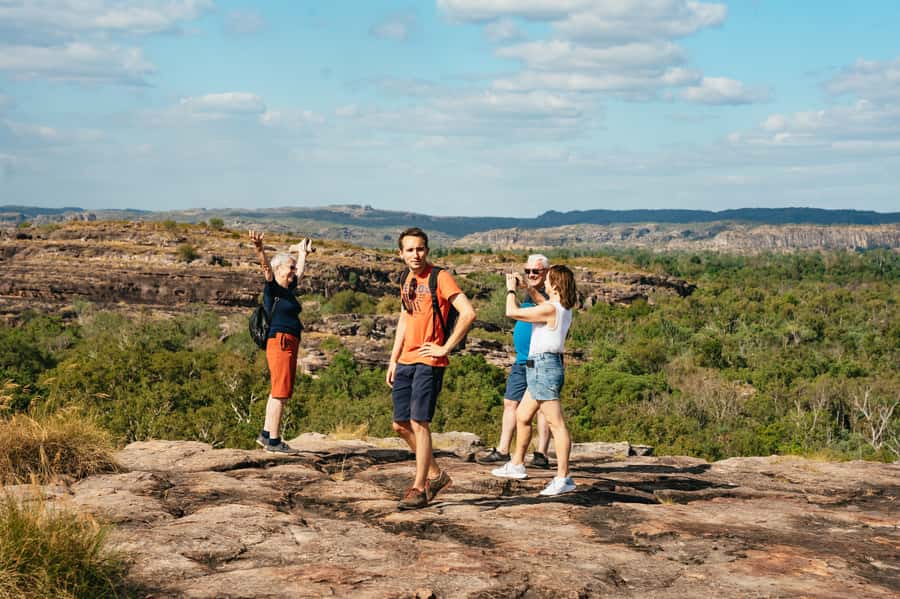
- Ubirr is the star cultural stop: Ancient Aboriginal rock art and the climb to the lookout provide the day’s most memorable combination of culture and scenery.
- Cahills Crossing is a safe crocodile-viewing point: Saltwater crocodiles may be visible from the observation platform, though access depends on conditions.
- Guides make a major difference: The strongest praise goes to the guides’ local knowledge, humour, care, and ability to explain First Nations culture respectfully.
- Pack for heat and distance: Bring 1.5 litres of water, sun protection, insect repellent, sturdy closed-toe shoes, and your own food.
Leaving Darwin for Kakadu country
The meeting point is outside The Leea, at 64 Cavenagh Street in Darwin City. You should arrive by 7:20 AM for the 7:30 departure. Hotel pickup and drop-off are not included, so you need to make your own way to the starting point.
Once the bus leaves Darwin, the day quickly becomes about the scale of the Top End. Kakadu covers more than 20,000 square kilometres, so the long drive is not a flaw in the itinerary so much as a fact of visiting this enormous park in a single day.
Transport is by an air-conditioned midi-coach or bus. That air conditioning matters, especially from October to April, when heat, humidity, and monsoonal rain can make even a short walk tiring. Some people have found the vehicle comfortable, while a taller passenger noted limited legroom, so you may want to treat your seat as practical rather than spacious.
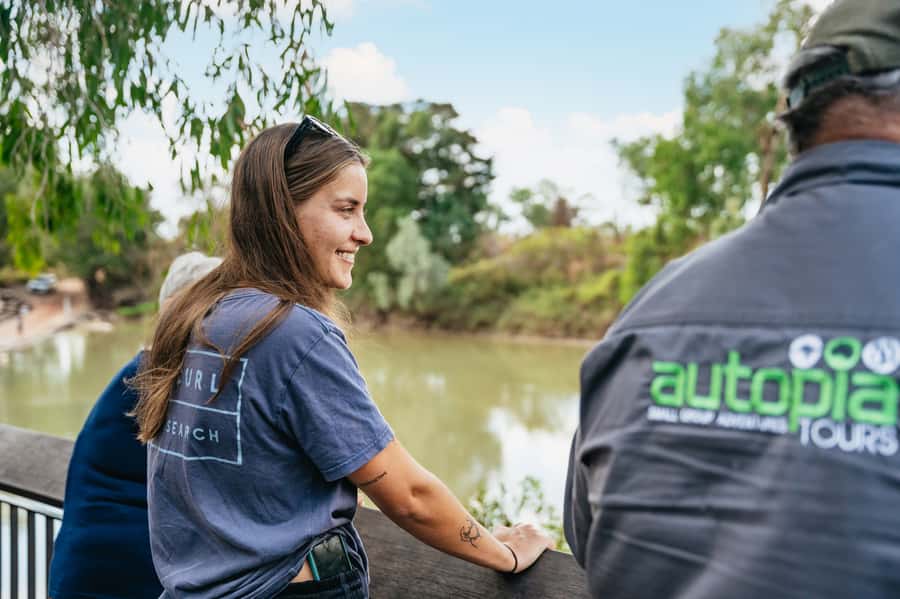
The guides are central to the experience. The strongest feedback names Becs, Dani, Leigh, Tim, Rick, Boggy, Naomi, Carlos, Daryl, and others for their humour, care, and strong understanding of the area. Good commentary helps the kilometres pass, and several guides have been praised for using personal stories and explaining the connection between Country, wildlife, and the Traditional Custodians.
More National Park Tours in Darwin
- Litchfield National Park and Jumping Crocodile Cruise
★ 5.0 · 2,119 reviews - Litchfield National Park Day Tour from Darwin
★ 4.0 · 264 reviews - Litchfield National Park: Full-Day & Lunch from Darwin
★ 4.6 · 205 reviews
Adelaide River: crocodiles with a splash
The first major choice comes at the Adelaide River. You can pay extra for the optional jumping crocodile cruise, which lasts about 70 minutes, or choose Fogg Dam Conservation Reserve instead.
The cruise offers a close view of saltwater crocodiles as they rise and leap for food beside the boat. It is a dramatic wildlife encounter, and several people consider it a must-do experience near Darwin. The boat crew are described as enthusiastic about crocodiles and their behaviour, adding useful context to the spectacle.
I would choose the cruise if you want action and a clear wildlife highlight early in the day. It is not a quiet nature cruise, though. The crocodiles are responding to a feeding presentation, so you should see it as a managed wildlife attraction rather than a completely spontaneous encounter in the wild.
The cruise is optional, and the supplied price of $180 per person does not clearly include the add-on. Check the current cost when booking. If you skip it, you do not lose the rest of the Kakadu day, since the alternative is a proper wetland visit.
Fogg Dam offers a quieter wildlife choice
Fogg Dam Conservation Reserve is a better fit if you prefer birds, open wetlands, and a slower start. The reserve is a sacred site for the Limilngan-Wulna people and provides habitat for magpie geese, white-bellied sea eagles, water pythons, wallabies, and possibly crocodiles.
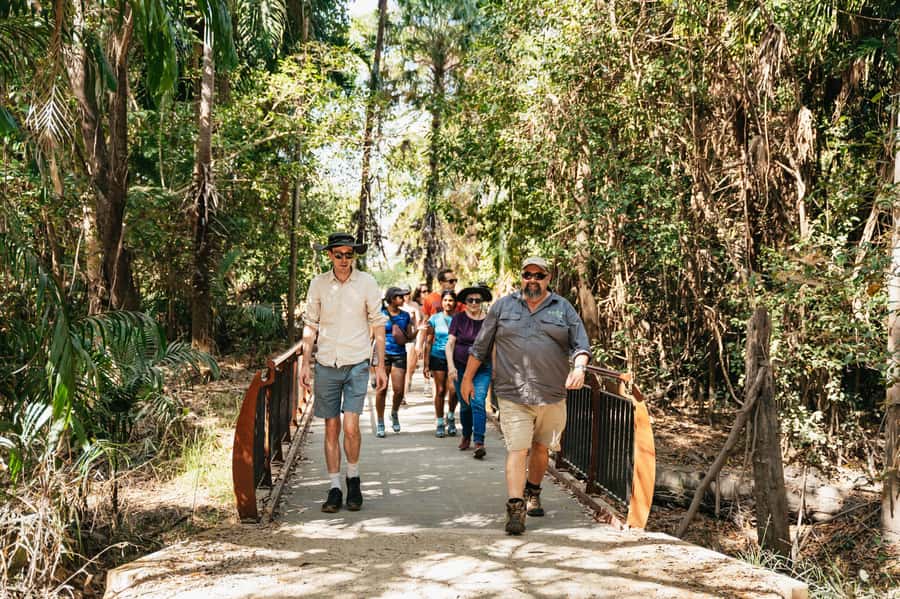
You walk and use viewing areas while the guide points out wildlife and explains the wetland environment. One particularly strong account describes seeing crocodiles, buffalo, wallabies, dingoes, and many birds in the wider Fogg Dam area, though sightings can never be guaranteed.
There is an important extra cost here. The Northern Territory park pass required for Fogg Dam is not included under the KD fare type, so confirm the applicable pass before choosing this option. Fogg Dam also makes more sense if you are happy to trade the jumping crocodiles for birdlife and a less theatrical nature experience.
Corroboree Park Tavern and Corroboree Billabong
The day includes a break at Corroboree Park Tavern, listed as a 20-minute stop around Corroboree Billabong. You can buy food there, and it is also a chance to support a local business rather than relying only on packed provisions.
Meals are not included. You can bring lunch and snacks, and the bus has an eski to keep food fresh. A water refill station is available, so a reusable bottle is more useful than buying several disposable drinks.
The stop is functional rather than a major attraction. With so much ground to cover, you should expect a short break, not a long meal or a leisurely pub visit. Pack food you can eat quickly, especially if you want to protect time at the cultural sites.
At the tavern, you might also see resident crocodiles called Fred and Brutus, along with a water buffalo out back. These are memorable extras, but they should not be confused with the wild crocodiles later in the day.
A completely different kind of day out in Darwin:
- Adelaide River Cruises – Jumping Crocodile Experience
★ 5.0 · 997 reviews - Sunset 3-Hour Cruise from Darwin with Dinner and Sparkling Wine
★ 5.0 · 980 reviews - From Darwin: Litchfield Park Tour & Jumping Crocodile Cruise
★ 4.9 · 829 reviews - Charles Darwin Dinner Cruise
★ 4.5 · 820 reviews
Bowali Visitor Centre puts Kakadu in context
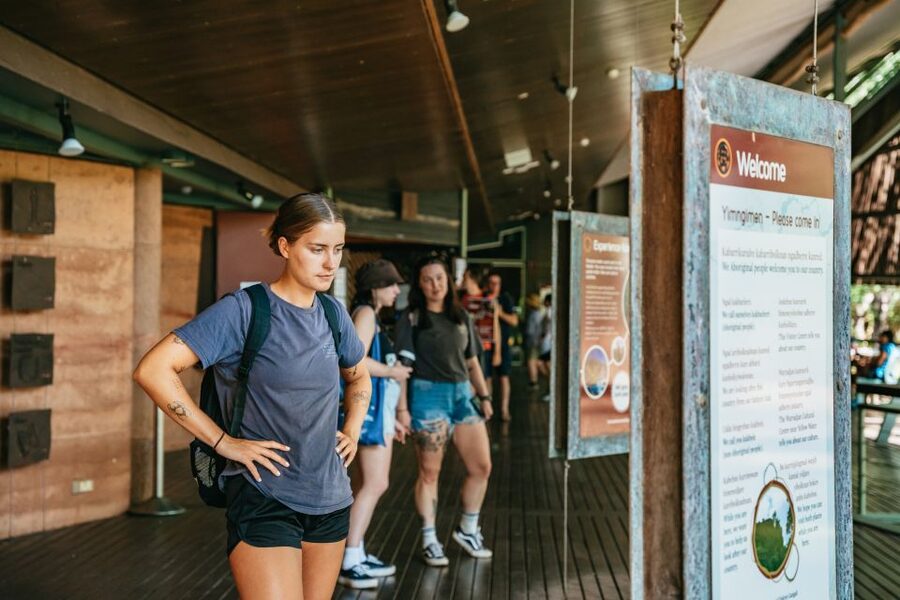
Bowali Visitor Centre provides a valuable pause from the road and a better understanding of Kakadu’s cultural importance. You have about 30 minutes of free time to view interpretive displays, learn about the park, and browse local art.
I consider this stop especially useful before Ubirr. Without some background, ancient paintings can look like isolated images on stone. The centre helps explain Kakadu as living Country, connected to the Bininj and Mungguy people, their stories, and their responsibilities to the land.
The visit is fairly short, so you will not have time to absorb every display. Still, it gives the day needed context. The best guides build on what you see here by explaining local plants, animals, culture, and the significance of the places ahead.
Cahills Crossing and the saltwater crocodiles
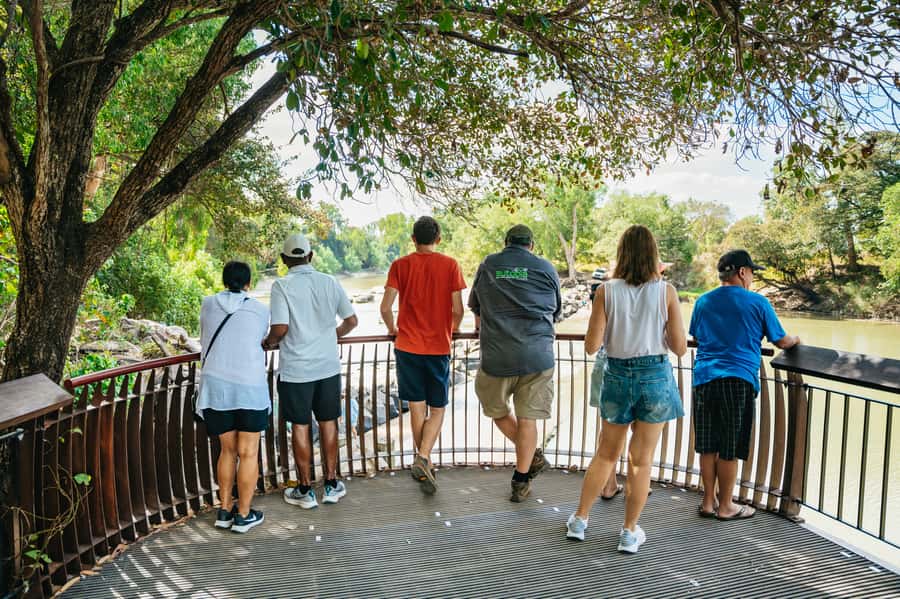
Cahills Crossing is one of the day’s most dramatic stops. It connects Kakadu with Arnhem Land and crosses the East Alligator River, an area well known for tidal water and saltwater crocodiles.
You view the crossing from a safe platform rather than walking close to the water. Depending on the conditions, you might see several crocodiles gathered near the crossing. One account counted eight, while also watching four-wheel-drive vehicles and a road train make the crossing.
That combination of wildlife and working road activity makes Cahills Crossing unusual. It is not simply a scenic lookout. You are watching a real crossing in crocodile country, which is why the guide’s safety instructions matter.
Access can be restricted by seasonal conditions, water levels, road closures, or other park decisions. During the wet season, some locations may close at short notice because of flooding. Your guide may need to alter the route or use another suitable stop.
Ubirr Rock and Kakadu’s ancient art
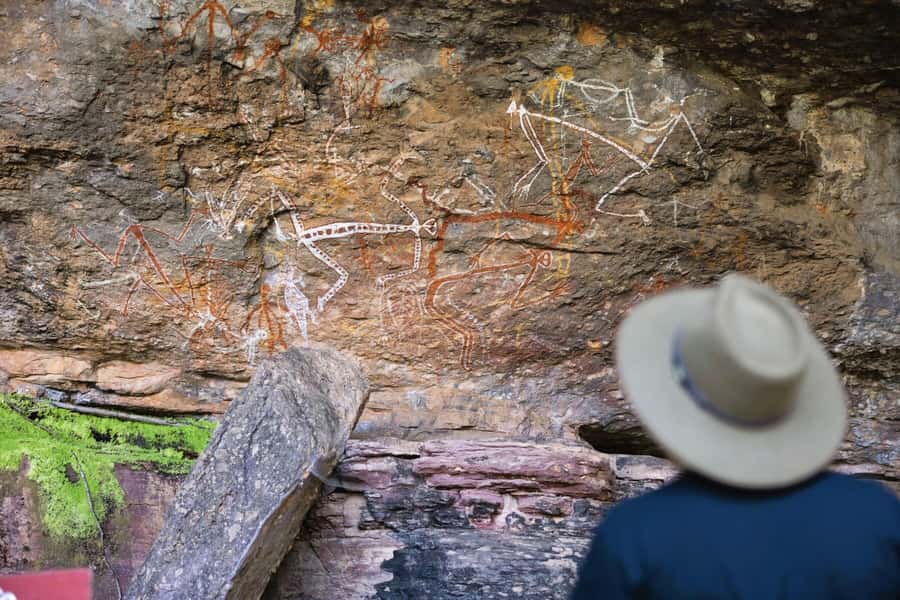
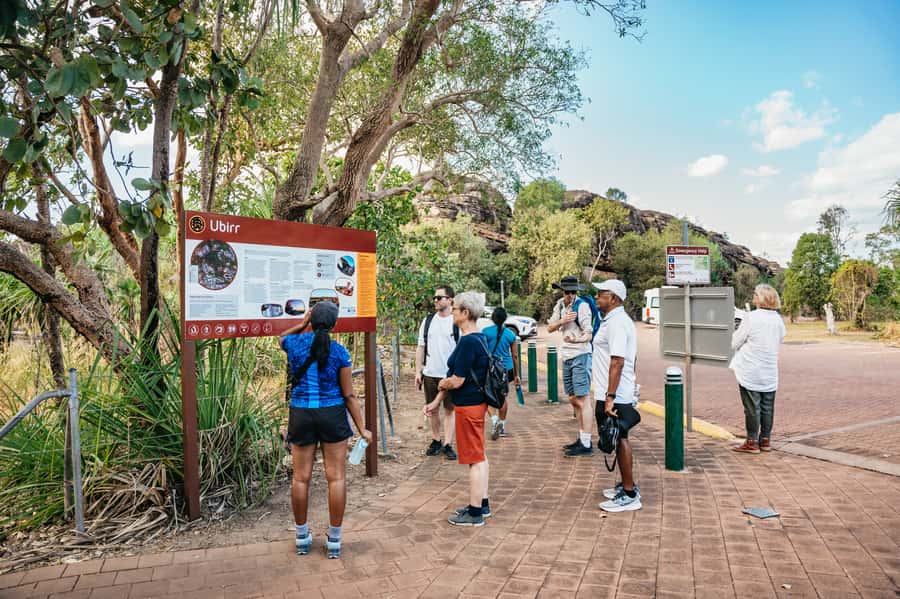
Ubirr is the emotional centre of the day. The site contains Aboriginal rock art dating back thousands of years, including images of ancestral beings, Dreamtime stories, and native animals.
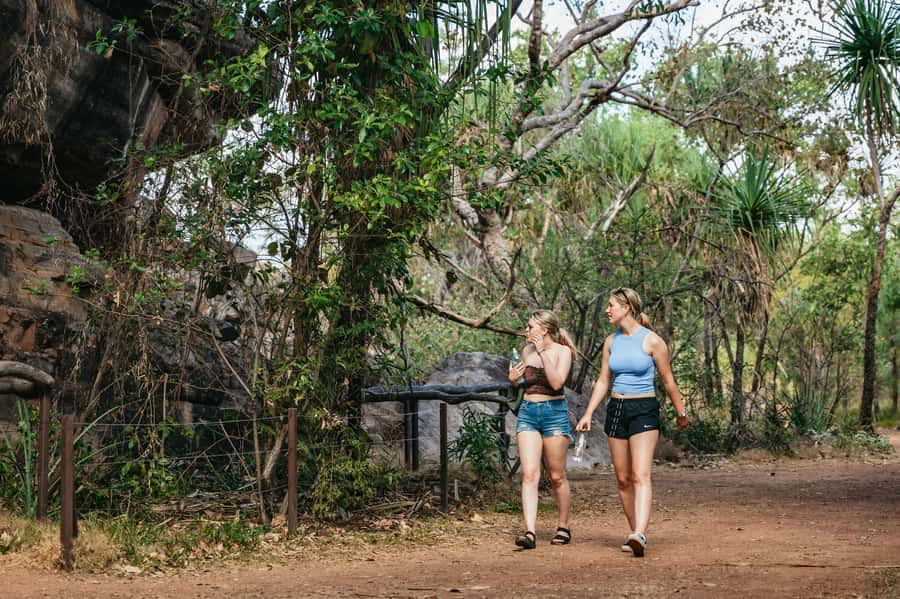
The walk is about 1.5 hours with a guided visit. You follow a short route past rock shelters and art galleries, then climb toward the lookout. The distance is not great, but heat, uneven ground, and the climb make sturdy shoes and a sensible pace important.
The art deserves time and attention. A good guide can explain what you are seeing without reducing the paintings to a quick photo stop. Guides such as Daryl and Dani have received especially strong praise for their explanations of Aboriginal culture and the meaning of the art.
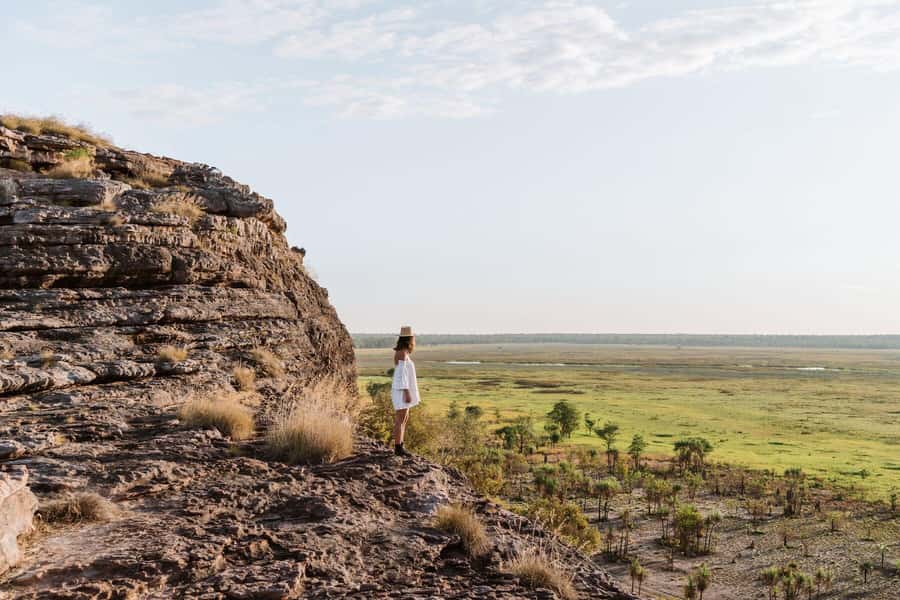
At the top, you get the view many people picture when they think of Kakadu: the Nadab floodplain spreading below, the East Alligator River, and the distant Arnhem Land escarpment. The view changes with the season. In the dry months, the floodplains can look open and sun-baked. In wetter periods, water fills the low country and gives you a clearer sense of how the park’s habitats work.
The climb is worth the effort, but it is not suitable for every visitor. People with mobility concerns should discuss their needs at least 48 hours before departure. The tour is not suitable for wheelchair users, and children under six cannot join.
When Nourlangie replaces Ubirr
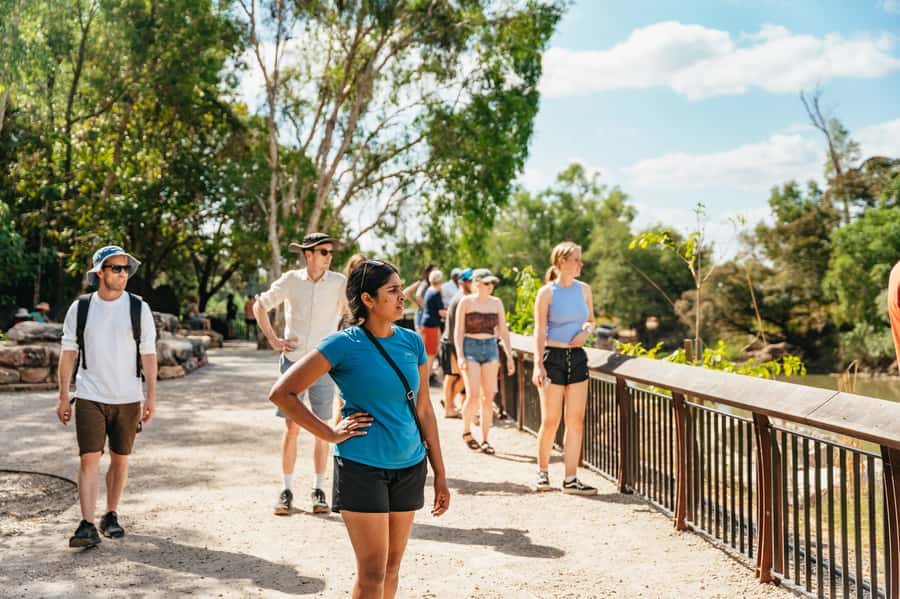
Ubirr may be inaccessible because of weather, road conditions, seasonal closures, or cultural events. In that case, the route can change to Nourlangie Rock, also called Burrungkuy.
Nourlangie offers another important rock art site among sandstone cliffs and shelters. The art provides a different view of Bininj spiritual traditions, and the area is also known for birdlife.
You should not treat this change as a poor substitute. Ubirr has the famous floodplain lookout, but Nourlangie has its own strong setting and cultural value. The key point is to book this day knowing that Kakadu is a living national park, not a fixed series of attractions open in every season.
How the seasons change the day
The dry season, broadly from May to September, is usually the more comfortable period for walking and road travel. Reviews from July through September describe hot conditions but strong views, accessible rock art, and rewarding wildlife stops.
The wet season, from October to April, brings high heat, humidity, and possible monsoonal rain. Roads and attractions can close with little warning, and a guide may need to replace planned locations. One January account describes flooding that shut several places, but also praises the guide for creating a worthwhile alternative route.
The wet season can still be beautiful. Floodplains begin to fill, storms reshape the sky, and Fogg Dam may be especially rewarding for birdlife. You simply need to accept less certainty and remain flexible.
Is $180 good value?
At $180 per person, this is good value if you have only one day for Kakadu and do not want to drive yourself. The price includes the Kakadu National Park pass, air-conditioned transport, an accredited driver-guide, local commentary, and the main park visits.
Driving more than 600 kilometres, navigating changing road conditions, and fitting in Ubirr, Cahills Crossing, Bowali, and a wetland or crocodile stop would be demanding on your own. You also gain interpretation that can turn a long drive into a lesson about plants, wildlife, First Nations culture, and the region’s history.
The price does not include food, drinks, travel insurance, personal expenses, or hotel transfers. The jumping crocodile cruise is optional, and Fogg Dam may require an additional NT pass under the KD fare type. Add these costs to your budget before deciding.
Value also depends on your travel style. If you want several walks, a slow pace, and time in remote parts of Kakadu, spend more than one day in the park. If you want a strong overview and a chance to see the park’s signature cultural and wildlife sites, this outing makes efficient use of your time.
What to pack for a hot, long day
Take the tour’s packing advice seriously. I would bring:
- At least 1.5 litres of water in a reusable bottle
- A broad sun hat, sunglasses, and high-protection sunscreen
- Comfortable closed-toe hiking shoes
- Breathable clothes and weather-appropriate layers
- Insect repellent
- Your medication and a small personal daypack
- Packed food and snacks if you do not want to buy lunch
- A camera and some cash for purchases
The operator also suggests swimmers and a towel, but there may be nowhere to swim on this itinerary. One useful correction from experience is that you should prioritise walking shoes, water, and sun protection over swim gear.
Do not bring oversize luggage, large bags, mobility scooters, or electric wheelchairs. A small 5 to 7 kilogram day bag is the practical limit. There is cold water on the bus, but you still need to carry enough for the walks and outdoor stops.
Who will enjoy this Kakadu day trip?
I would recommend it to first-time visitors based in Darwin, people with limited time, solo visitors who do not want to drive, and anyone keen to combine wildlife with First Nations culture. It also suits families with older children and adults who can manage a long day and short walks in heat.
You should think twice if long road trips leave you miserable, if you need generous legroom, or if you want a quiet, slow park experience. This is an overview tour. It gives you memorable highlights, not a full understanding of a park this large.
The guide can make or break the day, and the repeated praise for Becs, Dani, Leigh, Tim, Rick, Boggy, Naomi, Carlos, Daryl, and others is encouraging. The most valued qualities are not just facts, but humour, patience, personal stories, careful driving, and attention to people who need a slower pace.
Final verdict: book it for access, not leisurely pace
Book this tour if you want to see Kakadu’s major eastern highlights in one day and value a guide who can connect rock art, wildlife, and Country. Ubirr, Cahills Crossing, and the choice between Fogg Dam and jumping crocodiles give the day real variety.
Skip it if you have several days and can arrange a slower Kakadu visit. For everyone else, $180 is a fair price for transport, park entry, guiding, and access to places that would be difficult to combine independently. Just expect an early start, a late return, hot conditions, bumpy roads, and a very satisfying kind of tiredness.
FAQ
Where does the tour depart from?
The meeting point is outside The Leea, at 64 Cavenagh Street, Darwin City, Northern Territory. You should arrive 10 minutes before the 7:30 AM departure.
How long does the Kakadu tour last?
The tour lasts about 12 hours and returns to The Leea in Darwin in the evening.
Is food included?
No. Food and drinks are not included. You can buy lunch at local stops or bring your own food. An eski is available onboard, along with a water refill station.
Is the Kakadu National Park pass included?
Yes, the Kakadu National Park pass is included. Fogg Dam Conservation Reserve may require an additional Northern Territory park pass under the KD fare type.
Can I choose between the crocodile cruise and Fogg Dam?
Yes. The itinerary offers a choice between the optional Adelaide River jumping crocodile cruise and a visit to Fogg Dam Conservation Reserve. The crocodile cruise may cost extra.
What happens if Ubirr is closed?
If access to Ubirr is restricted, the tour may visit Nourlangie Rock, also known as Burrungkuy. Weather, road closures, flooding, and cultural events can cause itinerary changes.
Is the tour suitable for children or wheelchair users?
The tour is not suitable for children under six or wheelchair users. You should provide details of medical conditions or mobility issues at least 48 hours before departure.
Just added around Darwin
- Darwin: Adelaide River Half-Day Jumping Crocs Cruise★ 4.3 · 130 reviews
- From Darwin: Litchfield National Park Small-Group Day Trip★ 4.7 · 131 reviews
- Litchfield National Park Day Tour & Berry Springs, Max 11 Guests★ 4.5 · 131 reviews
- Golden Eye Sunset Jet Skiing in Darwin★ 5.0 · 139 reviews
- Litchfield & Berry Springs VIP Adventure Day Tours (group of 11)★ 5.0 · 142 reviews
- Darwin History and Wartime Experience Tour★ 5.0 · 144 reviews
- Litchfield National Park Tour with Wetlands or Crocodile Cruise★ 5.0 · 149 reviews
- “Cage Of Death” Crocodile Swim and Entry to Crocosaurus Cove★ 4.8 · 150 reviews
National Parks, compared.
Litchfield National Park and Jumping Crocodile Cruise
Read our review →
Grampians National Park Small-Group Eco Tour from Melbourne
Read our review →
From Port Arthur: Tasman Island Wilderness Cruise
Read our review →
Blue Mountains National Park Tour with River Cruise
Read our review →
From Hobart/Adventure Bay: Bruny Island Wilderness Cruise
Read our review →
Port Arthur Full-day Guided Tour with Harbour Cruise and Tasman National Park
Read our review →
Grampians National Park Small-Group Eco Day Tour
Read our review →
Bruny Island Wilderness Coast Eco Cruise with Lunch
Read our review →Browse the lists this tour appears in