
Reviewed · RAINFOREST & DAINTREE TOURS
Kuranda: Australian Butterfly Sanctuary
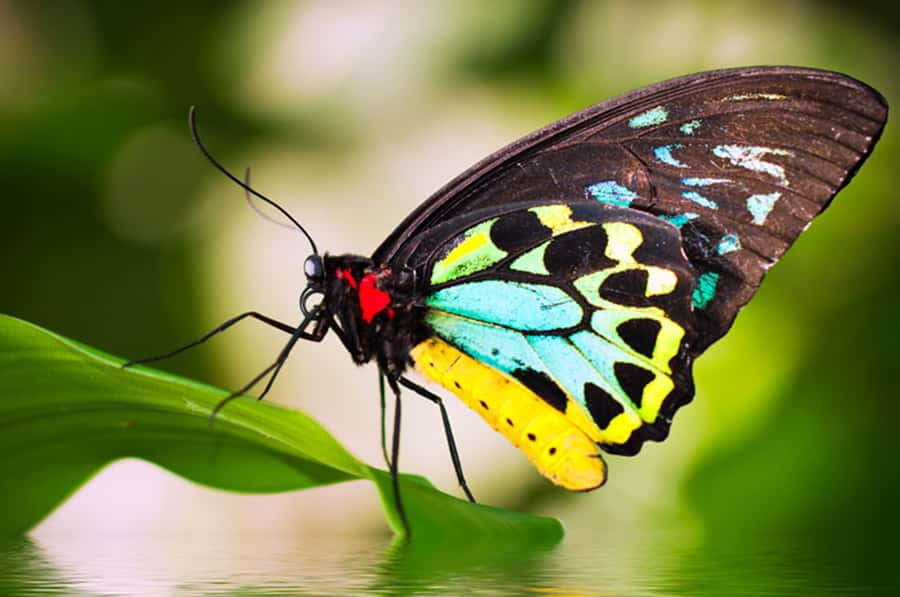
Butterflies turn a small visit into a rainforest surprise. The Australian Butterfly Sanctuary gives you close views of more than 1,500 tropical butterflies, including the striking green Cairns Birdwing, inside Australia’s largest butterfly flight aviary. You can wander at your own pace, join a free guided tour, and look through windows into the breeding laboratory.
I like the mix of beauty and real learning here. The sanctuary shows you more than pretty wings: you can watch staff raise caterpillars through the chrysalis stage, with as many as 4,000 caterpillars in the laboratory. I also like the simple tip to wear red, white, or hot pink, since bright clothing may attract butterflies to you.
The main drawback is that the number and variety of butterflies can vary on the day. One visitor expected many more, while another found the staff friendly but saw limited variety. The aviary can also feel hot, so bring water for before or after your visit, since food and drink are not allowed inside.
In This Review
- Key things to know before you go
- Entering Australia’s largest butterfly aviary
- Finding the green Cairns Birdwing
- The breeding laboratory and its 4,000 caterpillars
- Self-guided wandering or a free guided tour
- The museum and gift shop add useful time
- How long to allow in Kuranda
- Is the $17 admission good value?
- Who will enjoy this visit most?
- My practical plan for visiting
- Should you book the Australian Butterfly Sanctuary?
- FAQ
- Where is the Australian Butterfly Sanctuary?
- How much does admission cost?
- How many butterflies are in the sanctuary?
- Can I see the butterfly breeding process?
- Are guided tours included?
- Can I bring food or drinks inside?
- How can I reach the sanctuary?
Key things to know before you go
- The Cairns Birdwing is the star: Look for this large tropical species with its fluorescent green coloring.
- The sanctuary is all-weather: You can visit even when Kuranda’s rain makes outdoor plans less appealing.
- The breeding laboratory adds real substance: Viewing windows let you see caterpillars at different stages.
- Bright clothing may attract butterflies: Red, white, and hot pink are suggested colors.
- Free guided tours are available: Ask about the day’s times when you arrive, especially if you want more explanation than the self-guided visit provides.
- The $17 price is reasonable: You get the aviary, laboratory, museum, and gift shop in one Kuranda stop.
Entering Australia’s largest butterfly aviary
The Australian Butterfly Sanctuary is at 8 Rob Veivers Drive in Kuranda, a short walk from the main village area. You can reach Kuranda by Skyrail cable car, Kuranda Scenic Railway, or your own car, then add the sanctuary to a day spent exploring the village.
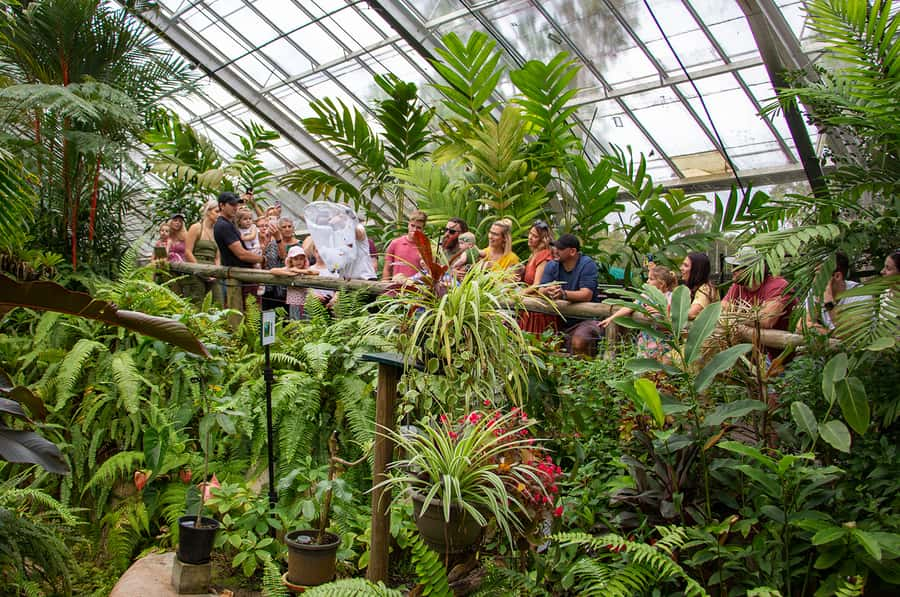
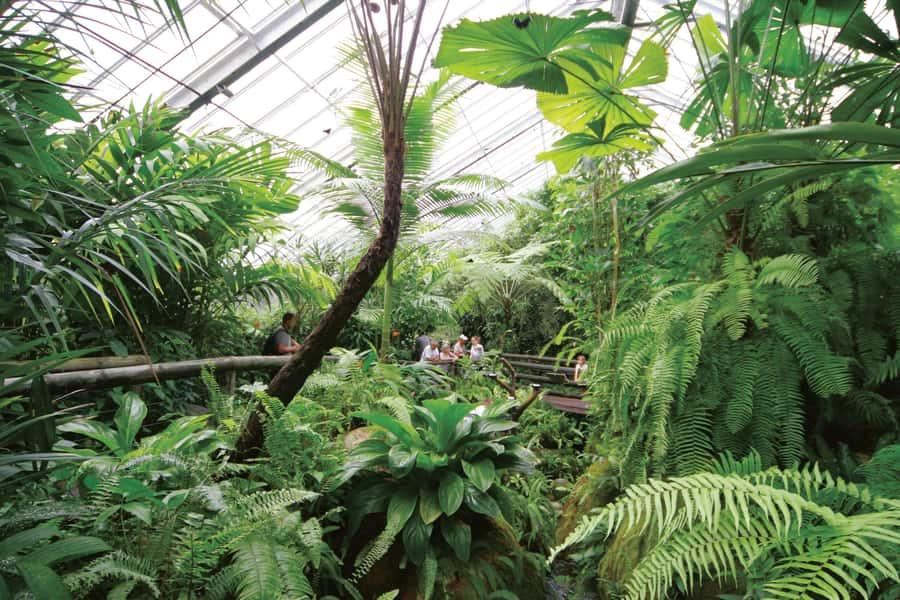
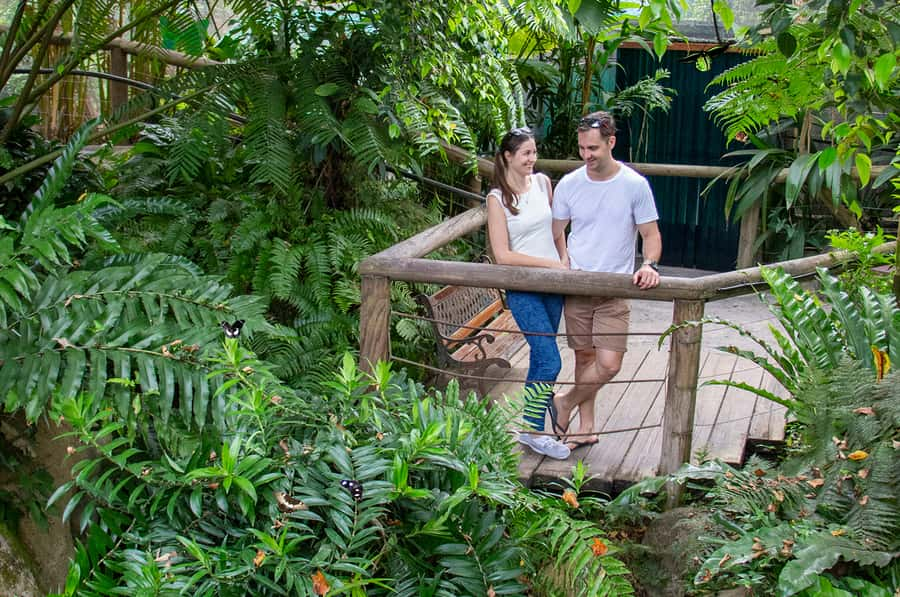
Inside, the central attraction is the flight aviary. This is not a display of butterflies pinned behind glass. The butterflies fly freely around planted areas, paths, and visitors, creating a close-up wildlife experience that feels quite different from a standard museum.
You can walk through at your own pace. That matters because butterflies do not perform on a schedule. One may settle on a leaf while another passes close to your shoulder, and the best moments come from slowing down instead of rushing from one end to the other.
The sanctuary is home to local rainforest species. That local focus makes the visit more meaningful than a collection of unrelated tropical insects. You are seeing species connected to the North Queensland environment, with the Cairns Birdwing as the most famous example.
The scale is useful, but do not treat the figure of 1,500 butterflies as a promise that every visit will look the same. Butterfly numbers and species variety can change. Some days may feel full of movement, while other days may seem quieter, as one recent visit found.
More Wildlife Experiences in Cairns
- Cairns Aquarium General Admission Ticket
★ 4.6 · 422 reviews - From Cairns: Rainforest & Nocturnal Wildlife Tour
★ 4.7 · 144 reviews - Cairns: Night at the Aquarium Guided Tour & 2 Course Dinner
★ 4.6 · 106 reviews
Finding the green Cairns Birdwing
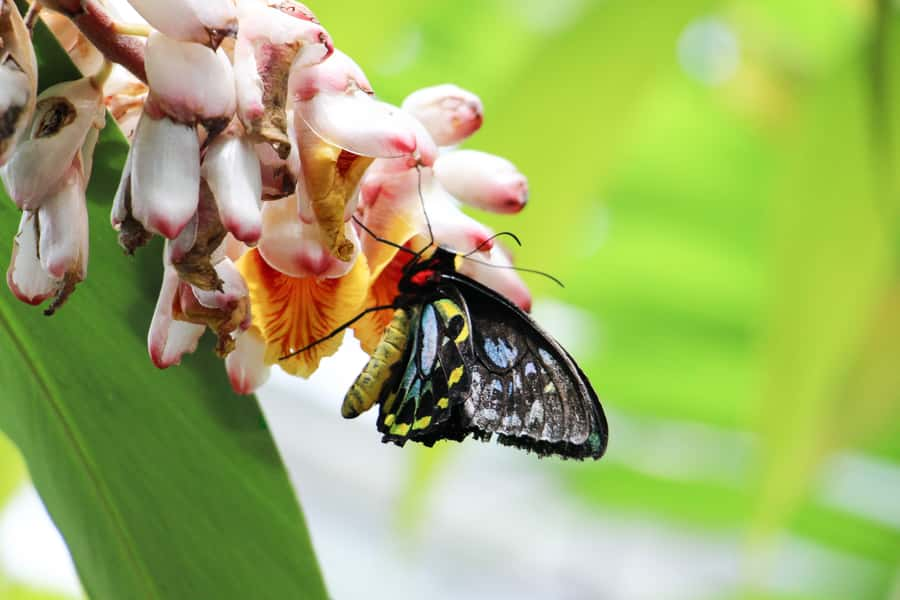
The Cairns Birdwing deserves your attention. Its bright green coloring can look almost fluorescent, especially when it moves through the light. It is the species most likely to fix your memory of the sanctuary, even if you know little about butterflies before arriving.
Your visit is not only about spotting the biggest or brightest insect. Guides explain how to identify different species, along with butterfly behavior and the stages of the life cycle. If you have children with you, this gives the visit a clear purpose: look, identify, and understand what you are seeing.
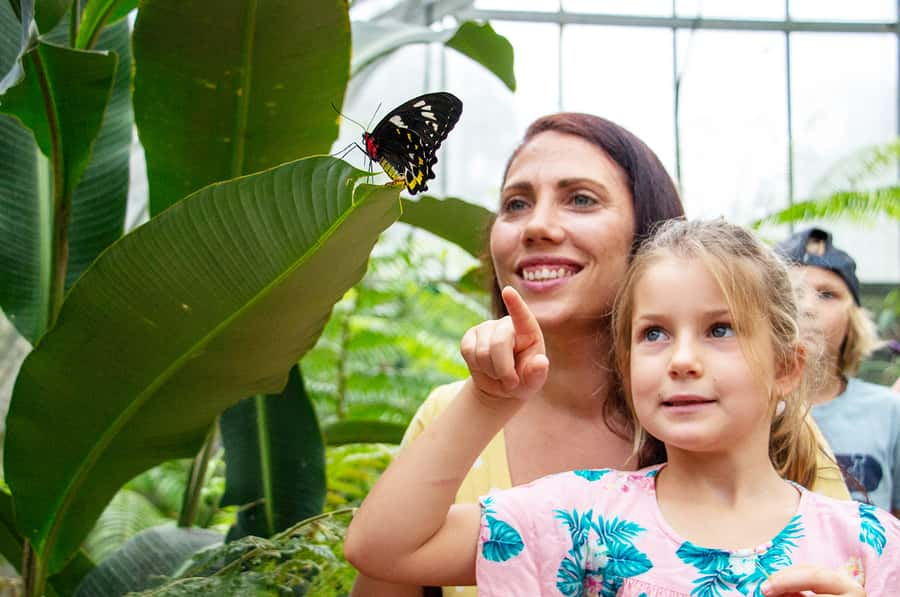
Wear a bright red, white, or hot pink top if you want to encourage butterflies to come closer. The advice is practical, not a guarantee. Butterflies may land on you, but they may also prefer nearby plants or another person’s shirt.
That unpredictability is part of the fun. You should not expect a staged animal encounter where every visitor receives the same moment. Instead, keep your arms still when a butterfly approaches and let it choose where to land.
The aviary is also a good place for photographs, though close subjects can be difficult to frame. A butterfly may move just as you prepare to take the picture. I would focus first on watching the insects and treat good photographs as a bonus.
The breeding laboratory and its 4,000 caterpillars
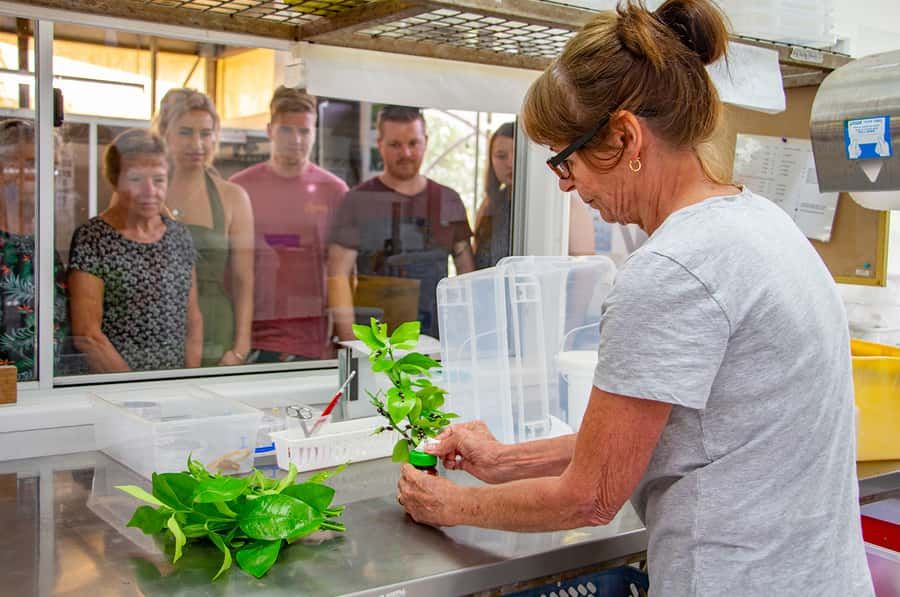
The breeding laboratory is the part I would make sure not to skip. Special viewing windows allow you to see the work behind the display, including caterpillars in different stages of development.
Up to 4,000 caterpillars may be housed there. Staff collect eggs daily and raise the caterpillars by hand until they form chrysalises. The young butterflies are then released into the aviary.
This changes how you see the flight area. Instead of viewing the butterflies as a fixed collection, you can understand it as a working cycle. Eggs become caterpillars, caterpillars become chrysalises, and new butterflies join the aviary. The laboratory explains why careful breeding is needed to keep the display supplied with local rainforest species.
You may find the caterpillars less immediately charming than the adults. Still, the laboratory is more informative than simply looking at colorful wings, and it gives the sanctuary a conservation and education angle.
The viewing windows are especially helpful because you can observe this process without entering the working area. You are given a clear look at the stages of development while staff handle the daily breeding work.
Self-guided wandering or a free guided tour
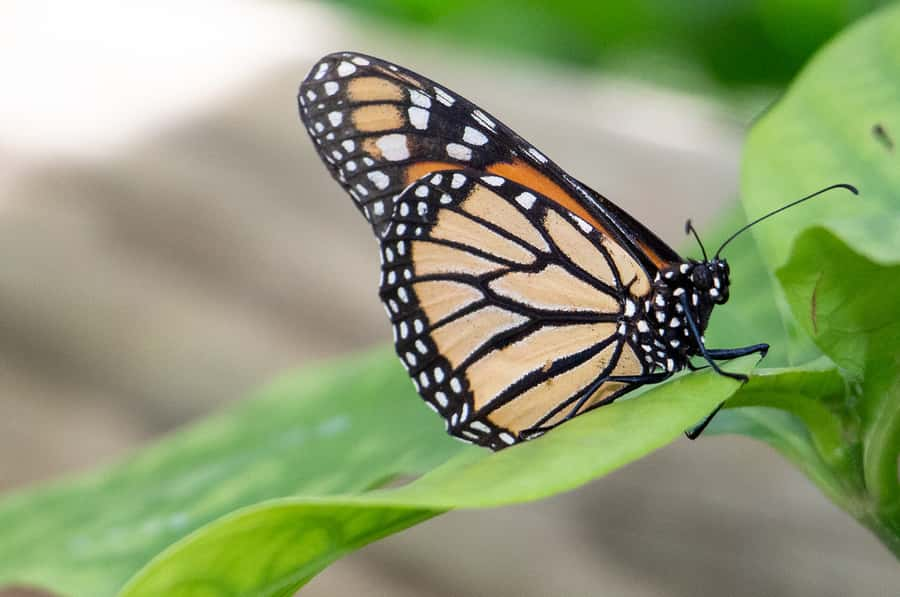
The standard visit is self-guided, so you can set your own pace. That works well if you are combining the sanctuary with Kuranda’s other sights and want flexibility.
Free guided tours are also available. Ask about the times at arrival, since the schedule is not supplied in advance here. If you want help identifying species or understanding behavior, plan around a tour rather than walking in and leaving immediately.
Nicole received especially strong praise for her enthusiasm, interesting explanations, and welcoming manner. If she is leading a tour when you arrive, it would be sensible to join it. A good guide can help you notice species and details you might otherwise miss.
The choice depends on your style. I would choose the guided option for a first visit, families, or anyone who wants more than photographs. I would choose the self-guided route if I had limited time or preferred to pause quietly around the butterflies.
Do not assume the guided option replaces time on your own. The best plan is often to join the explanation, then return to the aviary and watch at your own speed.
More Daintree and rainforest days:
- From Cairns: Self-Guided Kuranda Trip with Train and Skyrail
★ 4.6 · 3,392 reviews - Cairns: Daintree Rainforest and Mossman Gorge Tour
★ 4.6 · 2,485 reviews - From Cairns: Daintree Rainforest & Cape Tribulation 4WD Tour
★ 4.6 · 1,521 reviews - Cairns: Skyrail, Kuranda, and Rail Tour with Hotel Transfers
★ 4.6 · 1,038 reviews
The museum and gift shop add useful time
Entry includes a museum about butterflies from around the world. The information supplied does not give the museum’s size or exact displays, so I would treat it as a supporting part of the visit rather than the main reason to come.
It can help put the local species in context. After seeing North Queensland butterflies flying around you, comparisons with species from other parts of the world may make their shapes, colors, and life cycles easier to understand.
The gift shop is also included as part of the sanctuary visit, though purchases are separate. It gives you a chance to find a souvenir after the aviary and laboratory, particularly if you want something connected to butterflies or Kuranda.
Neither the museum nor the shop will replace the flight aviary. They are useful extras that make the $17 entry fee feel more complete, especially if you take time with the laboratory and guided material.
How long to allow in Kuranda
The ticket is valid for one day, and the activity information lists a duration of one day rather than a fixed number of hours. That gives you freedom to build the sanctuary into a broader Kuranda outing.
You can arrive by Skyrail, Kuranda Scenic Railway, or car. The sanctuary’s position at 8 Rob Veivers Drive makes it practical to combine with time in Kuranda Village, where you can eat before or after the visit.
Food and drink are not allowed inside the sanctuary. Plan your meal outside the entrance area, either before you go in or after you finish. This is a small rule, but it matters if you are visiting with children or arriving hungry after a morning on the railway or cable car.
The aviary may feel hot. One visitor specifically liked the staff and the visit but found the heat uncomfortable. I would choose light clothing, wear the suggested bright color if you want closer butterfly encounters, and schedule food and drinks nearby rather than expecting to carry them inside.
Because the sanctuary is all-weather, it can be a sensible choice when rain affects other plans. Still, all-weather does not mean cool or climate-free. Expect a tropical indoor setting.
Is the $17 admission good value?
At $17 per person, the sanctuary is fairly priced for a focused Kuranda attraction. You are paying for the aviary, the breeding laboratory, the museum, and access to a free guided tour, not just a quick walk past a few display cases.
The value depends on what you want. If you enjoy close wildlife encounters, photography, or learning how an animal is raised, the price works well. The breeding laboratory is important here because it gives the visit educational depth that a simple butterfly garden might lack.
If your main goal is to see a huge cloud of butterflies at every moment, the value is less certain. Butterfly numbers and species variety can be lower on some days. That is the clearest reason to keep expectations sensible.
A $17 visit also fits neatly into a day in Kuranda. You do not need to give up a full day to this one attraction, and you can pair it with the railway, Skyrail, village food, and shopping. Since food and drink are excluded, remember to budget for your meal separately.
Free cancellation up to 24 hours before the visit and reserve-now, pay-later booking are available. Those options help if your Kuranda plans depend on weather, transport, or the rest of your Queensland schedule.
Who will enjoy this visit most?
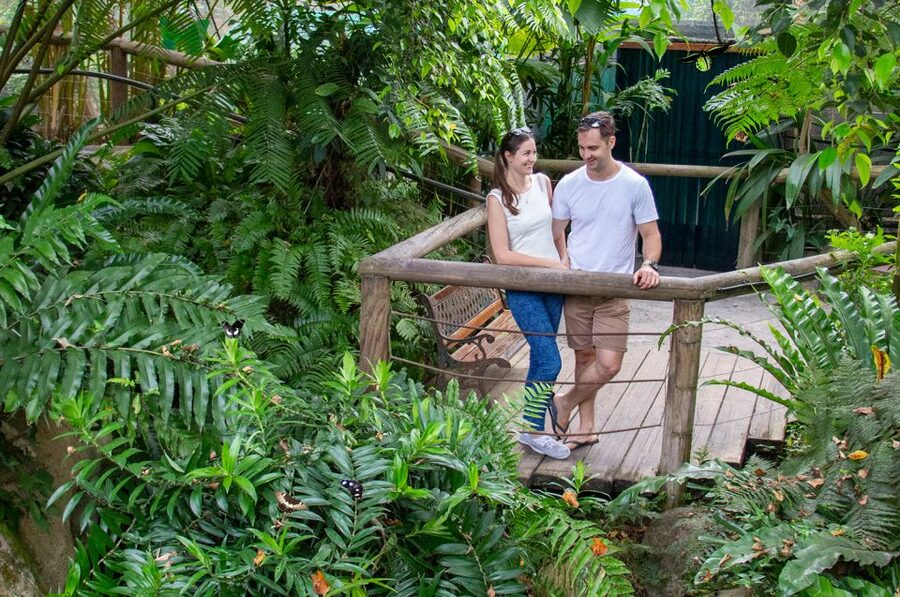
I would recommend the sanctuary to families, amateur photographers, nature fans, and anyone who wants a gentle wildlife stop in Kuranda. It is also suitable for people who prefer an all-weather activity with clear paths and the option of a self-guided visit.
The educational side makes it a good choice for children who ask how butterflies begin life. Seeing caterpillars in the laboratory can be more memorable than simply watching adult butterflies fly.
It may be less satisfying if you need a large attraction with many separate activities or if you expect the same number of butterflies on every visit. The sanctuary has one main focus, and that focus is quite specific.
The attraction is wheelchair accessible. English is the stated language for the host or greeter, guided information, and available material.
My practical plan for visiting
I would arrive in Kuranda with enough time to avoid rushing. First, I would ask about the free guided tour times. Then I would spend time in the aviary, keeping the camera away long enough to watch how the butterflies move.
Next, I would visit the breeding laboratory. Look for caterpillars at different stages rather than treating the viewing windows as a quick add-on. This is where the sanctuary explains the work required to maintain the butterfly population.
Afterward, I would return to the aviary if time allows. The second walk can feel different from the first because you now know what to look for and may notice species you missed earlier.
Finish with the museum and gift shop, then eat in Kuranda Village. This order gives you the main wildlife encounter first and leaves the indoor displays and meal for later.
Should you book the Australian Butterfly Sanctuary?
Book it if you want a reasonably priced, family-friendly wildlife stop with close butterfly encounters and a useful look at breeding work. The combination of 1,500 tropical butterflies, Cairns Birdwings, caterpillar viewing windows, and free guided tours offers more than a quick photo opportunity.
Go with realistic expectations. The aviary may be hot, and the number or variety of butterflies can vary from day to day. Wear red, white, or hot pink, ask for Nicole or another available guide if you want a guided explanation, and allow time for both the flight area and laboratory.
For most visitors already spending time in Kuranda, I think the $17 admission is worth adding. It is compact, educational, and easy to fit around the village, railway, or Skyrail.
FAQ
Where is the Australian Butterfly Sanctuary?
It is located at 8 Rob Veivers Drive, Kuranda, Queensland 4881.
How much does admission cost?
Admission is $17 per person.
How many butterflies are in the sanctuary?
The sanctuary is home to more than 1,500 tropical butterflies, all from local rainforest species.
Can I see the butterfly breeding process?
Yes. Special viewing windows look into the breeding laboratory, where you can see caterpillars in different development stages. The laboratory may house up to 4,000 caterpillars.
Are guided tours included?
Yes. Free guided tours are included. Ask about the available times when you arrive.
Can I bring food or drinks inside?
No. Food and drink are not allowed in the sanctuary. Kuranda Village has places to eat before or after your visit.
How can I reach the sanctuary?
You can travel to Kuranda by Skyrail cable car or Kuranda Scenic Railway, or drive yourself to the sanctuary.
Just added around Cairns
- Cairns: Great Barrier Reef Cruise & 10 Minute Helicopter★ 4.6 · 25 reviews
- Cairns: Guided Twilight Tour of the Aquarium★ 4.4 · 31 reviews
- Fitzroy Island: Full-Day Ferry & Snorkel Safari Guided Tour★ 4.4 · 37 reviews
- Cairns: Great Barrier Reef Snorkeling Tour with Lunch★ 4.7 · 41 reviews
- Kuranda Pamagirri Aboriginal Premium Full-Day Tour★ 3.9 · 42 reviews
- Cairns: Green Island and Seawalker Helmet Dive Combo★ 4.6 · 43 reviews
- Cairns: 4-Day PADI Open Water Course★ 4.8 · 44 reviews
- Cairns: Giant Swing★ 4.9 · 47 reviews
Rainforest & Daintree Tours, compared.
Self-Guided Kuranda Trip with Train and Skyrail
Read our review →
Daintree Rainforest, Mossman Gorge Small-Group from Port Douglas
Read our review →
Cape Tribulation, Mossman Gorge, and Daintree Rainforest Day Trip
Read our review →
Solar Whisper Daintree River Crocodile and Wildlife Cruise
Read our review →
Daintree Rainforest & Cape Tribulation 4WD Tour
Read our review →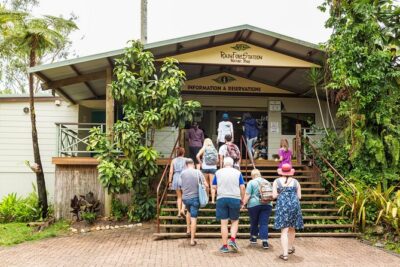

Skyrail, Kuranda, and Rail Tour with Hotel Transfers
Read our review →Browse the lists this tour appears in