
Reviewed · HISTORICAL TOURS
Salamanca Walk – History Tour
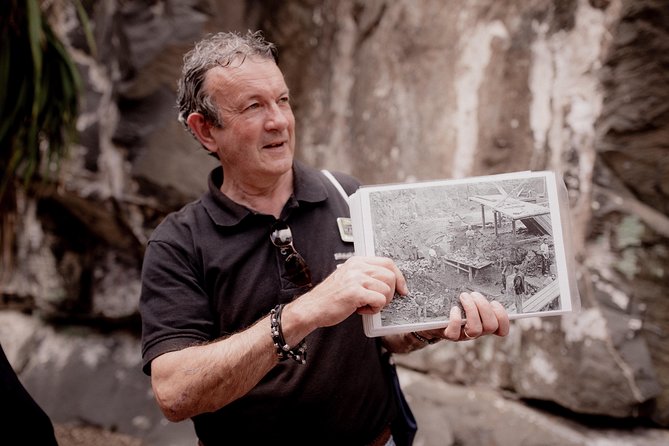
Old Hobart tells its stories outdoors. This gently paced walk links Salamanca and Battery Point through convict tales, old photographs, parks, homes, and views toward the Derwent River. I like the way guide Peter Lutz uses pictures and drawings to show how places looked before modern changes, and I like the small-group limit of 15 people, which leaves room for questions and a more personal feel.
The tour is also good value at $28.69 per person, especially if you are new to Hobart and want context before exploring on your own. My main caution is the length: two and a half hours on foot, with no planned sit-down break, may feel long for some people even though the pace is easy.
In This Review
- Key points to know before you book
- Why Salamanca and Battery Point make such a good pair
- Peter Lutz brings old Hobart into the present
- Salamanca Place: stone, markets, and a changing waterfront
- Arthur Circus Park and the homes of Battery Point
- St. David’s Park and the human story of settlement
- The walking pace, group size, and physical effort
- What the $28.69 price buys you
- Who should book this Salamanca history walk?
- Should you book the Salamanca Walk History Tour?
- FAQ
- Where does the Salamanca Walk History Tour start?
- Where does the tour finish?
- How long does the tour last?
- How many people can join the tour?
- Are children allowed to join?
- What is included in the tour?
Key points to know before you book

- Historic images make the past easier to see: Peter carries photographs and drawings that help connect present-day streets with earlier Hobart.
- Two Hobart districts in one walk: The route covers Salamanca and Battery Point, including Arthur Circus Park and St. David’s Park.
- Convict-era stories are central: You hear about convicts, free settlers, merchants, craftspeople, and clergymen who helped shape the colony.
- Small groups keep the tour conversational: A maximum of 15 people gives you a fair chance to ask questions.
- The walk is gentle but not brief: Most people can take part, yet two and a half hours without a scheduled seat may require sensible footwear and pacing.
- Useful at the start of your stay: Local advice about food, pubs, attractions, and the changing city can help you plan the rest of Hobart.
Why Salamanca and Battery Point make such a good pair
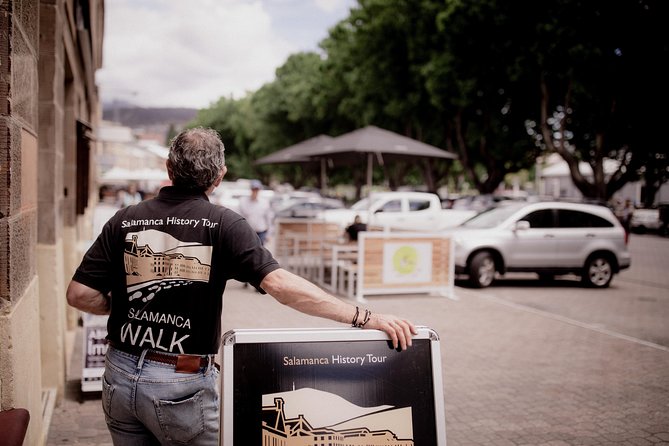
Salamanca and Battery Point sit close together, but they reveal different sides of Hobart. Salamanca brings together stone warehouses, the arts centre, the waterfront setting, and the area associated with the Salamanca Market. Battery Point adds residential streets, old houses, gardens, and a stronger sense of how people lived above and beyond the working port.
That contrast gives the walk a clear shape. You are not simply looking at old buildings one after another. You are connecting work, housing, religion, trade, government, and convict labour across a compact part of town.
The walk begins at Salamanca Arts Centre, 77 Salamanca Place. This is a practical meeting point near public transport and in an area that is easy to find. The activity finishes back there, so you do not need to arrange a ride from a distant ending point or worry about being left on the wrong side of town.
I would book this early in a Hobart visit. Once you understand what you are seeing, Salamanca Place and Battery Point become much easier to appreciate. The old stone, gardens, streets, and houses stop looking like attractive scenery alone and start making sense as parts of a working settlement.
More History Tours in Tasmania
- Derwent River Historic Harbour Cruise From Hobart
★ 4.5 · 570 reviews - Tasman Island Cruises and Port Arthur Historic Site Day Tour from Hobart
★ 5.0 · 477 reviews - Tasman Peninsula Tour, Cruise & Port Arthur Historic Site
★ 4.9 · 339 reviews
Peter Lutz brings old Hobart into the present
The strongest part of this experience is the guide’s storytelling. Peter Lutz is described as friendly, humorous, passionate, and well informed about Hobart’s past and present. His style seems less like a formal lecture and more like an illustrated conversation while walking.
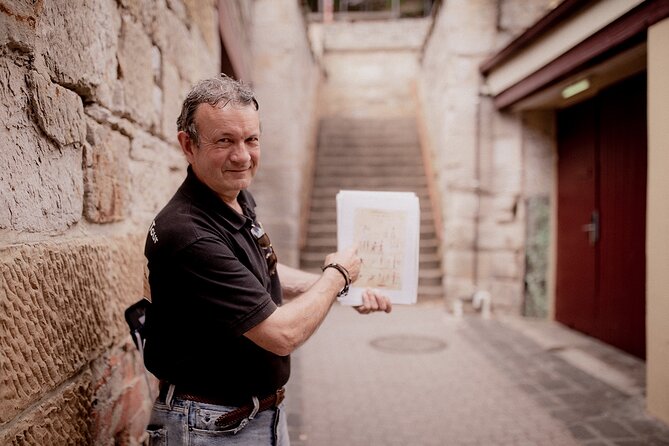
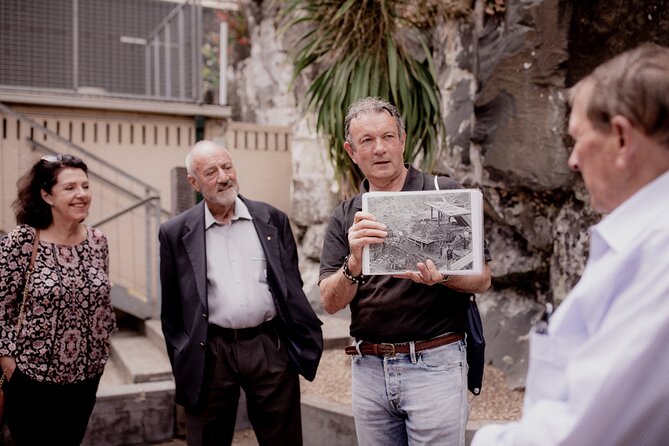
The photographs and drawings are especially useful. Old towns can be hard to read because modern roads, businesses, renovations, and new construction cover much of the earlier setting. Holding an image beside the current view lets you compare what changed, what survived, and how the area was reshaped.
That visual approach also helps with stories about land reclamation around Salamanca. You can better understand how an area that now feels established was altered over time. The photographs do practical work rather than serving as decoration.
Peter has also adjusted parts of the tour to suit the group when numbers were very small. One especially useful feature of a small group is the chance to ask about subjects that catch your attention. Guides Carmen and Lydija have also led the walk, so the experience is not tied to one voice alone, though Peter appears to be the main guide associated with it.
The tone should suit people who enjoy facts but do not want a dry recital of dates. Stories about ordinary workers, early settlers, convicts, and local characters give the past a human scale. You get a sense of the difficult work involved in building Hobart, rather than hearing only about important names and official events.
Salamanca Place: stone, markets, and a changing waterfront
The Salamanca section gives you a useful introduction to Hobart’s early development. The old buildings around Salamanca Place offer a chance to discuss the work of quarrying stone, the role of convict labour, and the trading activity that helped shape the district.
The area is also linked with the Salamanca Market, so the walk can help you see beyond the market stalls and weekend atmosphere. The market is a modern use of an older setting. Looking closely at the buildings and the ground beneath the area gives you a better sense of what came before today’s shops, cafés, galleries, and public spaces.
This part of the tour appears to focus on detail. You might be shown features you would otherwise pass without a thought, then given a historical image or drawing to explain their purpose or earlier appearance. That is one reason I would avoid treating the walk as a quick orientation lap. The value lies in pausing.
The waterfront setting adds another layer. Stories of merchants, whaling, construction, and trade show how closely Hobart’s early life was tied to the river and port. You are not only learning about architecture. You are learning why people came here, how they made a living, and how the town grew.
One limitation is that market activity can vary by day, and the tour should not be booked as a dedicated shopping experience. Its focus is the history of Salamanca and Battery Point. If you want stalls, food, and browsing time, plan that separately around the walk.
Arthur Circus Park and the homes of Battery Point
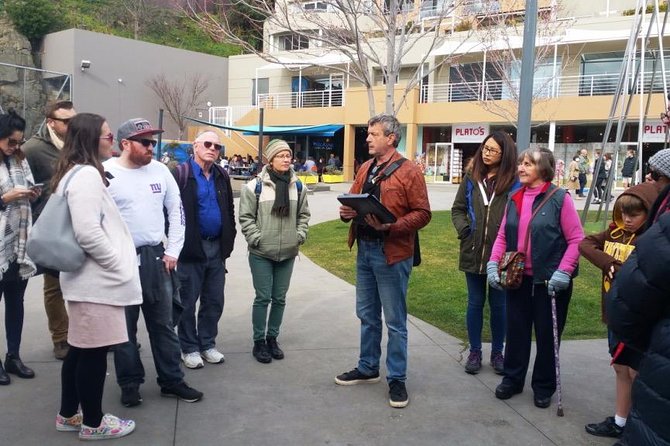
Arthur Circus Park is one of the most appealing stops because it shifts the focus from public waterfront buildings to the residential life of Battery Point. The park and the surrounding houses provide a close look at the neighbourhood’s architectural character.
This is where the tour helps you notice scale and layout. A building may appear simply old until you hear who lived there, what work they did, or how the surrounding street developed. The stories include craftspeople, clergymen, free settlers, merchants, and convicts, giving Battery Point a wider social picture than a row of handsome homes alone.
The houses are also a reminder that early Hobart was not built by one group. The colony depended on people with very different legal status, wealth, jobs, and expectations. Hearing those lives placed side by side makes the district feel less polished and more real.
The park itself offers a natural point to pause and look around, but do not count on a formal rest period. The overall walk has been described as easy and suitable for a wide range of ages, yet the full two and a half hours may still test anyone who dislikes standing for long stretches.
The guide’s old images are valuable here. You can compare the present streets with earlier versions and see how homes and public areas have changed. In a place as visually attractive as Battery Point, those comparisons stop you from simply photographing façades and moving on.
More Walking Tours in Tasmania
- Maria Island Cruise and Guided Walk Day Tour with Lunch and Drinks
★ 5.0 · 617 reviews - Southwest Tasmania Wilderness Experience: Fly Cruise and Walk Including Lunch
★ 5.0 · 233 reviews - Hobart History, People & Places – 2 hour city walk
★ 5.0 · 224 reviews - Old Hobart Pub Walking Tour
★ 4.5 · 91 reviews
St. David’s Park and the human story of settlement
St. David’s Park adds another setting and another chance to connect Hobart’s past with its present. Parks can seem like quiet gaps between major sights, but this stop helps place the city’s early community in a broader setting.
The tour explores how the colony’s foundations were laid through difficult labour. You hear about convict work, stone quarrying, whaling, trade, faith, and settlement. These subjects give you a better idea of the effort behind the streets and buildings you see today.
The stories also reach beyond the earliest years. The guide brings in contemporary information about Hobart, along with suggestions for attractions, food, and pubs. That makes the experience useful even if you have already read about Australian colonial history. You get a link between the old city and the Hobart you are visiting now.
A stop such as St. David’s Park can also help break up the visual rhythm of houses and stone walls. Still, the tour is best for someone who enjoys listening while walking. If you want long periods to sit, sketch, or explore each stop alone, the fixed group pace may feel restrictive.
The walking pace, group size, and physical effort

This is not a strenuous hike. The walk is described as gently paced, and most people can participate. It is suitable for families, with free tickets for children under 16, and service animals are allowed.
The more important issue is time rather than difficulty. Two and a half hours is long enough to cover a good amount of ground and tell detailed stories, but there is no stated scheduled sit-down break. One person felt that two hours might have been enough, while another valued the full amount of detail.
I would think about your own habits. If you like frequent stops, photographs, and questions, the time may pass quickly. If you tire easily while standing, or if young children need regular breaks, the length deserves attention before booking.
A group maximum of 15 is a real advantage. Large walking tours often turn history into a struggle to hear and keep up. Here, the smaller size should make it easier to see the photographs, follow the guide, and ask about family connections or particular buildings.
The route starts and ends at Salamanca Arts Centre, which keeps the day simple. It is near public transportation, and confirmation is provided when you book. Food and drinks are not included, so plan a café or pub stop before or after the walk rather than expecting refreshments along the way.
What the $28.69 price buys you
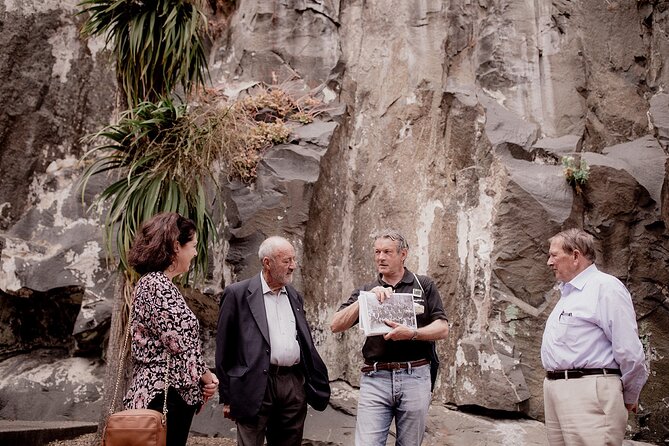
At $28.69, this is priced as an accessible introduction rather than a luxury private tour. The main value comes from interpretation. You can walk through Salamanca and Battery Point for free, but without a guide you may miss the reasons the areas look as they do.
The historical photographs and drawings add something you cannot easily get from a standard stroll. They help turn a pleasant walk into a before-and-after comparison, especially around Salamanca’s changed waterfront and Battery Point’s older homes.
You also get roughly two and a half hours of local context, plus current suggestions about food, pubs, and attractions. That matters if you are visiting Hobart for a short stay or arriving by cruise ship and want to make your time ashore count.
The price is less compelling if you only want a quick orientation or prefer to explore at your own pace. It is also not a food tour, market tour, or museum admission package. You are paying for the guide’s time, stories, visual material, and the chance to ask questions in a small group.
For most first-time visitors interested in Hobart’s past, I consider the cost fair. It can also work well for repeat visitors. One returning visitor who had been to Tasmania more than ten times still found new information in the walk, which says something about the amount of local detail covered.
Who should book this Salamanca history walk?
I would recommend it to:
- First-time visitors who want to understand Hobart before sightseeing alone
- People interested in convict history and colonial settlement
- Families looking for a low-impact activity, with free tickets for children under 16
- Architecture lovers who enjoy old homes, stone buildings, parks, and streetscapes
- Repeat visitors who want more meaning behind familiar places
- Cruise passengers seeking a compact activity that returns to its starting point
- Anyone who likes stories supported by photographs and drawings
I would be more cautious if you want a fast city overview, a food-focused outing, or a tour with plenty of seated rest. The walk is easy in physical terms, but it is not a short introduction.
Book with cancellation in mind. You can receive a full refund if you cancel at least 24 hours before the start time. Changes or cancellations inside that window are not accepted for a refund, and the activity may be cancelled if its minimum number is not reached.
Should you book the Salamanca Walk History Tour?
Yes, if you want Hobart’s older districts to make sense rather than simply look attractive. The combination of Salamanca’s working past, Battery Point’s homes, Arthur Circus Park, St. David’s Park, and Peter’s old photographs gives the walk a clear purpose.
I would schedule it near the beginning of your stay, then return to the market, galleries, cafés, and streets with a better eye for detail. Allow the full two and a half hours, wear comfortable shoes, and bring patience for standing and listening.
Skip it only if you prefer a very short walk or need regular seated breaks. For $28.69, this is a friendly, focused way to meet Hobart’s past and pick up useful ideas for the rest of your visit.
FAQ
Where does the Salamanca Walk History Tour start?
The tour starts at Salamanca Arts Centre, 77 Salamanca Place, Battery Point, Tasmania 7004, Australia.
Where does the tour finish?
The activity ends back at the meeting point at Salamanca Arts Centre.
How long does the tour last?
The walk lasts approximately two hours and 30 minutes.
How many people can join the tour?
The group has a maximum of 15 people.
Are children allowed to join?
Yes. The tour is family-friendly, and tickets are free for children under 16.
What is included in the tour?
Pictures and drawings of Hobart, Salamanca, and Battery Point are included. Food, drinks, and alcoholic beverages are not included.
Just added around Hobart
- Hobart Highlights Day Tour★ 4.8 · 25 reviews
- Cook Like A Pro in Taroona★ 5.0 · 26 reviews
- Signature Wine Tour – Hobart & SE Tasmania★ 5.0 · 26 reviews
- Kunanyi & Mt Wellington Explorer Bus: One-Way Bus Pass★ 4.8 · 27 reviews
- Grand Hobart Walking Tour★ 5.0 · 28 reviews
- From Hobart: Mt Wellington Summit & Rainforest Bike Tour★ 4.9 · 29 reviews
- 10 Days Ultimate Guided Tour of Tasmania – Comfort Tour★ 5.0 · 29 reviews
- Port Arthur Historic Site on Saturday including Salamanca Market★ 4.5 · 29 reviews
Historical Tours, compared.
Ultimate Melbourne Walking Tour: History, Laneways & Culture
Read our review →
Puffing Billy Railway: Heritage Steam Train Journey
Read our review →
Morning World Heritage Cruise on the Gordon River from Strahan
Read our review →
Strahan: World Heritage Cruise on Gordon River with Lunch
Read our review →

Experience History onboard The Mary Valley Rattler
Read our review →
Snorkel & Dive the Reef: Sustainable, Scientific & Cultural Tour
Read our review →
Derwent River Historic Harbour Cruise From Hobart
Read our review →Browse the lists this tour appears in