
Reviewed · HISTORICAL TOURS
Tae Rak (Lake Condah) 2-Hour Cultural Tour
Eels make this two-hour walk unforgettable. The Tae Rak Cultural Tour brings you close to Gunditjmara culture, ancient aquaculture, and the wildlife of Lake Condah in a calm, focused visit. I like the Gunditjmara-led storytelling and the chance to see eel traps and waterways that still show how people worked with this country for more than 39,000 years. I also like the choice of a morning or afternoon departure.
The main consideration is value. At $63.83 per person, this is a short experience, and coffee, tea, and snacks cost extra. If you arrive expecting a long guided excursion with extensive transport, you may find the two hours move quickly. If you want a meaningful introduction to Tae Rak, the price is easier to justify.
In This Review
- Key points before you book
- Why Tae Rak and Lake Condah matter
- Starting at the Tae Rak Aquaculture Centre
- Creation stories beside the lake
- Walking the western edge of Lake Condah
- Kooyang, eel harvesting, and living culture
- A guide-led experience with a respectful tone
- Morning or afternoon: choosing the better time
- What the $63.83 price buys you
- Who should book this cultural walk?
- Booking, cancellation, and meeting details
- Is the Tae Rak Cultural Tour worth booking?
- FAQ
- How long is the Tae Rak Cultural Tour?
- Where does the tour start?
- Does the tour return to the starting point?
- Is the tour available in the morning and afternoon?
- What will I see during the tour?
- Is food included in the tour price?
- How many people can join the tour?
- Can service animals join the tour?
- What happens if I need to cancel?
Key points before you book
- Ancient eel systems: See stone aquaculture sites, waterways, and fish traps linked to traditional kooyang, or eel, harvesting.
- Gunditjmara cultural guidance: Hear creation stories, legends, and historical accounts from a Gunditjmara guide.
- Two-hour format: The visit covers the Tae Rak Aquaculture Centre and the western edge of Lake Condah.
- Wildlife and plant life: Look for culturally significant flora, birdlife, and the lake’s marine life.
- Simple timing choice: Pick a morning or afternoon walk to fit your day.
- Small enough to follow: Groups are capped at 30 people, so the experience has a defined limit even when fully booked.
Why Tae Rak and Lake Condah matter
Tae Rak, also known as Lake Condah, is part of the Budj Bim Cultural Landscape. Here, the Gunditjmara people developed an extensive aquaculture system using lava flows, channels, waterways, and stone traps to manage eels and fish.
That detail changes how you see the place. This is not simply a walk beside a lake. The stones and waterways are evidence of careful planning, food production, and long-term connection to Country. Your guide helps you read features that could otherwise look like ordinary rock formations or wetland edges.
The experience also places Gunditjmara culture at the center. You hear creation stories and accounts of the relationship between people, animals, water, and land. The setting gives those stories weight because the physical systems are still visible around you.
I would not book this as a general sightseeing stop with a quick photo opportunity. Its value comes from listening, looking closely, and allowing the guide to explain why Tae Rak matters.
More History Tours in Melbourne
- Ultimate Melbourne Walking Tour: History, Laneways & Culture
★ 5.0 · 1,451 reviews - Ultimate Melbourne Walking Tour: History, Laneways & Culture
★ 4.8 · 338 reviews - Melbourne Historical Walking Tour: Crime, Gangsters & Lolly Shops
★ 5.0 · 137 reviews
Starting at the Tae Rak Aquaculture Centre
The tour begins at the Tae Rak Aquaculture Centre. Your Gunditjmara guide meets you there and starts with an introduction to the centre and its purpose.
You can expect an overview of the kooyang holding tank, the processing facility, the cafe, and the retail space. These opening details help you understand that eel harvesting is not only part of the past. It remains tied to cultural practice and the centre’s educational work.
The holding tank is particularly useful as a starting point. Before you see the old traps outdoors, you get a clear introduction to kooyang and its importance. The guide then connects that living resource to Gunditjmara creation stories and traditional harvesting.
The cafe and retail area also matter for practical reasons. Coffee and tea are not included in the tour, but you can use the centre as a place to get refreshments around your visit. One useful tip is to allow time for the cafe before or after the walk if you want coffee. An eel sample or eel-based food may also be available, but it is not part of the tour price, so ask about current options rather than assuming they are included.
One particularly distinctive food option is eel charcuterie. If that is available during your visit, it offers another way to understand kooyang as food and culture. The important point is to treat it as an optional extra, not a promised part of the two-hour experience.
Creation stories beside the lake
After the centre introduction, the guide gives an overview of the Gunditjmara creation story. This is where the tour moves beyond a technical explanation of fish traps and aquaculture.
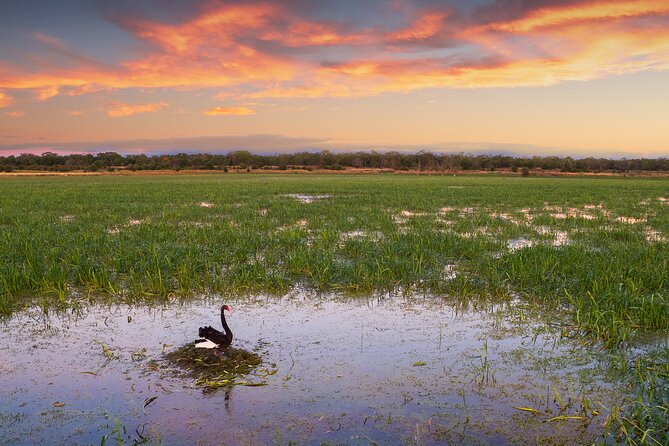
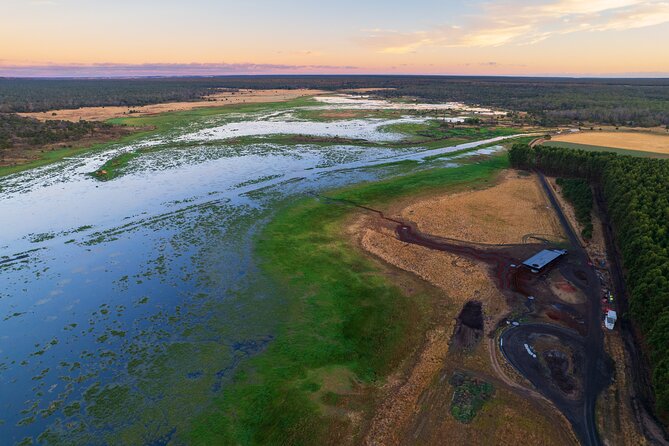
Creation stories provide a cultural way to understand the lake and the life around it. You will hear legends and historical accounts while looking across Tae Rak, so the setting and the storytelling work together. The guide also points out the lake’s birdlife and marine life.
You may find this section slower and more reflective than a standard sightseeing tour. That is a strength if you want context, but it can feel less active if you prefer constant movement. The experience asks you to pay attention to spoken stories as much as to what is in front of you.
The peaceful setting is part of the appeal. A calm natural environment makes it easier to think about the long time span involved here. Gunditjmara people have lived on this land for more than 39,000 years, and the tour gives you a direct way to connect that fact with the lake, waterways, and animals.
I especially value this part because it avoids treating culture as a museum display. The stories are shared outdoors, in the place they help explain.
Walking the western edge of Lake Condah
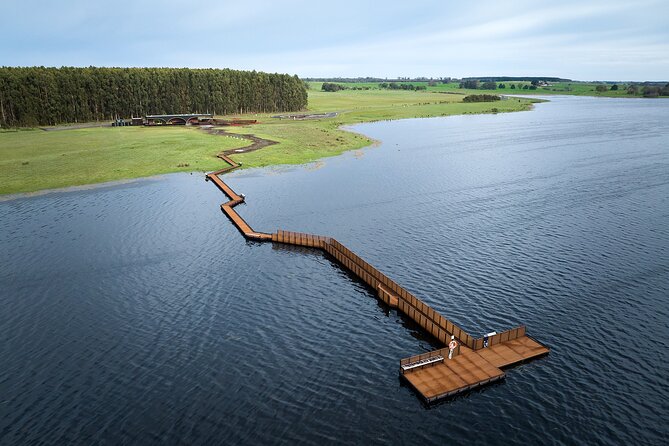
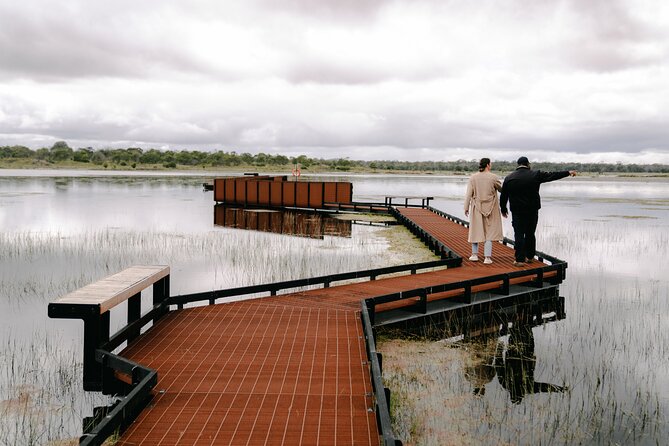
The route continues along the western edge of the lake toward the weir. This section gives you a broader view of the Tae Rak setting and the stone aquaculture sites.
The weir is an important point because it helps you see how water was managed. The guide explains the ancient system of lava flows, channels, waterways, and traps. You will learn how the Gunditjmara used these features to harvest kooyang and other food sources.
The stone structures may not announce themselves at first. A guide’s explanation is what makes them meaningful. You might otherwise see a collection of rocks or a wetland edge. With the right context, you can begin to notice the deliberate arrangement of the sites and the way water movement shaped the system.
This is also the most practical part of the walk for people who want to understand traditional engineering. You are not simply hearing that the aquaculture system was advanced. You are looking at the remains of how it worked.
The route is described as continuing along the western edge, but the supplied details do not promise a particular walking distance, surface, or level of physical difficulty. Most people can participate, but if you need precise information about terrain or walking conditions, contact the provider before booking.
A completely different kind of day out in Melbourne:
- Great Ocean Road Small-Group Eco Tour from Melbourne
★ 5.0 · 6,607 reviews - From Melbourne: Great Ocean Road, 12 Apostles, Wildlife Tour
★ 4.7 · 6,020 reviews - Laid back, Yarra Valley Wine Tour: Wine, Cider, Gin, Beer + Choc
★ 5.0 · 4,552 reviews - Great Ocean Road Reverse Itinerary Boutique Tour – Max 11 Guests
★ 5.0 · 4,186 reviews
Kooyang, eel harvesting, and living culture
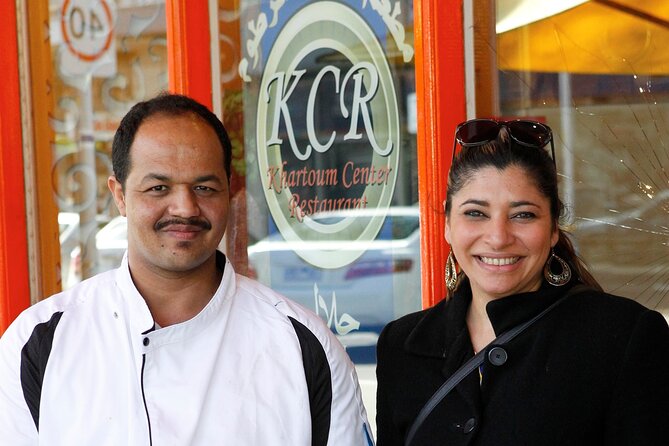
Kooyang means eel, and eels are central to the tour. You learn about traditional harvesting and the Gunditjmara relationship with this animal.
The subject is handled as culture, food, history, and environmental knowledge at the same time. That gives the experience more depth than a simple explanation of how a trap catches fish. You learn why the eels matter and how the aquaculture system supported Gunditjmara life.
The eel holding tank at the centre gives you an immediate reference point. Later, the stone traps and waterways show the larger system. Together, the indoor and outdoor parts make the explanation easier to follow.
If you are curious about food, ask directly about eel samples or dishes. One visitor felt disappointed after learning too late about an eel sample, while another enjoyed eel charcuterie after the tour. The lesson is simple: do not assume food tastings are included, and do not leave the centre without asking what is available that day.
That small extra could make the visit feel more complete for a food-focused visitor. Still, the cultural tour itself does not depend on a tasting. The main experience is the guide’s explanation of kooyang and the ancient aquaculture system.
A guide-led experience with a respectful tone
The guide is a major part of the value. A Gunditjmara guide presents the creation story, explains the centre, identifies culturally significant flora and fauna, and introduces traditional kooyang harvesting.
The strongest praise for this experience focuses on the guide’s cultural knowledge and respect. That matters here. A site connected to First Peoples should not be reduced to an archaeological curiosity. The guide helps you understand Tae Rak as a living cultural place.
You can also expect the tour to address history and reconciliation. One part of the experience is learning about thousands of years of culture, while another is considering the steps toward reconciliation in the present. The tour does not appear designed as a dramatic performance. Its strength is the steady connection between place, story, and evidence.
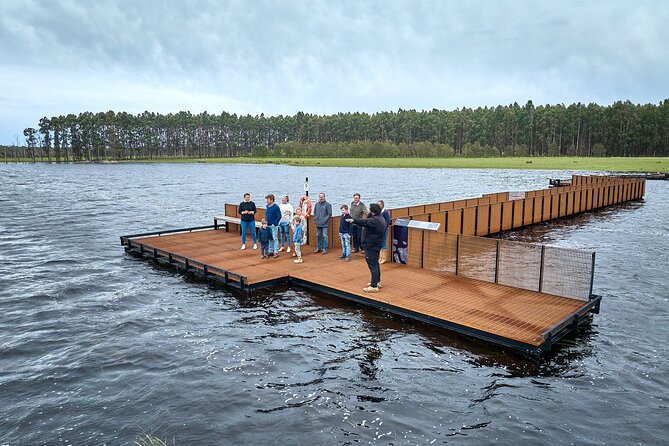
Because the group can include up to 30 people, your experience may depend on where you stand and how well you can hear. A group of 30 is not tiny, though it is still limited enough to keep the tour organized. Stay near the guide during explanations, especially around the lake and weir.
The published rating is 4.9 out of 5 from 203 ratings, with 98 percent recommending the experience. Those numbers suggest strong satisfaction, especially with the guide, cultural respect, and information about eels. They do not remove the value question, so consider what kind of tour you want before booking.
Morning or afternoon: choosing the better time
You can choose between a morning and afternoon walk. The best option depends on how you are arranging your day in Victoria.
A morning departure may suit you if you want to begin with the cultural visit and leave the rest of the day open. An afternoon departure may work better if you are fitting Tae Rak into a wider regional itinerary.
The data provided does not promise different wildlife conditions, temperatures, or light at each time. I would therefore choose based on your schedule rather than expecting one departure to be automatically better.
The tour requires good weather. If poor weather forces a cancellation, you will be offered a different date or a full refund. That policy is useful, but it also means you should avoid building an overly tight schedule around the experience if weather conditions look uncertain.
What the $63.83 price buys you

At $63.83 per person, the cost is reasonable for a specialist cultural tour, but you should judge it by the quality of interpretation rather than by the number of stops.
You receive about two hours with a Gunditjmara guide, access to the guided parts of the Tae Rak visit, and explanations of the centre, lake, flora, fauna, creation stories, and aquaculture sites. You also have restroom access on site and an air-conditioned vehicle is included.
The tour does not include coffee, tea, or snacks. That is not unusual, but it matters because the centre has a cafe and food can sound like part of the visit. Plan to pay separately if you want refreshments or eel-based food.
I think the price works best for you if cultural interpretation is your main goal. It is less compelling if you want a long outdoor adventure or a full-day tour with multiple attractions. Two hours can pass quickly, especially because the route includes both the centre and the lake edge.
The high rating supports the idea that the experience delivers strong cultural value. Still, price sensitivity is personal. If you are making a long journey specifically for a food tasting, confirm what is available before you go.
Who should book this cultural walk?
I would recommend Tae Rak to you if you want to understand Gunditjmara culture through place, story, and traditional food systems.
It suits:
- People interested in First Peoples’ history and culture
- Visitors who want a guided introduction to Budj Bim
- Anyone curious about traditional aquaculture and eel harvesting
- Families or mixed-age groups looking for a two-hour activity
- Nature lovers who want to learn about birdlife, marine life, and culturally significant plants
- Visitors who prefer a morning or afternoon activity rather than a full-day tour
The experience may be less suitable if you want a fast-paced schedule, a guaranteed tasting, or a detailed promise about walking distance and terrain. It is also not the right choice if you plan to skip the guide’s stories and only take photographs.
Most people can participate, and service animals are allowed. The information provided does not give a detailed accessibility description, so contact the provider if you need specific advice about surfaces, distance, or mobility access.
Booking, cancellation, and meeting details
The tour starts and finishes at the meeting point at Breakaway Creek, Victoria, listed as WRRG+Q2 Breakaway Creek. Your confirmation is provided when you book, and the mobile ticket makes it easy to keep the booking on your phone.
Free cancellation is available if you cancel at least 24 hours before the start time. Changes or cancellations made inside that 24-hour window are not accepted and are not refunded.
The experience needs a minimum number of participants. If that minimum is not reached, you will be offered another date or experience, or a full refund. Poor weather can also lead to a date change or full refund.
The group maximum is 30 people. That is worth noting when you decide how personal you want the experience to feel. It is not a private walk, but it is also not an unlimited crowd.
Is the Tae Rak Cultural Tour worth booking?
Yes, I would book it if you want a clear, respectful introduction to Gunditjmara culture and the ancient aquaculture systems of Lake Condah.
The strongest reasons are the Gunditjmara guide, the creation stories, and the chance to see eel traps and stone waterways in their actual setting. The tour makes the connection between culture and Country easy to understand without requiring a full day.
Book with realistic expectations. You are paying for two hours of interpretation, not an all-day excursion or included food tasting. Allow extra time for the cafe, ask about eel samples or eel charcuterie if that interests you, and choose your morning or afternoon slot around the rest of your plans.
For anyone exploring the Budj Bim area, this is a useful and worthwhile stop. It gives you the background needed to see Tae Rak as more than a scenic lake. It is a place shaped by Gunditjmara knowledge, careful water management, living tradition, and thousands of years of connection.
FAQ
How long is the Tae Rak Cultural Tour?
The tour lasts approximately two hours.
Where does the tour start?
It starts at the meeting point at Breakaway Creek, Victoria, listed as WRRG+Q2 Breakaway Creek.
Does the tour return to the starting point?
Yes. The activity ends back at the meeting point.
Is the tour available in the morning and afternoon?
Yes. You can choose a morning or afternoon walk.
What will I see during the tour?
You will visit the Tae Rak Aquaculture Centre, see the kooyang holding tank and processing facility, walk along the western edge of Lake Condah, and view the weir, stone aquaculture sites, and fish traps.
Is food included in the tour price?
No. Coffee, tea, and snacks are not included. Eel samples or eel charcuterie should be treated as optional offerings, not part of the tour admission.
How many people can join the tour?
The maximum group size is 30 people.
Can service animals join the tour?
Yes. Service animals are allowed.
What happens if I need to cancel?
You can receive a full refund if you cancel at least 24 hours before the experience start time. Cancellations or changes made less than 24 hours before the start time are not accepted or refunded.
More 2-Hour Experiences
- Melbourne: 2-Hour City Highlights River Cruise
★ 4.1 · 1,804 reviews - Melbourne: 2-Hour Bottomless Brunch Cruise
★ 4.8 · 297 reviews - Surfers Paradise: 2 Hour Surf Experience on the Gold Coast
★ 4.9 · 1,132 reviews - Bondi Beach: 2-Hour Surf Lesson Experience for Any Level
★ 4.9 · 935 reviews
Just added around Melbourne
- Great Ocean Road Lux Tour Max 11 Hotel Pickup★ 4.8 · 129 reviews
- Melbourne City Highlights Small Group Tour★ 5.0 · 131 reviews
- Melbourne: Reverse Great Ocean Road 12 Apostles with Lunch★ 4.6 · 131 reviews
- Melbourne sunrise balloon flight only★ 5.0 · 132 reviews
- Yarra Valley Full Day Gourmet Food, Wine & Gin Adventure★ 5.0 · 135 reviews
- Virtual Room – 40-50min VR Escape Game Adventure for 2+ Players★ 5.0 · 136 reviews
- Melbourne Sports Experience + MCG Tour Combo★ 5.0 · 137 reviews
- Melbourne Park Tennis Experience★ 5.0 · 143 reviews
Historical Tours, compared.
Ultimate Melbourne Walking Tour: History, Laneways & Culture
Read our review →
Puffing Billy Railway: Heritage Steam Train Journey
Read our review →
Morning World Heritage Cruise on the Gordon River from Strahan
Read our review →
Strahan: World Heritage Cruise on Gordon River with Lunch
Read our review →
Experience History onboard The Mary Valley Rattler
Read our review →
Snorkel & Dive the Reef: Sustainable, Scientific & Cultural Tour
Read our review →
Derwent River Historic Harbour Cruise From Hobart
Read our review →Browse the lists this tour appears in