
Reviewed · ULURU & RED CENTRE TOURS
Uluru, Kata Tjuta & Kings Canyon Camping Tour
Red dirt, giant skies, and three unforgettable icons. This 3-day Uluru camping tour links Kata Tjuta, Uluru, and Kings Canyon without asking you to rent a car or plan meals across enormous distances. I especially like the careful timing of the sunrise and sunset stops, plus the chance to sleep in an Aussie swag under the stars. The main catch is simple: you spend many hours on the road, and camping, shared chores, early starts, flies, and basic meals are part of the deal.
At $548 per person, the price is not pocket change. Still, it covers transport, park fees, guided walks, camping, sleeping bags, and all meals, making it a strong value compared with hiring a car, arranging accommodation, and paying for separate visits. Guides such as Greg, Elyse, Simon, Ryan, and Sophie have earned particular praise for keeping groups safe, fed, informed, and in good spirits.
In This Review
- At a glance: what makes this trip worthwhile
- Why this Red Centre tour works so well
- Day 1: Kata Tjuta’s domes and Uluru at sunset
- Sleeping in a swag under Central Australia’s stars
- Day 2: Uluru from sunrise to its cultural center
- Day 3: Kings Canyon’s rim, chasms, and Garden of Eden
- Choosing the 2-night or 3-night finish
- Food, comfort, and the parts that need improvement
- The guide can make or break the three days
- Is $548 good value?
- Who should book this camping trip?
- Should you book the Uluru, Kata Tjuta and Kings Canyon tour?
- FAQ
- How long does the Uluru, Kata Tjuta and Kings Canyon tour last?
- Where does the tour depart from?
- What time must my flight arrive if I depart from Yulara?
- Is lunch included on the first day?
- What walks are included?
- Where do I sleep?
- Are meals included?
- How much luggage can I bring?
- What should I pack?
- Is the tour suitable for children or people with mobility impairments?
At a glance: what makes this trip worthwhile
- Three Red Centre icons in one trip: Visit Kata Tjuta, Uluru, and Kings Canyon in a tightly planned route from Alice Springs or Yulara.
- Uluru at its best times: See the rock at sunset and sunrise, then complete the full base walk and visit the Cultural Centre.
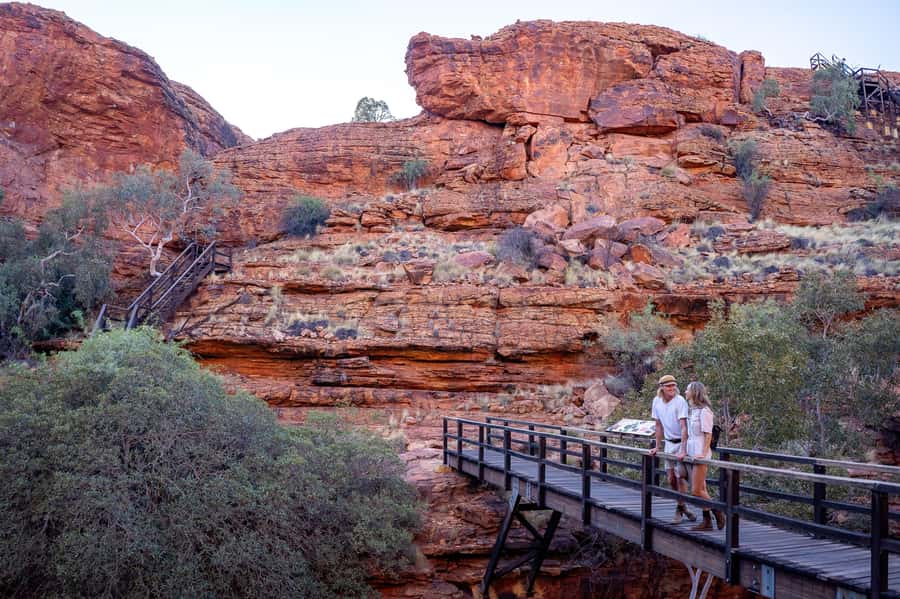
- Kings Canyon’s famous rim walk: Walk past the Lost City, Amphitheatre, Garden of Eden, and the canyon walls.
- A real swag night: Sleep outdoors in a bedroll-style Aussie swag, with a sleeping bag supplied and stars overhead.
- Guides do the hard work: Your guide drives, cooks, explains the area, manages timing, and adjusts the pace when conditions allow.
- Pack light and walk ready: Bring one soft bag or backpack up to 15 kilograms, a small daypack, sturdy shoes, water, sun protection, and a power bank.
Why this Red Centre tour works so well
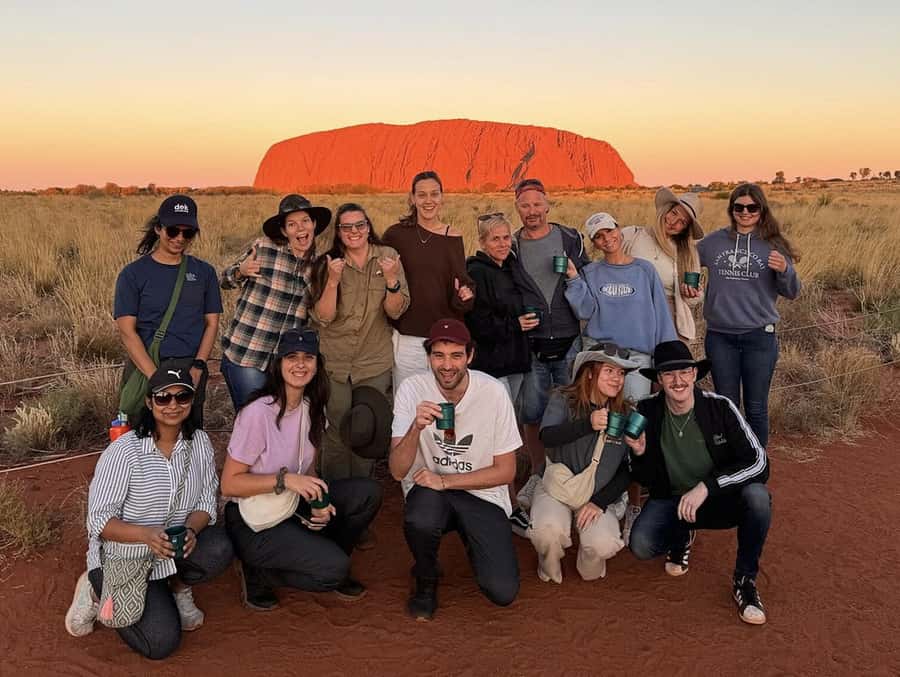
The great strength of this trip is its range. In three active days, you move from the rounded domes of Kata Tjuta to the singular bulk of Uluru, then on to the high sandstone walls of Kings Canyon. Each place has a different shape and mood, so the route never feels like three versions of the same stop.
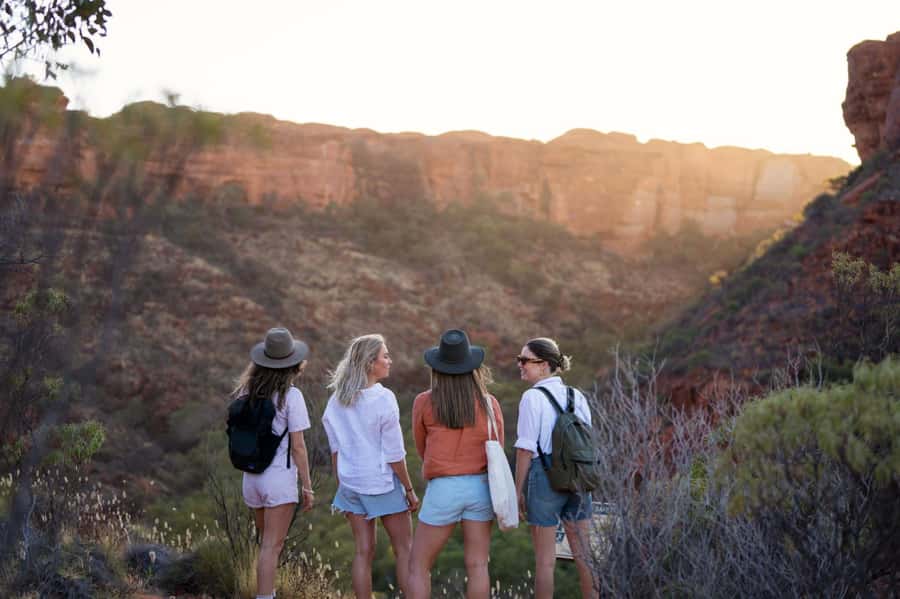
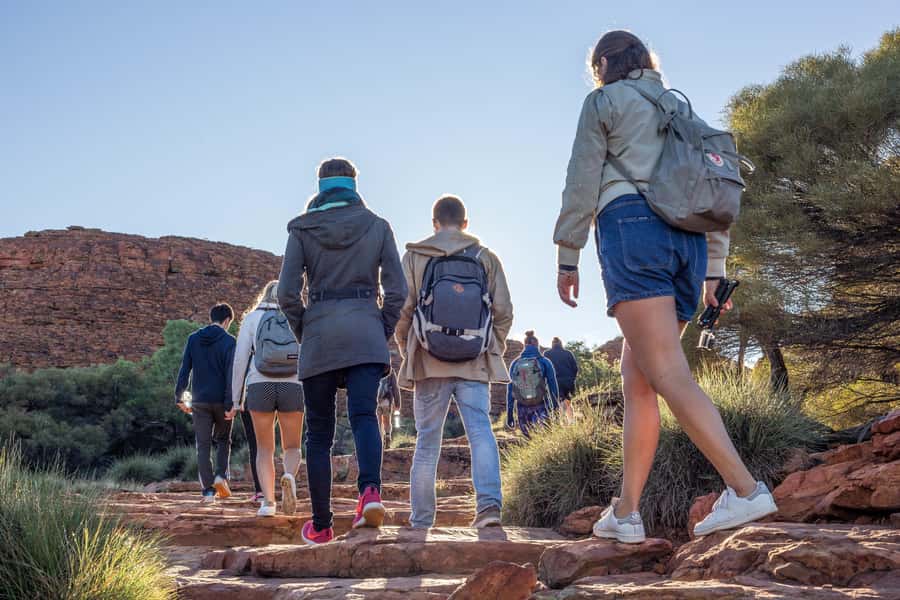
I also like that the tour gives you time on foot. You are not simply driven to a lookout, handed a photo opportunity, and moved along. The Walpa Gorge walk, Uluru base walk, and Kings Canyon rim walk let you feel the scale of the country at walking pace.
The trip is also a practical answer to the Red Centre’s awkward distances. Alice Springs to Yulara takes about 4.5 hours, and the roads between the major sights add plenty more time. Your guide handles the driving in an all-terrain vehicle while you watch the scenery change from the window.
That convenience comes with a trade-off. This is a busy few days, with very early starts and long drives. You should be comfortable walking in heat, carrying water, sleeping outdoors, and helping with the informal camp routine. It is not suitable for children under eight or people with mobility impairments.
A few more Yulara trips worth weighing up
- Uluru: Field of Light Sunrise Tour with Hot Drinks
★ 4.6 · 572 reviews - Uluru 15-Minute Helicopter Experience
★ 4.9 · 548 reviews - Yulara: Uluru & Kata Tjuta 25-Minute Helicopter Experience
★ 4.8 · 536 reviews
Day 1: Kata Tjuta’s domes and Uluru at sunset
If you begin in Alice Springs, pickup is around 6 am. That is an early start, but it gets you moving across the Central Australian countryside and toward Yulara. The drive takes roughly 4.5 hours, with lunch arranged after arrival in the Yulara area.
If you start in Yulara or arrive through Uluru Airport, pickup is much later, between about 1:40 and 2 pm. Your flight must arrive before 1:45 pm, and you need to eat lunch before pickup. There are no food shops or cafes at Ayers Rock Airport, so this small detail matters.
Your first proper walk is at Kata Tjuta, also called the Olgas. The group follows the Walpa Gorge route between huge rounded domes. Kata Tjuta has 36 domes of different sizes, and its broken, clustered form gives you a sharp contrast with Uluru’s single great mass.
This walk is less about reaching a famous summit and more about entering a natural corridor shaped by the domes. Your guide can point out plants, rock formations, and local stories as you walk. Guides such as Greg and Sophie have been praised for explaining Anangu culture, local plants, and the meaning of the country in a clear, engaging way.
Later, you head to the Ewings Lookout sunset area. Uluru changes color as the sun drops, moving through warm reds, oranges, and earthy browns. The view is broad and uncomplicated, which is exactly what you want at sunset: room to watch the rock rather than squeeze through a crowded schedule.
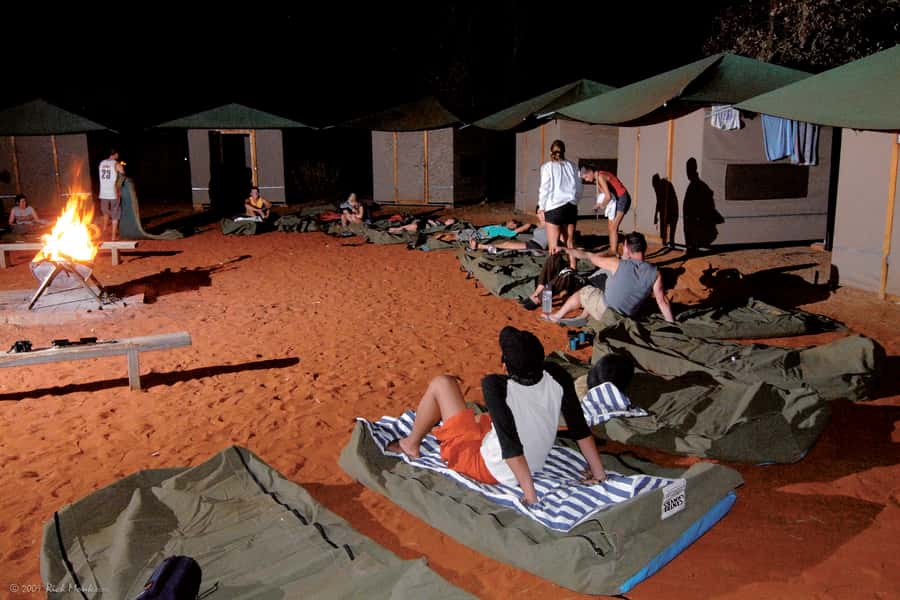
Back at camp, dinner is prepared for the group. Meals are included, and dietary needs can be catered for if you give at least 48 hours notice. The evening usually has a friendly, communal feel, with people eating together, helping where needed, and settling into swags beneath the night sky if conditions permit.
Sleeping in a swag under Central Australia’s stars
A swag is part sleeping bag, part weatherproof bedroll. The supplied swag and sleeping bag make outdoor sleeping far easier than bringing your own camping kit, and several people have found the setup warmer and more comfortable than expected, especially in winter.
You should still understand what you are booking. This is camping with basic shared facilities, not a hotel room. Tents may be available at camp, but you should check the exact arrangement before departure if you prefer walls and a roof. One useful report noted clean showers and toilets and a well-set-up camp, while another recommended a tent for anyone who finds outdoor sleeping less comfortable.
The night sky is one of the trip’s finest extras. Away from city lights, the stars become part of the experience rather than a background detail. You might hear dingoes in the distance, and you will likely notice the quiet in a way that is hard to find in ordinary accommodation.
Bring a torch, insect repellent or a net, warm clothing in winter, and a power bank. Camp power is limited, and the vehicle may not have charging points. A pillow is not included, so pack a small one if you need more comfort.
Day 2: Uluru from sunrise to its cultural center
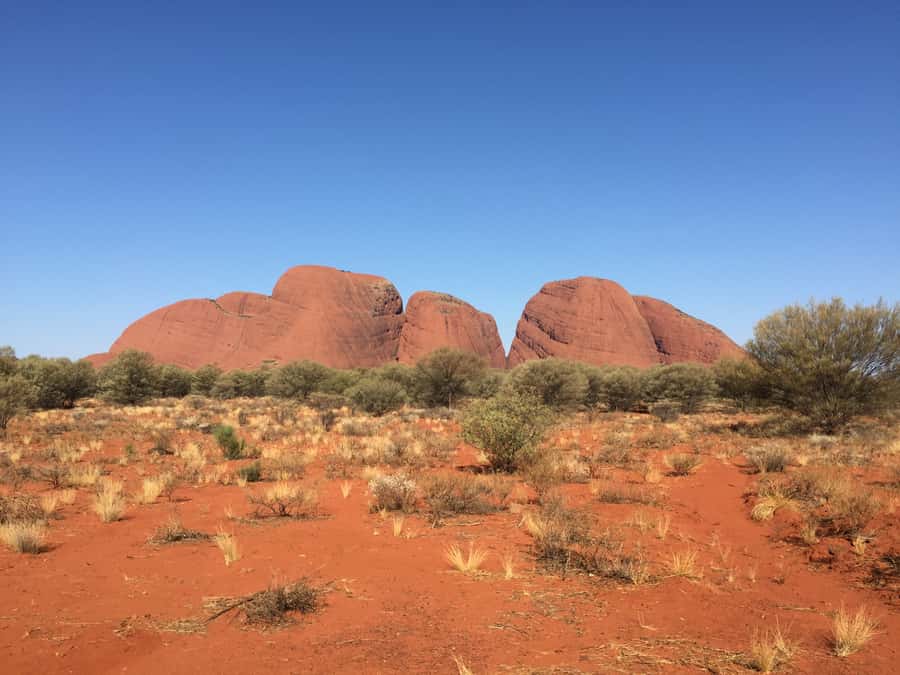
Day 2 starts early, often before dawn. The reward is an Uluru sunrise, when the rock slowly catches the morning light. The changing color is different from sunset, and the cooler air makes this a smart time for walking.
Your guide then takes you to a significant cultural site, where you can see Anangu rock art and hear one of the area’s creation stories. This is an important part of the visit because Uluru is not simply a large natural object. It is a living cultural place for the Anangu people, and the stories, art, and restrictions connected to it deserve respect.
After that, you complete a self-guided full base walk around Uluru. The walk gives you a better sense of the rock’s size than any distant viewpoint. The surface, caves, waterholes, shadows, and changing angles keep the route varied, even though the main subject remains the same.
The base walk also rewards patience. From a distance, Uluru can look smooth and simple. Up close, you notice ledges, grooves, vegetation, small pools, and shaded sections. Take the water requirement seriously. The tour asks you to carry 1.5 liters, and sturdy walking shoes, a hat, and sunscreen are essential.
After lunch, the Cultural Centre offers a more structured look at the region. You can see hand-crafted art by First Nations people from the Western and Central Deserts, and it gives useful context to the country you have just walked through. I would not rush this stop. It helps connect the scenery with living communities and cultural practice.
The afternoon brings another long transfer, this time toward Watarrka National Park and Kings Canyon. You spend the night at the exclusive campsite near the park. This is where the tour’s pace becomes clear: you have seen a great deal, but the main walk at Kings Canyon is still waiting for the morning.
A completely different kind of day out in Yulara:
- Yulara: Uluru Sunrise and Kata Tjuta Day Trip by Bus
★ 4.5 · 469 reviews - Uluru: Sacred Sites & Sunset Tour with Wine & Cheeseboard
★ 4.5 · 450 reviews - Uluru Base Segway Tour at Sunrise
★ 4.9 · 378 reviews - Uluru: National Park Astronomy Tour with Telescope and Photo
★ 4.4 · 357 reviews
Day 3: Kings Canyon’s rim, chasms, and Garden of Eden
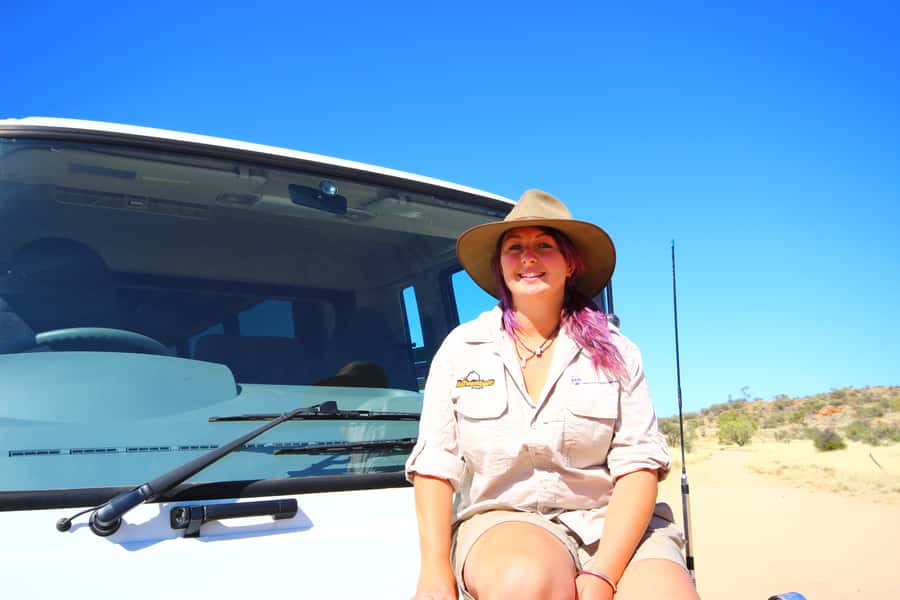
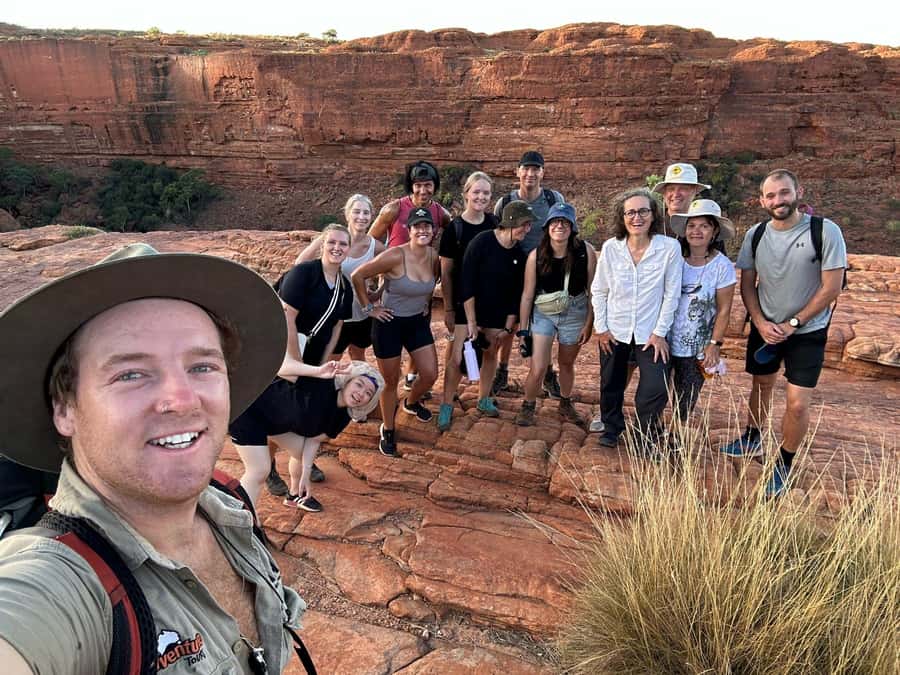
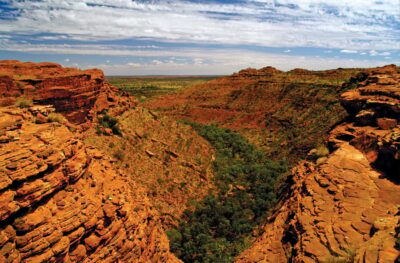
Kings Canyon is the physical high point of the trip for many people. The gorge has sheer sandstone walls and a strong sense of scale that changes as you walk above and through it.
The rim walk takes in the Lost City, the Amphitheatre, the Garden of Eden, and the North and South Walls. The route includes steep sections, including the climb often called Heart Attack Hill. That nickname is a useful warning, not a reason to panic. You need a reasonable level of fitness, and the early start helps keep the hardest walking away from the worst heat.
At the top, the view opens across layered rock and dry country. Then the route shifts into narrower sections, natural amphitheatres, rocky chasms, and the oasis-like Garden of Eden. The changes in form make the walk feel like a sequence of separate rooms cut into the rock.
A good guide matters here. Ryan was praised for staying with a slower walker and checking that she was safe, while other guides have been noted for setting a sensible pace and keeping groups hydrated. That sort of practical care is more valuable than a constant stream of facts on a demanding walk.
After lunch, you drive for about three hours back to Yulara in the late afternoon if you are taking the 3-night version. The 2-night option continues to Alice Springs and arrives at about 6 pm on Day 3. The long return drive can feel tiring, but it also means you have covered the major sights without needing to arrange a separate vehicle.
Choosing the 2-night or 3-night finish
The 2-night tour is the better fit if you need to return to Alice Springs. It ends there at around 6 pm on Day 3, which suits an onward trip or a return to town.
The 3-night version finishes in Yulara at about 9 am on Day 4. That extra night gives you time to choose an optional Yulara activity, such as a Sunset Camel Cruise, Field of Lights, Sounds of Silence, or Wintjiri Wiru drone display. These cost extra.
You can also watch another Uluru sunset for free from a different viewpoint. That is a good choice if you have already spent enough on add-ons or simply want a quieter final evening.
On Day 4, you get a short sleep-in and breakfast at camp. A free 10-minute transfer can take you to Desert Gardens Hotel or Uluru Airport. If your flight is later, you can leave luggage at Desert Gardens Hotel and spend time in Yulara Resort. Regular free shuttles connect the hotel with the airport.
Food, comfort, and the parts that need improvement
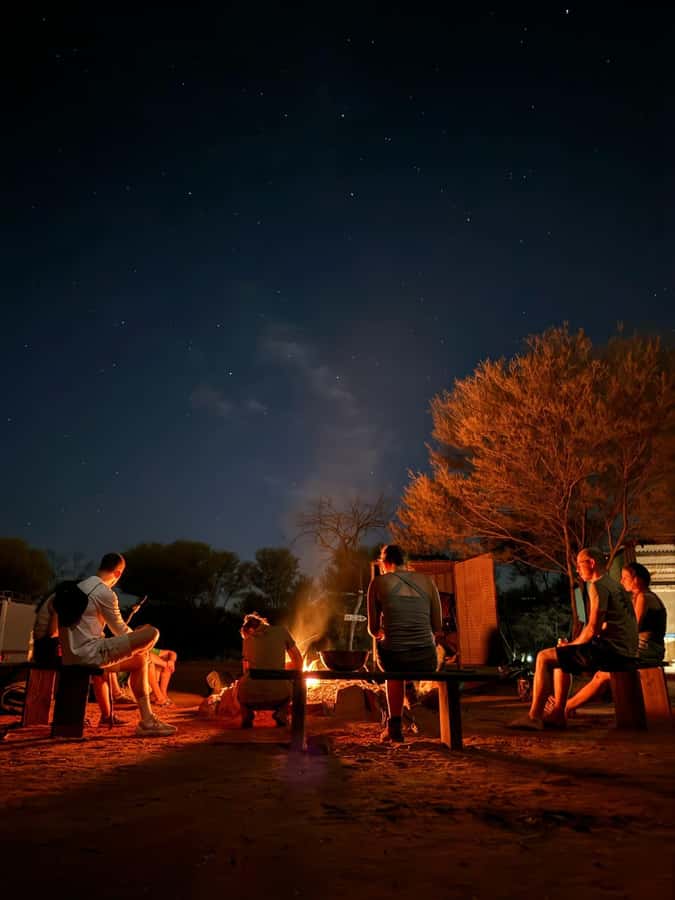
Food is included, which is a major advantage in a remote area. You do not need to shop, carry several days of supplies, or find a restaurant after a long walk. Guides including Simon and Elyse have received strong praise for cooking tasty meals and making sure the group was looked after.
Still, food is the clearest weak spot in the experience. Most meals appear to be straightforward camp fare, and some people have found portions too small. One meal reportedly ran short for people served later, partly because some group members took more than their share. Bring personal snacks, especially if you eat a lot after hiking.
Flies are another reality of the Red Centre. Some meal areas may not keep every fly out, and a fly-net hat can make a real difference. The tour does not list one as included, so bring your own if possible.
Camp facilities can be better than you expect, with clean showers and toilets reported at some sites. The vehicle, however, may be older, and air conditioning has not always been quiet. These are small comforts compared with the scenery, but they matter on a long drive.
The guide can make or break the three days
Your guide is driver, cook, walking leader, safety check, cultural interpreter, and group organizer. That is a lot for one person, and the best guides turn the long hours into part of the fun.
The strongest praise has gone to guides such as Elyse, Greg, Simon, Ryan, Sophie, Tye, Troy, Wayne, Hannah, Alex, Joe, and Tomi. Their strengths include clear organization, cultural explanation, humor, plant knowledge, good food, and attention to slower walkers.
Guide styles can vary. The tour may feel relaxed rather than like a nonstop lecture, so you may want to read a little about Uluru, Kata Tjuta, and Watarrka before you go. That lets you ask better questions and get more from the short cultural stops.
Group atmosphere also matters. The shared cooking, long drives, early alarms, and camp evenings create quick friendships, but they require patience. You will need to help with the simple realities of group camping and respect the fact that everyone has a different walking speed.
Is $548 good value?
At $548, you are paying for more than three park visits. The package includes an all-terrain vehicle, an experienced English-speaking guide, two or three nights of camping, swag and sleeping bag hire, all meals, park entry fees, the Uluru Cultural Centre, and the main walks.
Try pricing the same route independently. You would need a rental vehicle suitable for long outback distances, fuel, accommodation, camping equipment, food, park fees, and careful timing for sunrise and sunset. You would also carry the responsibility for driving after long walks and dealing with remote roads.
The tour will not suit someone who wants a private room, restaurant meals, or a slow schedule. For an active visitor who wants the major sights and does not want to manage the logistics, I think the price is fair. It is especially good value if you are comparing it with hotel stays and separate excursions around Yulara.
Who should book this camping trip?
I would recommend it to you if you want a social, active introduction to the Red Centre. It suits solo visitors, couples, and friends who enjoy walking, shared meals, basic camping, and a full schedule.
It is also a good option if you are traveling without a car. The distances are too large to treat casually, and having an experienced driver removes a major source of stress.
Think twice if you dislike early mornings, long vehicle transfers, flies, shared facilities, or outdoor sleeping. The walks are not presented as accessible, and people with mobility impairments should choose a different way to see the area.
Pack a soft bag, not a hard suitcase. The strict limit is 15 kilograms, plus a small daypack that fits inside the vehicle. Wear your walking shoes from pickup, carry water, and eat before a Yulara departure.
Should you book the Uluru, Kata Tjuta and Kings Canyon tour?
Book it if you want the Red Centre’s three big sights in one well-managed trip and are happy to trade comfort for access, scenery, and a night under the stars. The sunrise and sunset timing, Kings Canyon rim walk, and swag camping are the strongest reasons to go.
I would choose the 3-night version if you want to end in Yulara and have time for one more evening. Choose the 2-night version if Alice Springs is your next stop. Either way, bring snacks, a fly net, warm layers, and realistic expectations about long drives and basic camping. With those details handled, this is a memorable and efficient way to see the heart of Central Australia.
FAQ
How long does the Uluru, Kata Tjuta and Kings Canyon tour last?
The experience is listed as 3 days and 84 hours. The 2-night option finishes in Alice Springs on Day 3, while the 3-night option finishes in Yulara on Day 4.
Where does the tour depart from?
You can depart from Alice Springs, Yulara, or Uluru Airport. Alice Springs pickup is approximately 6 am, while Yulara pickups take place between about 1:40 and 2 pm.
What time must my flight arrive if I depart from Yulara?
Your flight must arrive before 1:45 pm so you can meet the pickup window between approximately 1:40 and 2 pm.
Is lunch included on the first day?
Lunch is included for the Alice Springs departure after reaching the Yulara area. If you depart from Yulara or Uluru Airport, you must eat lunch before pickup.
What walks are included?
The tour includes the Walpa Gorge walk at Kata Tjuta, the full Uluru base walk, and the Kings Canyon rim walk. It also includes visits to the Uluru Cultural Centre and Ewings Lookout.
Where do I sleep?
You camp for two or three nights in an Aussie swag with a sleeping bag supplied. Camps have basic shared facilities, and tent options may be available depending on the arrangement.
Are meals included?
Yes. Breakfast, lunch, and dinner are included during the tour. Dietary requirements can be catered for if provided at least 48 hours before departure.
How much luggage can I bring?
A strict 15-kilogram limit applies. Bring one small to medium-sized soft bag or backpack and a small daypack that can fit inside the vehicle. Oversize luggage is not allowed.
What should I pack?
Bring sturdy walking shoes, a hat, sunscreen, a 1.5-liter water bottle, toiletries, warm clothing in winter, a torch, insect repellent or a net, and a power bank. A pillow is not included.
Is the tour suitable for children or people with mobility impairments?
The tour is not suitable for children under eight or people with mobility impairments. The walks include long distances and steep sections, particularly at Kings Canyon.
Just added around Yulara
- Yulara: Uluru and Kata Tjuta Sunset Helicopter Tour★ 4.9 · 148 reviews
- Uluru: Small Group Guided Tour with Sunset Refreshments★ 4.8 · 190 reviews
- Uluru: Sunset, Sparkling Wine, Cheeseboard & Gourmet BBQ★ 4.4 · 193 reviews
- Best of Uluru – Segway and Walking Tour★ 4.8 · 204 reviews
- Uluru Highlights Small Group Morning Tour + Picnic Breakfast★ 4.8 · 212 reviews
- Uluru 1.5-Hour Sunset Tour with Sparkling Wine & Cheeseboard★ 4.3 · 226 reviews
- Uluru: Guided Walking Tour at Sunrise with Light Breakfast★ 4.6 · 256 reviews
- From Yulara: Uluru Tour and Sunset BBQ★ 4.6 · 320 reviews
Uluru & Red Centre Tours, compared.
Ayers Rock Day Trip from Alice Springs Including BBQ Dinner
Read our review →
Uluru: Field of Light Sunrise Tour with Hot Drinks
Read our review →
Kings Canyon: Full-Day Tour from Ayers Rock Resort
Read our review →
Yulara: Uluru & Kata Tjuta 25-Minute Helicopter Experience
Read our review →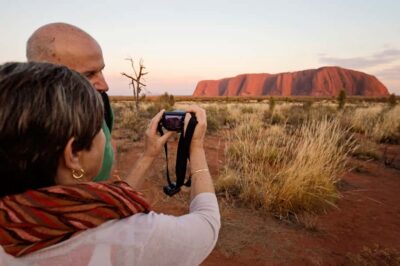
Yulara: Uluru Sunrise and Kata Tjuta Day Trip by Bus
Read our review →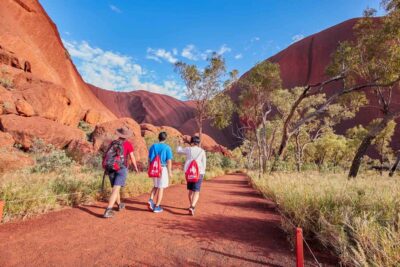
Uluru: Sacred Sites & Sunset Tour with Wine & Cheeseboard
Read our review →Browse the lists this tour appears in