
Reviewed · ULURU & RED CENTRE TOURS
Uluru Private Tour Aboriginal guided option
Uluru rewards slow attention. This four-hour private tour combines major viewing points, short walks, rock art, waterholes, and cultural stories with the flexibility of a vehicle reserved for your group. The operator is Australian-owned and works with local Anangu guides when one is requested and available.
I especially like the chance to hear about Uluru from someone connected to the local Aboriginal community, and I like the private format for families or groups who want to set their own pace. The main catch is that an Anangu guide is available on request, not guaranteed, and the A$37 national park entry fee per person is extra.
In This Review
- Key things to know before booking
- Why this private Uluru tour is different
- Four hours with Uluru, not just a photo stop
- Mutitjulu Waterhole and the cave with rock art
- Mala Walk, where the stories come into focus
- Kuniya Walk and the meaning of place
- Kata-Tjuta Dunes Viewing Area at sunrise or sunset
- The value of an Aboriginal guide
- What the guides do well
- Practical costs, timing, and group size
- Who should book this experience
- Should you book the Uluru private tour?
- FAQ
- Where does the tour take place?
- How long does the tour last?
- How many people can join the private tour?
- Can I choose sunrise or sunset?
- Is pickup available?
- Is an Aboriginal guide guaranteed?
- Which places are included?
- What is included in the price?
- How much is national park entry?
Key things to know before booking
- An Anangu guide can be requested: This is the tour’s most distinctive feature, but availability is not promised for every departure.
- You choose sunrise or sunset: The half-day format gives you a dramatic time of day without taking up your whole day.
- The route covers several major Uluru sites: Expect Mutitjulu Waterhole, Mala Walk, Kuniya Walk, rock art, caves, and a dunes viewing area.
- The vehicle is private for up to six people: That makes the price easier to justify for a full group than for one or two passengers.
- The cultural focus is central: Guides discuss Anangu language, traditions, stories, and the meaning of rock features, not just geology and photo stops.
- Bring your own meal: Water and air-conditioning are included, but coffee, tea, breakfast, and lunch are not.
Why this private Uluru tour is different
Many Uluru outings are built around a fixed group schedule. This one is designed for one party of up to six, which changes the feel of the day. You are not joining a large coach group, and the guide can speak directly with your family or friends instead of addressing a crowd.
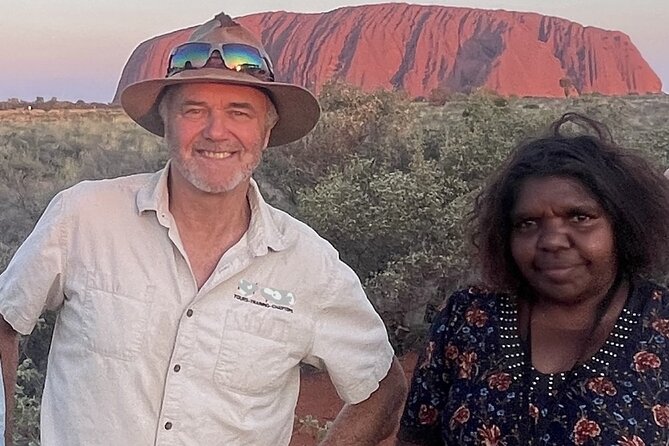
The operator uses local guides who have lived in the region for years and work alongside the Aboriginal community. That matters here. Uluru is not simply a large red rock with good sunset colors. It is a sacred place with continuing cultural importance, and the most worthwhile part of a visit is learning how the Anangu understand and care for it.
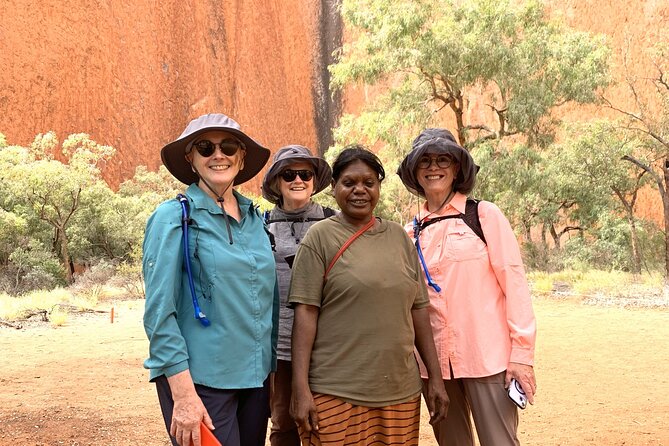
You can request an Anangu guide for the day. When that is possible, you may hear cultural stories and language directly from a local Aboriginal custodian. Samantha and Barbara are two Anangu guides praised for adding a special perspective, while guides such as Matt, Rick, and Ruben have been singled out for their care, humor, and clear explanations.
Still, keep expectations precise. The Aboriginal guided element is an option, not a fixed guarantee. If having an Anangu guide is the main reason you want to book, ask about availability before you commit.
More Aboriginal cultural tours:
- Aboriginal Homelands Experience
★ 5.0 · 39 reviews - From Perth: Wave Rock, York and Aboriginal Cultural Tour
★ 4.6 · 498 reviews - Wave Rock, York and Aboriginal Cultural Day Tour from Perth
★ 4.5 · 393 reviews
Four hours with Uluru, not just a photo stop
The tour lasts about four hours and can begin at sunrise or sunset. Start times vary, so you should confirm the exact pickup time and plan your breakfast or lunch around it.
A sunrise departure means eating beforehand. A sunset departure means having lunch before pickup. The tour provides bottled water, but it does not provide coffee, tea, breakfast, or lunch. That sounds basic, yet it is easy to forget when preparing for an early start in the desert.
The private air-conditioned vehicle is useful in the Red Centre. You will drive to and around Uluru, stopping to walk and look closely at features that can be missed from a distant viewpoint. Fuel and GST are included, so there are no separate fuel charges to calculate.
The tour is priced at $788.97 per group of up to six. For six people, that works out to about $131.50 per person before park entry. Add A$37 per person for the national park, and the total becomes a much better deal for a full family or friend group than for a couple traveling alone.
For two people, the cost is harder to defend unless you place a high value on privacy and a tailored pace. A shared outing may cost less, but it will not offer the same one-group setting.
Mutitjulu Waterhole and the cave with rock art
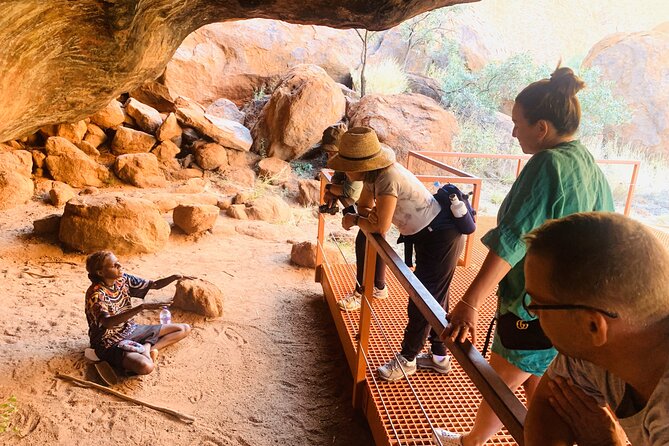
The first main stop is Mutitjulu Waterhole, with about an hour set aside for the visit. You walk through a narrow corridor toward a cave with native rock art and shaded areas where Anangu people traditionally met and shared stories.
This is a strong opening because it brings you close to Uluru’s human story. The setting is not just scenic. It shows how water, shade, shelter, art, and community life were connected in this dry country.
Your guide explains the stories linked to the area and the people who have gathered there. You may also learn how stories passed from older generations to younger ones helped teach practical lessons about life.
The walk is free once you are inside the park, but the total time is not a promise that you will spend every minute walking. The pace depends on your group and the guide. The tour is suitable for most people, and one guide, Matt, was praised for helping a group ranging from age 14 to 85, including a person with mobility issues.
That does not mean every section is easy for every person. The supplied information does not give trail distances or detailed surface conditions, so anyone with mobility concerns should discuss them with the operator before booking. A private tour gives you more room to communicate your needs, which is a real advantage.
Mala Walk, where the stories come into focus
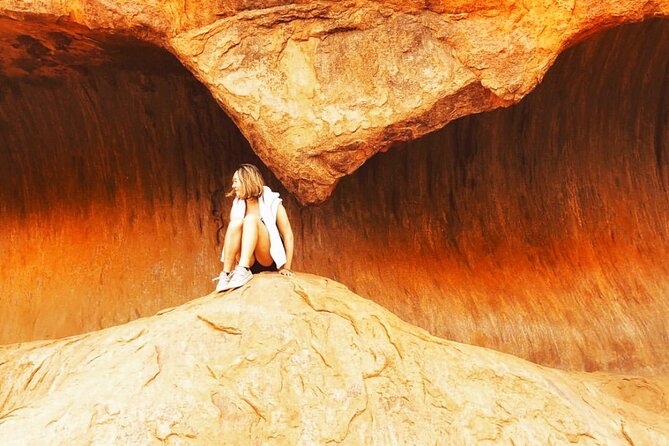
Mala Walk takes about an hour and brings you to caves, rock formations, and changing colors around Uluru. This is where a guide can turn a walk into something far more useful than a string of viewpoints.
The tour’s cultural explanations cover both past and present Aboriginal life. You may hear about the meaning of particular features, the stories connected to them, and the continuing place of Anangu culture in the region.
I like that the route does not treat culture as a short introduction before moving on to scenery. The cultural material is woven into the places you are looking at. Caves become meeting spaces. Rock forms become part of teaching stories. The walk becomes a lesson in how to read Uluru.
Matt received repeated praise for getting children involved, which makes this stop a good fit for families. His style was described as engaging, funny, and easygoing. That sort of guide can make a difference when young people are deciding if a cultural walk is interesting or simply another lecture.
The drawback is that the experience depends heavily on the person leading your group. The operator has several guides, and the strongest praise centers on people who explain clearly and adapt to different ages. You should see that as a reason to request your preferred style, not as a guarantee of a particular guide.
A few more Uluru trips worth weighing up
- Segway the FULL base of Uluru
★ 5.0 · 449 reviews - Uluru (Ayers Rock) Sunset + Outback Barbecue Dinner & Star Talk
★ 4.0 · 426 reviews - Full Uluru Base Walk at Sunrise Including breakfast
★ 5.0 · 408 reviews - Kings Canyon Day Trip from Ayers Rock (Uluru)
★ 4.5 · 380 reviews
Kuniya Walk and the meaning of place
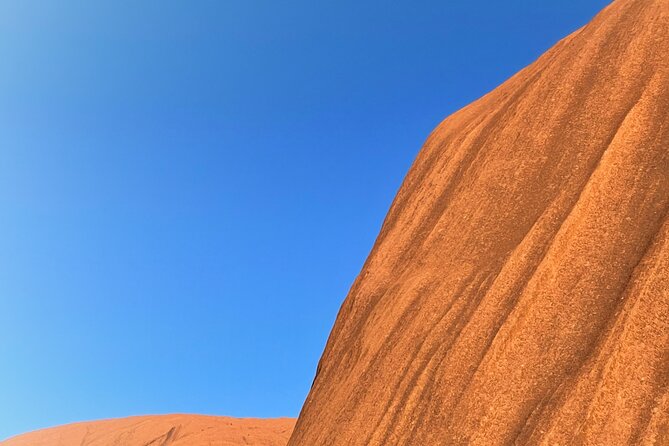
Kuniya Walk is another hour-long stop. Each section of Uluru carries different ancestral stories, and this walk helps connect the physical features to those teachings.
The supplied details do not name every feature you will see or provide a full script of the stories, which is appropriate. Some Aboriginal knowledge is not a simple collection of facts for public display. A good guide will explain what can be shared respectfully and help you understand why certain places matter.
This stop also gives you a chance to compare the character of different parts of Uluru. The rock is not one uniform wall. Its caves, colors, curves, shaded areas, and water-linked spaces create different settings, each with its own cultural meaning.
If you are hoping for a long, strenuous hike, this is not that kind of outing. It is a half-day introduction built around several shorter visits and drives. If you want focused interpretation without spending an entire day on foot, that design works well.
Kata-Tjuta Dunes Viewing Area at sunrise or sunset
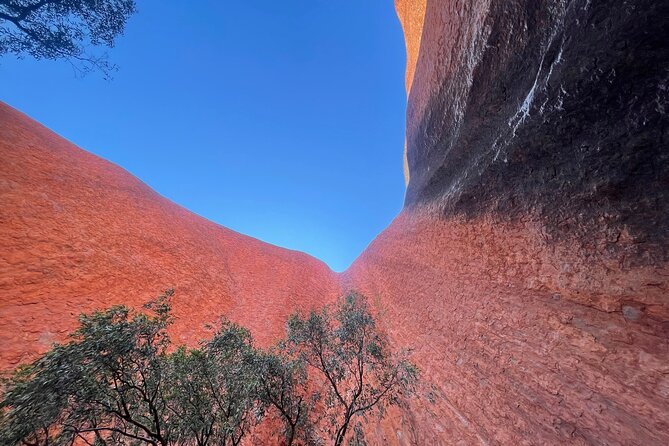
The dunes viewing area is planned for about 45 minutes. From here, you see Uluru across open desert scenery, with the horizon spreading beyond the rock.
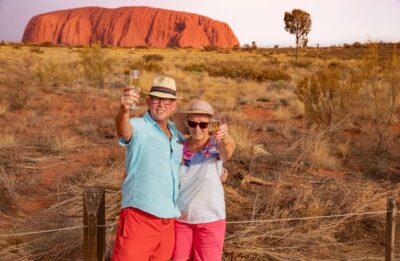
At sunset, the changing light can turn Uluru red and intensify its form for a few minutes. The appeal is not only the color. The open view lets you see how the monolith relates to the broad desert around it.
For a sunrise departure, the same broad setting offers a quieter start to the day, with the rock changing as the light grows. The experience is likely to feel different from sunset, but the tour does not promise a particular color or weather condition. Desert skies are part of the show, and they do not take requests.
The viewing stop is a good reason to carry a camera, but do not let photography become the whole point. The cultural walks are the part that gives the views meaning. A photo shows what Uluru looks like. A guide can help you understand why the place matters.
The value of an Aboriginal guide
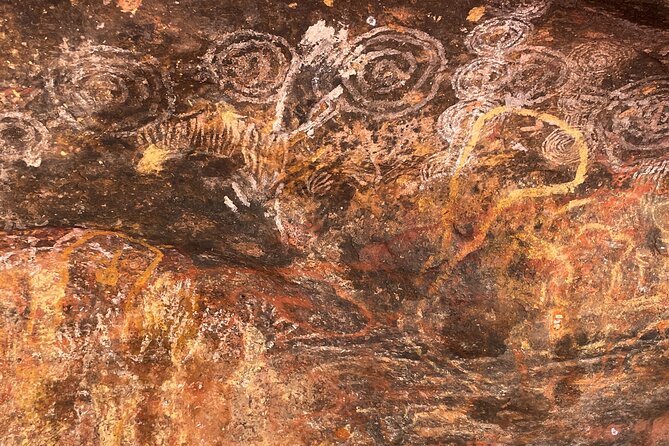
The optional Anangu guide is the feature that can make this tour more than a well-organized sightseeing circuit. Samantha and Barbara were praised for sharing First Nations culture, language, and a direct local perspective on Uluru.
Barbara, in particular, was described as gentle and deeply informed about the area. Samantha was credited with adding more context to the Aboriginal history and helping the group understand what it was seeing.
That direct perspective is valuable because Uluru has often been presented to outsiders mainly as a scenic attraction. A local Aboriginal guide can place the rock within living culture, ancestral stories, and present-day responsibilities.
There is an important practical limit: the Anangu guide comes on request and depends on availability. The main guide will still lead the outing if an Anangu guide cannot join. Matt, Rick, and Ruben were all praised for explaining the region with respect and for taking care of their groups.
When booking, be clear about what you want. If you need an Anangu guide, ask before paying. If you mainly want a private cultural tour with strong local interpretation, the regular guide may still provide a rewarding visit.
What the guides do well
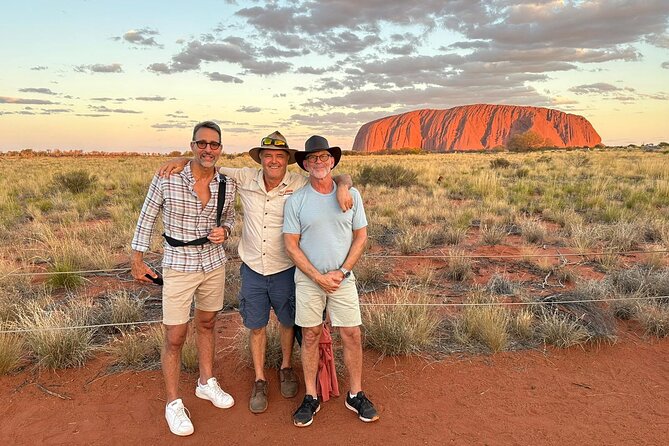
The strongest part of the experience is the human element. Rick was praised for being cordial and sharing a memorable visit. Ruben was noted for being kind and attentive, including making sure the group had enough water.
Matt appears often in the feedback, and for good reason. He was described as charismatic, funny, accommodating, and able to involve both children and older adults. He also helped make an anniversary feel special, which suggests that the private setup can work for celebrations as well as ordinary sightseeing.
The most important quality is respect. A guide who treats Anangu culture as a living tradition, rather than a colorful side note, changes the tone of the whole visit. You want explanations that help you look more carefully and behave more thoughtfully around sacred places.
No guide can control the heat, clouds, or how crowded a viewpoint may feel. What the guide can control is the quality of the explanation, the care shown to your group, and the way the tour connects the stops. That is where this experience earns its strongest praise.
Practical costs, timing, and group size
The advertised price is $788.97 for up to six people. National park entry is separate at A$37 per person, and the pass is valid for three days. That three-day validity can help if you are staying in the area and plan another park visit during that period.
Private transport, bottled water, fuel surcharge, GST, and an air-conditioned vehicle are included. Coffee and tea are not included, and you should eat breakfast before a sunrise tour or lunch before a sunset tour.
Pickup is offered, but the exact pickup details and start time are not fixed in the information provided. Confirmation is sent within 48 hours of booking, subject to availability.
The activity is private, so only your own group participates. Most people can take part, but detailed accessibility information is not provided. If someone in your group has mobility needs, mention that early. The private setting may allow the guide to be more accommodating, but you should not assume every walking section will be effortless.
The booking is non-refundable and cannot be changed for any reason. That makes it especially important to confirm your dates, group size, desired start time, and possible Anangu guide before you pay.
Who should book this experience
I would choose this tour for a family, a group of friends, or a couple who care about cultural interpretation and want a private vehicle. It is also a good choice for mixed-age groups because the guide can adjust explanations and pauses more easily than a large scheduled group.
It suits you if you want to see several key Uluru areas in half a day, rather than spend a full day on one long walk. The combination of driving, short walks, caves, waterhole, rock art, and a sunset or sunrise viewpoint gives you a broad first look.
Families may especially appreciate the guides’ ability to involve children. Couples celebrating an anniversary may value the private arrangement and the possibility of a more personal pace.
I would think twice if your only goal is the cheapest possible sunset view. The price is significant for a small party, and the park fee is extra. I would also pause if your main expectation is a guaranteed Aboriginal guide, since that element depends on availability.
Should you book the Uluru private tour?
Book it if you can fill most of the six seats and want Uluru explained through Anangu culture, local stories, and close-up walks. The private format, air-conditioned vehicle, flexible sunrise or sunset choice, and strong guide care make the cost easier to justify for a full group.
Before paying, ask whether an Anangu guide can join your chosen date and confirm pickup and start time. If that request is not possible, the tour can still be worthwhile with a local guide such as Matt, Rick, or Ruben, but you should decide based on the entire experience rather than assuming the Aboriginal guide is guaranteed.
For a small group on a tight budget, compare the price carefully. For a family or group of friends seeking a respectful, personal introduction to Uluru, this is one of the better uses of a half-day in the park.
FAQ
Where does the tour take place?
The tour takes place at Uluru in Australia and travels through Uluru-Kata Tjuta National Park.
How long does the tour last?
The experience lasts approximately four hours.
How many people can join the private tour?
The price covers one private group of up to six people.
Can I choose sunrise or sunset?
Yes. The tour offers a half-day sunrise or sunset option, although start times may vary.
Is pickup available?
Yes. Pickup is offered.
Is an Aboriginal guide guaranteed?
No. You can request an Anangu Aboriginal guide, but availability on the day is not guaranteed.
Which places are included?
The tour includes Mutitjulu Waterhole, Mala Walk, Kuniya Walk, caves with rock art, a dunes viewing area, and a drive to and around Uluru. The Indigenous Culture Center may be included on request.
What is included in the price?
Private transportation, bottled water, the fuel surcharge, GST, and an air-conditioned vehicle are included.
How much is national park entry?
National park entry costs A$37 per person. It is purchased on arrival, and the ticket is valid for three days.
Just added around Uluru
- 3-Day Uluru Kata Tjuta Kings Canyon Outback Safari ex. Ayers Rock★ 5.0 · 27 reviews
- 4 Day Uluru Kata Tjuta Kings Canyon West MacDonnell ex.Ayers Rock★ 5.0 · 32 reviews
- Aboriginal Homelands Experience★ 5.0 · 39 reviews
- Uluru Audio Tour App★ 5.0 · 45 reviews
- Mt Conner 4WD Small Group Tour from Ayers Rock Resort inc Dinner★ 5.0 · 47 reviews
- Uluru By Segway – Self Drive your Car to Uluru★ 5.0 · 65 reviews
- Alice Springs School of the Air Guided Tour Ticket★ 5.0 · 66 reviews
- Uluru: Sacred Sites Tour + Sparkling at Sunset & BBQ Dinner★ 4.5 · 82 reviews
Uluru & Red Centre Tours, compared.
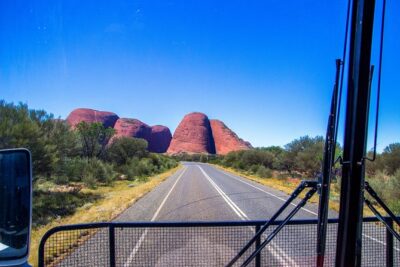
Ayers Rock Day Trip from Alice Springs Including BBQ Dinner
Read our review →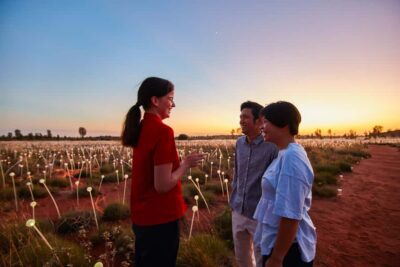
Uluru: Field of Light Sunrise Tour with Hot Drinks
Read our review →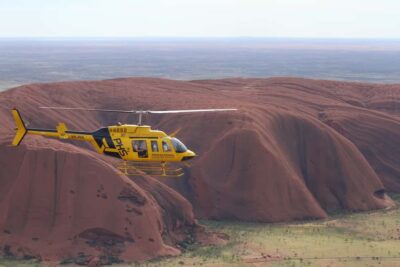
Kings Canyon: Full-Day Tour from Ayers Rock Resort
Read our review →
Yulara: Uluru & Kata Tjuta 25-Minute Helicopter Experience
Read our review →
Yulara: Uluru Sunrise and Kata Tjuta Day Trip by Bus
Read our review →
Uluru: Sacred Sites & Sunset Tour with Wine & Cheeseboard
Read our review →Browse the lists this tour appears in