
Reviewed · HISTORICAL TOURS
Cairns History Walking Tour
Cairns is more than a gateway to the reef. This 90-minute walking tour gives you a useful introduction to the city through Aboriginal culture, colonial history, architecture, art, and local stories. I like the small maximum of 12 people, which should make it easier to hear the guide and ask questions. I also like the route’s range, from traditional owners and outdoor Aboriginal artworks to pirates, the opium trade, wartime Cairns, and early Chinese communities.
The main consideration is that this is a compact city walk, not a full historical seminar. Each stop lasts about 5 to 10 minutes, so some subjects are touched on rather than explored at length. You will also be outside for the whole tour, and weather can affect the experience. Still, at $37.98 per person, it offers a practical way to get your bearings before spending time on the reef or in the rainforest.
In This Review
- Key points to know before you book
- Why a short history walk improves a Cairns stay
- Meeting at Cairns Museum and looking back 40,000 years
- Aboriginal art and colonial change at Cairns Art Gallery
- The Esplanade Lagoon, reef, rainforest, and pirates
- Early government outside the Mulgrave Shire building
- War, memory, and the Reef Hotel Casino
- Bolands Centre, steamships, and early hotel life
- Chinatown and the Chinese story on Grafton Street
- Hides Hotel and the return to the museum
- What the guides add to the walk
- Is $37.98 good value for 90 minutes?
- Practical details before you go
- Who should book this Cairns walk?
- Should you book the Cairns History Walking Tour?
- FAQ
- How long does the Cairns History Walking Tour last?
- Where does the tour start?
- Where does the tour finish?
- How many people can join the tour?
- Is admission to the stops included?
- What happens if the tour is canceled because of weather?
Key points to know before you book
- Small group of 12 maximum: The limited group size should make the talk more personal and help you follow the guide on busy city streets.
- About 90 minutes on foot: The route covers central Cairns at an easy pace, with short talks at eight points of interest.
- Starts at Cairns Museum: You meet at 93/105 Lake Street in Cairns City and finish back at the same place.
- History reaches back 40,000 years: The tour places modern Cairns in the story of the traditional owners, not only the colonial settlement.
- Wide subject range: Expect Aboriginal art, gold rush history, early government, hotels, war, Chinese settlement, pirates, and the opium trade.
- Strong customer rating: The tour is rated 4.9 out of 5, with 98 percent recommending it.
Why a short history walk improves a Cairns stay
Many people arrive in Cairns with a boat trip, a reef excursion, or a rainforest day already in mind. That is sensible, but it can leave the city itself looking like a launch pad rather than a place with its own story.
This walk fixes that. You get a quick explanation of why Cairns developed where it did, how the town grew around trade and government, and how Aboriginal, Chinese, colonial, and wartime stories overlap. I like that the route does not treat history as a list of old buildings. It connects buildings and public art to larger subjects such as land, commerce, migration, and conflict.
The tour also helps you read the city during the rest of your stay. After hearing about the former government headquarters, early hotels, Chinatown, and the war memorial, you can pass those places again with more context. That is useful in Cairns, where many historic clues sit among newer shops, restaurants, hotels, and visitor facilities.
You should expect a walking talk rather than entry into a series of museums. Admission is listed as free at each stop, and the value comes from the guide’s explanation. The walk is especially useful at the start of a visit, when you want a clear picture of the city before choosing where to eat, shop, or explore.
More history tours:
- Ultimate Melbourne Walking Tour: History, Laneways & Culture
★ 5.0 · 1,451 reviews - Puffing Billy Railway: Heritage Steam Train Journey
★ 4.6 · 1,195 reviews - Morning World Heritage Cruise on the Gordon River from Strahan
★ 5.0 · 1,193 reviews
Meeting at Cairns Museum and looking back 40,000 years
The tour begins outside Cairns Museum at 93/105 Lake Street. This is a fitting starting point because the first discussion covers the area as a meeting place for traditional owners and colonial settlers.
That opening matters. It places the history of Cairns far earlier than the arrival of European settlers. You will hear about a story reaching back at least 40,000 years, then move toward the changes brought by colonial settlement. That order gives you a better foundation than starting with the first government buildings or commercial businesses.
The guide also introduces the city’s setting and its connection to the reef and rainforest. The point is not simply that Cairns is near famous natural attractions. It is that the environment shaped settlement, work, travel, and the city’s identity.
Allow about 10 minutes here. Since the tour begins at the museum but does not list museum admission as part of the walk, you should think of this stop as an outdoor orientation rather than a museum visit. If you want to spend time inside the museum, plan that separately.
Aboriginal art and colonial change at Cairns Art Gallery
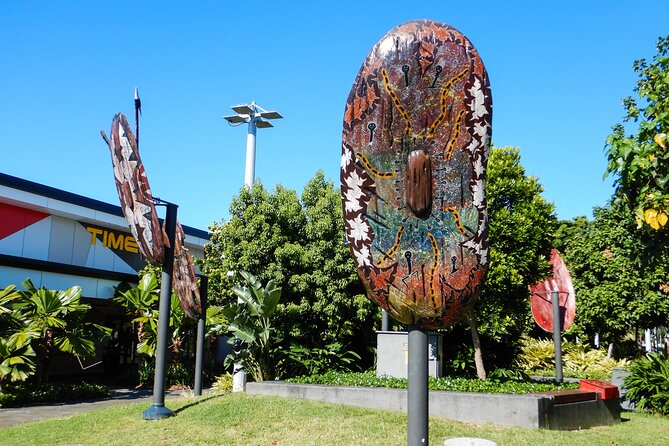
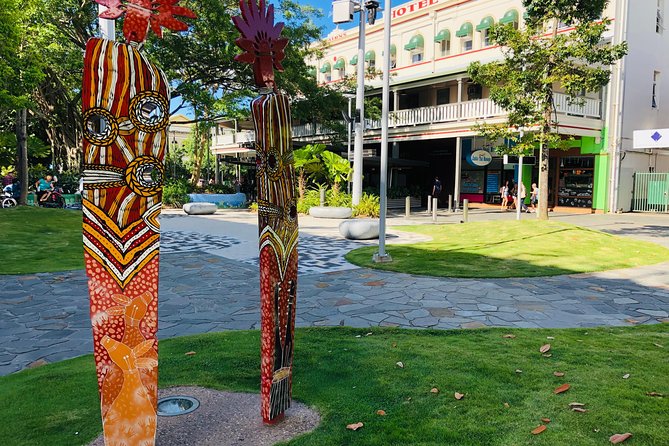
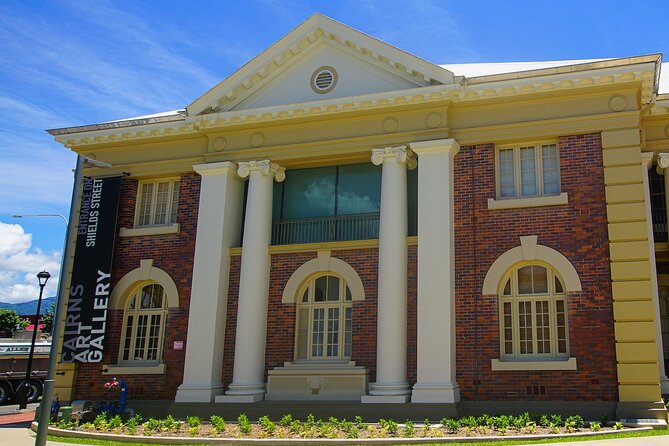
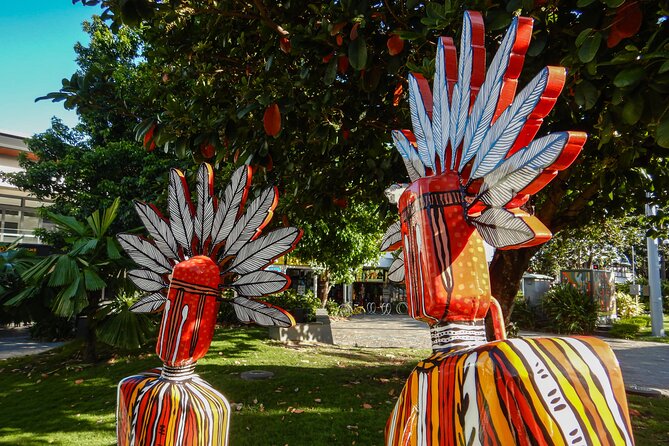
The next stop is Cairns Art Gallery, where the conversation turns to public art and the growth of the colony. A key detail here is the Shields Street traditional Aboriginal shields street art by Paul Bong.
This is one of the tour’s more useful features because it brings Aboriginal culture into the modern city rather than confining it to a distant or abstract past. Public art gives you something visible to examine while the guide explains its meaning and place in Cairns.
The stop also covers the gold rush and the establishment of the colony. That pairing shows how commerce helped drive Cairns’ development. You will also hear about the Public Curators building, now connected with the Cairns Regional Gallery. Architecture becomes evidence here, not just decoration.
The talk lasts about 10 minutes. That is enough to point out important features and explain the main story, but not enough for a detailed art lecture. If Aboriginal art is your main interest, treat this as an introduction and allow extra time elsewhere in Cairns to explore more on your own.
The Esplanade Lagoon, reef, rainforest, and pirates
At the Cairns Esplanade Lagoon, the guide discusses the reef and rainforest as World Heritage Sites. The tour also covers early settlers and pirates, which gives this stop a surprisingly broad reach.
The Esplanade is a good place to connect Cairns’ modern visitor life with its older setting. The lagoon is closely associated with leisure and tourism, while the reef and rainforest represent the natural attractions that draw people to the region. The historical discussion helps explain why these places matter beyond their postcard appeal.
The pirate stories add a less polished side to early coastal life. Along with the discussion of settlers, they suggest that Cairns was shaped by trade, movement, risk, and opportunism, not simply by orderly town planning.
This stop is listed at about 10 minutes. Because it is outdoors, conditions will affect how comfortable you are. One customer noted that a tour became cold and windy, so bring a light layer even if the day begins warm. Cairns weather can change, and a short walk is more enjoyable when you are not distracted by the elements.
More walking tours:
- Cairns: Night Walk in Cairns Botanic Gardens
★ 4.8 · 86 reviews - Sydney Opera House Official Guided Walking Tour
★ 4.5 · 3,770 reviews - From Sydney: Blue Mountains Tour with Waterfall Walk & Lunch
★ 4.8 · 2,400 reviews - Sydney The Rocks Guided Walking Tour
★ 5.0 · 1,546 reviews
Early government outside the Mulgrave Shire building
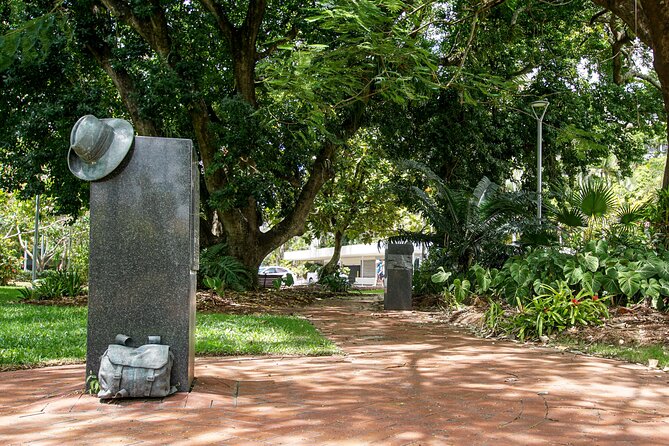
The Cairns Tourist Information Centre is the next point, where the guide discusses early government in front of the Mulgrave Shire building. This building served as the original local government headquarters for the colony.
For me, this is the kind of stop that makes a city walk worthwhile. A government building can look ordinary until you know what took place there and why it mattered. The talk gives you a clearer sense of how Cairns was administered as the settlement grew.
The location also provides a useful contrast with the earlier stops. You move from traditional meeting places and public art to the formal machinery of colonial government. That progression helps explain how authority was established and how the new settlement was organized.
Expect another 10-minute discussion. If you prefer a tour packed with grand monuments, this stop may feel modest. Cairns’ story is often found in working buildings and public spaces rather than in monumental architecture, and the guide’s interpretation is important here.
War, memory, and the Reef Hotel Casino
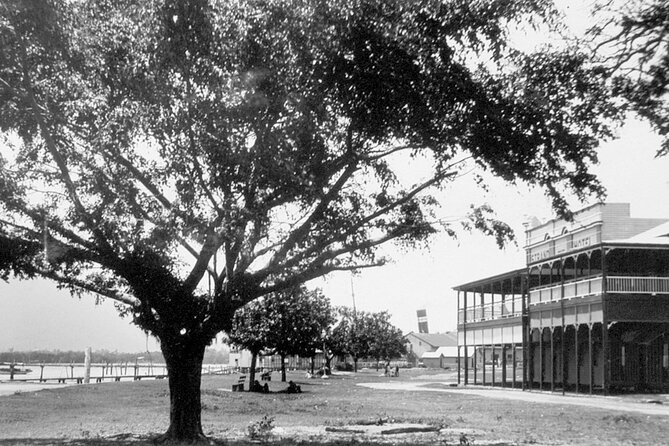
The route continues to the Reef Hotel Casino and the war memorial beside it. Here, the guide explores the role of war in Cairns life, with special attention to World War II.
This stop adds an important layer to the city. Cairns was not only a place of trade, administration, and tourism. War affected daily life, the movement of people, and the city’s wider role in the region. The memorial provides a direct place to discuss that past.
The location is also a reminder that old and new Cairns sit side by side. A war memorial beside a modern casino may seem like an odd pairing, but that contrast is useful. It shows how the city has changed while still holding onto physical reminders of earlier periods.
The talk lasts about 10 minutes. You should expect a concise explanation rather than a military history lesson. If wartime history is especially important to you, ask questions during the stop while the subject is fresh.
Bolands Centre, steamships, and early hotel life
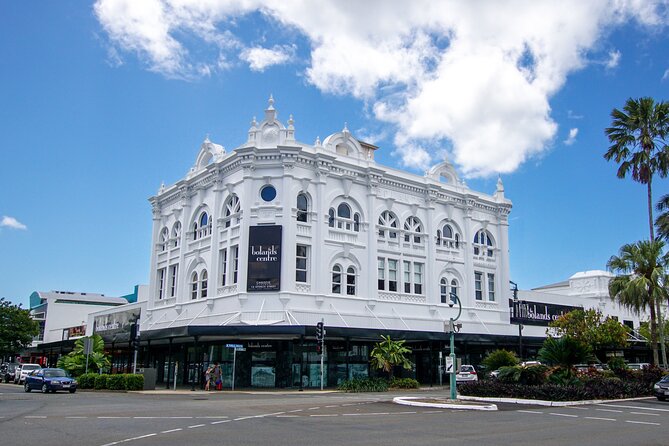
At The Chambers, the guide looks toward the historic Bolands Centre, described as the first department store in Cairns. The discussion also includes the Adelaide Steamship Company and the Central Hotel.
This section brings commercial life into focus. A department store tells you about local buying habits and the town’s growing economy. The Adelaide Steamship Company points to the importance of shipping and coastal links. The Central Hotel reflects the social role of hotels in an early colonial settlement.
I like this part because it moves away from official history and toward everyday life. Businesses, transport companies, and hotels helped make Cairns function. They served people arriving, working, trading, and passing through.
You will view these sites from a position along the route rather than spend a long time inside each one. That keeps the walk moving, but it also means you should pay attention to the guide’s descriptions and look carefully at the buildings around you. The history may be easy to miss if you are focused only on modern storefronts.
Chinatown and the Chinese story on Grafton Street
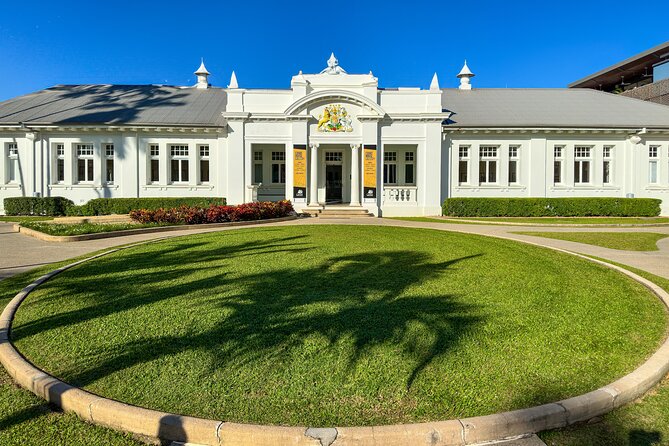
At Crystal Ball Bookstore, the walk reaches the Chinatown exhibit in front of the shop. The guide discusses the important role of Chinese communities in Cairns history and explains why Grafton Street was the heart of Chinatown.
This is one of the most valuable parts of the route because Chinese history is central to understanding the development of many Australian towns. The discussion adds migration, trade, and community life to the story already introduced through government, shipping, hotels, and the gold rush.
The Chinatown exhibit gives the subject a physical reference point. You are not simply hearing about a group that once lived and worked in Cairns. You are looking at a reminder of how a particular street functioned as a community center.
This stop is shorter, about five minutes, so it will be a brisk introduction. If you have a strong interest in Chinese Australian history, you may wish you had more time. Still, it gives you a reason to look more closely at Grafton Street and ask the guide for additional details.
Hides Hotel and the return to the museum
The final stop is Hides Hotel Cairns, followed by a return to the front of Cairns Museum. The guide discusses the School of Arts and its role in the founding colony, then turns to the history of Hides Hotel and the part historic hotels played in early settlement life.
This ending brings together several themes from the walk. The School of Arts points to education, culture, and community organization. Hides Hotel returns you to the world of early accommodation and social meeting places. Hotels were not only places to sleep. In a growing settlement, they could be tied to travel, business, conversation, and local life.
The final discussion lasts about five minutes, and the activity ends back at the starting point. That is convenient if you have plans afterward, especially because you finish in central Cairns near shops, food, and other city attractions.
The circular route is also easy to manage. You do not need to arrange a pickup or figure out public transport from a distant endpoint. The meeting point is near public transportation, and most people can participate, according to the tour details.
What the guides add to the walk
The quality of a short history walk depends heavily on the person leading it. Here, Peter received particular praise for making the tour interesting and for explaining Cairns and the Great Barrier Reef clearly. One direct comment described the walk as easy, full of fun facts and stories, with the time passing quickly.
Georgia also led a memorable tour for one couple. Along with explaining Cairns’ past and present, she pointed out coffee spots and dining choices. That is a useful bonus early in your stay, when you are still deciding where to eat and how to spend your free time.
The feedback on both guides points to the same strength: the tour is not only about dates and buildings. It includes stories, architecture, culture, local recommendations, and explanations of why Cairns exists where it does. That broad approach suits you if you like history presented through ordinary streets rather than a long list of names.
The guide’s role is especially important because the walk does not include admission to major indoor attractions. You are paying for interpretation, not a collection of ticketed entries. Ask questions when a subject catches your interest, particularly during the shorter five-minute stops.
Is $37.98 good value for 90 minutes?
At $37.98 per person, this is not the cheapest way to stroll through central Cairns. You could walk the same streets for free. The difference is that you would miss the connections between the places, including the links among Aboriginal history, colonial settlement, gold, shipping, government, war, Chinese communities, and hotels.
The small group helps support the price. With a maximum of 12 people, you are less likely to feel lost in a crowd, and the guide can respond to questions more easily. The route also covers eight stops in about 90 minutes, so you receive a focused orientation without giving up half a day.
I see the best value here for a first or second day in Cairns. The information can help you choose restaurants, notice historic buildings, and understand the city before heading out to the reef or rainforest. If you already know Cairns well or want a detailed specialist history lecture, the short format may feel limited.
The 4.9 out of 5 rating and 98 percent recommendation suggest that the format is working well for most people. The strongest praise focuses on the guide’s explanations, the easy pace, and the way the history makes Cairns more meaningful.
Practical details before you go
You meet at Cairns Museum, 93/105 Lake Street, Cairns City. The activity returns to that same meeting point, so it is simple to fit into a day of sightseeing.
Plan for approximately 1 hour and 30 minutes. The listed stops range from five to 10 minutes, with walking time between them. Wear comfortable shoes and consider a light layer because the tour operates outdoors and conditions may be cool or windy.
A mobile ticket is provided, and confirmation is sent when you book. Service animals are allowed, the meeting point is near public transportation, and most people can take part. The tour requires good weather and a minimum number of participants. If poor weather or low enrollment causes cancellation, you are offered another date or a full refund.
You can cancel for a full refund up to 24 hours before the local start time. Changes or cancellations inside that window are not accepted and are not refunded.
Who should book this Cairns walk?
I would recommend this tour if you want a short, well-organized introduction to Cairns before a reef cruise or rainforest outing. It suits history-minded visitors, first-time arrivals, couples, solo visitors, and anyone who prefers a small group to a large guided crowd.
It is also a good choice if you like mixing serious subjects with practical local advice. The route covers colonialism, Aboriginal art, war, migration, and the opium trade, but guides may also help you find coffee and dining spots.
I would think twice if you dislike outdoor walking, need a highly detailed account of one period, or want substantial time inside museums and historic buildings. This is a broad overview with short stops, not an exhaustive course.
For most visitors, the walk earns its price by helping you see Cairns as a real city with layers of culture and history, not merely a departure point for the reef. Book it near the beginning of your stay, bring comfortable shoes, and leave room for questions.
Should you book the Cairns History Walking Tour?
Yes, if you want the city to make more sense before you explore the wider region. The limited group, central circular route, strong guide feedback, and mix of Aboriginal, colonial, Chinese, commercial, and wartime history give the experience a clear purpose.
The best reason to book is not the number of stops. It is the way the guide connects those stops. You will finish with a better idea of why Cairns developed, what shaped its communities, and where to look for history in the streets around you.
FAQ
How long does the Cairns History Walking Tour last?
The tour lasts approximately 1 hour and 30 minutes.
Where does the tour start?
It starts at Cairns Museum, 93/105 Lake Street, Cairns City, Queensland 4870.
Where does the tour finish?
The activity ends back at the Cairns Museum meeting point.
How many people can join the tour?
The tour has a maximum group size of 12 people.
Is admission to the stops included?
The listed stops have free admission. The tour is a guided walking experience through central Cairns.
What happens if the tour is canceled because of weather?
If poor weather causes cancellation, you will be offered a different date or a full refund.
Just added around Cairns
- Cairns: Great Barrier Reef Cruise & 10 Minute Helicopter★ 4.6 · 25 reviews
- Cairns: Guided Twilight Tour of the Aquarium★ 4.4 · 31 reviews
- Fitzroy Island: Full-Day Ferry & Snorkel Safari Guided Tour★ 4.4 · 37 reviews
- Kuranda: Australian Butterfly Sanctuary★ 4.3 · 40 reviews
- Cairns: Great Barrier Reef Snorkeling Tour with Lunch★ 4.7 · 41 reviews
- Kuranda Pamagirri Aboriginal Premium Full-Day Tour★ 3.9 · 42 reviews
- Cairns: Green Island and Seawalker Helmet Dive Combo★ 4.6 · 43 reviews
- Cairns: 4-Day PADI Open Water Course★ 4.8 · 44 reviews
Historical Tours, compared.

Ultimate Melbourne Walking Tour: History, Laneways & Culture
Read our review →
Puffing Billy Railway: Heritage Steam Train Journey
Read our review →
Morning World Heritage Cruise on the Gordon River from Strahan
Read our review →
Strahan: World Heritage Cruise on Gordon River with Lunch
Read our review →

Experience History onboard The Mary Valley Rattler
Read our review →
Snorkel & Dive the Reef: Sustainable, Scientific & Cultural Tour
Read our review →
Derwent River Historic Harbour Cruise From Hobart
Read our review →Browse the lists this tour appears in