
Reviewed · WILDLIFE & ZOO EXPERIENCES
Kakadu National Park Wildlife & Ubirr Rock Art Tour from Darwin
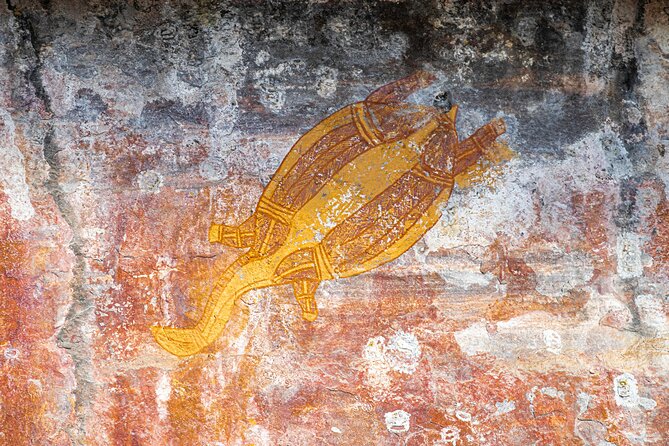
Ancient art waits beyond the long road. This full-day trip from Darwin gives you a useful taste of Kakadu National Park, with 20,000-year-old rock art at Ubirr and broad views from its rocky summit. I like the mix of Aboriginal culture and wildlife, and I like having guides such as Rick, Darryl, Boggi, Tim, and Aaron bring the country to life with stories about birds, crocodiles, geology, history, and local traditions. The catch is simple: this is a very long day, with roughly three hours each way on the road.
The optional Adelaide River jumping crocodile cruise adds real excitement, while Fogg Dam and Cahills Crossing offer quieter chances to spot birds and saltwater crocodiles. You should expect heat, walking over uneven rocks, limited food choices, and a compact minibus where storage and legroom may be tight.
In This Review
- Key points to know before booking
- Is one day enough for Kakadu?
- Starting from Darwin at 7:30 am
- Fogg Dam: the gentler wildlife beginning
- Choosing between crocodiles and birdwatching
- Food stops and the practical lunch plan
- Entering Kakadu National Park
- Jabiru and Bowali Visitor Centre
- Cahills Crossing and saltwater crocodiles
- Ubirr rock art and the climb to the lookout
- The long return to Darwin
- Guides are the main value
- Heat, comfort, and what to pack
- Who should book this Kakadu day trip?
- Should you book it?
- FAQ
- How long is the Kakadu tour from Darwin?
- Where does the tour start and finish?
- Is the jumping crocodile cruise included?
- What can I do instead of the crocodile cruise?
- Is lunch included?
- Is Kakadu National Park entry included?
- How many people can join the tour?
- Is the Ubirr walk difficult?
- Can children join the tour?
Key points to know before booking
- Ubirr combines ancient rock art with 360-degree views, but reaching the best lookout involves a moderate climb over rocks.
- Fogg Dam is the birdwatching highlight, with wetlands, observation decks, and chances to see local wildlife.
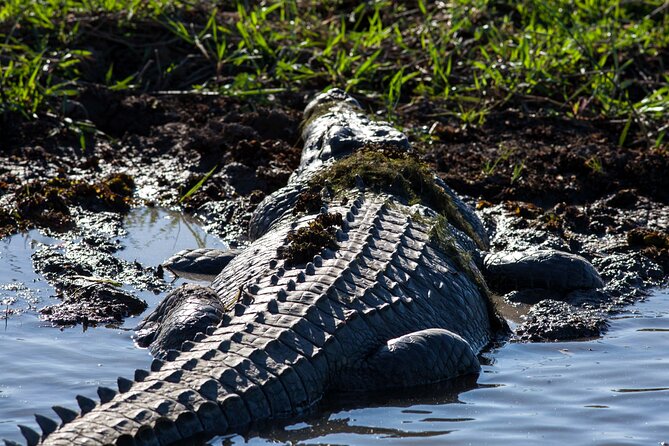
- Cahills Crossing offers safe crocodile viewing from a platform, never from the road or water.
- The jumping crocodile cruise is optional, so you can choose between a wildlife cruise and a wetland stop with the guide.
- The tour runs from 7:30 am to about 7:30 pm, making it a big but efficient day from Darwin.
- Small groups of up to 21 people make the guiding more personal, though the bus can feel cramped on a full departure.
Is one day enough for Kakadu?
Kakadu is too large for a proper visit in one day. That is the honest answer. Still, if you have only a few days in Darwin, this tour makes a strong case for going. You reach the park’s famous eastern highlights, see Aboriginal art at Ubirr, visit wetlands, look for crocodiles, and return to the city the same evening.
The price is $168.55 per person, including park entry, transport, guiding, and commentary. For a 12-hour outing, that is fair value if you do not have a rental car or several days to spend in the Top End. You are paying not just for a seat, but for someone else to handle a long drive and explain what you are seeing.
I would not book this expecting a slow, peaceful Kakadu stay. The route covers a lot of ground. You spend much of the day moving between sites, and the road scenery can feel repetitive. But the main stops are worthwhile, especially Ubirr. Think of the trip as a well-packed first look rather than a complete park experience.
More National Park Tours in Darwin
- Litchfield National Park and Jumping Crocodile Cruise
★ 5.0 · 2,119 reviews - From Darwin: Kakadu Wilderness Escape & Rock Art Day Tour
★ 4.5 · 403 reviews - Litchfield National Park Day Tour from Darwin
★ 4.0 · 264 reviews
Starting from Darwin at 7:30 am
The meeting point is The Leea Darwin at 64 Cavenagh Street. Pickup and drop-off are available at selected locations in Darwin City, and the tour ends back at the starting point around 7:30 pm.
The early start matters. Kakadu is far from Darwin, and the return journey takes time. The upside is a full day in the park. The downside is that you need to be ready for a long stretch in a vehicle before the main cultural stops arrive.
Transport is by an air-conditioned mini-coach, with a maximum group size of 21. That is smaller and more personal than a large sightseeing bus, and the guide can usually keep the group together without much fuss. Still, do not expect a luxury coach. Some seats have been described as tight, with no overhead storage.
Bring only what you need for the day. A small bag, water, sun protection, walking shoes, and a change of shirt are more useful than bulky luggage.
Fogg Dam: the gentler wildlife beginning
Fogg Dam Conservation Reserve gives the day a pleasant start in the wetlands. You walk around the reserve and use observation decks at the Fogg Dam Conservation Centre, looking for birds and other wildlife among the water and vegetation.
This stop suits you if you enjoy watching rather than chasing wildlife. Bird sightings depend on conditions and timing, but the reserve gives you a good introduction to the Top End environment before the more dramatic Kakadu stops.
The hour here also breaks up the drive. You can stretch your legs, take photographs, and listen as the guide explains the plants and animals around the wetlands. Guides including Rick, Dani, and Boggi have received strong praise for explaining local fauna and birdlife in a clear, entertaining way.
Bring binoculars if you have them, although the tour does not list them as included. Do not count on Fogg Dam alone for a major wildlife spectacle. It is best treated as a calm, informative wetland walk.
Choosing between crocodiles and birdwatching
The tour offers an optional one-hour jumping crocodile cruise on the Adelaide River. The cruise costs extra, and the price is not specified in the tour information, so check the current upgrade cost before booking.
This is the more theatrical choice. You travel on the river and watch saltwater crocodiles rise from the water near the boat. The experience gives you a close look at these powerful reptiles while keeping you in a controlled setting. Several parts of the day can involve crocodile viewing, but the cruise is the clearest opportunity for a focused encounter.
If you skip the cruise, you can explore a bird wetland with the guide instead. That option may appeal more if you prefer quiet observation or want to avoid paying for the upgrade. The best choice can also depend on the season, since bird activity varies.
I like that the choice is yours. Just remember that the cruise is not included in the base price. If you want it, select the upgrade when booking rather than assuming it is part of the standard day.
More Wildlife Experiences in Darwin
- Adelaide River Cruises – Jumping Crocodile Experience
★ 5.0 · 997 reviews - From Darwin: Litchfield Park Tour & Jumping Crocodile Cruise
★ 4.9 · 829 reviews - The Croc Bus to the Famous Jumping Crocodile Cruise
★ 5.0 · 481 reviews - 1 Hour Jumping Crocodile Cruise on the Adelaide River
★ 4.5 · 345 reviews
Food stops and the practical lunch plan
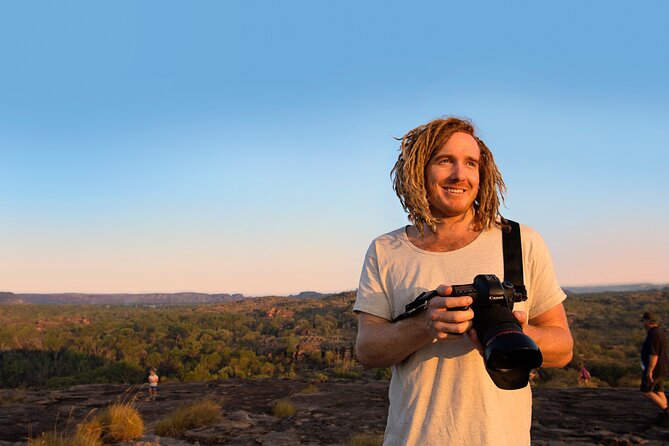
At Corroboree Park Tavern, the group stops for about 30 minutes. You can buy refreshments and lunch there. The food is then stored in an eski so it stays fresh until later.
This arrangement is practical, but food choices along the route are limited. I would buy what you need at this stop rather than waiting for a perfect café later in the day. All food and drinks are at your own expense.
Lunch is also scheduled around the Bowali Visitor Centre in Jabiru, again at your own expense. The timing may feel a little improvised because you are fitting meals into a packed sightseeing day. Carry water and a few snacks so you are not relying entirely on one stop.
The tour does not list food or drinks as included. That keeps the advertised price lower, but it means you must plan ahead. In the heat, water is not a small detail.
Entering Kakadu National Park
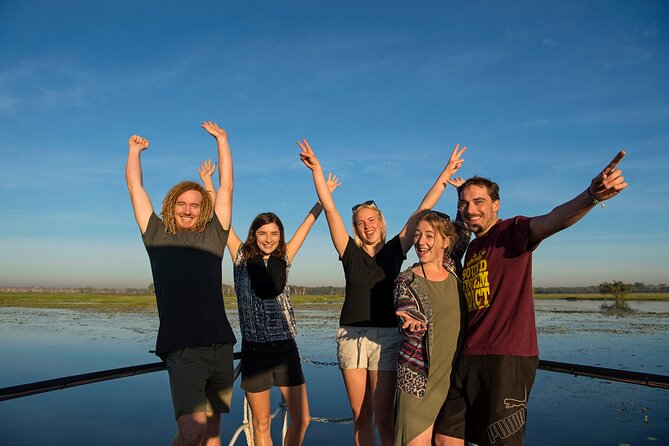
A short photo stop at the Kakadu welcome sign marks the park entrance. It is not a major attraction, but it gives you a clear sense that the long drive has brought you somewhere distinct.
Kakadu is a World Heritage listed area with both natural and cultural importance. The value of this trip comes from seeing those two sides together. You are not simply looking at scenery. You are visiting a place where Aboriginal art, living cultural traditions, wildlife, wetlands, and dramatic rock formations are all part of the story.
The main Kakadu touring time is listed at about two hours, followed by stops in Jabiru, Bowali, Cahills Crossing, and Ubirr. The day is divided into short visits, so listen closely when the guide explains the meeting time. A late return to the bus can affect everyone’s schedule.
Jabiru and Bowali Visitor Centre
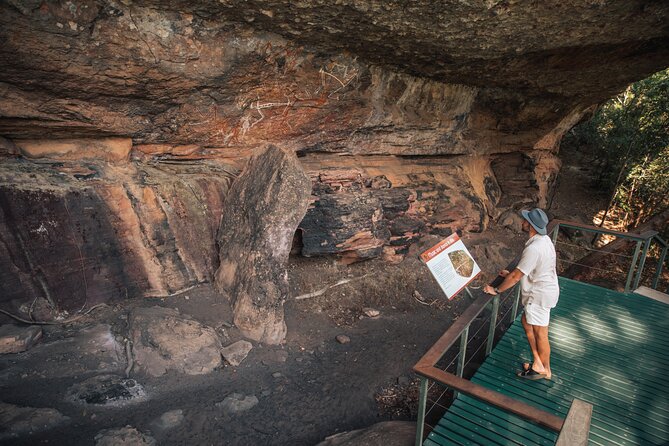
Jabiru is a small town in the heart of Kakadu and a gateway to the park. The tour allows around 30 minutes here, enough for a short break and a change of pace.
Bowali Visitor Centre follows as another brief stop, with local artwork and information about the park. Lunch takes place here at your own expense. This is a useful pause before the afternoon’s main wildlife and rock art stops.
Do not expect a long museum visit. Thirty minutes passes quickly. The value is in seeing local art and getting more context for the country you are visiting, rather than spending hours indoors.
Cahills Crossing and saltwater crocodiles
Cahills Crossing is one of the tour’s most memorable wildlife stops. You watch from a viewing platform, looking for saltwater crocodiles in their natural habitat.
The important point is the viewing platform. This is not a place for getting close on foot or taking risks near the water. Crocodile sightings are not guaranteed, but the stop is set up for observing them safely, and the chance of seeing one adds tension to an otherwise quiet hour.
The crossing also shows how wildlife and roads share this remote environment. Your guide can help you understand what to look for and where to focus your attention. Guides have been praised for explaining crocodiles, birds, environmental management, and the wider ecology of the Northern Territory.
Cahills Crossing works best if you are patient. You may see a crocodile quickly, or you may need to wait and scan the water. Keep your camera ready, but do not let photography distract you from the setting.
Ubirr rock art and the climb to the lookout
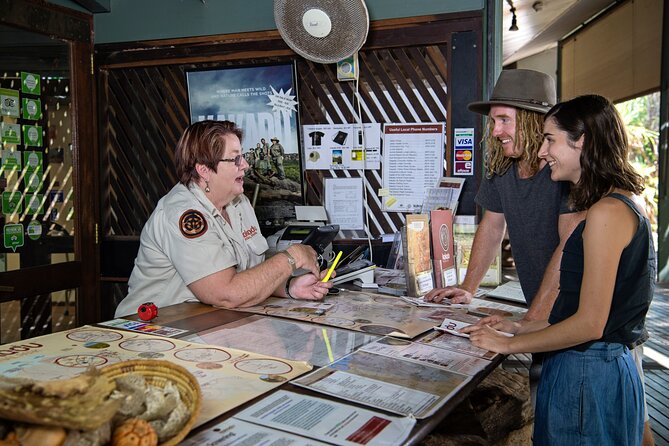
Ubirr is the heart of the day. The rock shelters contain Aboriginal paintings dating back thousands of years, with the tour describing the art as around 20,000 years old. You can see images and hear explanations of their meaning, history, and cultural setting from the guide.
This is where a good guide makes a major difference. Darryl, Rick, Boggi, Bogdan, Tim, Dani, and others have been praised for explaining Aboriginal culture and the artwork in a way that adds depth without turning the stop into a lecture. The art is powerful on its own, but the stories help you understand why the site matters.
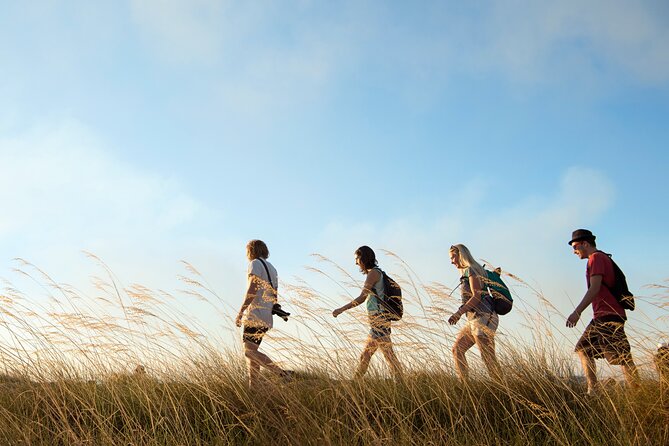
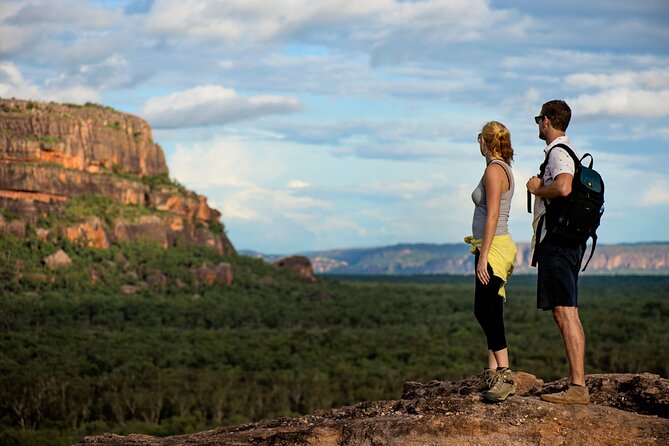
The walk is not a flat pavement stroll. You move through rocks and climb toward a lookout. The climb has been described as moderate, and some visitors found it more demanding than expected. Hiking shoes are strongly recommended, especially if you are unsteady on uneven ground.
The reward is a high rocky viewpoint with wide, 360-degree views over Kakadu. The change from enclosed rock shelters to open sky is striking. Many people consider the lookout the surprise of the day.
You do not need to be a serious hiker, but you should have moderate physical fitness. Guides have helped older participants and adjusted their support for different abilities, though the tour is not suitable for children aged five and under. If you have trouble with rocky walking, ask for a clear description before booking.
Give yourself time to look carefully at the art. The temptation is to rush toward the view, but the paintings are the cultural centre of the stop. The lookout is beautiful. The shelters are what make Ubirr special.
The long return to Darwin
After Ubirr, you return to Darwin, arriving around 7:30 pm. The final three hours listed for the return include the drive back to your pickup point.
This is when the day catches up with you. The air-conditioned bus helps, and a friendly guide can keep the mood light, but there is no disguising the distance. Several guides have been praised for lively storytelling, humour, music, and commentary during the drive. Aaron, in particular, was noted for creating a warm atmosphere with his welcome, music, and entertaining stories.
That human touch matters on a long road day. A silent transfer would feel much harder. With a guide who explains the region as you go, the drive becomes part of the learning, even when the view outside changes slowly.
Guides are the main value
The strongest part of this tour is the guiding. Names frequently praised include Rick, Darryl, Boggi, Tim, Aaron, Dani, Alex, Arran, and Bogdan. The exact guide depends on the departure, but the pattern is clear: the experience relies heavily on the person behind the wheel and microphone.
The best guides do more than point out birds or recite dates. They connect Aboriginal culture, geology, animals, crocodiles, local history, and environmental care. They also keep the group on time and watch out for people during the Ubirr climb.
That makes this tour a better choice than driving yourself if you want context. A rental car gives you more freedom, but you would need to manage the long route, park entry, site timing, and interpretation on your own.
Heat, comfort, and what to pack
The tour operates in all weather, so dress for the conditions. Kakadu can be hot, and the Ubirr walk is more comfortable when you have proper shoes and sun protection.
Pack:
- Plenty of drinking water
- Walking shoes with a firm sole
- Hat, sunscreen, and light clothing
- A small day bag
- Snacks or money for food
- Camera and spare battery if needed
The bus may feel cramped, particularly on a full group of 21. There is no overhead storage, so keep your belongings compact. Regular comfort stops help, but this is not a tour built around long leisurely breaks.
Free cancellation is available if you cancel at least 24 hours before the start time. Changes or cancellations inside that window are not accepted for a refund. The tour also needs a minimum number of participants, and if that requirement is not met, you are offered another date, another experience, or a full refund.
Who should book this Kakadu day trip?
I would recommend it to you if you are staying in Darwin for only a few days, want to see Ubirr, and prefer a guide to handle the driving. It also suits nature lovers who want wetlands, birds, crocodiles, and Aboriginal art in one busy day.
It is a good match for families with older children, couples, solo visitors, and older adults who can manage moderate walking. The guides appear attentive to different ages and abilities, but the uneven rocks at Ubirr still require care.
I would hesitate if you dislike long drives, need generous legroom, or want a quiet park visit with plenty of free time. I would also consider a longer Kakadu trip if your schedule allows. One day gives you an impressive snapshot, not the whole park.
Should you book it?
Book this tour if Ubirr rock art is high on your Darwin list and you have limited time. The journey is long, but the combination of ancient Aboriginal art, the Ubirr lookout, Fogg Dam wetlands, and crocodile viewing makes the day worthwhile.
Choose the jumping crocodile cruise if close wildlife viewing appeals to you. Choose the wetland alternative if birds and a quieter stop sound better. Either way, wear proper shoes, carry water, expect a full day, and treat the price as payment for transport, park access, and strong local guiding. For a first taste of Kakadu from Darwin, that is a sensible trade.
FAQ
How long is the Kakadu tour from Darwin?
The tour lasts approximately 12 hours. It departs Darwin at 7:30 am and returns to the city around 7:30 pm.
Where does the tour start and finish?
The meeting point is The Leea Darwin at 64 Cavenagh Street, Darwin City. The tour ends back at the meeting point.
Is the jumping crocodile cruise included?
No. The one-hour Adelaide River jumping crocodile cruise is an optional upgrade and costs extra.
What can I do instead of the crocodile cruise?
If you do not choose the cruise, you can explore a bird wetland with the tour guide.
Is lunch included?
No. Food and drinks are not included. You can buy lunch and refreshments at Corroboree Park Tavern and have lunch at your own expense near Bowali Visitor Centre.
Is Kakadu National Park entry included?
Yes. The Kakadu National Park entry fee is included in the tour price.
How many people can join the tour?
The tour has a maximum group size of 21 people.
Is the Ubirr walk difficult?
The walk involves moving through rocks and climbing toward a lookout. A moderate level of physical fitness is recommended, and hiking shoes are advised.
Can children join the tour?
Children must be accompanied by an adult, and the tour is not suitable for children aged five and under.
Just added around Darwin
- 5 Day Kakadu Katherine Gorge Litchfield 4WD Camping Adventure★ 5.0 · 26 reviews
- Kakadu National Park Scenic Flight &Yellow Water Cruise★ 5.0 · 28 reviews
- Darwin: Small Group 2-Hour Heritage Walk★ 4.9 · 28 reviews
- Darwin Harbour Cruise★ 4.9 · 28 reviews
- Darwin City Sightseeing Tour★ 4.0 · 29 reviews
- Jumping Croc Cruise, Berry Springs, Fogg Dam & Humpty Doo Pub★ 5.0 · 29 reviews
- Litchfield National Park Waterfalls & Wildlife Adventure Tour★ 5.0 · 30 reviews
- WWII Bombing of Darwin & Royal Flying Doctor Service★ 4.8 · 34 reviews
Wildlife & Zoo Experiences, compared.
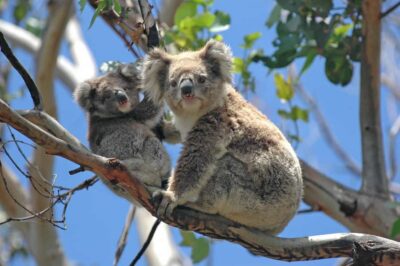
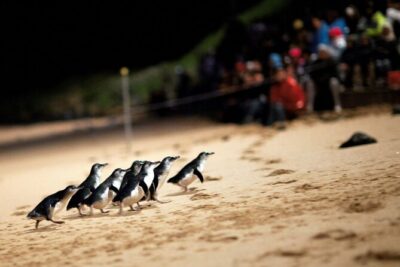
Penguin Parade, & Wildlife Encounters Eco Tour from Melbourne
Read our review →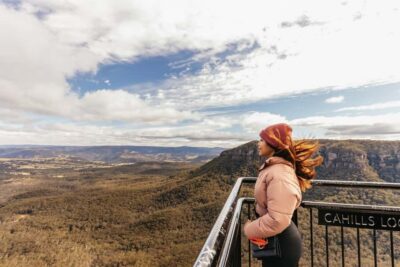
Blue Mountain Small Group Scenic World, Wildlife, Waterfall
Read our review →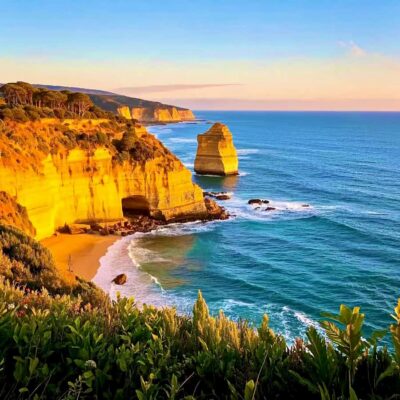
Melbourne Great Ocean Rd Reverse Tour London Bridge Wildlife
Read our review →
Litchfield National Park and Jumping Crocodile Cruise
Read our review →
Blue Mountains Adventure: Scenic World, Zoo & Koala Photo
Read our review →
Solar Whisper Daintree River Crocodile and Wildlife Cruise
Read our review →
Browse the lists this tour appears in