

Reviewed · WILDLIFE & ZOO EXPERIENCES
Port Douglas: Wildlife Habitat Entrance Ticket
Meet Australia’s wildlife up close. Port Douglas Wildlife Habitat gives you a friendly, hands-on way to see native animals across five habitats, from wallabies and kangaroos to cassowaries, crocodiles, koalas, and the elusive Lumholtz’s tree-kangaroo. I like the open, spacious setting, and I like that your ticket includes five-day re-entry, not just a single rushed visit. The main drawback is that animal photos, koala holding, and crocodile encounters cost extra.
The advertised visit takes one hour, but you should allow several hours if you want to catch talks, feed kangaroos, walk the crocodile plank, and return to areas at your own pace. At $34 per person, the ticket offers good value, especially if you are staying in Port Douglas long enough to use the re-entry benefit.
In This Review
- Key points at a glance
- Why Wildlife Habitat works well in Port Douglas
- Start with the five habitats
- Woodlands
- Wetlands
- Rainforest
- Nocturnal Habitat
- Savannah
- The crocodile plank is the park’s boldest moment
- Plan around the talks and presentations
- Photo opportunities cost extra
- How much time should you allow?
- Is $34 good value?
- Who should choose this experience?
- Practical tips for a better visit
- Should you book Wildlife Habitat?
- FAQ
- Where is Wildlife Habitat located?
- What does the $34 ticket include?
- How long should I allow for a visit?
- Can I feed kangaroos and wallabies?
- Are koala and crocodile photos included?
- Is Wildlife Habitat wheelchair accessible?
Key points at a glance
- Five habitats in one eight-acre park: Walk through Woodlands, Wetlands, Rainforest, Nocturnal, and Savannah settings.
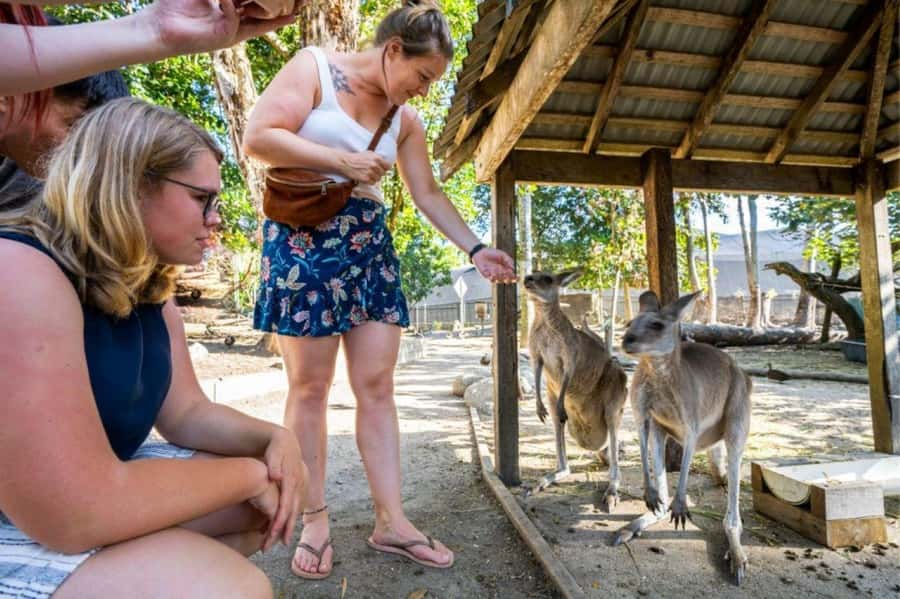
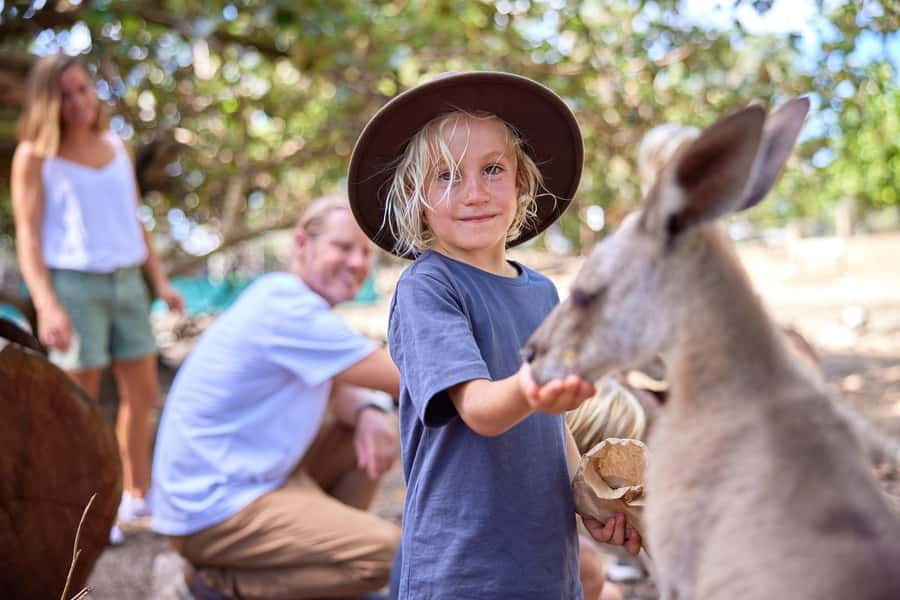
- Hand-feed kangaroos and wallabies: This is one of the most relaxed and popular parts of the visit, with animals moving freely in their habitat.
- The Predator Plank crosses a crocodile billabong: You balance on a suspended plank above saltwater crocodiles, a short walk with a memorable payoff.
- More than 600 individual animals: The collection includes over 100 Australian species, including cassowaries and Lumholtz’s tree-kangaroos.
- Talks run throughout the day: Free guided walks and presentations cover koalas, pythons, crocodiles, and birds.
- Five-day re-entry adds value: You can return during your Port Douglas stay instead of trying to see everything in one visit.
Why Wildlife Habitat works well in Port Douglas
Port Douglas is often used as a base for the Great Barrier Reef and the Daintree region. Those outings can take most of a day, cost far more, and depend on weather and sea conditions. Wildlife Habitat offers a simpler half-day plan, with no boat ride and no long transfer into the forest.
The park covers eight acres and is arranged around five different natural settings. That matters because you are not looking at a row of small cages. The paths and animal areas are designed to give the park a more open feel, while still allowing you to get close to Australian wildlife.
I especially like the balance between easy viewing and interaction. You can watch animals from the paths, join a free presentation, hand-feed wallabies, or add a paid photo experience. You choose how active and how expensive your visit becomes.
The park also supports the onsite Tropical Animal Rehabilitation Centre and other conservation programs and research. Its rehabilitation work relies solely on donations, so you can treat the entry fee as access to the park while deciding separately if you want to support that work with a donation.
More Wildlife Experiences in Cairns
- Cairns Aquarium General Admission Ticket
★ 4.6 · 422 reviews - From Cairns: Rainforest & Nocturnal Wildlife Tour
★ 4.7 · 144 reviews - Cairns: Night at the Aquarium Guided Tour & 2 Course Dinner
★ 4.6 · 106 reviews
Start with the five habitats
The best way to approach the park is to walk through each of its five environments rather than rushing straight to the most famous animals. Each area gives you a different sense of Australian wildlife, and the variety helps keep the visit interesting for families and adults alike.
Woodlands
The Woodlands habitat introduces you to animals suited to dry forest areas. Kangaroos and wallabies are the main attraction here, and hand-feeding is one of the clearest reasons to visit.
The interaction is simple and memorable. You buy or use the available food as directed, then wait for the animals to approach. I would remind children to move slowly and follow staff instructions. The experience is better when you let the wallabies come to you rather than chasing them for a photograph.
This section can feel more personal than viewing animals behind a barrier. You see their size, movement, and calm habits at close range. It is also a good place to slow down after arriving, since the animals provide an easy introduction to the park.
Wetlands
The Wetlands setting highlights species connected with water and marshy environments. It helps show that Australian wildlife is not all kangaroos and koalas. Plant life and habitat design are part of the display, giving you more context for how the animals live.
This area may appeal most to anyone who enjoys watching rather than touching. Take your time at viewing points, since some animals can be less obvious than the wallabies. The park’s free talks can add useful detail, so check the schedule when you enter.
A completely different kind of day out in Cairns:
- From Cairns: Great Barrier Reef Cruise by Premium Catamaran
★ 4.9 · 3,567 reviews - From Cairns: Self-Guided Kuranda Trip with Train and Skyrail
★ 4.6 · 3,392 reviews - Cairns: Outer Edges of The Great Barrier Reef Scenic Flight
★ 4.9 · 2,912 reviews - Cairns: Daintree Rainforest and Mossman Gorge Tour
★ 4.6 · 2,485 reviews
Rainforest
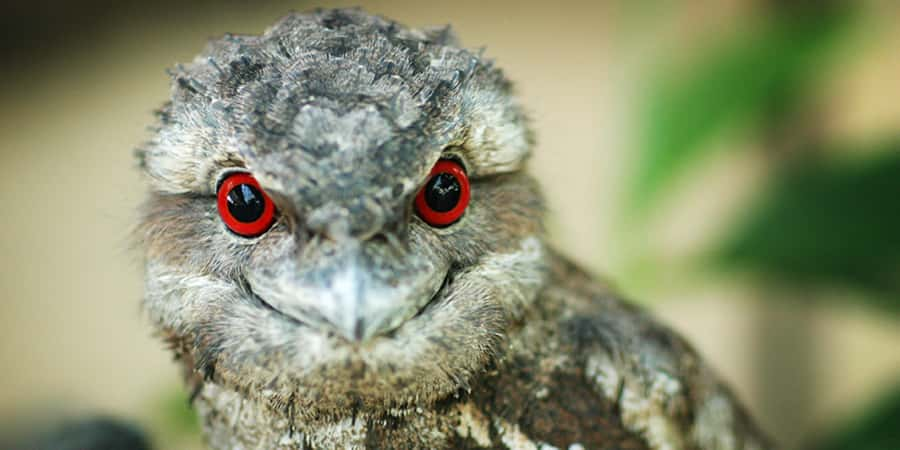
The Rainforest section is especially relevant in Tropical North Queensland. Here you can look for birds and animals associated with thick, humid forest, including the cassowaries and the rare Lumholtz’s tree-kangaroo.
Cassowaries are a major reason to pay attention in this area. They are large, striking birds with a distinctive appearance, and seeing them gives you a close look at a part of Australian wildlife that many people never encounter. The Lumholtz’s tree-kangaroo is less predictable, which makes spotting one feel like a bonus rather than a guaranteed photo opportunity.
Do not measure this section only by how many animals you see in the first few minutes. The rainforest setting is designed for observation, and patience may reward you.
Nocturnal Habitat
The Nocturnal Habitat is built around animals that are active after dark. The lighting creates a starry-night effect, allowing you to see species that are difficult to observe during normal daytime hours.
This section is a useful reminder that wildlife does not operate on a human timetable. Some nocturnal animals may be easier to see here than outdoors during the day, though their behavior can still be subtle. Keep your voice low and watch carefully.
You can also pay extra for the separate WildNIGHT Nocturnal Tour. This is a two-hour evening tour by torchlight, not part of the standard entry ticket. It may include the endangered Mahogany glider, scorpions viewed under UV light, and keeper feeding of quolls. Minimum and maximum numbers apply, so you need to check availability separately.
Savannah
The Savannah habitat rounds out the park’s five environments and gives the visit another open setting. It helps connect the different parts of the collection, from large animals to smaller native species and birds.
I like the way these habitats give you a sense of place instead of presenting every animal in the same kind of enclosure. You may not spend equal time in each area, but together they make the park feel more like a series of living environments.
The crocodile plank is the park’s boldest moment
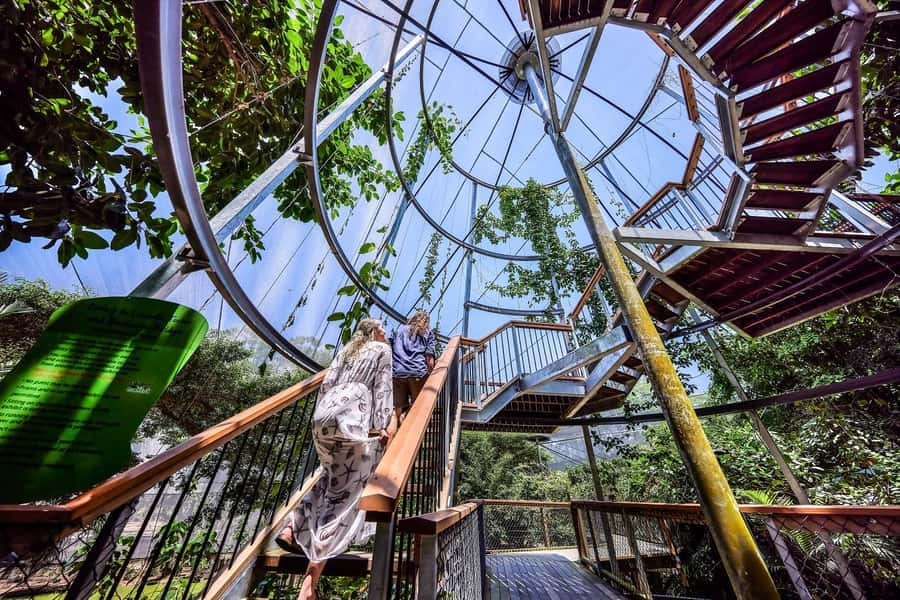
The Predator Plank is a balance beam suspended over a billabong filled with saltwater crocodiles. It is not a long walk, but the design gives you a direct view down toward powerful animals resting below.
This is the moment that can make the visit feel more than a standard wildlife park outing. You are still safely separated from the crocodiles, but the height and open view create a mild jolt of excitement. If you dislike heights or narrow walkways, you may prefer to watch from the side.
The plank also gives you a useful look at crocodile behavior. The animals are not performing tricks. They may lie still, which is exactly the point. You get to see a predator at rest rather than a staged show.
Crocodile presentations run during the day, along with talks about koalas, pythons, and birds. Check the times early. A short presentation can add much more meaning to what you see on the walkways, particularly if you are unfamiliar with Australian species.
Plan around the talks and presentations
The ticket includes free guided tours and presentations throughout the day. These are worth fitting into your schedule, since a keeper can point out details you might miss alone.
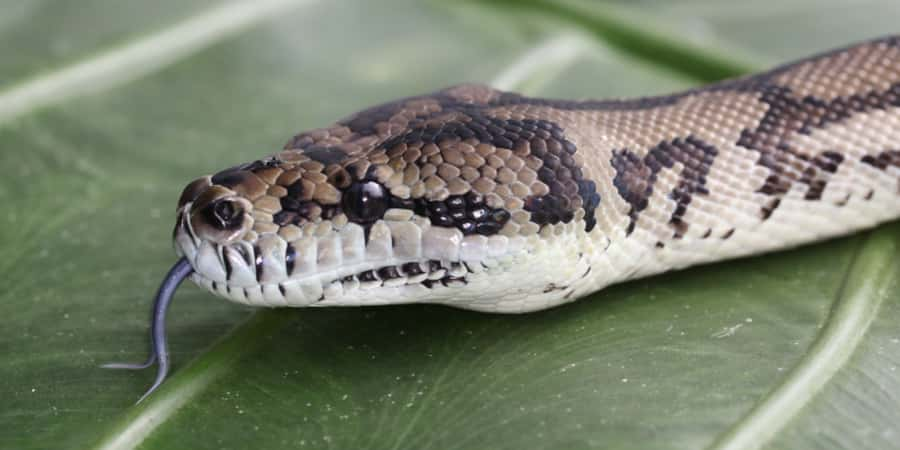
The koala presentation can explain the animal’s habits and conservation needs, while the crocodile talk gives context to the billabong and Predator Plank. Bird and python presentations add more range to the visit. The reviews of this experience placed particular emphasis on the koala and crocodile talks, so I would make those a priority if the times work for you.
The park is more enjoyable when you treat the schedule as a framework rather than a strict tour. Watch a presentation, explore another habitat, then return for feeding or a photo session. The five-day re-entry ticket makes this easy.
Photo opportunities cost extra
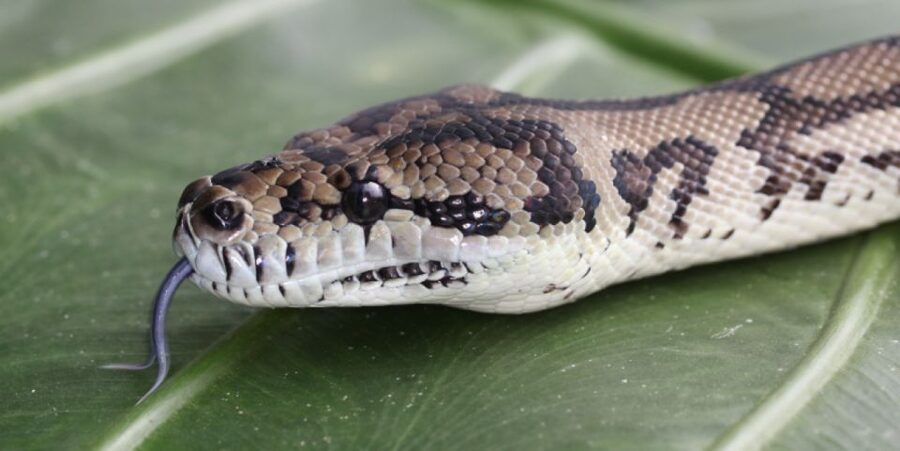
Koala and crocodile photos are not included in the $34 entry price. You can also arrange photos with birds, snakes, and baby crocodiles, depending on the available options. These encounters are optional, so you can keep the basic visit at the advertised price.
A koala holding opportunity may appeal to families or anyone hoping for a classic Australian souvenir image. Still, I would decide before arrival how much you want to spend on extras. The main park already provides close animal viewing, so a paid photo is not needed to make the day worthwhile.
The photo and presentation area also gives you a chance to learn about the animals before deciding. That is a better approach than treating the photo as the whole point of the visit.
How much time should you allow?
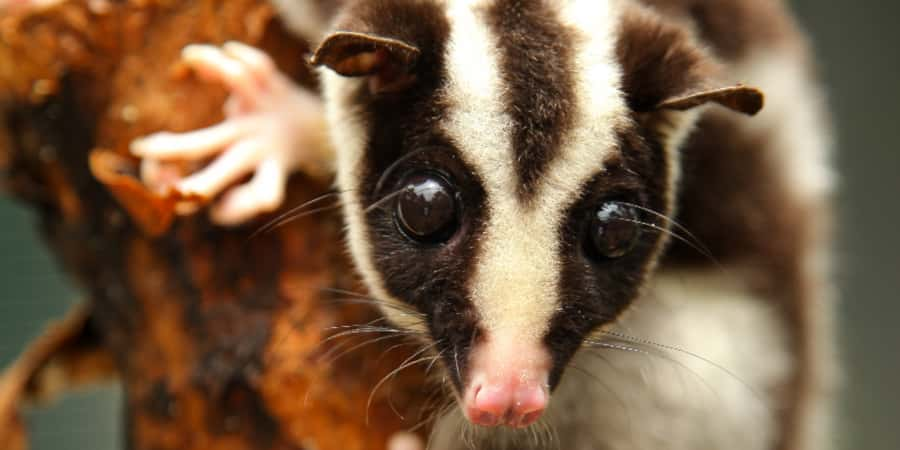
The listed duration is one hour, but that is best understood as the minimum time needed to see the attraction rather than a complete visit. If you want to feed kangaroos, attend talks, pause at the habitats, and walk the crocodile plank, plan on several hours.
One recent visit was described as a fun three-hour outing, while another found enough native animals and birds to fill a few hours. That range makes sense. Your timing will depend on presentation schedules, how long you watch the animals, and whether you add a photo experience.
The five-day re-entry ticket changes the value calculation. If you are in Port Douglas for several days, you can make a short first visit, return for a presentation, and use another visit to see the Nocturnal Habitat more carefully. A single-day ticket would be less useful for that style of trip.
An unexpected practical detail is the report of a free shuttle bus to and from Port Douglas Harbour. Because this service is not described as a core inclusion, ask about current availability before relying on it. The stated meeting point is on Port Douglas Road.
Is $34 good value?
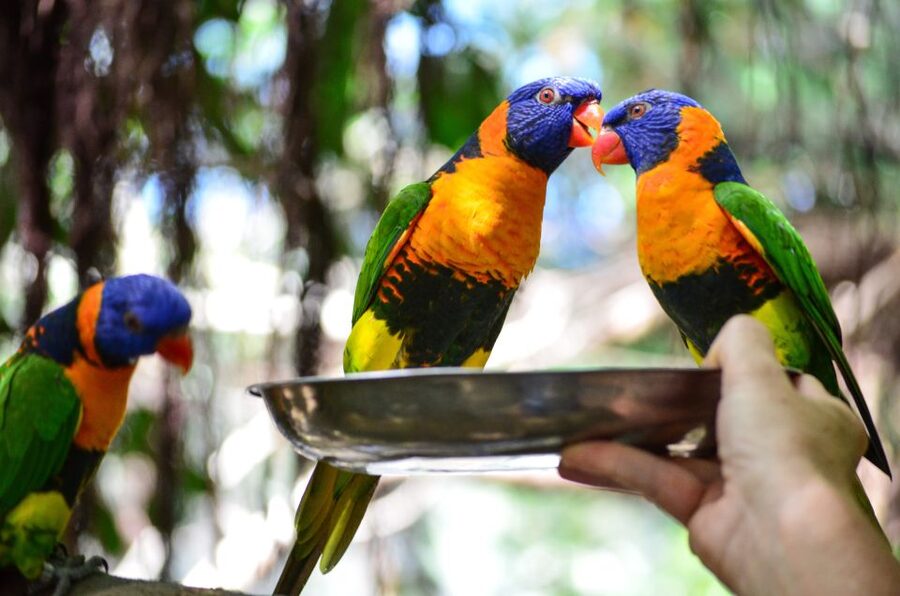
For $34 per person, I consider the basic entry fairly priced. You get access to five habitats, more than 100 Australian species, over 600 individual animals, scheduled presentations, and five-day re-entry.
The value is strongest if you use the park as a flexible part of a Port Douglas stay. If you only have one hour and skip all talks and interaction, the price feels less impressive. If you spend two or three hours and return later, it becomes a better deal.
Keep extra costs in mind. Koala and crocodile photos are separate, as are other animal photo opportunities. WildNIGHT is also an additional activity. You can enjoy the standard park without paying for these, but families should set a budget before arriving.
The high rating of 4.9 from 45 reviews fits the main strengths: friendly staff, close animal encounters, kangaroo feeding, and useful talks. The experience is not designed as a wilderness safari, and you should not expect every rare animal to appear on cue. Its value comes from access, variety, and the chance to return.
Who should choose this experience?
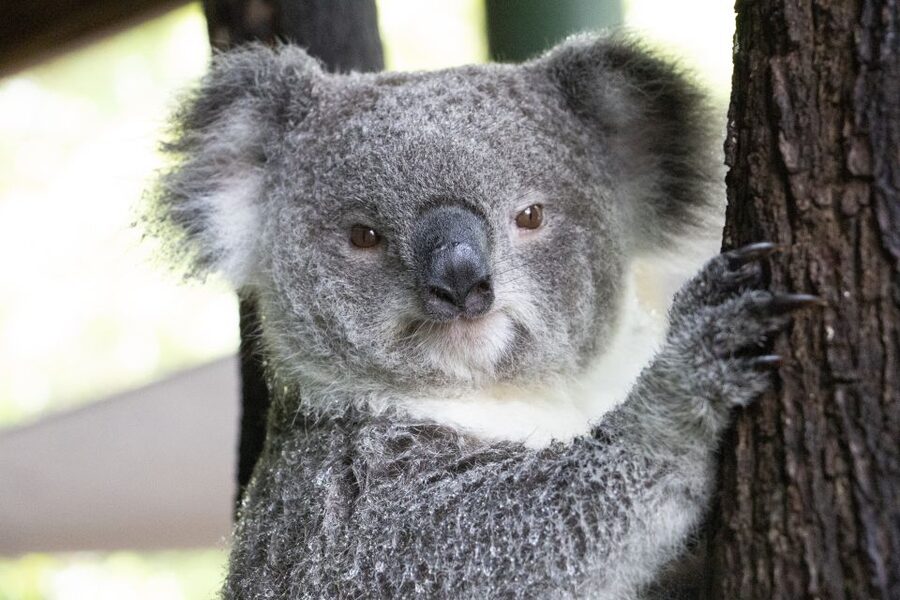
I would recommend Wildlife Habitat to families, first-time visitors to Australia, and anyone who wants an easy introduction to native Queensland animals. The hand-feeding area gives children a clear highlight, while the presentations and habitat design offer enough substance for adults.
It also suits anyone who has limited time between larger Port Douglas outings. You can spend an hour or several hours, and the five-day re-entry option helps if your schedule changes.
Wildlife photographers may enjoy the close viewing, but paid photo sessions and crowds around popular encounters could affect the experience. Anyone seeking a completely wild setting should choose a national park outing instead. This is a managed wildlife attraction, with the benefits and limits that come with that format.
The park is wheelchair accessible, and small-group options are available. English is the stated language for the guided material.
Practical tips for a better visit
- Check presentation times as soon as you arrive, then plan your habitat walk around the talks.
- Give yourself more than the listed one-hour duration if you want to see the park properly.
- Use the five-day re-entry ticket if you are staying in Port Douglas for several nights.
- Decide in advance if you want a koala, crocodile, snake, bird, or baby crocodile photo.
- Ask about the free shuttle to and from Port Douglas Harbour before planning transport around it.
- Bring patience to the rainforest and nocturnal areas. Some of the more unusual animals may not be immediately obvious.
- Consider a donation to the Tropical Animal Rehabilitation Centre, which relies solely on donations for its operations.
Should you book Wildlife Habitat?
Book it if you want close contact with Australian wildlife without committing to a full-day excursion. The kangaroo feeding, crocodile plank, free talks, and five habitats give you a solid mix of interaction and observation.
I would be less keen if your only goal is to see animals in completely wild surroundings. For most Port Douglas visitors, though, this is a practical and fairly priced way to meet native species, especially when you use the five-day re-entry ticket and attend the presentations.
The best plan is to allow two or three hours, treat the paid photos as optional, and build your visit around the keeper talks. That approach gives you the most from the $34 entry fee without turning a pleasant wildlife visit into an expensive add-on package.
FAQ
Where is Wildlife Habitat located?
Wildlife Habitat is located on Port Douglas Road, Port Douglas, Queensland 4877, Australia.
What does the $34 ticket include?
The ticket includes entry to Wildlife Habitat and a five-day re-entry ticket.
How long should I allow for a visit?
The listed duration is one hour, but you may want several hours to explore the five habitats, attend presentations, feed kangaroos and wallabies, and walk across the crocodile plank.
Can I feed kangaroos and wallabies?
Yes. Hand-feeding kangaroos and wallabies is one of the activities available at Wildlife Habitat.
Are koala and crocodile photos included?
No. Koala and crocodile souvenir photos are not included in the entry ticket and cost extra. Other photo opportunities with birds, snakes, and baby crocodiles are also optional extras.
Is Wildlife Habitat wheelchair accessible?
Yes. The attraction is wheelchair accessible, and small-group options are available.
Just added around Cairns
- Cairns: Great Barrier Reef Cruise & 10 Minute Helicopter★ 4.6 · 25 reviews
- Cairns: Guided Twilight Tour of the Aquarium★ 4.4 · 31 reviews
- Fitzroy Island: Full-Day Ferry & Snorkel Safari Guided Tour★ 4.4 · 37 reviews
- Kuranda: Australian Butterfly Sanctuary★ 4.3 · 40 reviews
- Cairns: Great Barrier Reef Snorkeling Tour with Lunch★ 4.7 · 41 reviews
- Kuranda Pamagirri Aboriginal Premium Full-Day Tour★ 3.9 · 42 reviews
- Cairns: Green Island and Seawalker Helmet Dive Combo★ 4.6 · 43 reviews
- Cairns: 4-Day PADI Open Water Course★ 4.8 · 44 reviews
Wildlife & Zoo Experiences, compared.
Penguin Parade, & Wildlife Encounters Eco Tour from Melbourne
Read our review →
Blue Mountain Small Group Scenic World, Wildlife, Waterfall
Read our review →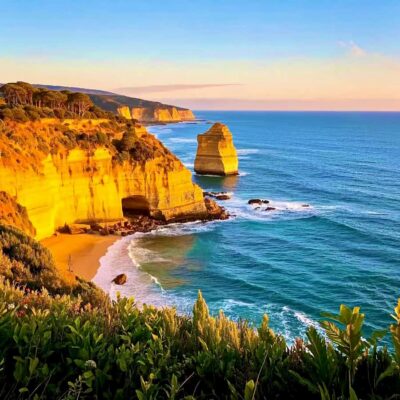
Melbourne Great Ocean Rd Reverse Tour London Bridge Wildlife
Read our review →
Litchfield National Park and Jumping Crocodile Cruise
Read our review →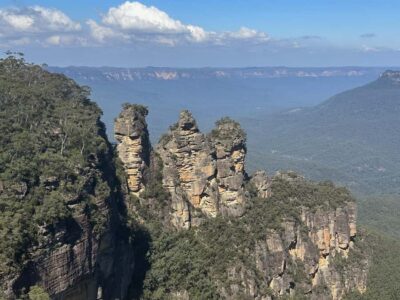
Blue Mountains Adventure: Scenic World, Zoo & Koala Photo
Read our review →
Solar Whisper Daintree River Crocodile and Wildlife Cruise
Read our review →
Browse the lists this tour appears in