
Reviewed · ULURU & RED CENTRE TOURS
Uluru Kata Tjuta & Kings Canyon 3-Day 2-Night Camping Tour
Red Centre nights are made for sleeping outside. This three-day, two-night trip from Yulara to Alice Springs packs Uluru, Kata Tjuta, Kings Canyon, cultural sites, campfires, and the Mereenie Loop into one active Outback journey. I like the excellent range of sights and the chance to sleep beneath the stars in a canvas swag. I also like that the guides, including names such as Jim, Ewel, Adam, Tristan, and Shearna, often add strong cultural and natural-history context rather than simply pointing at rocks.
The main catch is the pace. You will face early starts, long road sections, direct sun, steep rocky ground, and group chores such as cooking and cleaning. One guide may drive, lead walks, prepare meals, and manage more than 20 people, so this is a hands-on camping trip, not a polished resort holiday.
In This Review
- The five things to know before booking
- Why this three-day route works so well
- Day one: Cultural Centre to Uluru’s sacred sites
- Kantju Gorge and a sunset dinner beside the rock
- Day two: Kata Tjuta at first light
- The long road to Kings Canyon
- Swag camping under a huge sky
- Day three: Kings Canyon and the Watarrka walk
- What the guide adds to the experience
- Who should book this trip?
- Is $598 good value?
- Should you book the Uluru, Kata Tjuta and Kings Canyon tour?
- FAQ
- Where does the tour start and finish?
- How long does the tour last?
- What places does the tour visit?
- Are meals included?
- Is a sleeping bag provided?
- What is a swag?
- Is a Safari Tent option available?
- How difficult are the walks?
- Can children join the tour?
- Is the tour suitable for people with mobility impairments?
The five things to know before booking
- Uluru is only the beginning: The program also reaches Kata Tjuta, Kings Canyon, and the West MacDonnell Ranges.
- The swag is the real Outback option: You sleep on a canvas-covered bed roll under the open sky, with a sleeping bag required.
- Kings Canyon brings the biggest hike: One walk can reach 9 to 11 kilometres, with the guide deciding who should attempt it.
- The trip ends in Alice Springs: The Mereenie Loop route turns this into useful transport as well as sightseeing.
- Expect a working camp: You may help with meal preparation, washing up, packing, and general camp duties.
- This needs solid fitness: Walks cover 2 to 4 kilometres on many days, with at least one much longer trek over steep, rocky ground.
Why this three-day route works so well
At $598 per person, this is not a cheap bus transfer. It is a combined transport, accommodation, meals, park-entry, guiding, and walking package lasting about 60 hours. If you tried to arrange those pieces separately, you would need to handle long-distance driving, national park fees, campsites, food, and route planning yourself.
I see the strongest value in the route. You start in Yulara and finish in Alice Springs, while visiting the Red Centre’s three major sights along the way. That makes the trip especially useful if you are flying into Uluru and continuing overland to Alice Springs.
The rating of 4.7 from 183 bookings also fits the experience described by the people who have taken it. The highest praise goes to the guides and the group atmosphere. Jim is repeatedly described as organized and reassuring, while Ewel is praised for driving, cooking, planning, and leading a large group with calm efficiency. Guides such as Rhett, Misty, Jordan, Sanne, and Tristan are also singled out for adding history, astronomy, plants, geology, and Aboriginal culture to the walks.
That praise comes with a useful warning: the guide can become the entire engine of the trip. One person may be responsible for logistics, safety, food, driving, and entertainment. If you appreciate pitching in and keeping things moving, this creates camaraderie. If you expect to sit back while staff handle everything, you may find the arrangement tiring.
A few more Uluru trips worth weighing up
- Uluru (Ayers Rock) Sunset + Outback Barbecue Dinner & Star Talk
★ 4.0 · 426 reviews - 3 night Uluru, Kata Tjuta and Kings Canyon Camping Adventure
★ 5.0 · 228 reviews - Uluru (Ayers Rock) Base and Sunset Half-Day Trip with Opt Outback BBQ Dinner
★ 4.5 · 199 reviews
Day one: Cultural Centre to Uluru’s sacred sites
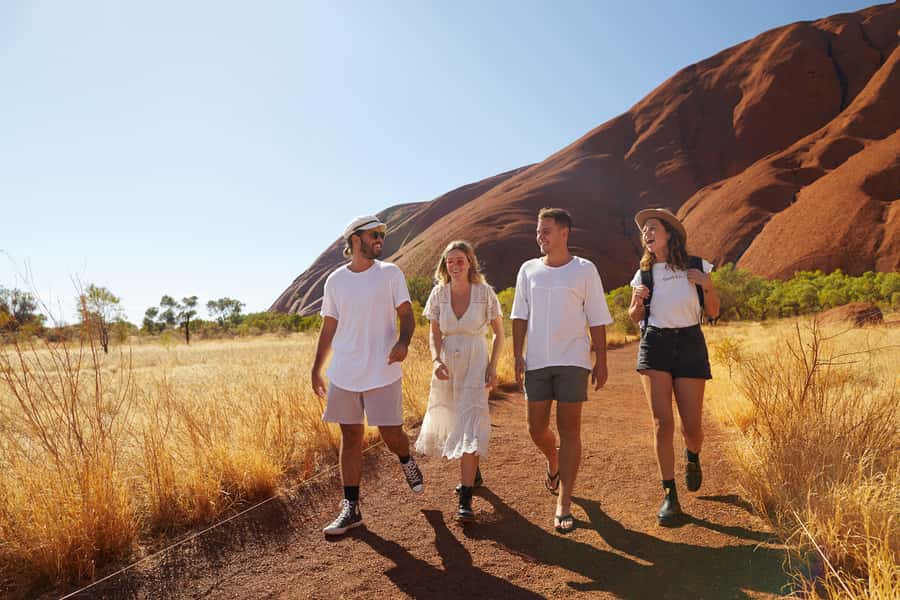
Pickup begins at Ayers Rock Airport in Yulara, followed by a visit to the Uluṟu-Kata Tjuṯa Cultural Centre. This is an important first stop because it gives meaning to what you are about to see. You learn about the park’s geology, plants, ecology, history, and cultural importance before walking around Uluru itself.
I like this order. Uluru is easy to treat as a giant photo subject, but the Cultural Centre helps you understand that it is also a place governed by Anangu cultural law. The guide’s role matters here. Several guides are praised for speaking respectfully about Aboriginal communities and connecting the rock to living culture, rather than presenting it as a simple geological oddity.
The drive to Uluru’s base is short, but the walking is more substantial. You head toward Mutitjulu Waterhole, where the guide explains sacred rock art sites and the creation stories of Kuniya and Liru. The route continues toward Kuniya Piti, giving you a closer look at the formations, caves, and changes in the rock surface.
This section is not a race to the best photo. I would pay attention to the guide’s explanations and allow time to notice the small details. The cultural material is a central part of the day, not an optional extra.
Kantju Gorge and a sunset dinner beside the rock
The next stop is Kantju Gorge, where you see an elders’ cave, the area described as the world’s oldest pantry, and Central Australia’s highest waterfall. The waterfall may be one of those Outback sights whose character depends heavily on conditions, but the gorge itself adds another angle to Uluru. You are not simply circling the rock. You are seeing how water, shelter, food, and ceremony shape the place.
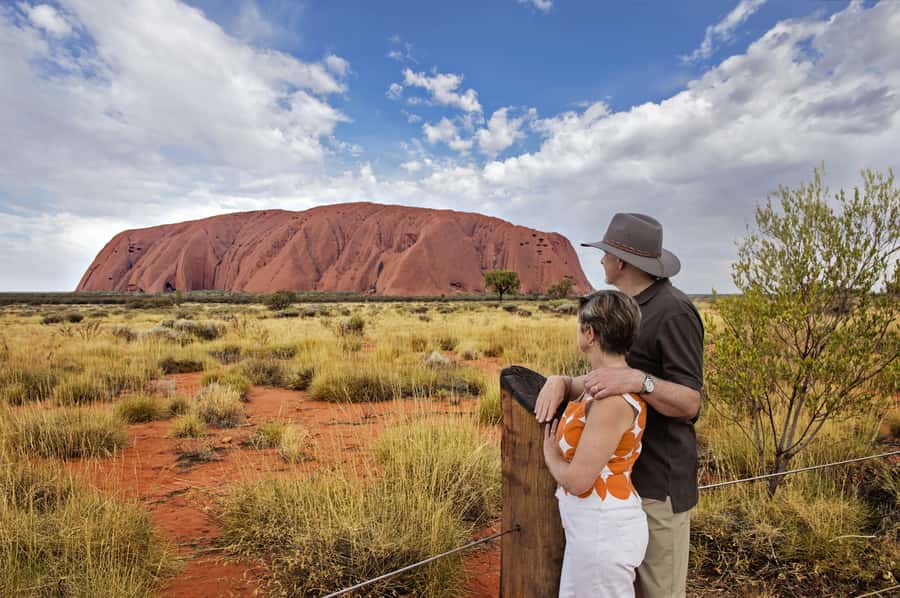
The first day finishes at camp with dinner and broad sunset views. This is one of the trip’s most praised features. The combination of a meal, changing light on Uluru, and a group gathered after a day outside gives the evening a simple pleasure that an ordinary sightseeing stop cannot match.
Meals are included, but you are expected to help with camp life. That can mean preparing food, washing up, or helping pack. The provided food receives strong praise, and the shared work often helps a group of strangers become a team. I would still bring extra snacks if you have special dietary needs, since the operator specifically advises you to supply your own food for meals that do not meet those requirements.
Day two: Kata Tjuta at first light
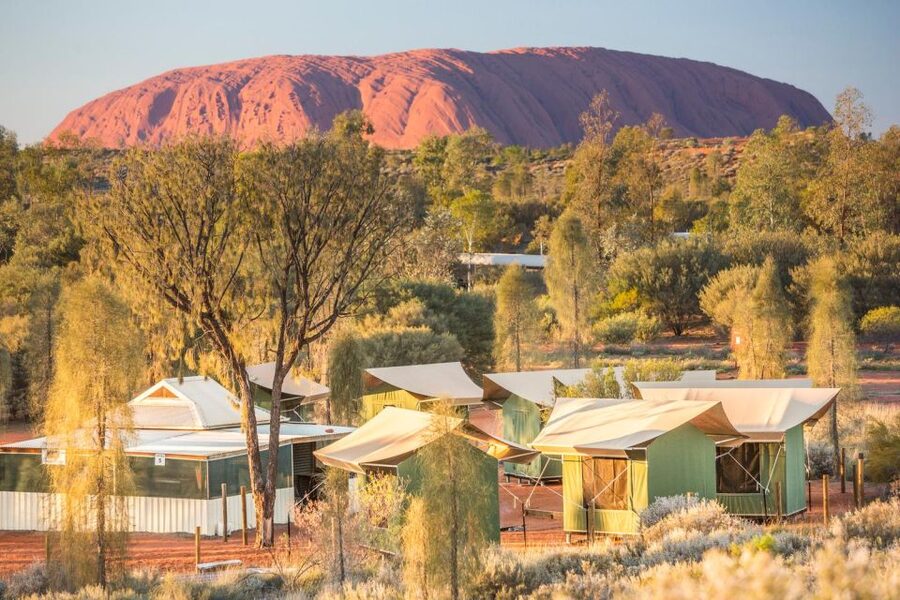
Day two begins early with a light breakfast and a sunrise drive into Uluṟu-Kata Tjuṯa National Park. You see Kata Tjuta rising ahead as you enter the park, a powerful change from Uluru’s single massive form. Kata Tjuta is made of large conglomerate formations, and the walk brings you into a more enclosed, rugged setting.
The exact walk may be the Valley of the Winds or Walpa Gorge. Both options involve uneven ground and substantial rock formations, but they offer different levels of challenge. The guide chooses the route according to conditions and the group.
This is where fitness becomes real, not a line in the fine print. The daily walks may be only 2 to 4 kilometres, but steep rocky sections, direct sunlight, and heat make distance a poor measure of difficulty. Wear proper hiking shoes, bring a hat, use biodegradable sunscreen, and carry a reusable water bottle. Onboard water is supplied, but you need your own bottle.
The early start is worth it for the light and cooler conditions, though you should not expect a leisurely morning. This trip aims to cover major sights in a short time, so the schedule keeps moving.
A completely different kind of day out in Uluru:
- Segway the FULL base of Uluru
★ 5.0 · 449 reviews - Full Uluru Base Walk at Sunrise Including breakfast
★ 5.0 · 408 reviews - Kings Canyon Day Trip from Ayers Rock (Uluru)
★ 4.5 · 380 reviews - Uluru (Ayers Rock) Field of Light Sunrise Tour
★ 4.5 · 329 reviews
The long road to Kings Canyon
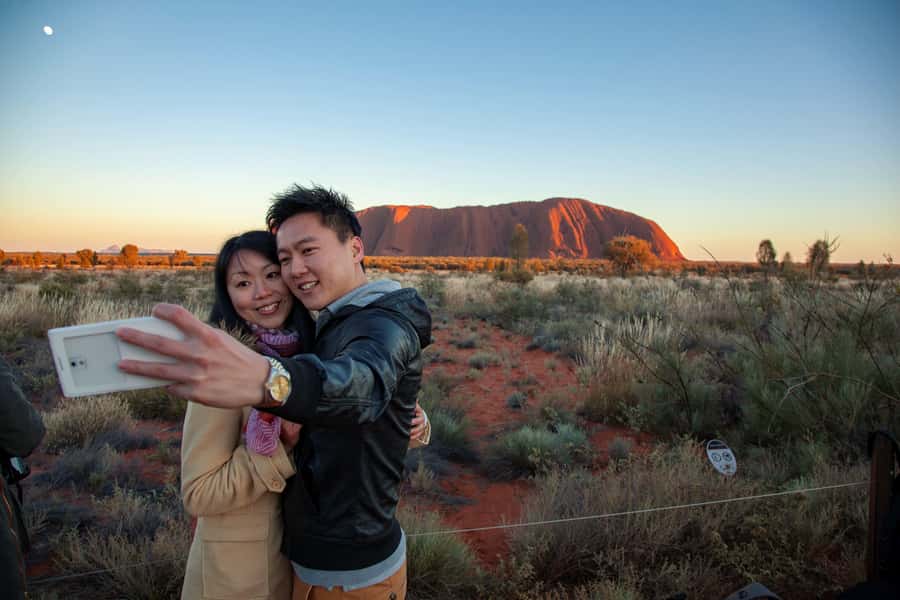
After Kata Tjuta, the bus heads toward Kings Canyon. This is one of the less glamorous parts of the trip, but it is essential to the route. You are crossing large stretches of Central Australia, and the road time helps you understand the distance between the major parks.
The vehicle is air-conditioned, which matters after a hot walk. Still, this is a long-distance trip, not a short shuttle. One person described the full route as roughly 1,500 kilometres of driving across the three days. The exact total can vary with the departure direction and route, but you should expect several long periods on the bus.
The reward comes near Kings Canyon, where the group arrives in time for an Outback sunset. Dinner follows at camp, usually around a campfire. The second night is another chance to sleep in a swag or use the fixed tent option, depending on what you book.
Swag camping under a huge sky
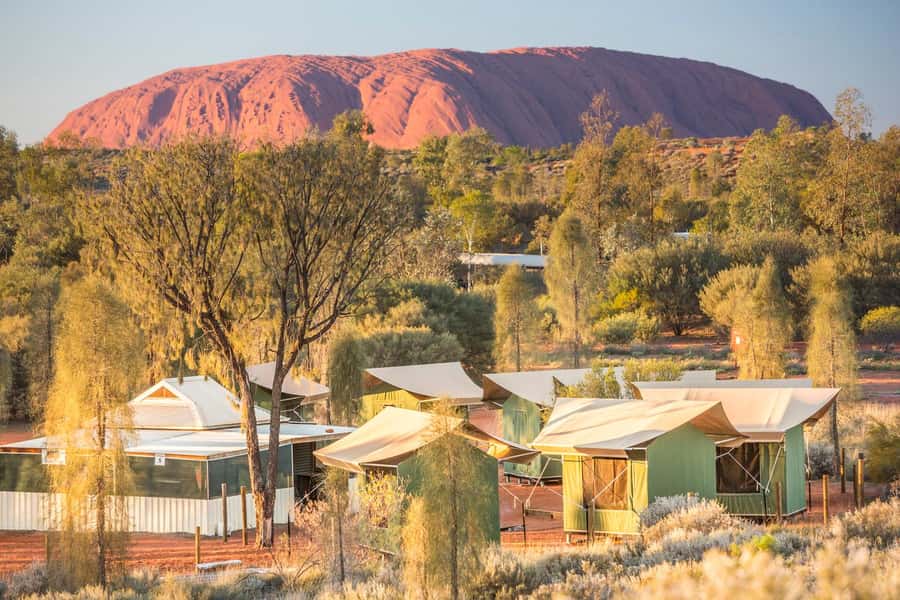
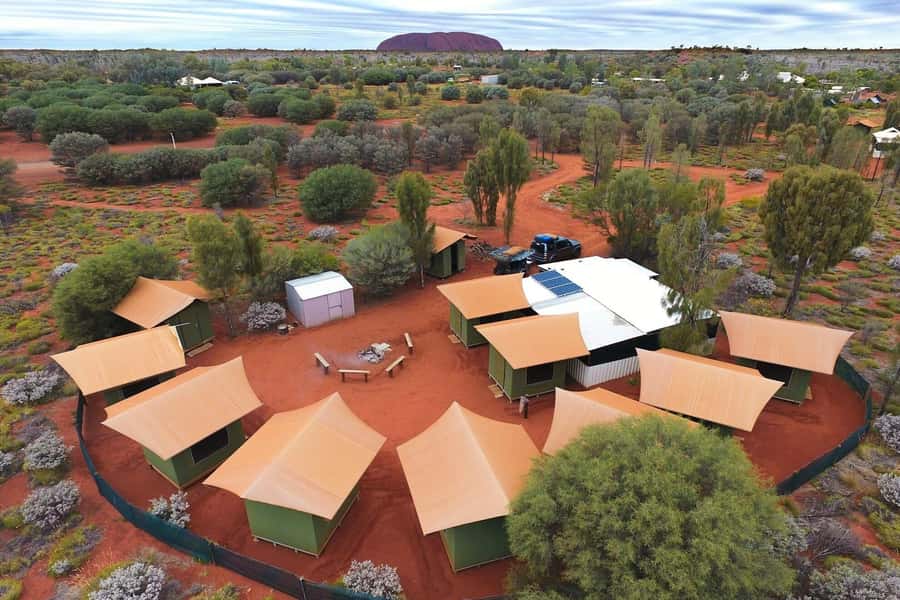
The swag is a canvas-covered bush bed roll, usually placed outdoors beneath the stars. It includes a mattress, pillow, and bedding arrangement according to the option selected, but you must bring or rent a sleeping bag. Rental is available onsite for $40.
I think the swag is the trip’s most distinctive accommodation choice. Several people describe sleeping under the stars as their favorite part, and that makes sense. After the red rock and long roads, lying back in the open air gives the Outback a quiet, personal moment.
It is also basic. A swag is not a sealed cabin. One booking account warns that small animals can potentially crawl into the open sleeping setup, so you should be comfortable with genuine outdoor camping. Keep clothing and bags closed, use the provided or rented bedding correctly, and bring a flashlight.
The Safari Tent option is better for anyone who wants more shelter. It provides a fitted sheet, top sheet, mattress, pillow, and pillowcase. The supplied information does not describe the tents as luxury accommodation, so I would think of them as a practical step up from open-air swag camping, not a hotel room.
Day three: Kings Canyon and the Watarrka walk
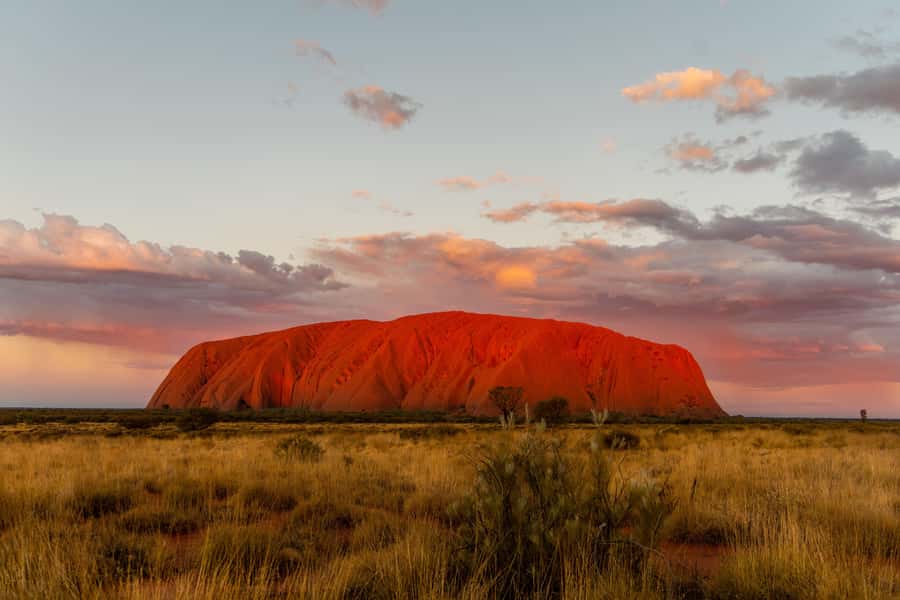
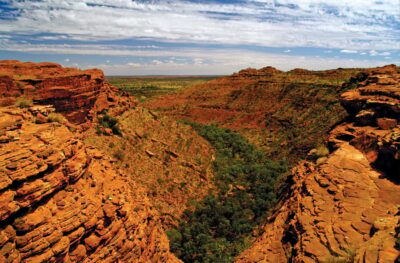
The final major sight is Kings Canyon in Watarrka National Park, an ancient home and sacred area for the Ulpanyali and Lilla people. The walk brings you past 100-metre cliff faces and sandstone chasms. This is the day for dramatic views, but it is also the day that demands the most from your legs.
At least one trek on the trip can run 9 to 11 kilometres. The guide has discretion over who attempts it, and people over 70 need a doctor’s certificate submitted 30 days before travel. This is sensible. The route includes steep, rocky ground and exposure to sun, so you need more than average walking ability.
I would not book this tour hoping to skip every demanding section and simply wait beside the bus. The itinerary is built around bush walks, and the most memorable views require effort. If your fitness is moderate to advanced, the physical work becomes part of the reward. If you have a low fitness level, mobility limits, high blood pressure, a recent surgery, a cold, or another medical condition, this is not the right trip.
After the walk, you have some downtime before the return journey. The bus takes the Mereenie Loop Tourist Drive through the West MacDonnell Ranges toward Alice Springs. This off-the-beaten-track route is a useful final chapter because it keeps the journey focused on the Outback rather than sending you back the way you came.
What the guide adds to the experience
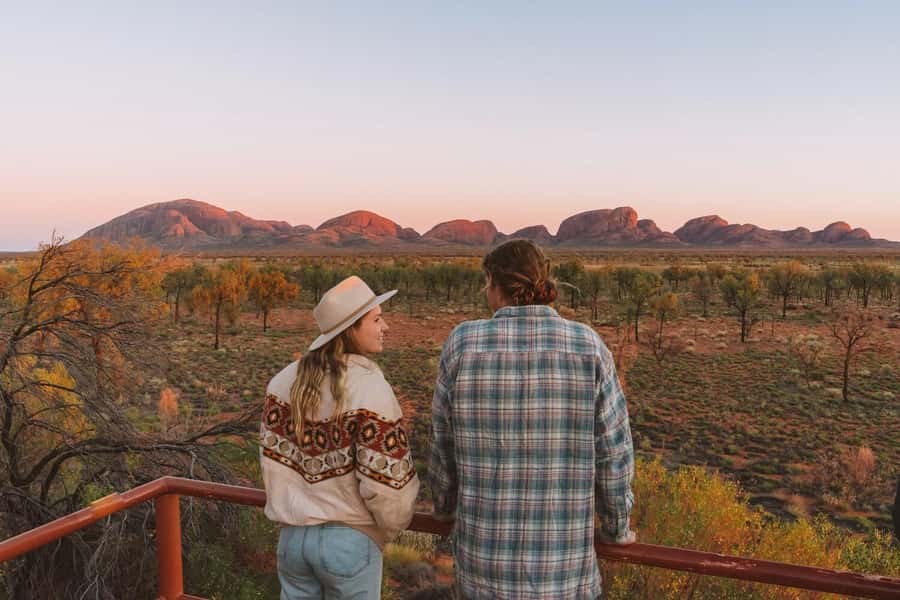
The guide can make or break a small-group camping trip, and this one receives unusually strong praise for its staff. Jim is described as handling the group with confidence, while Ewel is praised for combining driving, cooking, planning, and walks. Adam is noted for creating good energy and helping people overcome a fear of snakes. Rhett receives praise for explaining plants, rock formations, stars, Aboriginal history, and current developments.
Names such as Tristan, Shearna, Sanne, Misty, Jordan, Joey, Sophie, Caspar, Lea, Alex, and Sharni also appear in the experience accounts, often alongside comments about humor, cultural respect, organization, or enthusiasm. That gives you a useful picture of the guiding style: expect interpretation and personality, not a silent ride from one viewpoint to another.
The flip side is workload. One account makes the fair point that a single guide can become stretched while driving around 20 people, leading walks, organizing meals, and keeping everyone safe. The best response is to take part. Help when asked, listen to instructions, and avoid treating the guide as a driver, chef, park ranger, and entertainer all at once.
Who should book this trip?
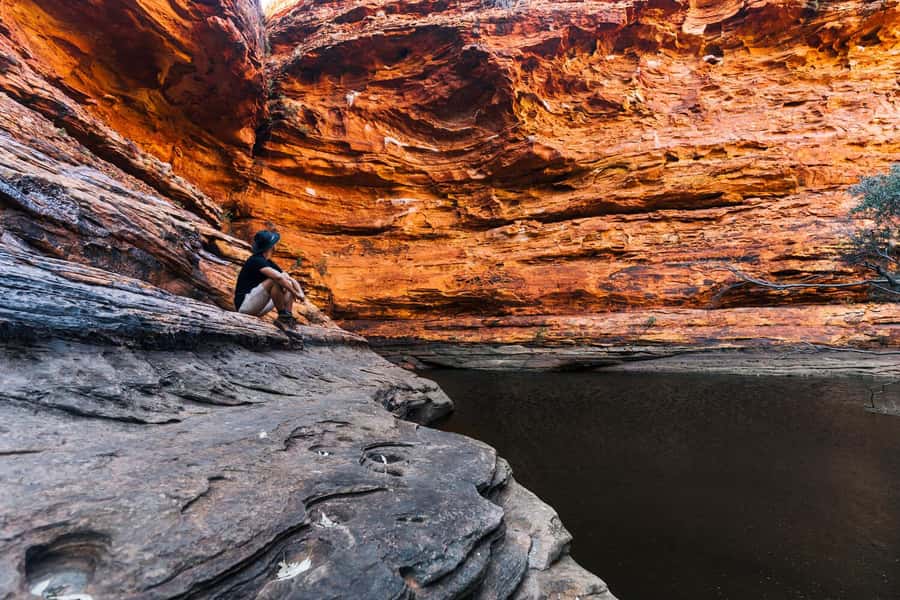
I would choose this tour if you have limited time and want the main Red Centre sights in one organized route. It suits solo visitors especially well because shared meals, campfires, and group walks create easy opportunities to meet people from different countries.
It also suits active visitors who want more than a viewpoint and a quick photo. You walk at Uluru, Kata Tjuta, and Kings Canyon, then travel through remote country between them. The cultural explanations add depth, while the swag option gives you a night sky experience that fixed accommodation cannot quite match.
I would be cautious if you need a slow schedule, private space, hotel comfort, or full service at camp. Children under seven cannot join, and children aged eight to 17 must remain with an adult or legal guardian. The tour is not suitable for pregnant people, wheelchair users, people with mobility impairments, people over 80, or those with several listed medical conditions.
Pack for changing conditions. Bring closed-toe hiking shoes, breathable and warm clothing, rain gear, toiletries, insect repellent, a daypack, personal medication, a power bank, a flashlight, and a sleeping bag. Large bags and baby strollers are not allowed, though each person may bring one small day bag and one larger bag.
Is $598 good value?
For three days, two nights, three major national park areas, transportation from Yulara to Alice Springs, park fees, seven included meals, camping, and a guide, $598 is a fair price for an active Outback trip. The value becomes stronger if you were already planning to travel between Yulara and Alice Springs.
The price does not buy luxury. You pay for access, logistics, guiding, and a packed route. You also contribute labor at camp and accept early mornings and long drives. I would compare it with the cost and effort of hiring a vehicle, arranging campsites, buying food, paying entry fees, and navigating the Mereenie Loop yourself.
Free cancellation is available up to 14 days before departure for a full refund. Starting times and the exact meeting point depend on the option booked, so check those details before you commit to flights or accommodation.
Should you book the Uluru, Kata Tjuta and Kings Canyon tour?
Book it if you want a high-value, active introduction to the Red Centre and like the idea of combining famous sights with cultural learning, campfire meals, and a night under the stars. The strongest reasons to go are the three major walks, the Yulara to Alice Springs route, and the guides’ clear personal investment in the land and its stories.
Skip it if you want a gentle sightseeing holiday. The long bus sections, early starts, steep walks, open-air sleeping, and shared chores are not minor details. For the right person, though, those rough edges are exactly what turn this from a sightseeing transfer into a memorable Outback experience.
FAQ
Where does the tour start and finish?
The trip begins with pickup at Yulara’s Ayers Rock Airport and finishes in Alice Springs after the Mereenie Loop Tourist Drive through the West MacDonnell Ranges.
How long does the tour last?
It lasts about 60 hours across three days and two nights.
What places does the tour visit?
The route includes the Uluṟu-Kata Tjuṯa Cultural Centre, Uluru, Mutitjulu Waterhole, Kuniya Piti, Kantju Gorge, Kata Tjuta, Kings Canyon in Watarrka National Park, and the Mereenie Loop route.
Are meals included?
The package includes two breakfasts, three lunches, and two dinners. If you have special dietary needs, bring your own snacks for meals that are not included or do not meet your requirements.
Is a sleeping bag provided?
No. You must bring a sleeping bag or rent one onsite for $40.
What is a swag?
A swag is a canvas-covered Australian bush bed roll. It is provided when you select the Bush Swag option.
Is a Safari Tent option available?
Yes. The Safari Tent option includes a fitted sheet, top sheet, mattress, pillow, and pillowcase.
How difficult are the walks?
The walks are rated for moderate to advanced fitness. Many cover 2 to 4 kilometres over rocky, sometimes steep ground, and at least one trek may cover 9 to 11 kilometres.
Can children join the tour?
Children under seven cannot join. Children aged eight to 17 must be accompanied by an adult or legal guardian at all times.
Is the tour suitable for people with mobility impairments?
No. The experience is not suitable for wheelchair users or people with mobility impairments. It is also not suitable for people with a low fitness level, pregnant people, people over 80, or people with several listed medical conditions.
Just added around Uluru
- Afternoon Kata Tjuta Small Group Tour★ 4.5 · 138 reviews
- Uluru (Ayers Rock) to Alice Springs One-Way Shuttle★ 4.5 · 150 reviews
- Uluru Sunrise (Ayers Rock) and Kata Tjuta Half Day Trip★ 4.5 · 156 reviews
- Alice Springs to Ayers Rock (Uluru) One Way Shuttle★ 4.5 · 156 reviews
- Small Group Uluru Sunset Viewing Tour★ 4.5 · 159 reviews
- Uluru Morning Guided Base Walk★ 4.5 · 160 reviews
- Highlights of Uluru Including Sunrise and Breakfast★ 5.0 · 184 reviews
- Best of Uluru & Segway★ 5.0 · 186 reviews
Uluru & Red Centre Tours, compared.
Ayers Rock Day Trip from Alice Springs Including BBQ Dinner
Read our review →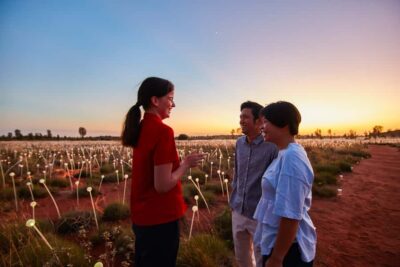
Uluru: Field of Light Sunrise Tour with Hot Drinks
Read our review →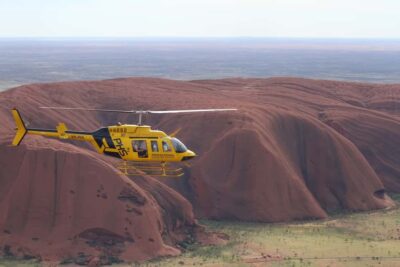
Kings Canyon: Full-Day Tour from Ayers Rock Resort
Read our review →
Yulara: Uluru & Kata Tjuta 25-Minute Helicopter Experience
Read our review →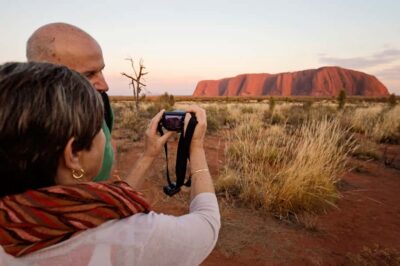
Yulara: Uluru Sunrise and Kata Tjuta Day Trip by Bus
Read our review →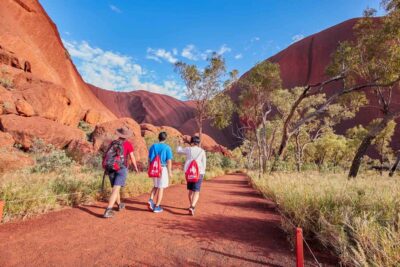
Uluru: Sacred Sites & Sunset Tour with Wine & Cheeseboard
Read our review →Browse the lists this tour appears in